How do we keep the Netherlands safe from flooding?
Text Roel van Gils Beeld DeltaresTekst Roel van Gils Beeld Deltares
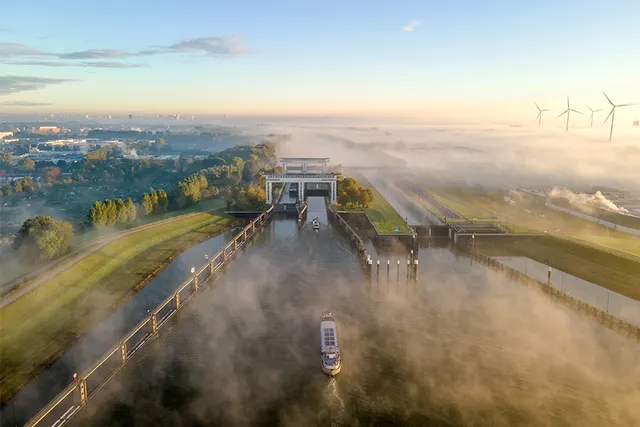
In the final months of 2023 and the first weeks of 2024, the Netherlands was hit by high water in its rivers and lakes and along the coast. Even the Maeslant Barrier closed automatically for the first time since it opened in 1997. Despite this, our dikes held up well. According to Meindert Van, dike technology expert at Deltares, this is the result of almost a thousand years of knowledge and experience and, above all, of a commitment to continuous improvement. He brings us up to date on the latest developments and future challenges. After all, is there such a thing as the dike of the future?
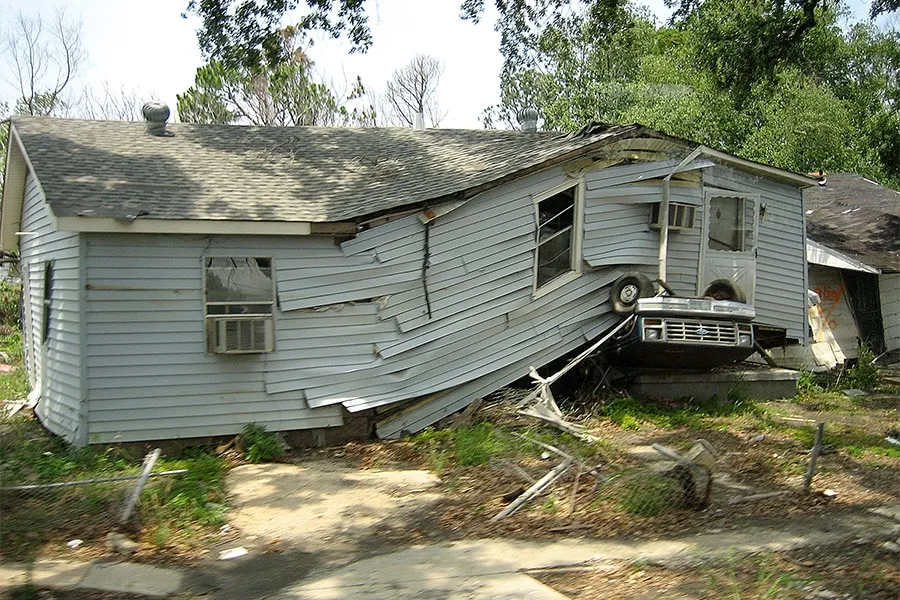
Deltares is an independent knowledge institute for applied research in water and the subsurface. “We are a non-profit foundation established to maintain the knowledge base for water and the subsurface. Water safety is one aspect of that,” says Meindert. “When it comes to dikes, we conduct research across the board for organisations such as Rijkswaterstaat, water authorities and the Flood Protection Programme. We also regularly go on missions abroad to gather and share knowledge, such as after the severe flooding in New Orleans in 2005. I have also been to China, Colombia and Bhutan, for example, to tackle dike problems.”

A combination of circumstances
Meindert is pleased with how the recent period of high water has gone. “What you can see in the Netherlands is that we have things pretty well organised here. The primary flood defences have performed excellently in terms of strength. Nothing unusual happened. And it was quite severe, partly due to a combination of circumstances. Sea levels were high, as the Maeslant Barrier only closes when the water reaches 3 metres above NAP, and this coincided with strong winds and stormy conditions, as well as heavy rainfall during those months. This caused water levels in the rivers to rise, as well as levels in the IJsselmeer and Markermeer. During a storm, the water is pushed to one side and the lake effectively ‘tilts’, with waves crashing against the dikes. Despite these loads, the dikes held up well everywhere. They are designed for higher water levels and even stronger winds.”
Water safety enshrined in law
The safety requirements for the primary flood defences in the Netherlands are set out in law. Meindert explains: “By contrast, the safety of the secondary system is not regulated by law. It is much more a system of polders and pumping stations. Flooding of a secondary system is far less serious than flooding of a primary flood defence. It results only in localised flooding, without large numbers of casualties or major disruption to the economy. That is not to say it cannot be very inconvenient for the people affected, but it does not have consequences for water safety as a whole.”
A centuries-old system
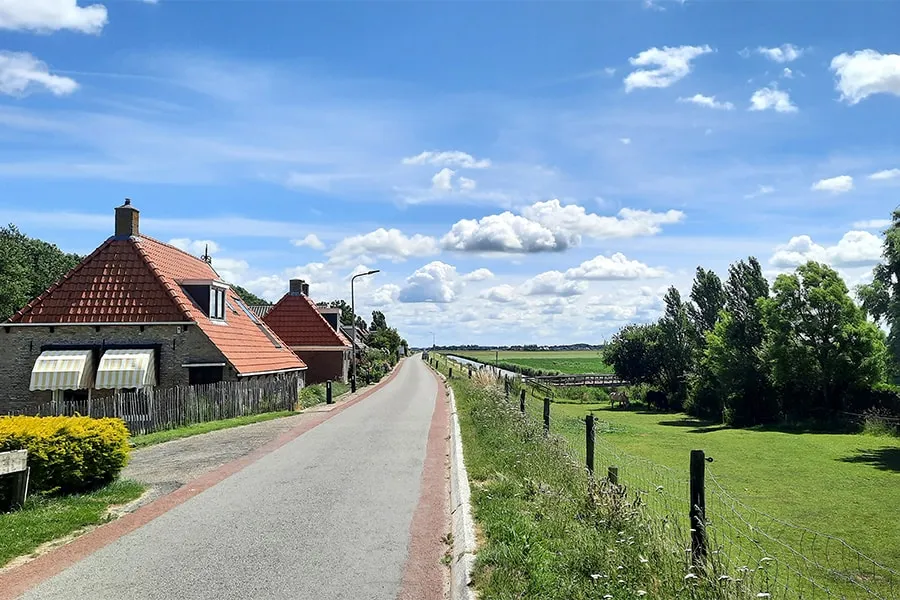
According to Meindert, the reason the damage caused by high water in the Netherlands is generally limited compared with that in neighbouring countries is that we set much higher safety requirements for our dikes. “The system is centuries old. The first water authorities here were established a thousand years ago. The system has been maintained, raised and improved ever since. Weak links are identified and eliminated. It is a continuous process. By international standards, we have things very well in hand. We have to, because things can go very badly wrong. Other countries always look at how we organise and fund water safety in the Netherlands. There is little political debate about it. Water safety is in our DNA.”
A broad scope
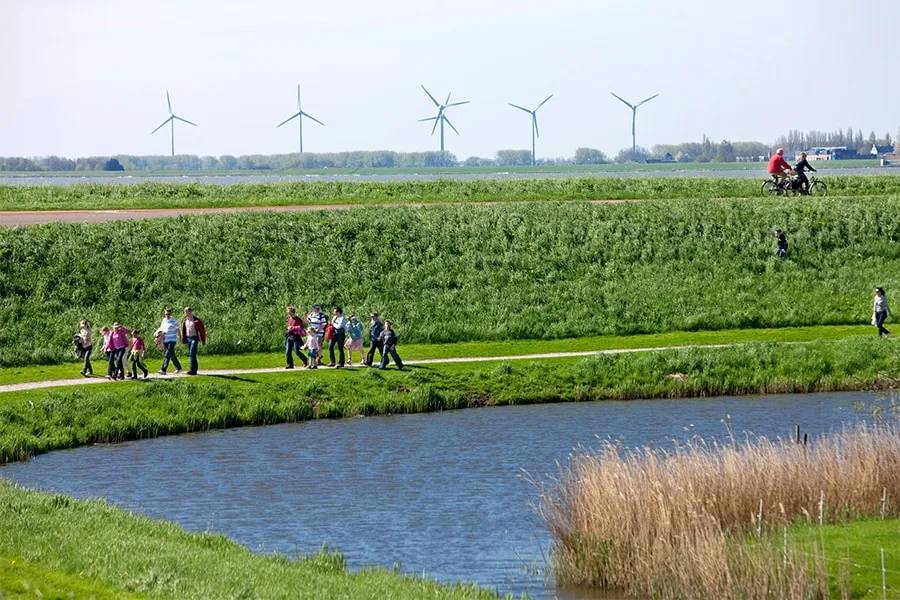
When it comes to spatial planning decisions, legislation and politics are increasingly guided by the principle that water and soil should be leading factors, according to Meindert. “How should we plan the Netherlands in future so that water and soil have a proper place? Research into water safety focuses not just on the dike as a line along the river, but on the entire area around the rivers. The foreland, floodplains, neighbouring homes and business parks also need to be planned intelligently so that they contribute to water safety. In short, this means making multifunctional use of space. A good example is the wind turbines on the dike berm along the Eems-Dollard. Here, flood defence and the energy transition come together.” ′
Innovation accelerator
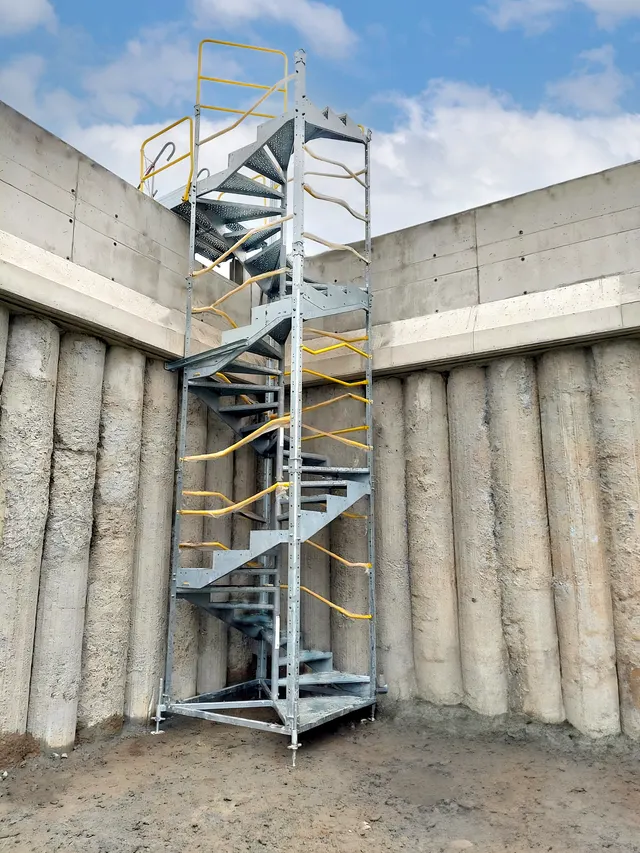
The Flood Protection Programme estimates that more than 2,000 kilometres of dikes will be strengthened by 2050. “Through the Innovation Accelerator, we are constantly researching how to carry out this operation more quickly, at lower cost and with less impact on the surrounding area and the environment. This work is producing new techniques, such as using sheet piling in dikes, as well as solutions that have less or no impact on CO2 emissions. As part of this, we are also researching the impact of low-temperature asphalt. The Hot Mix asphalt currently used in road construction is gradually being phased out to meet climate targets. But what does that mean for asphalt on dikes? Can low-temperature asphalt be used as hydraulic engineering asphalt, and how does it behave under waves and extreme conditions? We are working hard on developments like these.”
Biodiversity agenda
The biodiversity agenda also has implications for dikes, in various ways. “One positive development is that greater attention is being paid to different grass mixtures,” says Meindert. “This means more flowers and more wildlife on the dike. A flowering dike is not only attractive, it also improves biodiversity.” Speaking of wildlife, the growing beaver population is an increasing concern for water safety. “Over the past ten years, we have learned a great deal about their behaviour and what it means for water safety. Beavers can dig tunnels 10 metres or more in a day. And they head for the dike precisely when you do not want them there. It is logical behaviour. They live in the floodplains, but when water levels rise, they move towards the dike. They start a burrow just below the high-water line and dig until they reach dry ground. What they are doing is largely invisible. How do you keep it under control, and what impact does it have on water safety? At some point, it becomes a political question. How far are we willing to go? This will undoubtedly be on the water safety agenda in the coming years.”
Accelerating climate change
Another item on the agenda is accelerating climate change. “A thousand years ago, the North Sea was about 2 metres lower, and 10,000 years ago it was as much as 50 metres lower,” says Meindert. “Sea levels are still rising by around 20 centimetres per century as a result of the last ice age. At the same time, the land is subsiding by 20 to 30 centimetres per century because we pump water out of the polders. That means we have to keep out an extra 50 centimetres of water every century, even without taking anything else into account. On top of that, there is the prospect of accelerated climate change. The KNMI has just drawn up new scenarios. Based on these projections, we can make statements about expected water levels in 50 or even 200 years. We take scenarios like these into account in our research into future dikes and flood barriers. For example, how long will the Maeslant Barrier remain operational? Or what do these scenarios mean for the current coastline? The beach is currently maintained through sand nourishment. Can we continue doing that if sea levels rise more quickly, and what will it cost?”
A continuous process
Deltares brings together knowledge and information, including on water safety, so that well-informed decisions can be made. And that knowledge does not come solely from its own research. “We are seeing more and more countries affected by flooding and responding by developing their knowledge,” says Meindert. “At the time of the New Orleans floods, the US was well behind in terms of knowledge, but it has since caught up. The same is true of France and the United Kingdom. Internationally, knowledge of dikes has improved significantly compared with around twenty years ago. Back then, the Netherlands was the benchmark, but other countries are also building up more knowledge, which benefits us too.” Asked what the dike of the future will look like, Meindert says: “There is no single answer to that. We are currently working towards 2050, but that is not the end point. It is a continuous process of upgrading and adaptation, taking account of climate scenarios, sinking ground and rising sea levels. We have been doing that for the past thousand years, and we will continue to do so for the next thousand.”
Question about this story? Ask your question
Keep following this
Get an email when a new story is published. No account needed.
- SubjectSafety