Assessment method speeds up adoption of circular steel in infrastructure
Text Roel van Gils Images Van Heteren
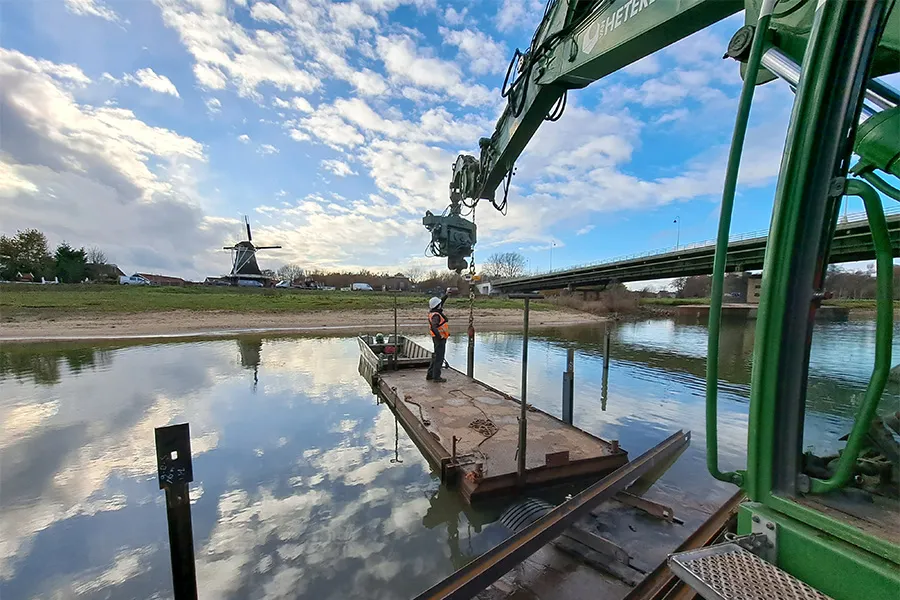
New steel is still used too often in infrastructure. That is a pity, as there are plenty of opportunities to give structural steel sections a second life, including in infrastructure. The key is to be able to quickly establish whether used steel is fit for purpose, without having to carry out costly investigations and analyses. Van Heteren has responded to this need and, together with Rijkswaterstaat, CROW and Adviesbureau Heurter, developed the Circular Steel Assessment Method (TCS), which CROW has made freely available via duurzaamgww.nl.
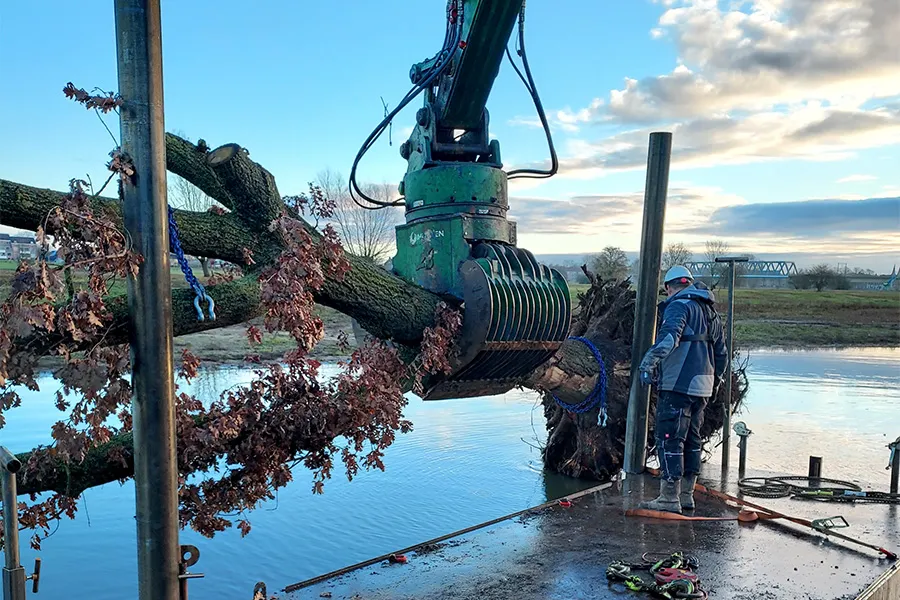
The idea for the TCS emerged during Rijkswaterstaat’s Rivierhout project, explains Bart Boksebeld, director of Van Heteren. “One part of the project involved placing 74 dead trees at 11 locations in the IJssel between Deventer and Doesburg. These trees promote biodiversity. They effectively act as coral for invertebrates. Fish use the branches and roots for shelter, spawning and foraging. The project was linked to the ‘Challenge Zero Emission’, with the aim of delivering it emission-free. Van Heteren then joined the Rijkswaterstaat team to brainstorm about the options. In those sessions, we pointed out that there is still a great deal of low-hanging fruit when it comes to sustainability and circularity in projects, and that we should focus on this first before moving on to more exotic approaches.”
Nationwide roll-out
As part of its focus on low-hanging fruit, Van Heteren proposed using circular steel sections to anchor the trees. “The contract, however, was the main obstacle. The standard contract used by Rijkswaterstaat and many other clients prevents the use of reused steel,” says Bart. “We therefore need a method for straightforwardly testing reused steel sections for light steel structures. Circular steel is entirely viable, but until recently the cost of testing was higher than the cost of buying new steel. We needed a method that could establish in 5 minutes, without laboratory testing, whether a piece of structural steel was suitable for reuse. We could develop this ourselves or together with Rijkswaterstaat, but we decided to broaden the scope. CROW also joined, with the aim of developing a working method that could be rolled out nationwide. Finally, we brought in additional steel expertise from Adviesbureau Heurter. Together, we set to work developing the TCS.” The focus was on using structural steel sections for light structures in consequence class CC1, with a design life of no more than 50 years.
A matter of minutes
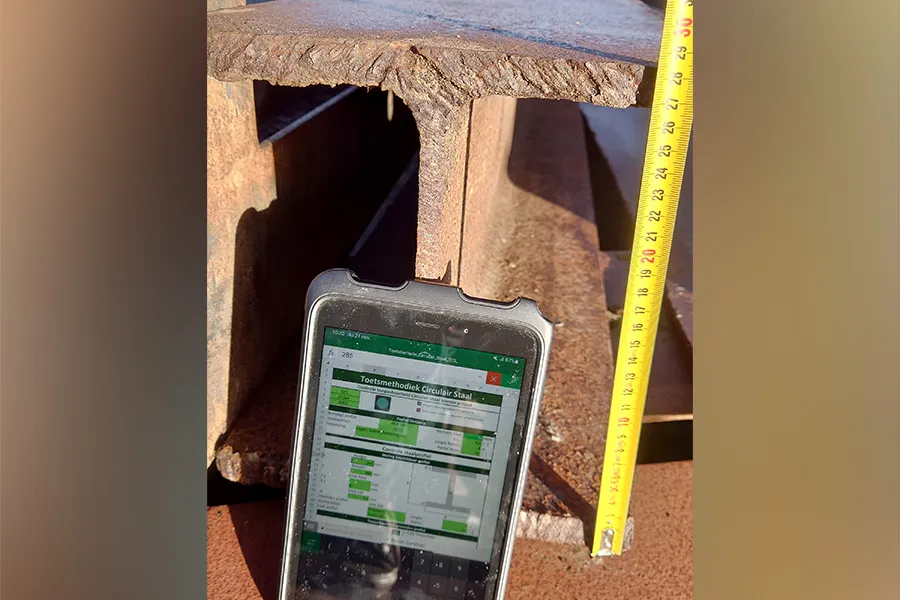
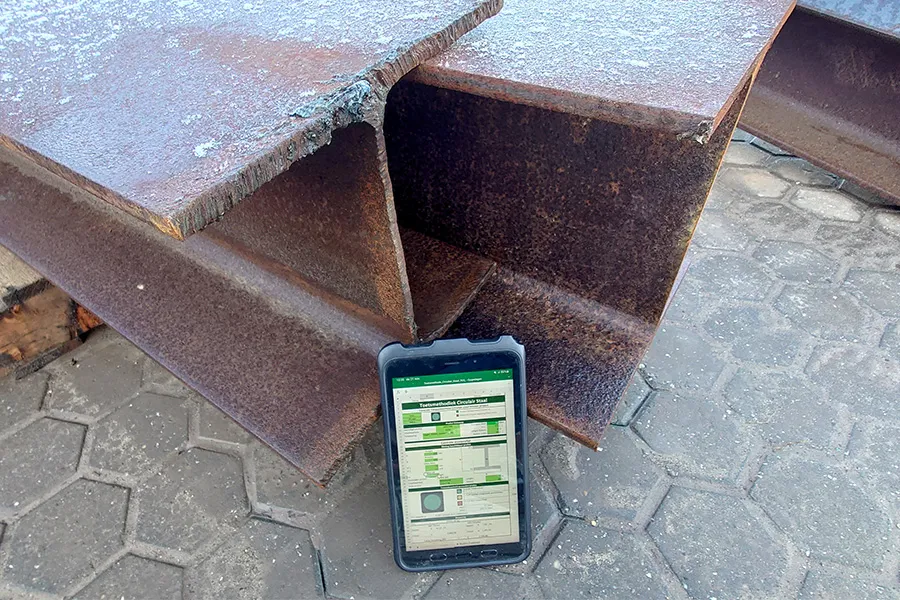
Steel sections are assessed in Excel using a so-called smart flowchart with three steps. “The first step establishes whether the TCS is suitable for assessing circular steel in a project, based on the consequence class, execution class and design life. If it is, the TCS displays a green light,” says Rob Bollen, structural engineer at Van Heteren. “If not, you are referred to NTA8713:2023 for further investigation. If the TCS is suitable, you can determine in a matter of minutes whether the available steel section is suitable for the project in question. This is done by comparing the design characteristics entered for the required steel against the parameters of the steel section whose suitability you want to establish. Here, too, we use a traffic-light system.” As well as demonstrating that the steel section meets the functional requirements, the assessment method also shows how choosing circular steel sections helps reduce emissions, expressed as the Environmental Cost Indicator (MKI).
An eye-opener
According to Bart, the TCS has been tested on several pilot projects. CROW has now published the method on duurzaamgww.nl, making it available nationwide. “It is now up to Rijkswaterstaat and other clients to include the options for circular applications in consequence class CC1 in their contracts and demonstrate compliance using the TCS.” Mattijs Erberveld, innovation adviser at Rijkswaterstaat: “At Rijkswaterstaat, we aim to work circularly. Standard contract requirements often stand in the way of using circular steel. They are generally geared towards new materials, partly because of reliability and safety concerns, but circularity brings an additional objective. In that respect, the TCS was an eye-opener for us too, and gives contractors scope for a safe, circular alternative.” Bart concludes: “Van Heteren has been using circular steel for many years. Thanks to the TCS, its use will only increase, particularly for anchors, scaffolding, mooring facilities and bridges in consequence class CC1.”
Question about this story? Ask your question
Keep following this
Get an email when a new story is published. No account needed.
- ThemeLower emissions and more reuse
- SubjectInfraTech