Foundations / Site investigation
Pile tests show that standards are not necessarily the last word
Text Roel van Gils Images BMNED
Pile toe resistance is overestimated, shaft friction underestimated
A pile system derives its bearing capacity from a combination of toe resistance and shaft friction. Historically, current Dutch standards and guidelines have placed too much emphasis on toe resistance. Shaft friction, by contrast, is often substantially undervalued and is further disadvantaged by the cap on cone resistance. This is unjustified, says Dylan van Opdurp of engineering consultancy BMNED, and an increasing number of leading academics in the Netherlands agree with him. “Overestimating toe resistance can even lead to serious cases of damage, as practice has sadly made painfully clear all too often.”
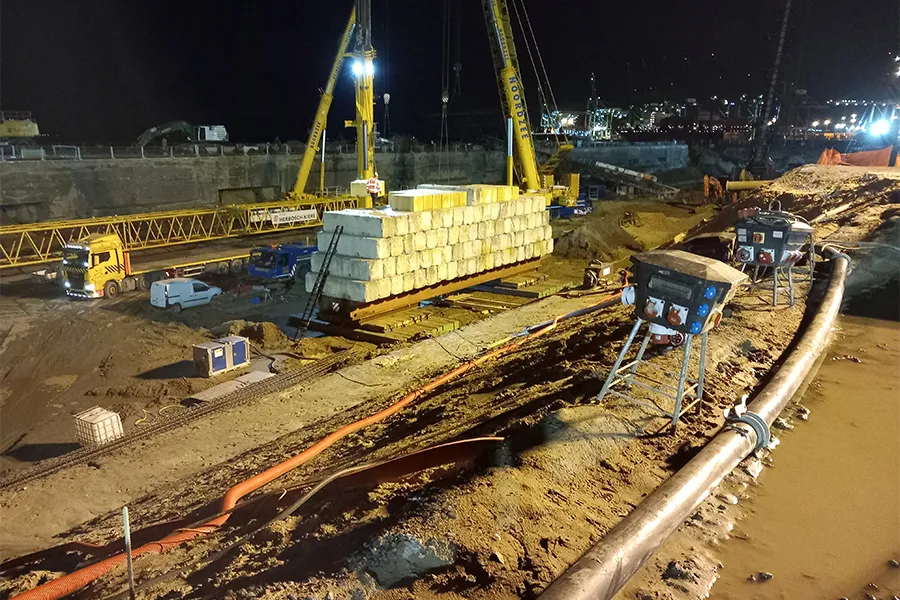
Standards and guidelines
In current design standards for determining the bearing capacity of a foundation pile, almost everything is attributed to the toe, says Dylan. “The toe resistance actually available is therefore substantially overestimated, in some cases even severely. In a number of cases, this has unfortunately already led to serious damage, with buildings settling and/or structures being badly damaged. Fortunately, there is growing recognition that the pile toe does not deliver what, based on ‘old assumptions’, one might expect it to. BMNED began to realise as early as 2017 that there was something wrong, or potentially wrong, with the pile class factors generally accepted and laid down in standards. That year, a ministerial decision reduced the pile class factor for the toe, effectively one of the design parameters. However, the decision included an exception: if a foundation contractor could use high-quality tests to demonstrate that a higher pile class factor was appropriate for its pile toe, the factor did not have to be reduced, or had to be reduced by less.”
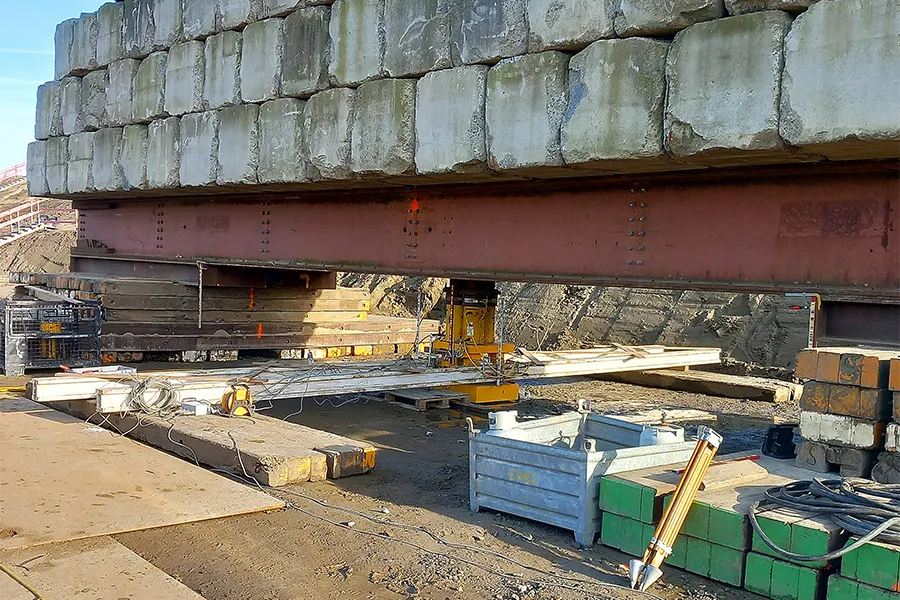
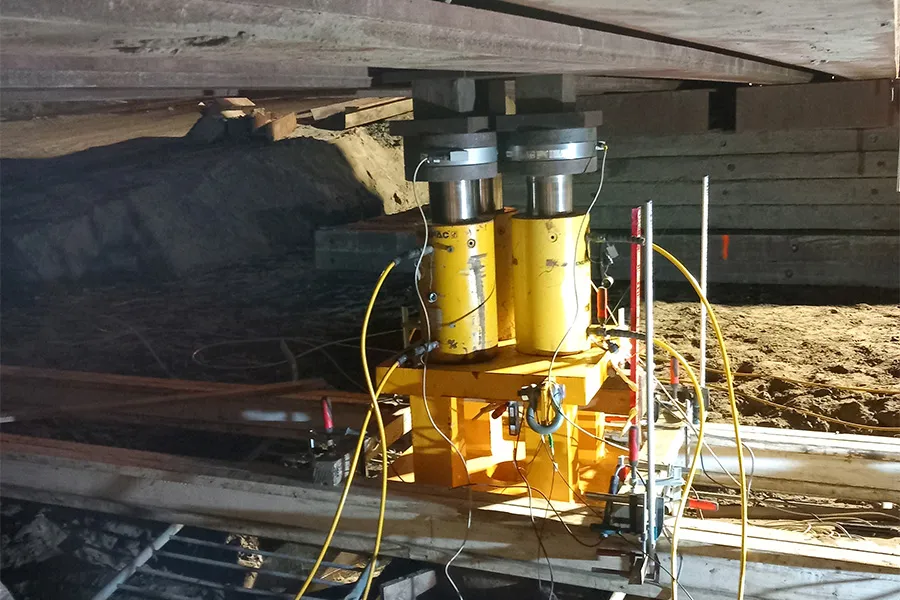
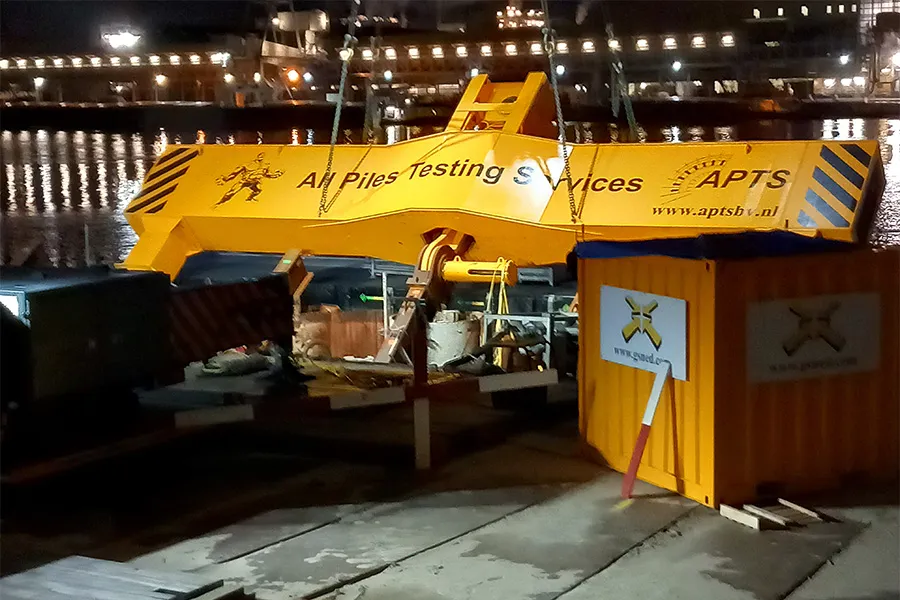
Pile tests
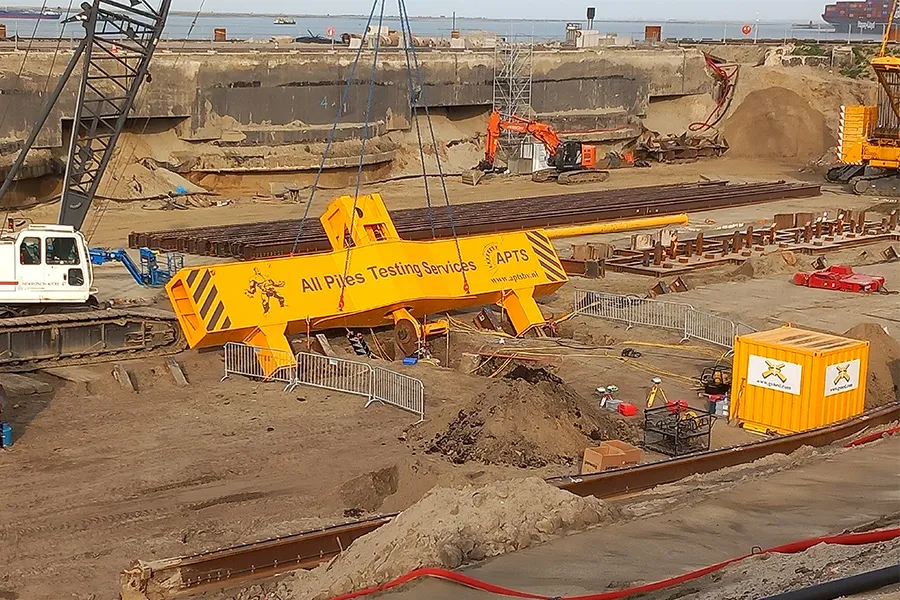
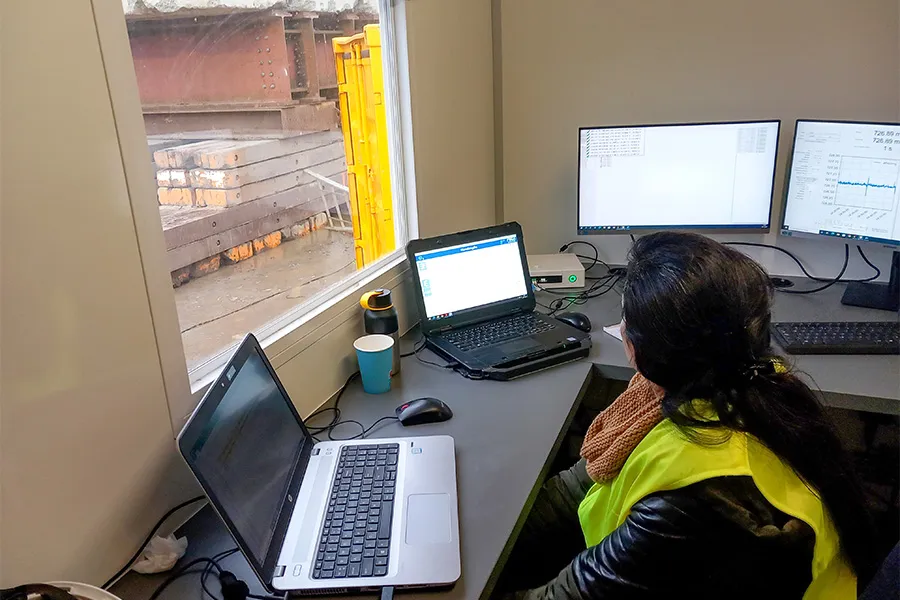
APTS, part of BMNED, which specialises exclusively in high-quality testing of foundation piles, was therefore frequently commissioned by foundation contractors from early 2017 onwards. The aim was always to use a small number of tests to show that the pile toe in question did not need to be downgraded. This proved impossible in every case. For all the piles tested by BMNED, the pile class factor found for the toe was significantly lower even than the already downgraded factors! The positive finding from all this testing was that the test results consistently showed a higher-performing pile class factor for the shaft. Clearly, there is room to improve the standard so that bearing capacity is determined realistically. “The biggest problem now is that if the calculations assume very high toe resistance and the pile penetrates only half a metre into the dense sand layer, there is not enough reserve in the pile,” Dylan explains. “The structure it supports may then settle excessively. Based on the large number of high-quality load tests we have carried out, we strongly recommend that both pile class factors be incorporated correctly into the standards. We also believe it is time to reconsider the current requirement to cap the measured cone resistance. Raising the cap is one option; depending on the test results, it may even be possible to remove the cap altogether.”
Correct factors
A lower-performing pile toe and a higher-performing shaft: is there cause for concern, you might ask yourself? Yes, says Dylan. “Depending on the design of a particular piled foundation, the required net bearing capacity may be just out of reach, or sometimes entirely unavailable, and then the consequences can be serious. It is therefore vital that our geotechnical engineers can design responsibly using correct pile class factors.”
Dylan acknowledges that the whole issue of pile class factors is a sensitive one. “Until now, pile systems have always been assigned a relatively high toe factor. As noted above, however, this has proved unjustified in practice. Foundation contractors often see a reduction in the pile class factor for the toe as a commercial threat to their product(s).” According to Dylan, however, this concern is unwarranted in most cases. “After all, carrying out a set of high-quality pile tests can narrow the actual net difference, sometimes even eliminate it entirely. Piles do not necessarily have to be larger in diameter and/or longer.”
The main benefit of establishing the correct pile class factors is that a certified pile system can be used to design a foundation system that is not only better, but also safer. Secondly, this supports our shared responsibility to curb CO2 emissions, at the very least, by not putting more into the ground than is strictly necessary for a safe foundation design.
Question about this story? Ask your question
Keep following this
Get an email when a new story is published. No account needed.
- SubjectFoundations / Site investigation