Foundations / Site investigation
Improving flow at the historic Doorslagsluis in Nieuwegein
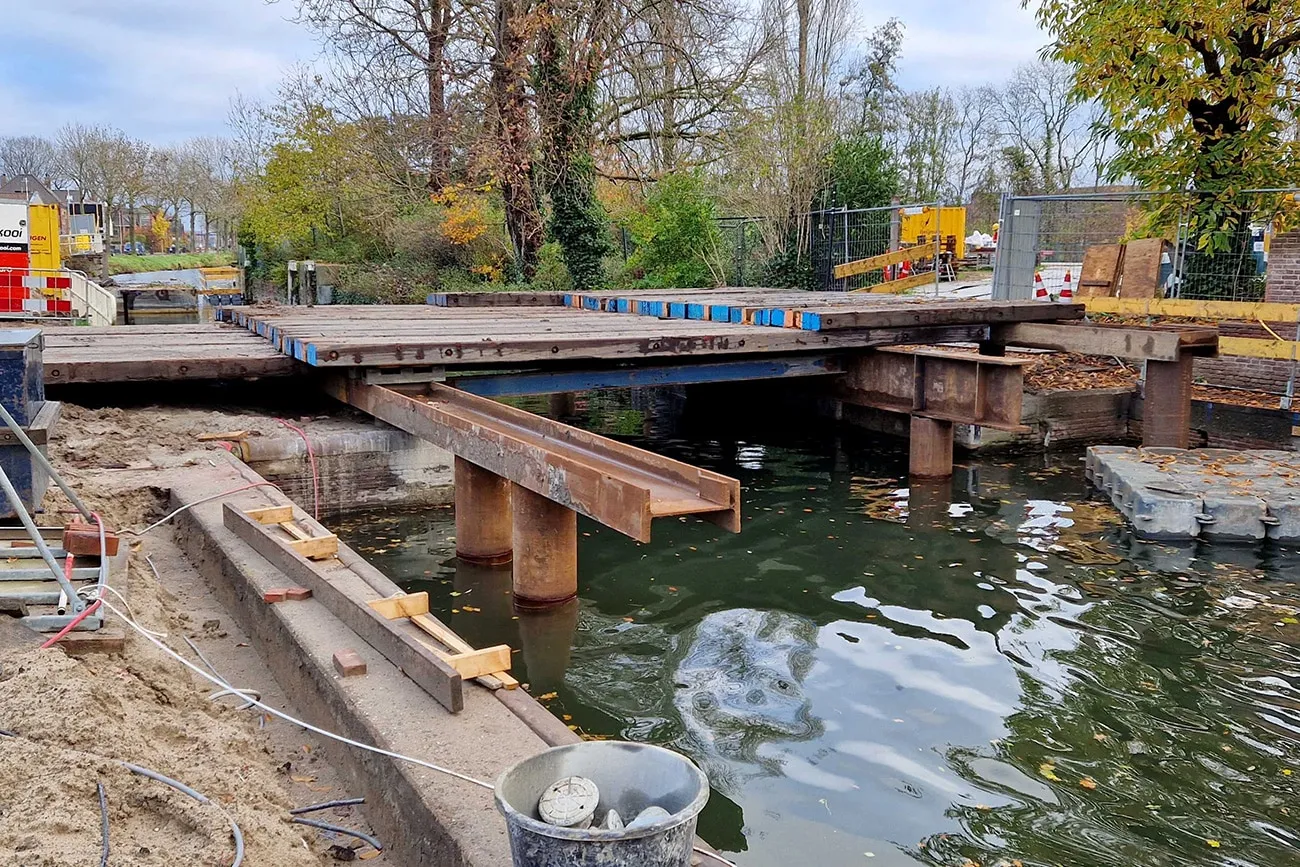
The historic Doorslagsluis in Nieuwegein is in need of maintenance and forms a bottleneck on the water supply route to the western Netherlands. During the options appraisal for increasing the capacity of the Doorslagsluis, removal was a realistic option, but its listed status led to an innovative solution being chosen. This was developed through close consultation between Hoogheemraadschap De Stichtse Rijnlanden, gemeente Nieuwegein, Historische Kring Nieuwegein, the heritage committee and local residents. The chosen option increases the flow capacity around the Doorslagsluis while preserving its historic character.
A collaborative approach with a construction team
The work is being carried out in several phases. A construction team has been set up in which the client and contractor work closely together and share their knowledge and expertise. The team coordinates the entire project. Main contractor Heijmans brought in Kandt B.V. as a subcontractor to carry out various works on the lock. Bastiaan Verheul, project manager at Kandt: “As part of the construction team, you get involved early in the project and contribute proactively to making the work practical to deliver. The challenge on this project? No drawings of the existing structure were available. Heijmans therefore carried out various investigations to obtain the necessary information. This was a good first step towards establishing the founding depth, condition and construction of the quay walls.”
Restricted flow and heritage constraints
Verheul explains some of the other challenges on the project. “It is a long, linear structure of around 300 metres, with an upper lock head, a lower lock head and a bridge abutment. The lock chamber of the former lock is 11 metres wide, but at the lock heads and bridge abutment it is only 6 metres wide, which restricts the flow of water. Something therefore needs to be done about this. At the same time, there are constraints because the structure is listed. This has to be taken into account in the design. The lock heads are being demolished and rebuilt on piles. The lock will remain visually intact, while the required flow capacity is created so that additional water can pass underneath.”
Specialist equipment
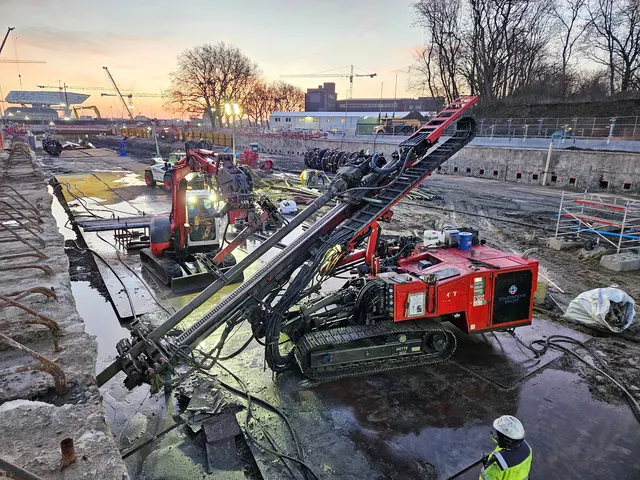
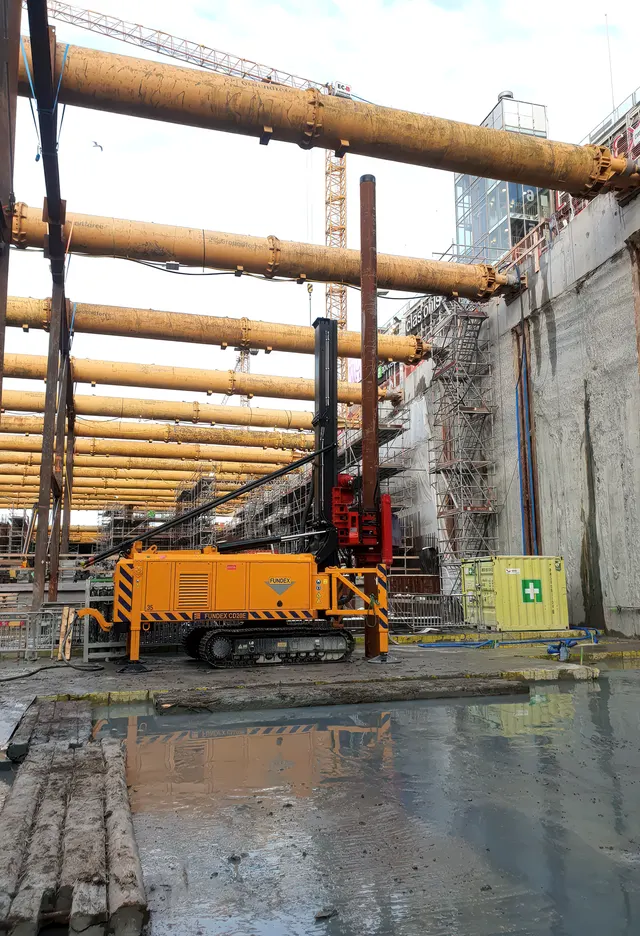
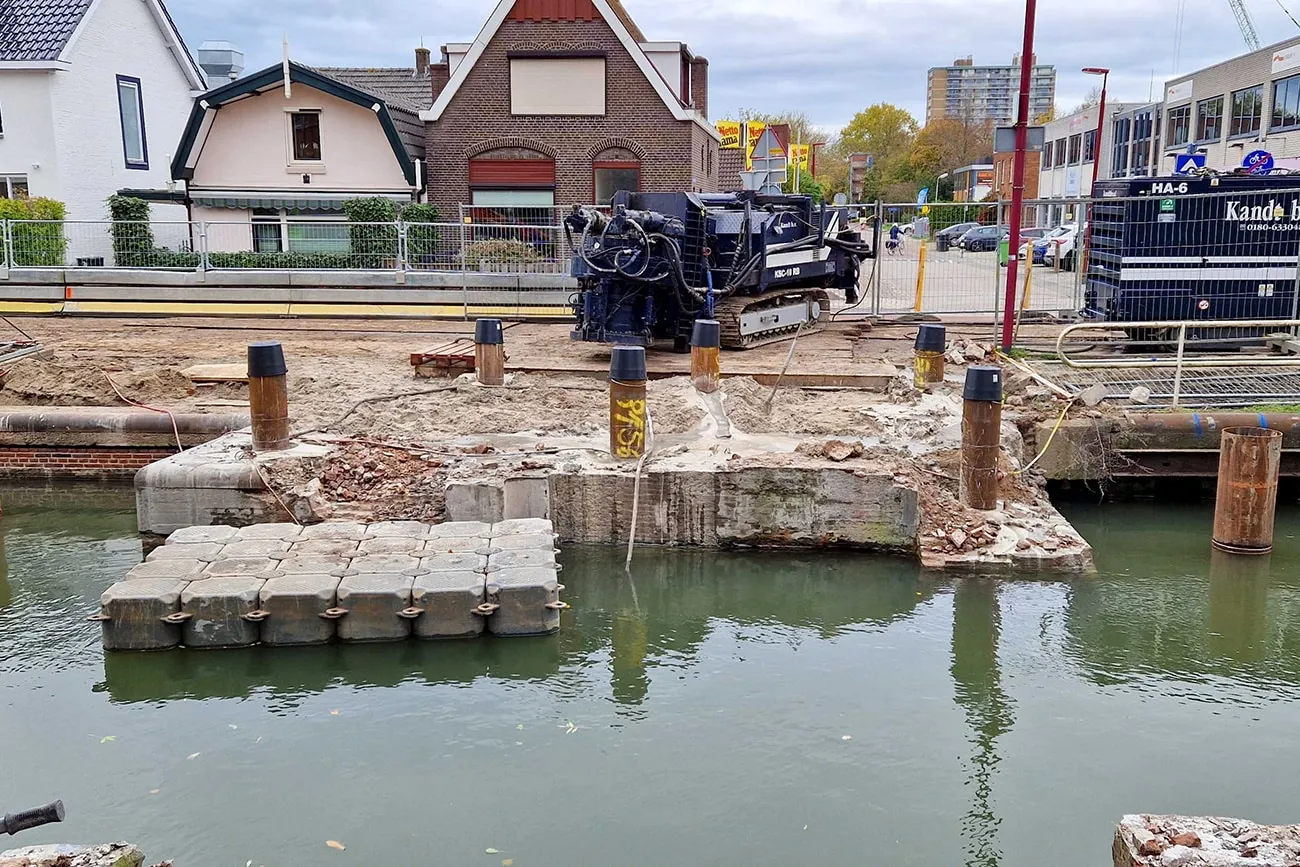
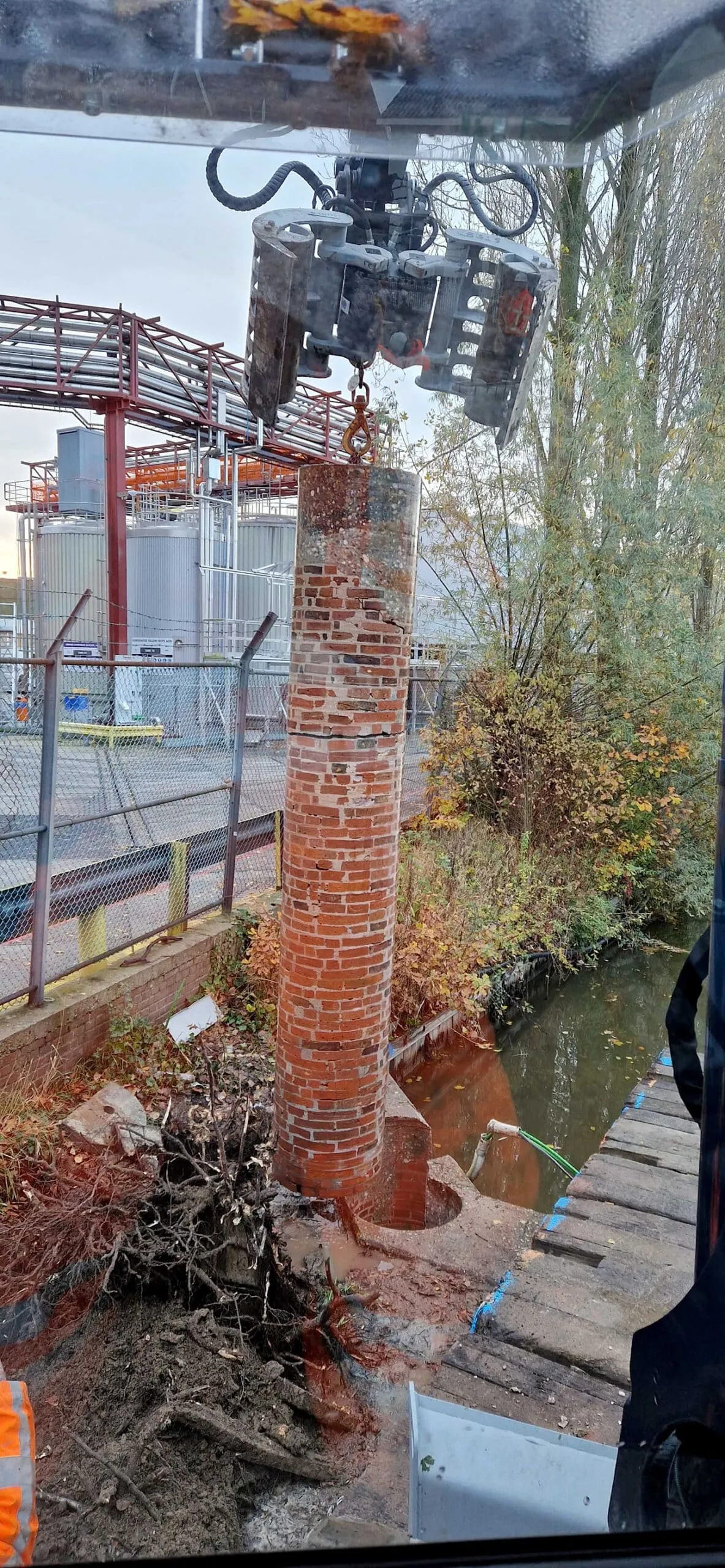
Where the lock heads and bridge abutment are being removed, it is important that the quay retains its retaining function. Kandt installed sheet piles at five different locations, totalling around 120 metres, anchored by thirty-two grout anchors. “Because there are timber piles and crossheads beneath the quay wall, which the sheet piles had to pass through, we crushed the old foundation to clear the way for the sheet pile wall. We also drilled fifteen LeKa piles through the existing lock heads. After the lock heads have been demolished, a table structure will be built on these piles to support the new lock heads. From the outside, this will give the structure the appearance of a lock. In consultation with the architect, who is involved in the project because of the lock’s listed status, partial lock gates will also be installed, allowing water to flow underneath.”
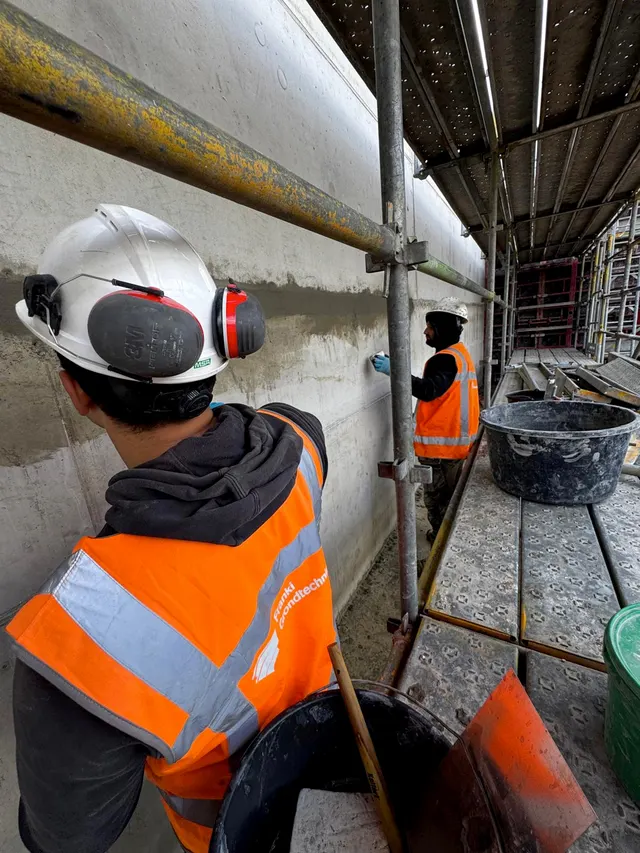
Verheul explains that specialist equipment was used to carry out all the work. “The waterway is too narrow to fit a pontoon. We are not allowed to work from the factory site, and although the road on the other side can be closed, the important cycle route running along it cannot. The condition of the quay is not entirely known, so you cannot simply set up large equipment there without restriction.” It is quite a challenge, then, but one Kandt knows how to tackle. “We built working platforms from which the work could be carried out without hindering cyclists. To create a good connection between the lock chamber wall and the new sheet pile wall to be installed through the existing lock heads, De Wilde NL B.V. drilled core holes through the masonry of the existing lock wall. Diamond drilling creates a clean demolition line, precisely where required, ensuring a sound connection to the existing chamber wall, which is to remain intact. All in all, another fine project that Kandt has contributed to, involving constructive collaboration between different parties and disciplines,” Verheul concludes.
A business enquiry for Kandt Aannemings- en Funderingsbedrijf BV? Get in touch
Who worked on it
Doorslagsluis in Nieuwegein
- sheet piling
 Kandt
- main contractorHeijmans
- core drillingDe Wilde NL B.V.
Keep following this
Get an email when a new story is published. No account needed.
- ProjectDoorslagsluis
- SubjectFoundations / Site investigation
- CompanyKandt Aannemings- en Funderingsbedrijf BV
- CompanyHeijmans
- CompanyDe Wilde NL B.V.