GIS and security
Text Danny van Hooren, Roel van Gils Beeld SmallToGo
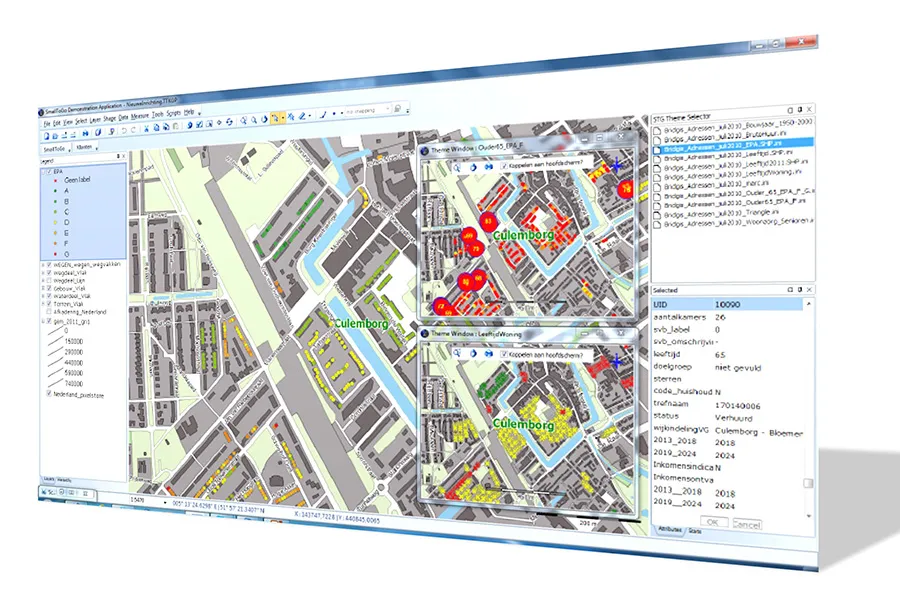
Reliable data quality and the speed of data processing have major benefits when it comes to keeping data up to date and carrying out tasks based on it. At the same time, they also pose a challenge in relation to terrorism: terrorists are keen on reliable, detailed information. According to Danny van Hooren, director of SmallToGo, GIS and security, or data and security more generally, are therefore important topics internationally.
It is clear to see what is happening everywhere: the sabotage of gas pipelines in the Baltic Sea, the study of wind turbines in the North Sea, cyberattacks on energy companies, and so on. “In some cases, external employees of certain nationalities have even been removed from their positions to prevent data from falling into the wrong hands. But how does this affect projects in practice when they get underway?”

Integrity
First of all, anyone taking up a position at an energy company must be able to provide a certificate of good conduct, Danny explains. “They also sign various documents agreeing to keep information confidential. A person’s integrity plays a major role here. But safeguards are also put in place within applications, in this case those used to work with geographic information. Data in geographic applications is particularly valuable, as these also record the location of pipelines.”
- Which data can an application user access or see?
- Which data may a user share with others?
- Can data be traced back to a person or organisation?
- What data is imported into the application?
- What text information may be displayed on a map?
Data security
To comply with certain rules and the ISO standard on data security, rules have been set out in ISO 27001. “It is better known by the acronym ISMS,” says Danny. “This stands for Information Security Management System. To qualify for ISO certification, a company must meet a whole series of requirements before certification can be awarded. It is also assessed against these requirements, in what is known as an audit. So once certification has been obtained, a company must continue to comply with the requirements. This means that a company must continually do all it can to protect its data and prevent cyberattacks.”
Remaining vigilant
Creating and sharing maps is fun and useful, but it is easy to share too much information, Danny explains. “Remaining vigilant about what information is made public is therefore vital to network security. This applies to all networks. Infrastructure such as roads and waterways, and visible features such as wind turbines, weirs, dykes and the like, cannot be hidden from view in the first place. But the locations of substations, transformer kiosks and pumping stations can.”
Today, a great deal of data is available through sources such as pdok.nl, but energy companies are wary of sharing ‘too much’ information. “Within your own company, too, consider what information is sensitive, what is being shared and for what purpose the data is used. If you would like us to assess whether you are sharing too much or overly sensitive (geographic) data, please feel free to contact us.”
Question about this story? Ask your question
Keep following this
Get an email when a new story is published. No account needed.
- ThemeDigitalisation from design to construction
- SubjectDigitalisation & software