Digitalisation to support sustainable development in the construction industry
“Sustainability is an integral part of our business strategy,” says Joost Bolkenstein of Thinkproject. “Internally, we focus on issues such as responsible business practices, while also looking at developments in the construction industry and how we can support sustainability policies through smart software solutions.”
Vision for sustainability
“As an organisation, we set ourselves sustainability targets. For example, by using our software, we aim to save the equivalent of as many as 90,000 trees in 2022. Our software also makes a crucial contribution to reducing CO2 emissions.” Thinkproject is a genuine pioneer in this area and has established various processes to support it. “We have stated our ambition to become the European leader in sustainability savings in the software industry,” says Bolkenstein.
Challenges in construction
Looking at the construction industry, we see that, according to various media, the sector faces seven major challenges: the severe housing shortage, pressure on space, the Climate Agreement, a shortage of skilled workers, the sheer volume of rules and legislation, the need for the sector to innovate, and the need to keep costs under control. “Quite a challenge!” says Bolkenstein. “Fortunately, we offer all kinds of smart solutions that put clients back ‘in control’ of their construction projects. For example, we have built indicators into our software that focus on sustainability targets and can demonstrate that nitrogen-related issues do not affect your project. You can also monitor shortages of raw materials within the project.” For now, this is mainly a convenient way to save costs and time. Bolkenstein expects that, in time, contracts will stipulate that you must demonstrate how sustainable you have been in a project.
Taking digitalisation to the construction site
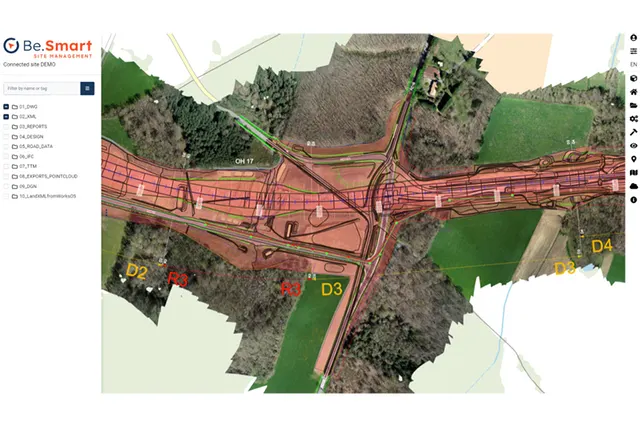
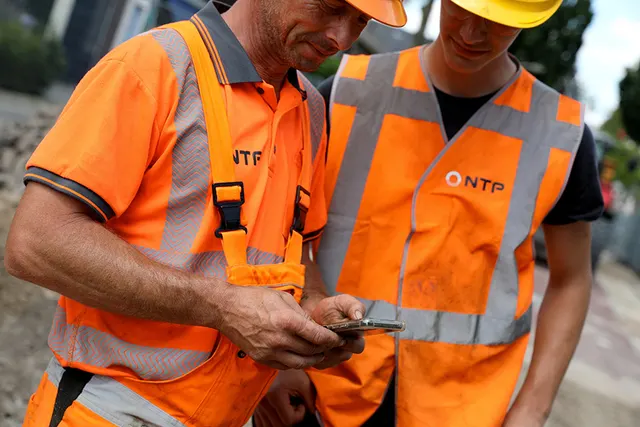
He notes that some companies have already begun their digital transformation. “It is now fairly easy to monitor in the office whether a project is on track in terms of time and budget, but how much visibility is there on the construction site itself? There is certainly a need for it, and people are becoming more open to it,” says Bolkenstein. “So we are bringing the all-important BIM model to the construction site. There are not many companies worldwide that can do this well, but we are one of them. 2D is often in pretty good shape, but companies still need help with 3D. That is where we can make a difference. Using a BIM model on a tablet without an internet connection, you can monitor progress on site. At a glance, you can see where you are and, for example, where raw materials may be in short supply. So even once the project is under way, you remain ‘in control’.”
Digitalisation, communication and data management
“Clear communication and collaboration are at the heart of every digital transformation. They lead to greater productivity and efficiency,” says Bolkenstein. “By digitising information flows on construction projects, you save paper, reduce waste and make project delivery, including building permits, material traceability, quality control and budget management, more efficient. This can shorten construction times, which in turn leads to less environmental pollution.”
A sustainability partner
“Construction companies that shy away from digitalisation are unlikely to be able to keep up with developments in improving communication, reducing waste streams and creating sustainable sites. Of course, we understand that this is a major challenge, but we are the partner that can support you. We offer advice and tools. And it is not just about software: we also show how processes can contribute to sustainability.” Bolkenstein concludes: “Together with our partners, we create a level playing field in which both parties take responsibility for doing their bit to make the world a better place.”
Question about this story? Ask your question
Keep following this
Get an email when a new story is published. No account needed.
- ThemeDigitalisation from design to construction
- SubjectDigitalisation & software