









Fast Track binding advice: prevent disputes from dragging on!

Disputes during construction can seriously disrupt a project. This can sour relations, destroy trust between the parties and undermine effective collaboration. Construct Advocaten regularly sees these factors contribute to new conflicts. And before long, the parties are at loggerheads on site while the work is still under way. Many contractors and clients will have experienced a project like this. Everyone agrees on one thing: “Never again.” The Arbitration Board for the Construction Industry has a procedure that can prevent these situations.
The need for clarity
Parties involved in construction need clarity, especially while the work is under way. Who, for example, is contractually responsible for the delay? Is the design adequate or not? The client and contractor can have sharply differing views on the answers to these questions, particularly when a dispute is technically complex and involves many relevant facts that support both sides’ arguments.
A snowball that keeps rolling
If clarity is not forthcoming quickly, relations between the parties can become strained. It is not uncommon for the parties to then take steps that only escalate the conflict. The client suspends payments, the contractor halts the work and, before you know it, the construction contract is terminated. What may have started as a relatively minor issue has now become a major dispute, with significant financial risks to match. In short, there is much to be said for nipping disputes in the bud. You need to fix the holes in the roof while it is raining!
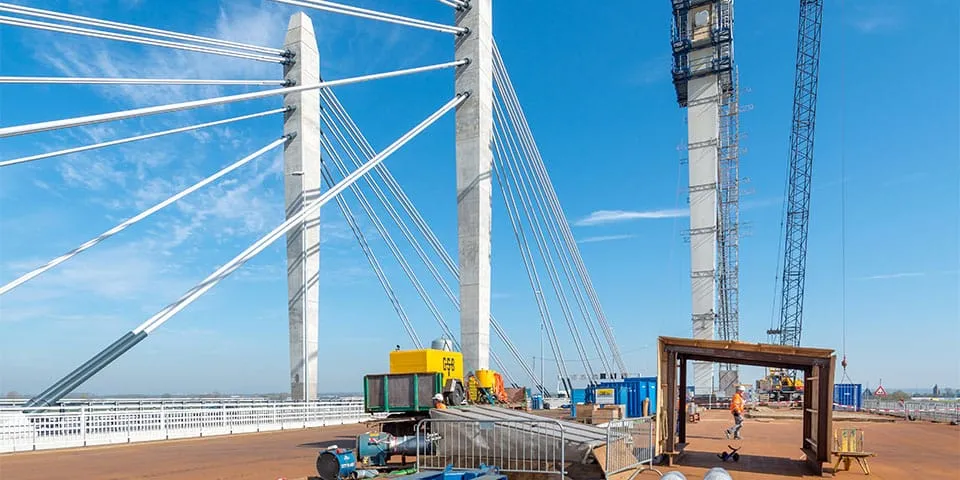
Disputes during construction can seriously disrupt a project.
Ordinary proceedings are not enough
However, referring a dispute to judges or arbitrators while the work is still under way does not always help the parties. Proceedings in the courts or before the Arbitration Board for the Construction Industry often take too long. By the time a judgment is delivered, the work has usually been completed long ago. Interim relief proceedings, which can be brought before either the courts or the Arbitration Board, may be an option. Experience shows, however, that the scale and technical complexity of construction disputes mean that interim relief proceedings are not always successful. It is not uncommon for a judgment to state that further evidence or expert investigation is needed, and that interim relief proceedings are not suitable for this. The parties are then no further ahead.
Fast Track binding advice
The Arbitration Board has recognised the importance of a swift, binding decision while work is under way. It has therefore introduced the option of Fast Track binding advice. The procedure works as follows. Each party may set out its case in writing twice, submitting all relevant evidence, after which there is an oral hearing. The case is decided by one or three arbitrators with knowledge and experience in the specific subject matter of the dispute. The entire process, from start to decision, takes just seven weeks. The parties can also agree to adapt the procedure to their own requirements. This offers maximum flexibility. The decision is binding until the work is handed over.
Out of sight, out of mind?
The benefits of Fast Track binding advice are clear. The procedure gives the parties ample opportunity to explain their positions and submit evidence, and delivers a very swift decision from arbitrators with relevant expertise. How practical is it to hear from arbitrators, while the work is still under way, who is right, in whole or in part? This swift decision gives the parties clarity for the duration of the work and prevents disputes from escalating.
In short, on paper this is a very welcome way of resolving disputes. Yet the procedure is not widely used. We think that is a shame. We believe that people are reluctant to use what they do not know. Readers of this article, at least, are now familiar with it. We believe this procedure offers a welcome alternative for disputes in the civil engineering sector.
How does it work?
If this Fast Track binding advice procedure has piqued your interest, it is important to know that you must agree to use this method of dispute resolution. This can be done by expressly including the Fast Track procedure in the construction contract. If you have not done so, all is not lost. The parties can still agree to it afterwards. In short, if the parties are willing, nothing need stand in the way of resolving disputes in this swift, practical manner.
Question about this story? Ask your question
Companies in this story
Keep following this
Get an email when a new story is published. No account needed.
- ThemeViable projects and strong collaboration
- SubjectNews
- CompanyConstruct Advocaten







