Why concrete cracks
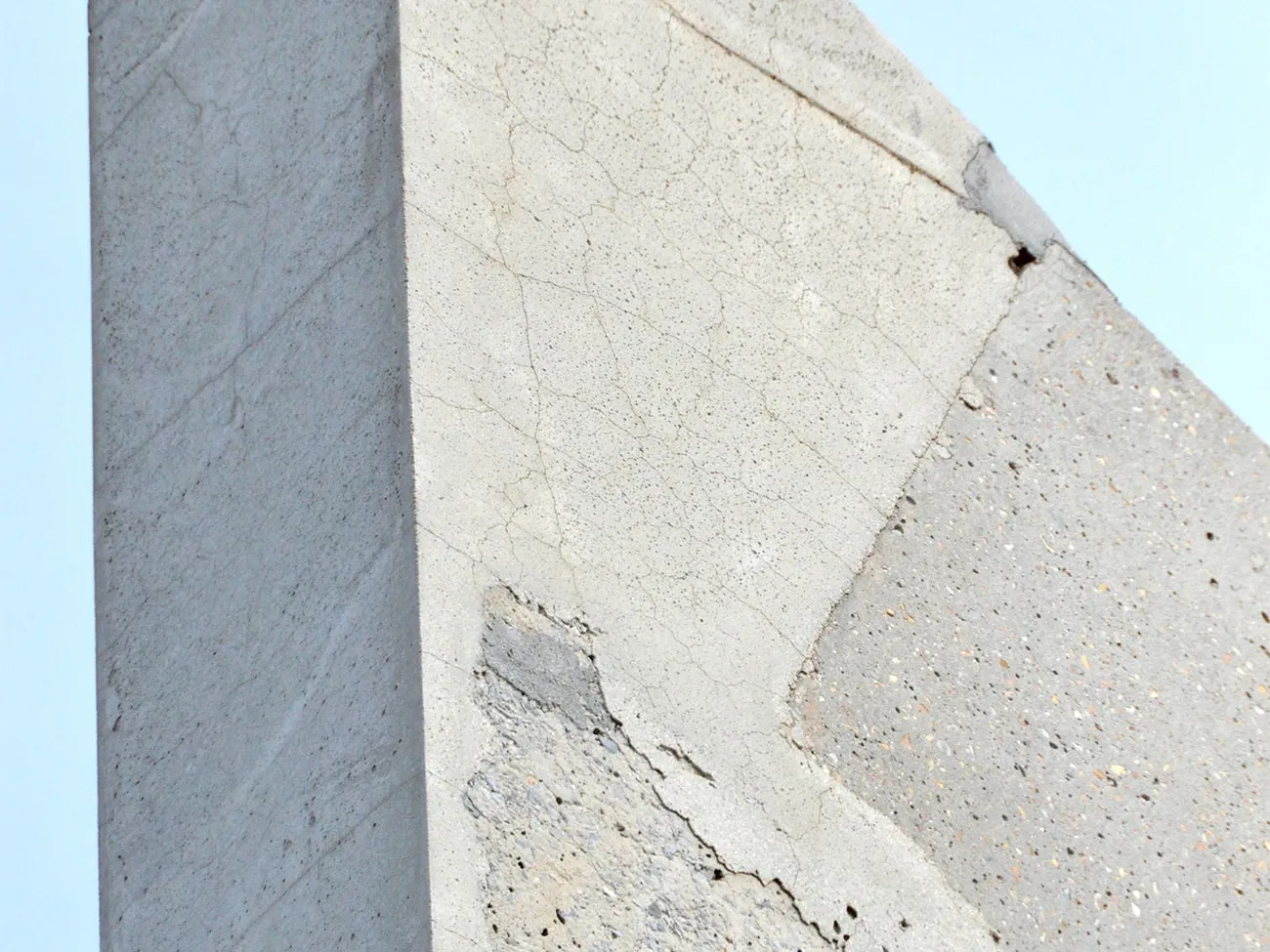
Concrete is the most widely used construction material in the world. Since Louis Vicat invented cement in 1817, research and development have optimised its properties. This has resulted in better applications, greater mechanical strength and chemical resistance, and new materials such as prestressed concrete. Has concrete achieved perfection over the years? If we take a close look at the many concrete structures around us, we see that none has remained perfectly intact, not even those of the most recently built structures.
Concrete’s inevitable weak point is its tendency to crack. Cracking is compounded by the very factor that accounts for concrete’s popularity: its compatibility with steel, and the fact that reinforced concrete meets the requirements of an advanced construction material. Are all cracks the same? Certainly not. Cracks can be caused by various factors, including deformation, hydraulic shrinkage, thermal shrinkage or swelling. The main differences are explained below by BASF Master Builders Solutions.
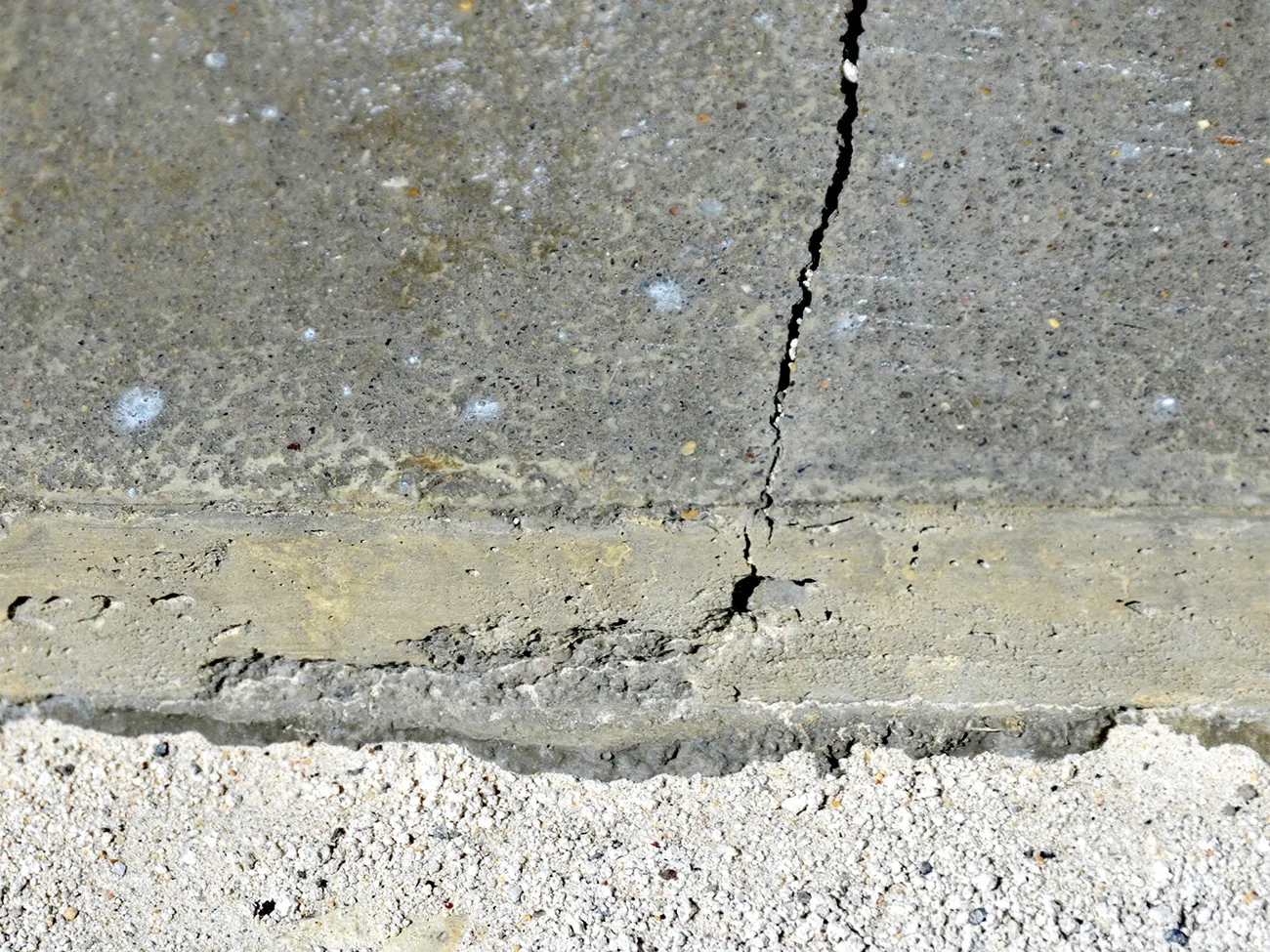
Cracks caused by deformation
Concrete structures are subjected to tensile, compressive and shear forces. These forces deform the material and can cause cracks. The location and shape of a crack in a structure are often characteristic. The cause can therefore be identified by looking closely at the cracks. Cracks caused by compression run parallel to the applied force, cracks caused by tensile forces form perpendicular to the force, while cracks caused by shear forces run perpendicular to the tensile stress.
Concrete’s tensile strength is only about one tenth of its compressive strength. This is why concrete is rarely used without reinforcement. The most common reinforcement method is to embed steel reinforcing bars in areas exposed to tensile stress. This type of concrete is usually called reinforced concrete. Synthetic fibre reinforcement can also be used.
Cracks caused by hydraulic shrinkage
Concrete exposed to the air generally shrinks as it hardens. This is because some of the water in the concrete evaporates. Cracks form when shrinkage forces exceed the strength of the concrete. This can be seen as a race against time between two processes: water evaporation and the increase in concrete strength. The same applies to concrete elements that cannot deform. When concrete shrinks, deformation is impossible. In these conditions, internal stress builds up, leading to cracking when the stress exceeds the strength of the concrete.
Cracks can also form before the concrete has hardened. This phenomenon is not solely the result of hydraulic shrinkage, but is more likely caused by the evaporation of some of the water or by absorption by the subgrade. It mainly affects pavements cast in hot, dry weather, or concrete poured in cold weather in heated spaces or on a porous subgrade. Cracks form in specific locations, such as at concrete joints and near reinforcement.
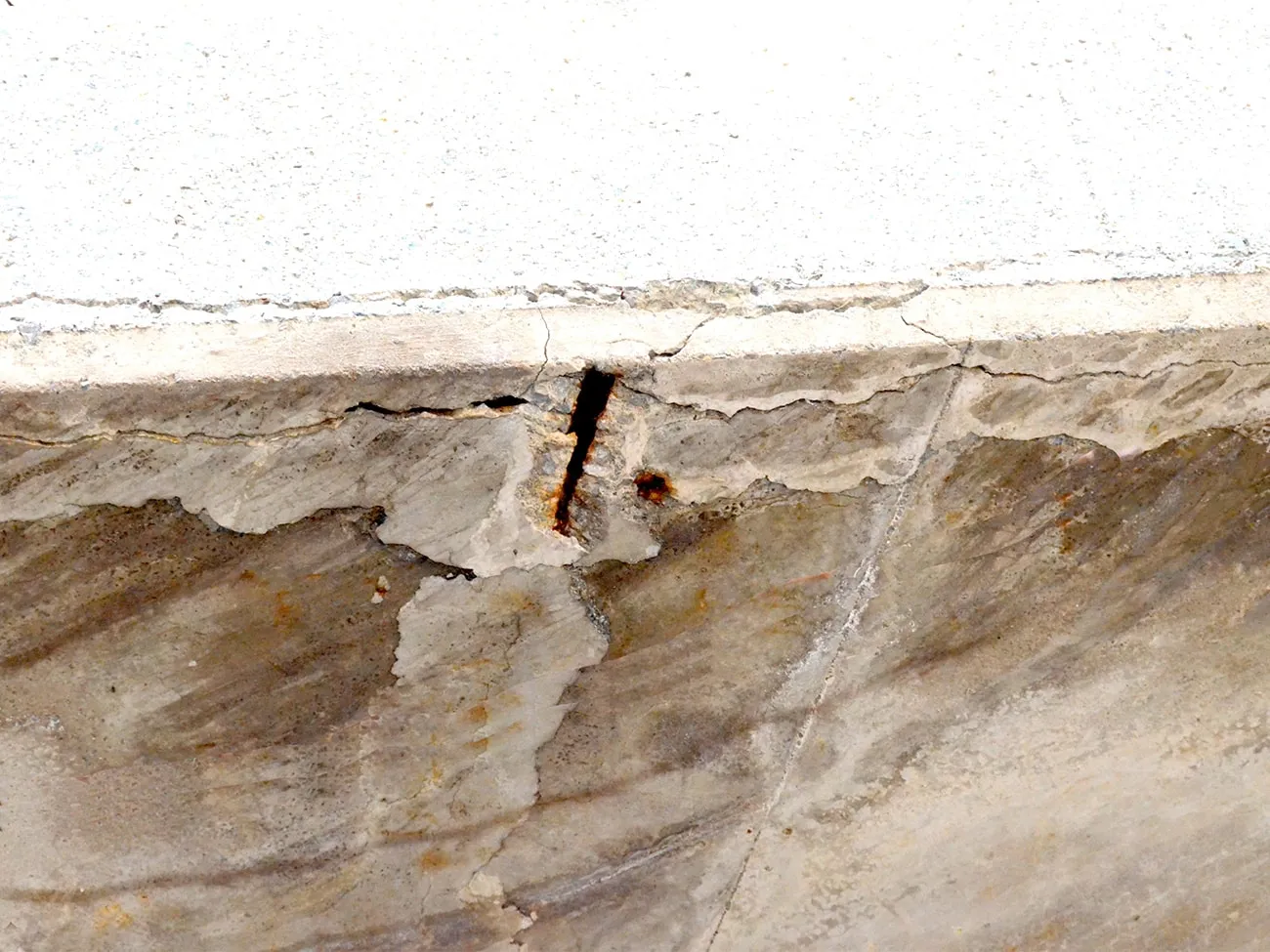
Cracks caused by thermal shrinkage
This problem occurs mainly in large structures. Cement hydration is an exothermic reaction that releases heat, which dissipates over time. The temperature change is not the same throughout the structure, causing differential deformation that can lead to cracking.
Cracks caused by swelling
Concrete can swell as a result of the action of salts such as sulphates, which are often found in soil that comes into direct contact with the concrete. This leads to a chemical reaction with the aluminate in the cement itself, forming an expansive substance. Swelling can also occur when the free water in the concrete freezes, increasing in volume as it turns to ice. Finally, swelling can be caused by oxidation of the reinforcement embedded in the concrete, a process that is itself accelerated by the presence of cracks.
Cracks caused by steel reinforcement
Concrete is highly alkaline and therefore protects steel reinforcement. This makes reinforced concrete an almost indestructible material. However, under certain conditions the reinforcing bars can corrode, forming rust. When the volume of the corrosion products exceeds that of the original reinforcing bar, this creates tensile stress in the concrete. In advanced stages of corrosion, the concrete can crack and delaminate. The main causes of corrosion of steel in concrete are carbonation of the concrete and the presence of sea salt or de-icing salt in the concrete and around the reinforcing bars.
Question about this story? Ask your question
Companies in this story

Keep following this
Get an email when a new story is published. No account needed.
- ThemeMaterials and techniques for infrastructure
- SubjectConcrete
- CompanyMaster Builders Solutions