Technical concrete innovation as a solution
Text Tony VosImage Sterk Beton
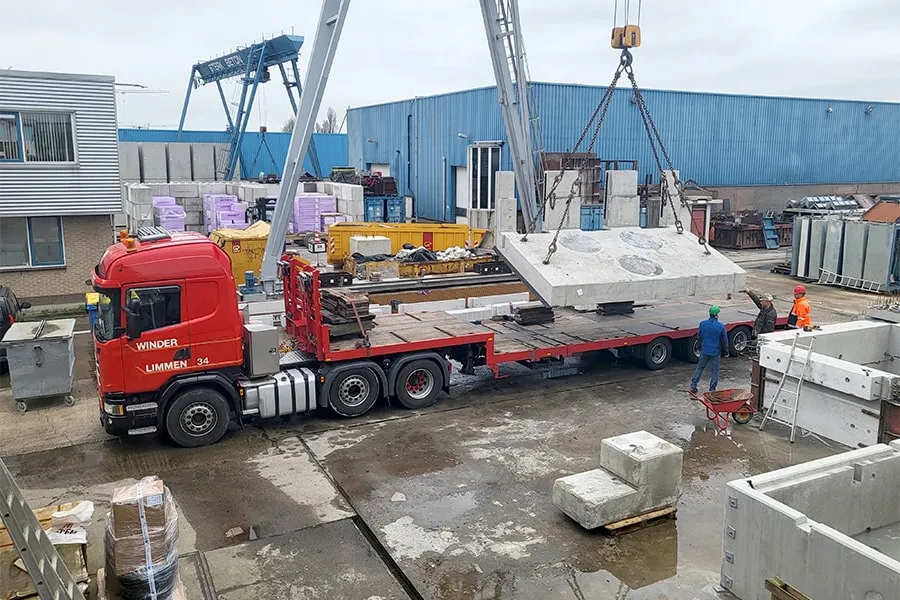
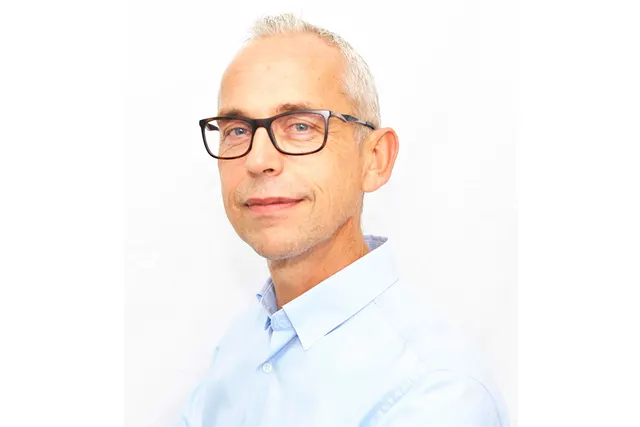
As part of the Kade 2.020 consortium, Koninklijke Oosterhof Holman approached Sterk Beton during the concept stage to help consider the use of so-called Easy Flow precast concrete elements to renew Amsterdam’s quay walls. Director Hennie Smit explains.
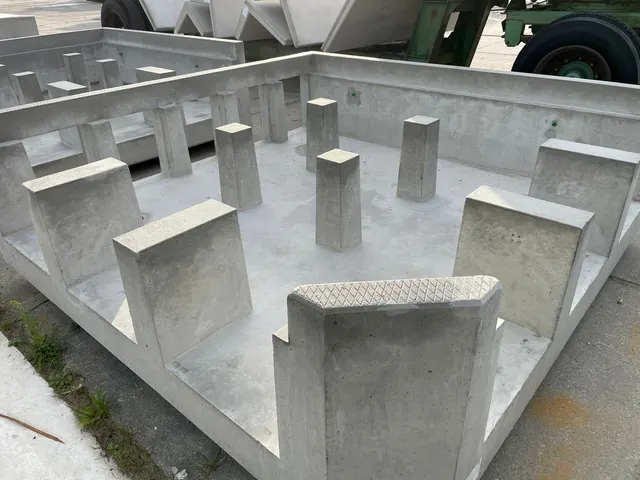
Sterk Beton joined a preparatory process with the client to develop a concrete element that would meet their wishes and requirements as closely as possible. Hennie says: “We spent two years on an intensive process involving far-reaching technical collaboration. It was a complex process and a huge challenge for us. Various technical solutions had to be brought together in the elements. They need to withstand considerable forces, while also being practical to manufacture and handle.”
Input on installation
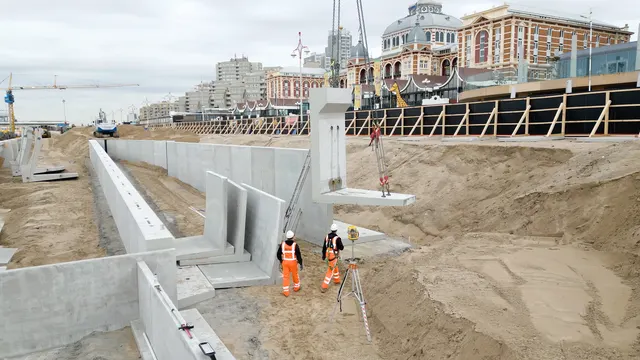
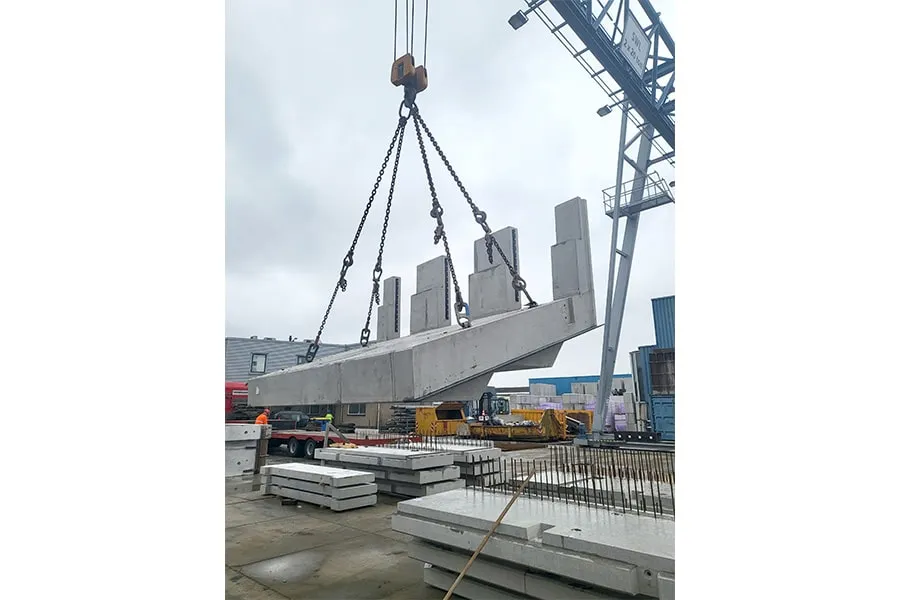
Sterk Beton’s Easy Flow concrete elements are structural components. The company produces and supplies them, but also contributed to the installation process. Hennie says: “It is also our job to keep taking a close look and, in line with Kade 2.020’s LEAN approach, to get better every 5 metres. If requirements emerge during the process, we adapt the elements. A great deal of expertise lies behind these new brick-faced quay walls.”
During the replacement process, piles are first drilled into the quay. A slice of the existing brickwork is then sawn off on the waterside. New vertical piles are installed for the quay wall, and the concrete elements are placed on them. Batter piles are also installed to transfer the horizontal forces into the ground.
Hennie says: “We deliver the concrete elements, made at our factory, to Amsterdam-Noord. From there, they are transported by electric vessel to the project site. A special lifting pontoon was developed for this purpose and aptly named Krachtpatser. The pontoon presses each element against the quay and places it on the piles. An innovative technique from the offshore industry is used to connect the piles and elements.”
If the process runs smoothly, no one from Sterk Beton needs to be on site. However, the company has been asked to monitor the overall process periodically and provide input. In principle, though, Sterk Beton is simply the supplier of the specially designed concrete elements.
Special elements
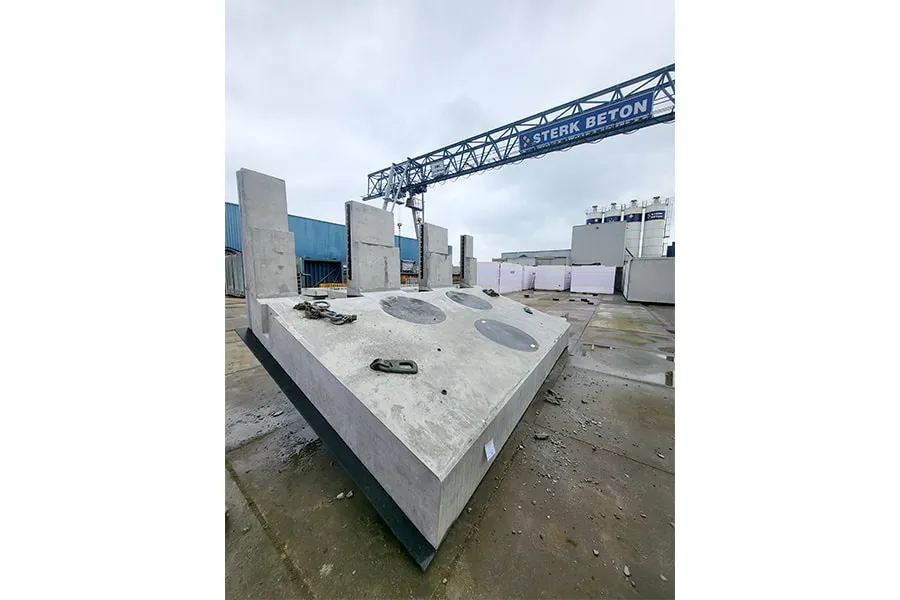
“Bespoke work,” Hennie stresses, “which we carry out in construction, civil engineering, industry and all manner of structures that can be lifted. We often make special elements, and this quay element is a good example. Whatever the client, we draw on our experience to find the best technical solution.”
Oosterhof Holman approached Sterk Beton for its expertise. Its proposals for the concrete element proved the most realistic, and the working relationship felt right, leading the contractor to conclude that Sterk Beton was the right partner to bring the concept to fruition. The elements’ broad outline had been devised, but a suitable supplier was needed to develop the details.
Hennie says: “This is how we get involved in many projects: by supplying knowledge and non-standard products. For example, we also make bridge piers and façade elements for the construction industry. I often compare it to Lego on a large scale.”
On Kade 2.020: “I think it is a revolutionary approach to creating quay solutions. Traditional methods cause a great deal of disruption in the city, much of which is avoided through technical innovation. We also meet ecological requirements by making holes of different diameters in the elements for various animal species.”
Amsterdam has taken a bold step by pursuing innovative collaboration with market parties.
A business enquiry for Sterk BV? Get in touch
Who worked on Kade 2.020
- contractorKoninklijke Oosterhof HolmanIn this story
Keep following this
Get an email when a new story is published. No account needed.
- ProjectKade 2.020
- ThemeMaterials and techniques for infrastructure
- SubjectConcrete
- CompanySterk BV
- CompanyKoninklijke Oosterhof Holman