Striking formwork solution for car park entrance wall
Text and images NOE Bekistingtechniek
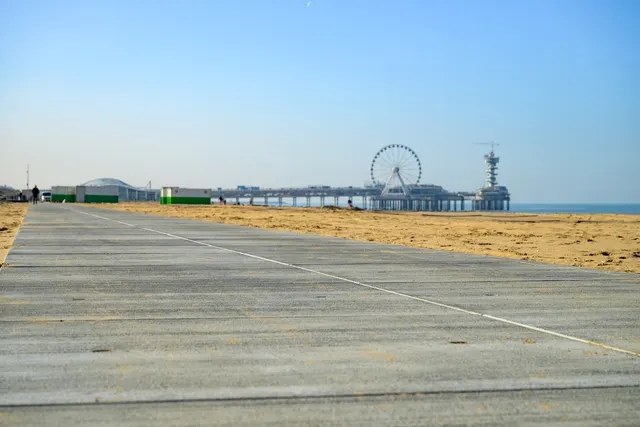
Elevated concrete art in the Scheveningen dunes
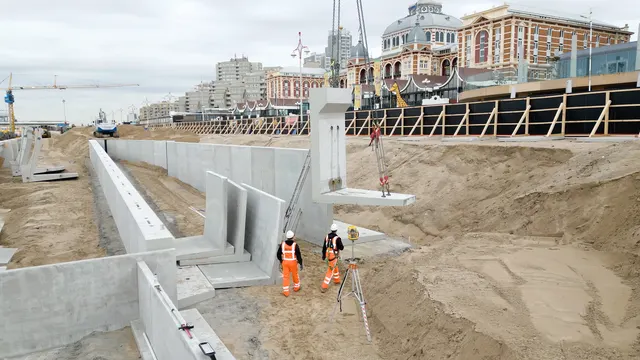
The Northern Harbour Head in Scheveningen is being redeveloped to make room for businesses in the harbour and strengthen the Scheveningen boulevard as a tourist attraction. As part of the redevelopment, a car park with 840 spaces has been built on Strandweg. Its entrance walls are in fair-faced concrete and were constructed by B-smart fundering B.V. Notable features include the curved, rising walls, cast in situ in two concrete colours. The lower section of the walls also has a fluted finish. NOE-Bekistingtechniek and NOE-Betonvormgeving developed an ingenious formwork solution in consultation with B-smart.
The redevelopment of the Northern Harbour Head is being carried out by VolkerWessels Vastgoed. The initiative was taken by several local businesses, which worked with the municipality and VolkerWessels Vastgoed to conduct a feasibility study and draw up a plan. This is now being delivered in phases.
Car park
Continental Car Parks was appointed to build the car park. Before construction could begin, 130,000 cubic metres of dune sand were excavated and removed. Some of this sand will be put back, so that the car park is effectively set into the dune and completely hidden from view. The only visible part will be the garage entrance.
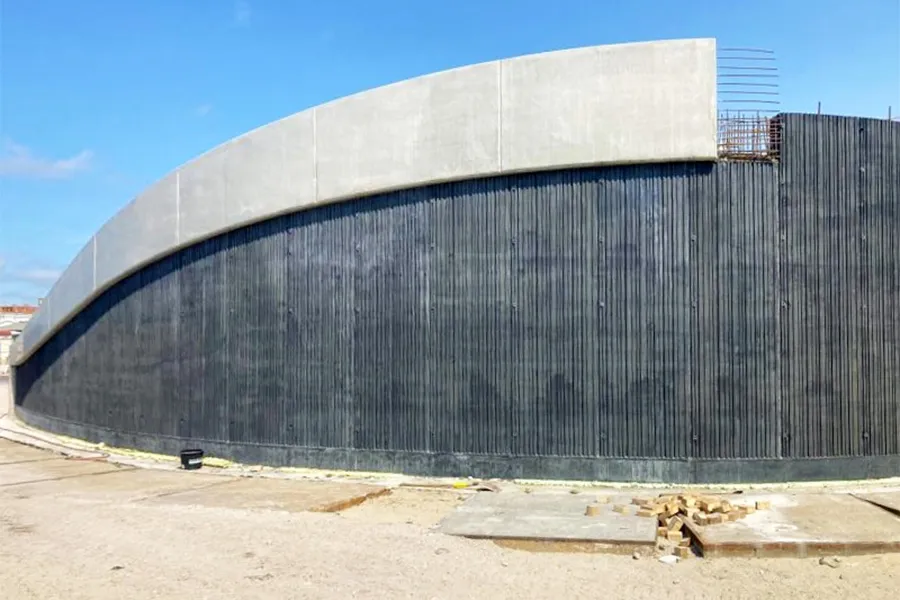
Designed by architectural practice Team V, the entrance is the finishing touch: the walls follow the contours of the dune and curve outwards. Notable features include the anthracite and grey colours of the walls and the clean fluted finish. The entire project places considerable demands on the formwork technology and design, as well as the concrete placement.
A challenging combination
“The challenge lies in combining formwork technology, concrete technology and placing techniques,” says Sandro Boots of B-smart. “For the car park walls, the architect chose a combination of anthracite and grey fair-faced concrete. The grey upper section had to have a completely smooth finish, while the lower anthracite section was to have a fluted finish. The grey band at the top runs from one wall to the other, framing the entrance.
Based on these requirements, we put together a plan. We then looked for a partner who could develop and deliver it for us. We chose NOE-Bekistingtechniek and NOE-Betonvormgeving, which have extensive experience with complex projects of this kind.”
Special NOEplast formliner
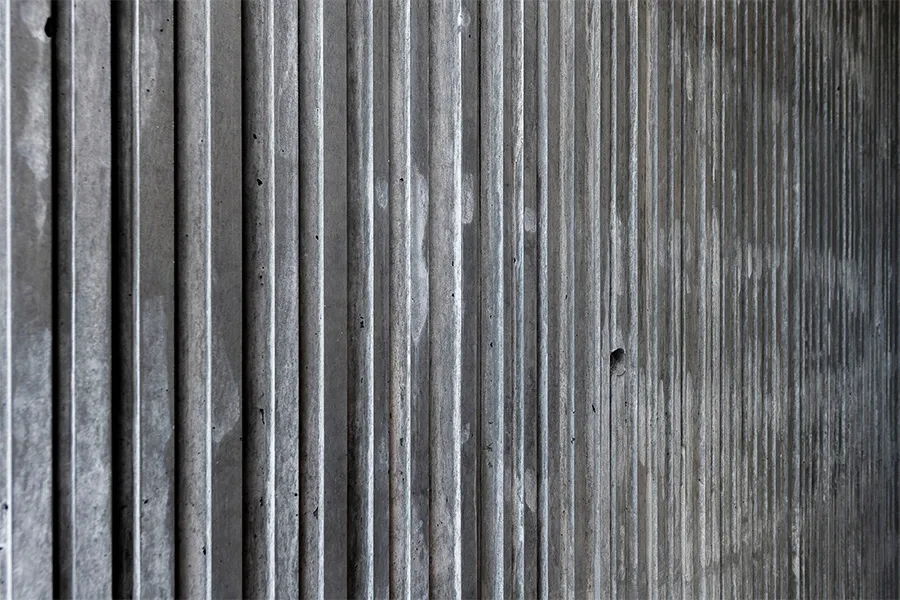
NOEplast formliners were used to create the fluted finish on the lower section of the concrete. NOEplast offers a wide range of standard relief textures and patterns. Boots says: “However, the architect had a particular fluted profile in mind, so it had to be made specially. A new counter-mould, tailored precisely to the architect’s specifications, was used to make an intermediate production negative, which in turn formed the basis for the final NOEplast formliners. These liners were fitted into the formwork so that the texture was imprinted on the cast concrete. They are made of polyurethane, which is flexible but requires care when striking the formwork.”
NOEplast formliners can be bonded into moulds (precast), bonded to the formwork or fixed in place with nails or screws (on site). Concrete can then be poured onto or against them. To make it as easy as possible to use NOEplast liners on site, they can be supplied ready-mounted on a formwork panel. Once the concrete has cured and the mould or formwork has been removed, the liner’s relief pattern remains imprinted on the surface. A light clean then makes the liner ready for reuse. NOEplast formliners can be reused around 100 times under normal conditions.
Curved NOEtop formwork
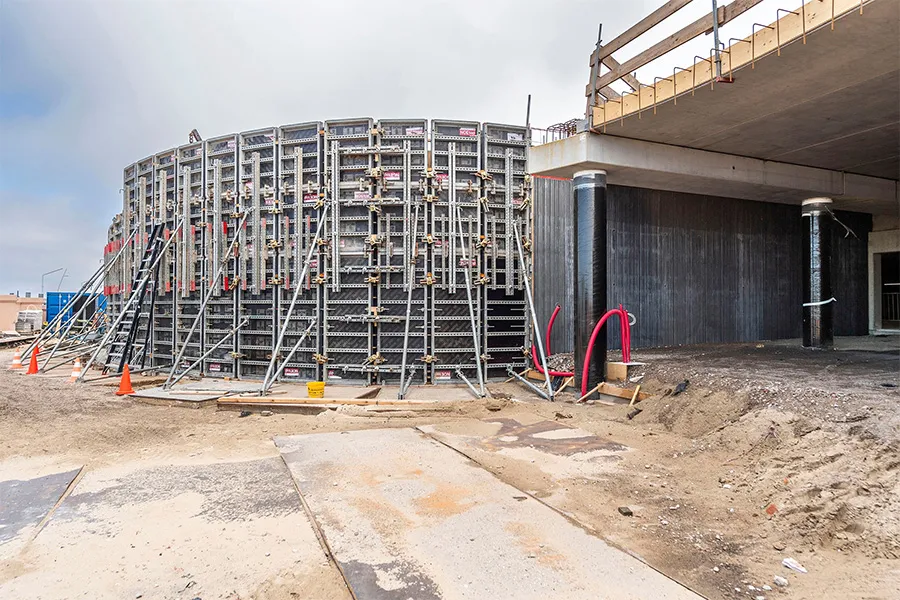
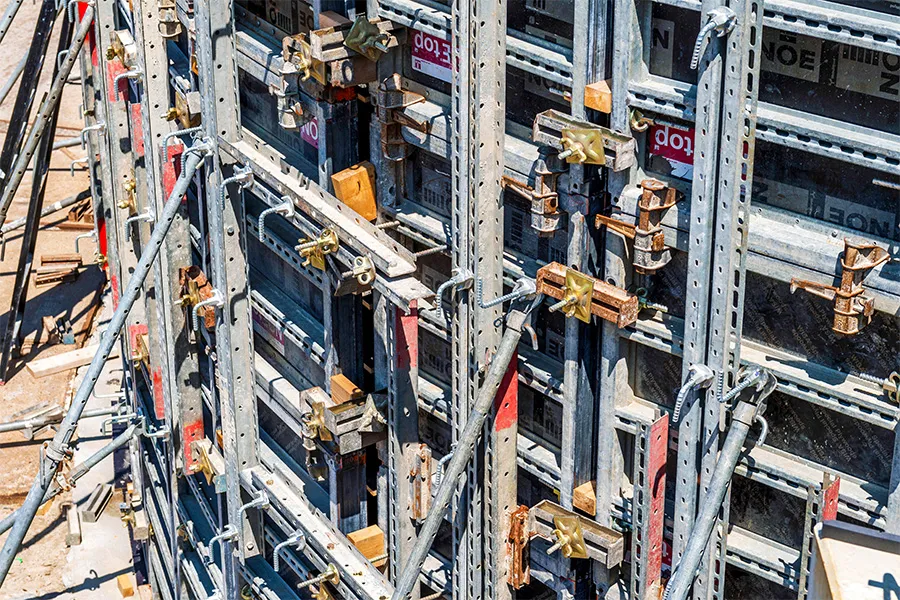
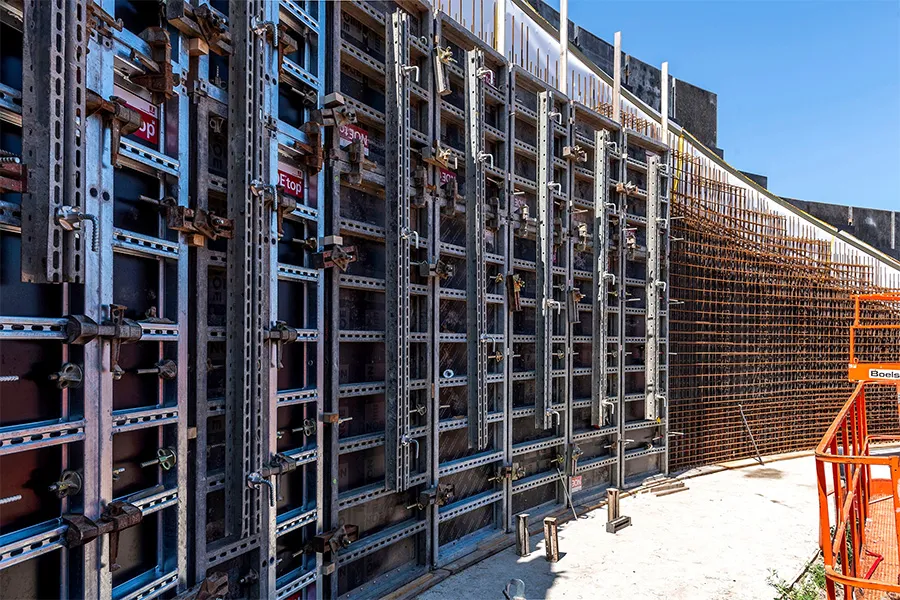
The curved entrance walls were cast in situ using the NOEtop formwork system. Both the anthracite and grey concrete were poured in the same formwork. Boots says: “To achieve the curved shape, cassettes were fitted to the front face of the formwork (sea side). As dune sand will eventually be placed against the back of the concrete wall, only the top 20 cm of the rear face was finished as exposed concrete. The walls are not only curved, they also rise towards the entrance. Their rising profile follows the contours of the dune, allowing the entrance to blend seamlessly into the landscape.” The wall formwork reaches a maximum height of 4.50 metres.
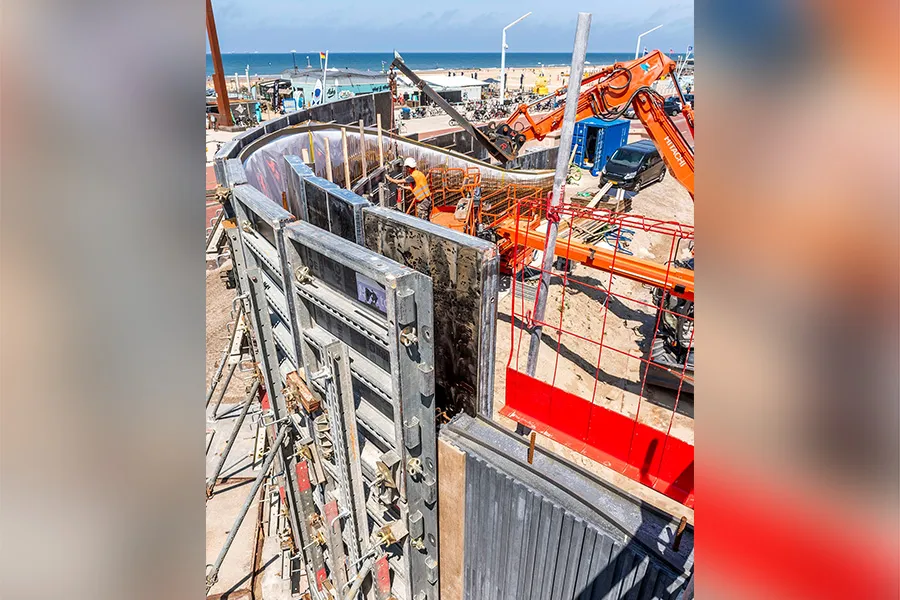
Elevated concrete placing
Once the reinforcement had been installed and the formwork closed, the concrete could be poured. A special concrete mix was used, which achieved high stiffness during placement. “This was necessary to cast the wall, which varies in height, in a single day. The anthracite concrete was poured in 50 cm layers and compacted immediately. The rate of placement is crucial to the final result. If it is too slow, there is a risk of colour variation. If it is too fast, many air bubbles may become visible on the surface. Different release agents were also used for the fluted and smooth concrete sections.”
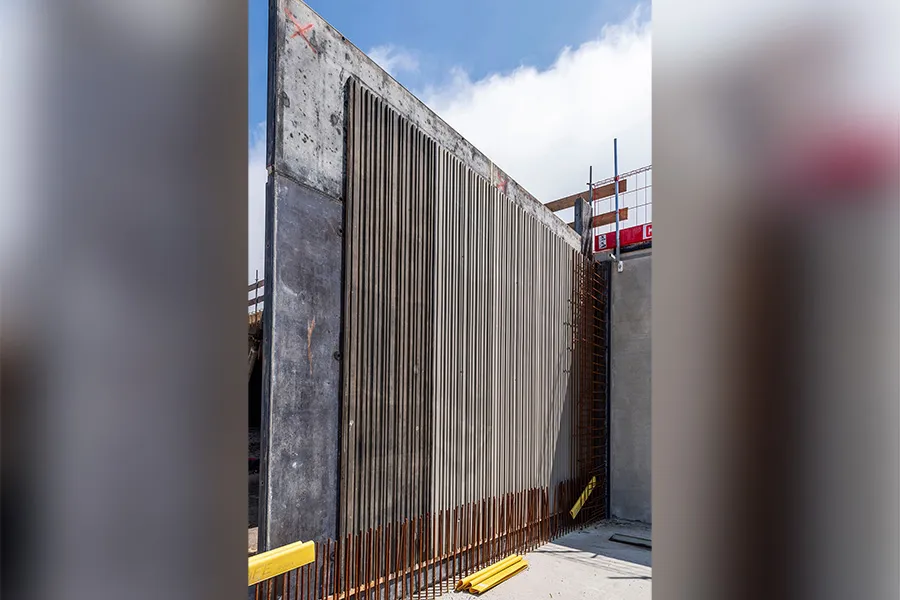
To prepare for every eventuality, B-smart first produced a representative 1-metre-wide mock-up using the same design and conditions as the final wall. Like the mock-up, the finished entrance wall was struck in one go, four days after the final pour, to prevent discolouration. Boots says: “Thanks to thorough preparation, we achieved an excellent result despite the varying weather conditions and the complexity of the project.”
Question about this story? Ask your question
Keep following this
Get an email when a new story is published. No account needed.
- ThemeMaterials and techniques for infrastructure
- SubjectConcrete