Concrete on a roll offers an innovative solution for sealing and erosion control
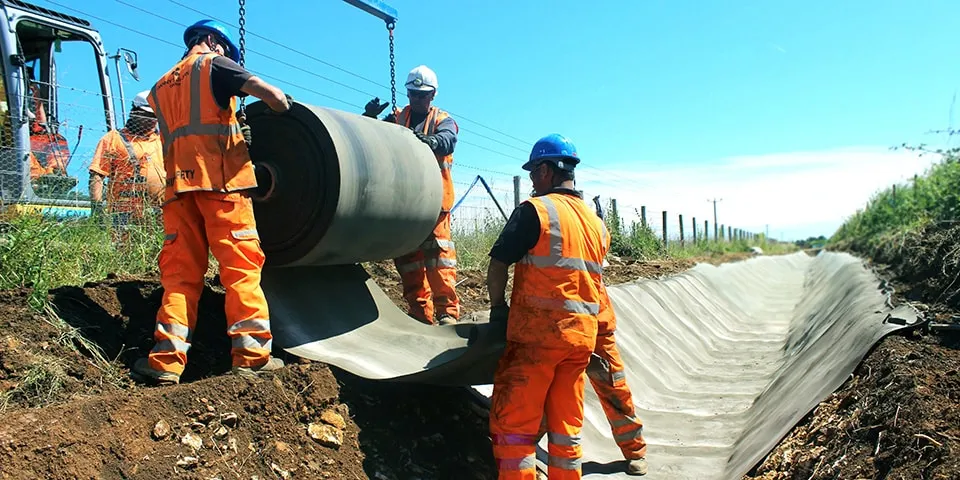
Concrete is almost synonymous with construction, and it has countless applications in civil engineering. Precast concrete makes it possible to produce structures in a factory, efficiently and under controlled conditions. But what if concrete needs to follow a complex geometry, such as the contours of the ground or slopes at the project site, including any unevenness? Formwork then has to be installed, with wet concrete poured against it. This is the usual method for solid structures, but if a thin layer of concrete is sufficient, a significant excess thickness will be poured, particularly when the concrete is placed on a slope. This wastes an expensive raw material and, moreover, installing and then removing the formwork is inefficient.

Schematic cross-section of Concrete Canvas showing (1) fibrous outer layer to be hydrated, (2) 3D fibre structure, (3) dry concrete mix, (4) waterproof PVC geomembrane backing.
Concrete Canvas®, innovation at its best
The product consists of a waterproof backing topped with a layer of dry concrete mix, protected by a tough, fibrous structure. The concrete mat is supplied in rolls 1 m wide, with the length depending on the type of mat. Several weights per m2 are available: 7, 12 and 19 kg/m2. Mark Griffiths of Concrete Canvas Technology in Wales is available to advise on the design of typical applications. In his experience, a team of 3 can lay approximately 200 m2/hour. Once laid, the mat is thoroughly sprayed with water. The curing process then begins, and after 24 hours it reaches 80% of its optimum strength.
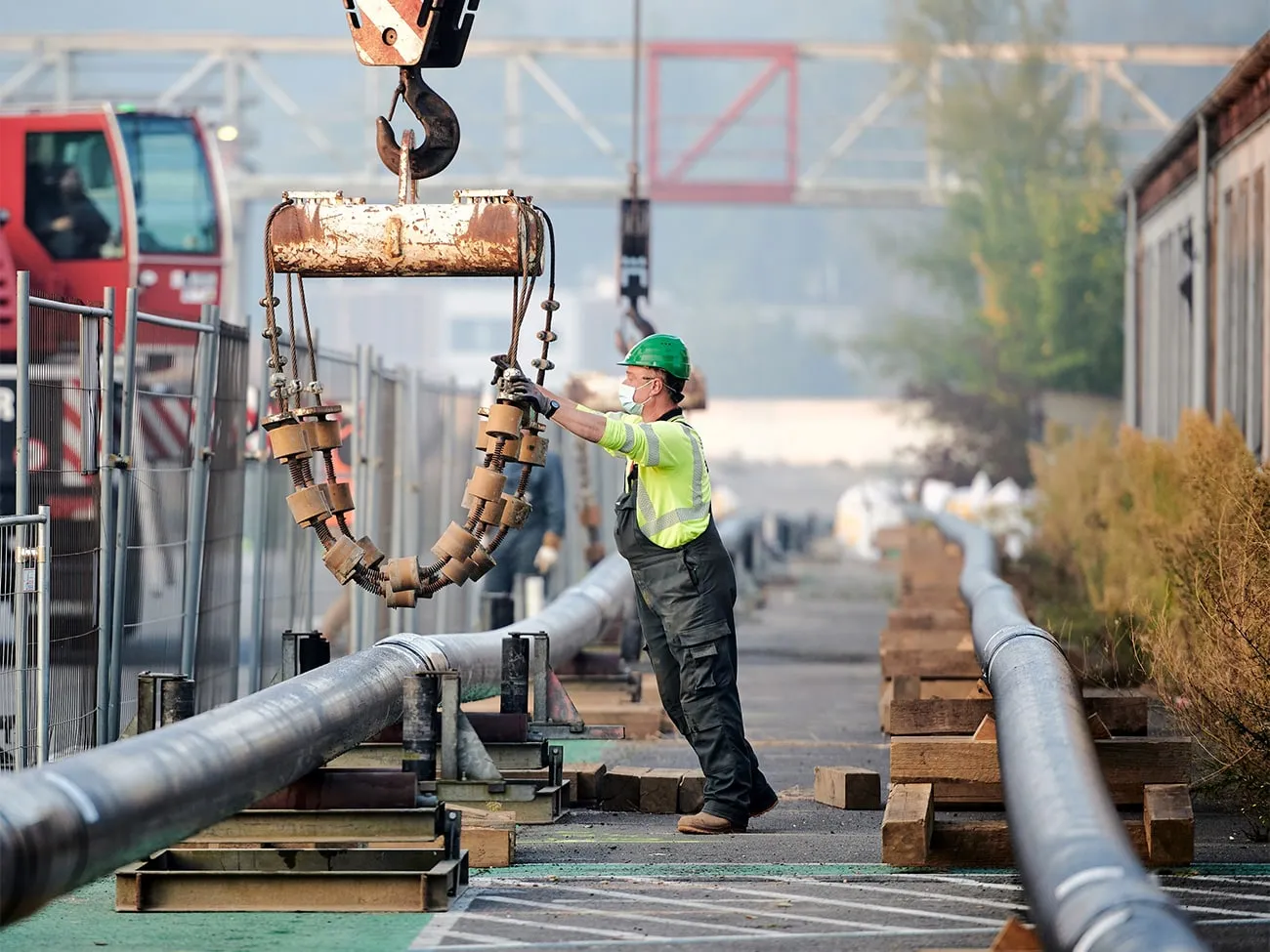
The project is under way, with the embankments of the tank bunds being lined with Concrete Canvas concrete matting. Two tanks have already been completed, and work is under way on the double-tank installation.
Applications:
- Sealing the drainage ditch around the cutting
- Safety lining for tank bunds
- Waterproofing canals, waterways, reservoirs and stormwater basins
- Erosion protection for slopes
- Preventing erosion at overflow structures
- Preventing weed growth alongside busy railway lines and at refineries
- Repairing existing concrete infrastructure
Advantages:
- Easy to install
- The shape adapts to the existing ground, ensuring full contact
- Dimensions can be adapted to the geometry of the project
- Continuous construction, with no open joints
- Suitable for installation in almost all weather conditions
- The PVC waterproof sheets are easy to weld together
- Prevents shrubs and grass from growing, so requires little maintenance
- Environmentally friendly, thanks to its low CO2 footprint
- Long service life, UV-resistant and chemically resistant
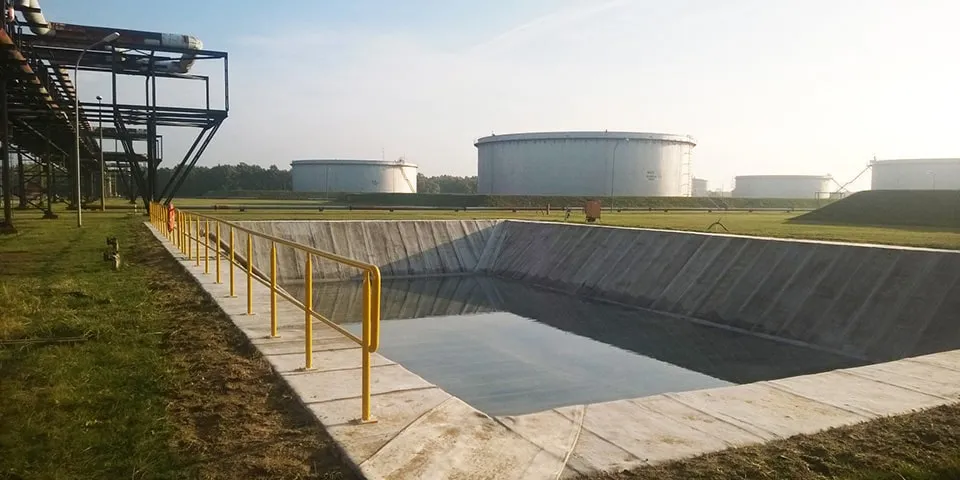
Concrete Canvas used as a lining for a firefighting water basin.
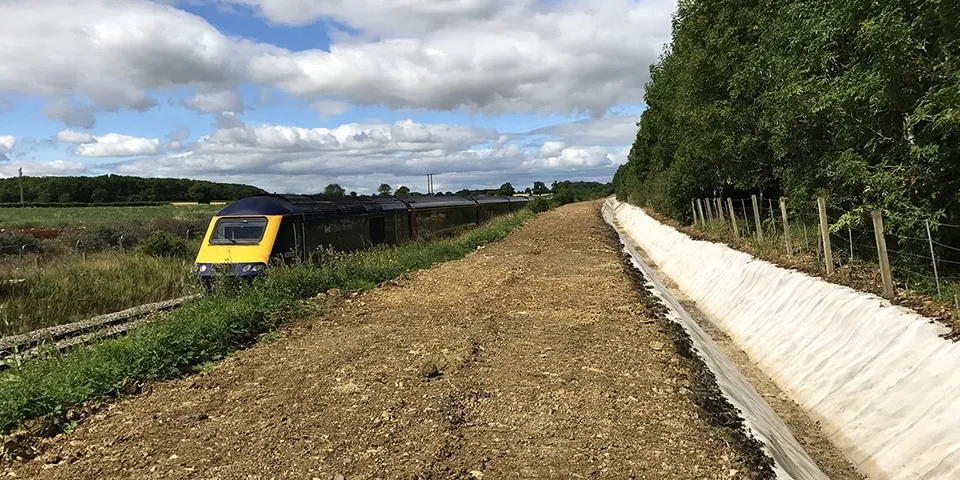
The smooth surface of Concrete Canvas and its low roughness coefficient result in high flow velocities. This means little silt is deposited.
Steven De Maesschalck of Texion is enthusiastic. He has attended projects where pouring concrete on a slope posed a major problem for the contractor. With Concrete Canvas concrete matting on a roll, sealing a steep slope with concrete is straightforward. At the top, the mat is laid horizontally into the slope to prevent water from seeping underneath. Vertical applications, for example waterproofing against a wall, are also possible. The mat is then fixed at the top.
For information and advice on projects in the Netherlands, contact Etienne van der Kuij of ProTanks Trade ([email protected])
Question about this story? Ask your question
Companies in this story

Keep following this
Get an email when a new story is published. No account needed.
- ThemeMaterials and techniques for infrastructure
- SubjectConcrete
- CompanyTexion