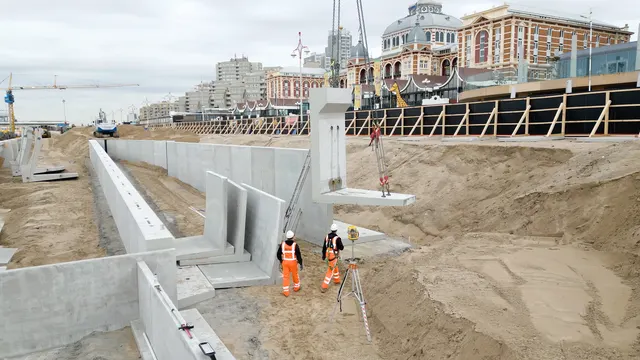
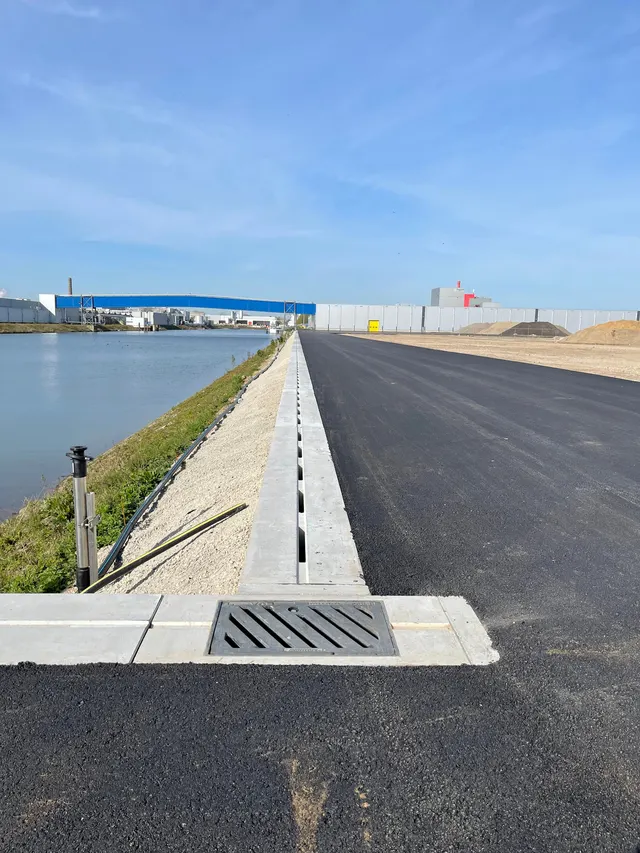
Concrete is not so bad after all!
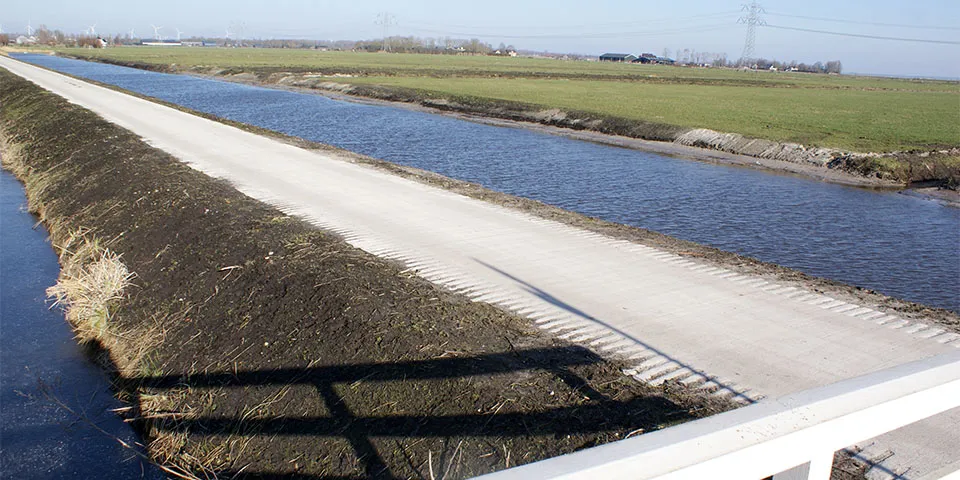
Compared with not building at all, putting up houses, offices, flats, factories and other structures is always bad for the environment, whether you use concrete, brick or timber.
Four questions about concrete answered
1. It is claimed that building with concrete is bad for the environment, but is that true?
Building with concrete is more environmentally friendly than you might think. In the Netherlands, concrete accounts for just 1.6 per cent of CO2 emissions, including the production of cement and reinforcing steel abroad. Cement is the material responsible for the most CO2 emissions in concrete production. Around 80 per cent of total carbon dioxide emissions come from cement. The remainder comes from the energy used for transport and production.
The 1.6 per cent share is low, especially considering that three-quarters of the mass of building materials used in residential and non-residential construction in the Netherlands is concrete. Its contribution to carbon dioxide emissions in the country is relatively low, but must still be reduced to zero. The European cement industry has pledged to achieve zero emissions by 2050.
Worldwide, concrete accounts for seven per cent of total CO2 emissions. This is due to the huge demand for it, and there is good reason for that: concrete is strong, safe, long-lasting and can be used to make just about anything. Towering skyscrapers, homes, sewers, bridges, industrial floors, you name it.
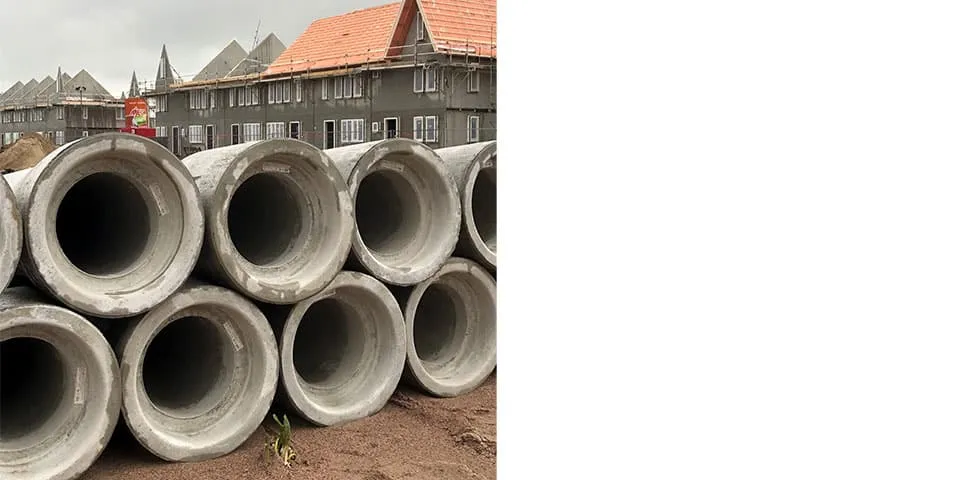
We are building the future with concrete: it is strong, safe and long-lasting. It can be used to make just about anything. Towering skyscrapers, prefabricated homes, sewers, bridges, roundabouts, you name it. Scan the QR code to watch this animation on YouTube.
2. Building with concrete is more environmentally friendly than building with timber. How can that be?
At first glance, building with timber may seem to produce fewer CO2 emissions, but closer examination shows that this is not the case. In construction, timber often means CLT, or cross-laminated timber.
This is bonded laminated timber made from plantation-grown trees. Its manufacture requires adhesives and resins containing substances such as polyurethane and melamine formaldehyde. Protective coatings are also used in its application. To improve its fire resistance, it needs to be clad or made from thicker timber. CLT is therefore quite different from a freshly sawn, fragrant beam straight from the forest.
For a fair comparison, it is best to look at the building level. Figures per kilogram or tonne are less useful. In practice, they are difficult to compare because a building requires a greater volume of CLT than concrete. On the other hand, a cubic metre of concrete is much heavier than bonded timber.
Studies show that, at building level, concrete performs better than or comparably to CLT in terms of CO2 impact. But that is not the whole story. Heating and cooling a timber building requires more energy than its concrete equivalent. In a timber home, the additional heating and cooling alone over a 15-year period produce as much CO2 as the concrete used to build a comparable home.
3. What research is this based on?
These are independent studies carried out in Belgium, Sweden and Norway. The study in Belgium found no environmental difference between a concrete house and one built with conventional structural timber. For an eight-storey apartment building, concrete performs 10 per cent better.
The Norwegian study shows that, in terms of CO2 emissions, concrete performs better than CLT for a 16-storey apartment building, is roughly on a par at eight storeys, and CLT performs slightly better at four storeys. One small caveat: the Norwegians assumed a clinker content of 70 per cent in the concrete, which is less favourable than the situation in the Netherlands, where the clinker content is 50 per cent.
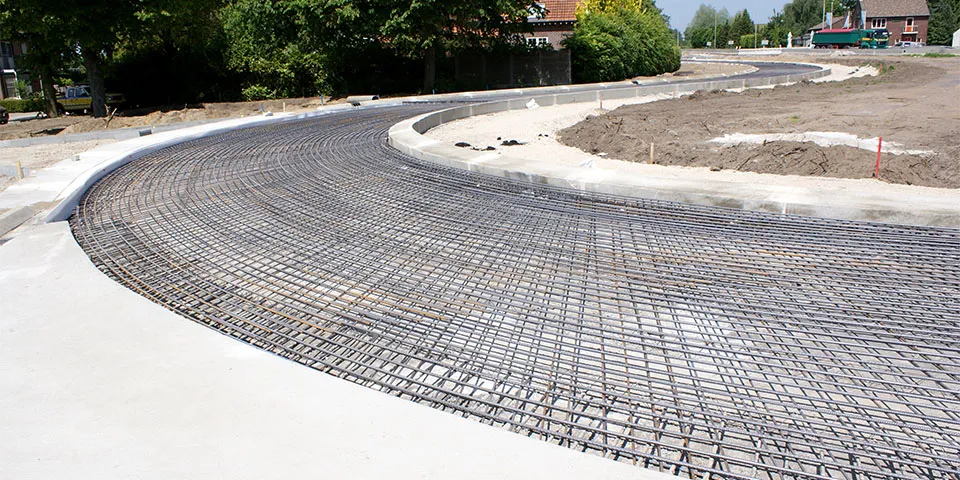
This oval roundabout is in the centre of Bergen, at the junction of Rijksweg and Siebengewaldseweg, and is built entirely in concrete. Limburg province chose concrete because it can withstand the high torsional forces exerted by lorry traffic and does not develop rutting. Concrete was chosen for the segregated cycle paths because it is not susceptible to root heave. The province expects a service life of 40 years with little maintenance.
4. What does the LCA say about concrete?
A life cycle assessment (LCA) provides valuable insight into environmental impacts and associated CO2 emissions, but there are caveats. The LCA takes 11 key aspects into account and combines them into a single figure: the environmental cost indicator (MKI). This expresses in euros the cost of offsetting adverse environmental effects. In the Netherlands, the MKIs of all the materials used in a building are added together to calculate what is known as the MPG, or Environmental Performance of Buildings.
Not everything is measured in a life cycle assessment. For example, it does not account for organic material left behind, such as after trees are felled. Carbon uptake and release are rightly netted off against each other, but if the tree had not been felled, it would have absorbed much more CO2.
The increase in biodiversity in river areas resulting from sand and gravel extraction is not taken into account in the LCA. The service life of concrete is also estimated very conservatively for the assessment: 50 years for offices and 75 for homes, even though they can easily last for more than a century.
Question about this story? Ask your question
Keep following this
Get an email when a new story is published. No account needed.
- ThemeMaterials and techniques for infrastructure
- SubjectConcrete