









Tunnel maintenance vital to Amsterdam’s accessibility
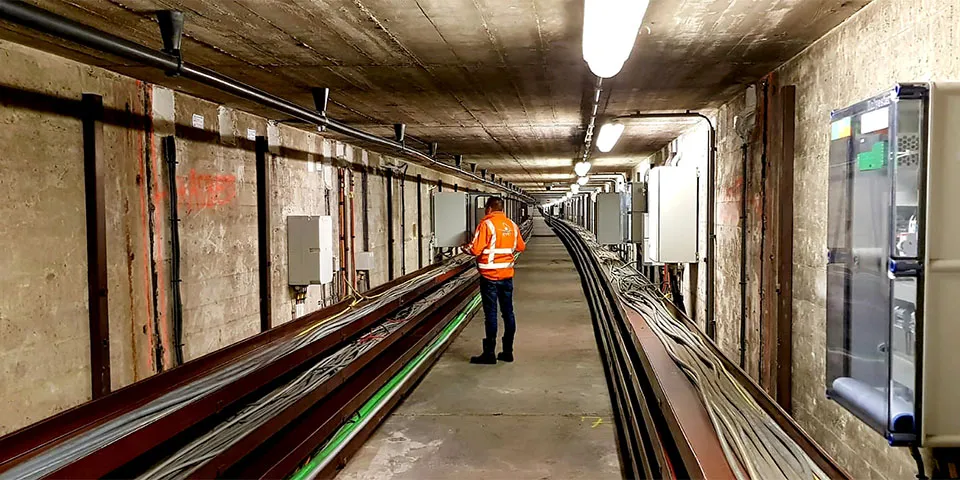
Tunnels are complex infrastructure assets. They are almost like organisms, packed with technical systems and becoming increasingly complex in structural terms, partly because safety requirements are becoming ever more stringent. The Netherlands even has the strictest Tunnel Act in Europe. That is because enormous volumes of traffic pass through Dutch tunnels every day. The last thing you need is a tunnel that is not working properly.
The nineteen tunnels that form part of the national road network are managed by Rijkswaterstaat. Other tunnels are managed by the provinces and municipalities in whose areas they are located. Amsterdam is well provided for in this respect. The capital has the IJ-tunnel (1968), the Piet Heintunnel (1997), the Spaarndammertunnel (2018) and the Michiel de Ruijtertunnel (2015), while the municipality also counts the underpass beneath the Arena (1996) as a tunnel. To keep these vital parts of Amsterdam’s infrastructure safe and accessible, the municipality has an extensive programme of major and routine maintenance.
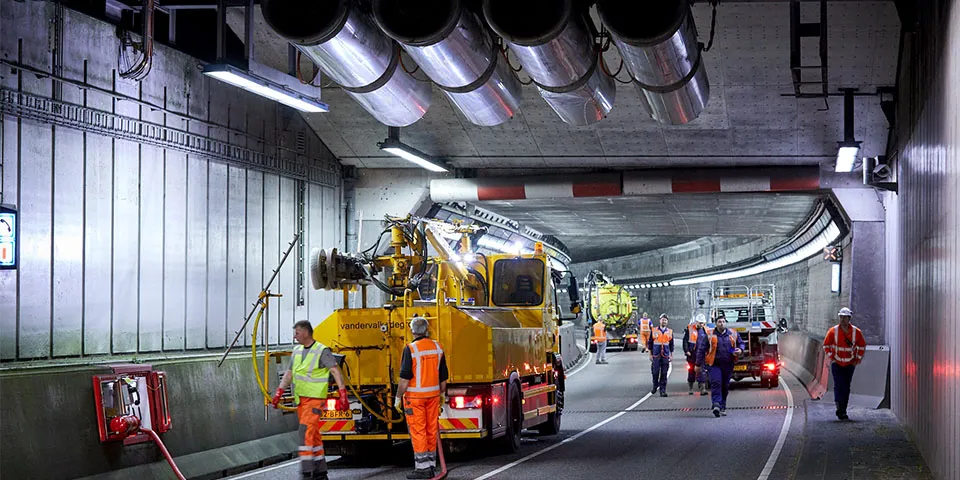
Cleaning crew in the north entrance of the IJtunnel. (Photo: Gemeente Amsterdam/Vincent Basler)
Major maintenance
Jeroen Schrijver is asset manager for road tunnels at Gemeente Amsterdam: “Maintenance is divided into major maintenance and routine maintenance. Major maintenance is carried out as a project, taking an integrated approach. We tackle all tunnel components that require major maintenance or replacement as a single package, to minimise disruption. For example, from the end of this year the Michiel de Ruijtertunnel will be closed at night for six months to bring its fire resistance up to the statutory level.”
Routine maintenance
Routine maintenance is carried out regularly by contractors. Schrijver: “We distinguish between tunnel technical systems, which require a lot of preventive maintenance and fault repair, and civil engineering components, which mainly need corrective maintenance. This includes cleaning walls, sweeping the carriageway and cleaning gullies and drains. We explicitly regard these activities as maintenance too, because they contribute to tunnel safety and availability. As far as the public is concerned, routine maintenance is scheduled as far as possible during monthly overnight tunnel closures, which are publicised through various established channels. The first Sunday of the month is marked in the calendar for night maintenance by Stadsregie, the emergency services and public transport operators.”
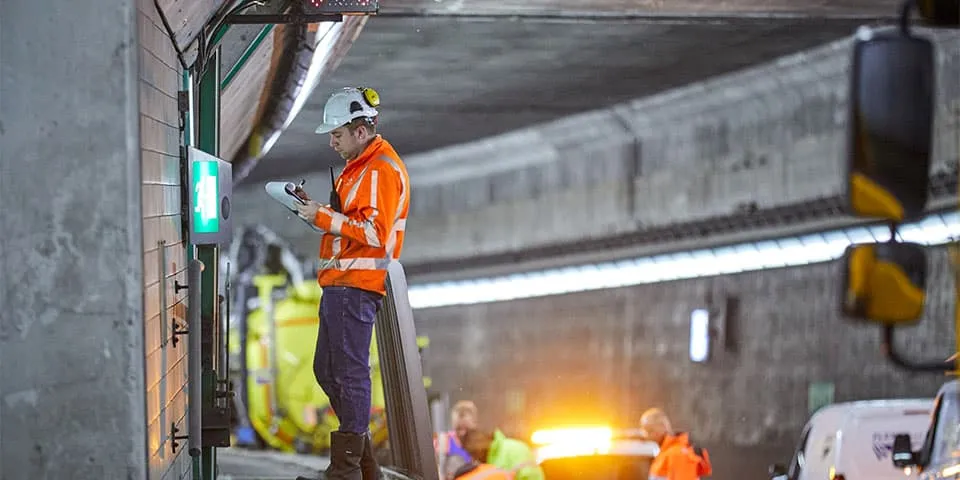
Inspection of an emergency exit door in the IJtunnel. (Photo: Gemeente Amsterdam/Vincent Basler)
Testing, inspecting and measuring
Routine maintenance partly follows a set programme, also known as preventive maintenance. Schrijver: “For each component, specified tasks are carried out in advance, including testing, inspection and measurement. Most cleaning is also planned. Routine maintenance also involves responding to unexpected events, particularly faults and damage. If these affect tunnel operations and, for example, safety requirements are no longer met, they are remedied within short response times. That is why the contracts include fairly strict call-out arrangements. To date, the maintenance approach has been similar for all the tunnels. However, we are working to introduce risk-based maintenance for the systems. This is now under way in the IJ-tunnel and will also be rolled out to the Michiel de Ruytertunnel and the Spaarndammertunnel this year.”
45 systems
The technical systems are what make a tunnel so complex. Schrijver: “The IJtunnel, for example, has 45 different systems. Most are housed in the service tunnel, while some are installed in the main tunnel, including camera systems, the intercom, lighting and sensors that detect air quality, smoke and traffic movements. To access them, the tunnel bore is closed every two months so they can be tested. We call a camera circuit a ‘non-sleeping’ system, because it can be tested from the traffic control centre. Ventilation is an example of a ‘sleeping’ system that is normally switched off. It therefore has to be tested to check that it is still working.”
The maintenance contracts for the technical systems have been outsourced to two contractors. AEVO is responsible for the IJ-tunnel, the Michiel de Ruijtertunnel, the Spaarndammertunnel and the Verkeerscentrale Amsterdam. Dynniq is responsible for the Piet Heintunnel, the IJ-tramtunnel and the Arenatunnel.
Question about this story? Ask your question
Keep following this
Get an email when a new story is published. No account needed.
- ThemeUnderground construction
- SubjectBridge construction







