









Sustainable new timber cable-stayed bridges over the Hambeek in Roermond
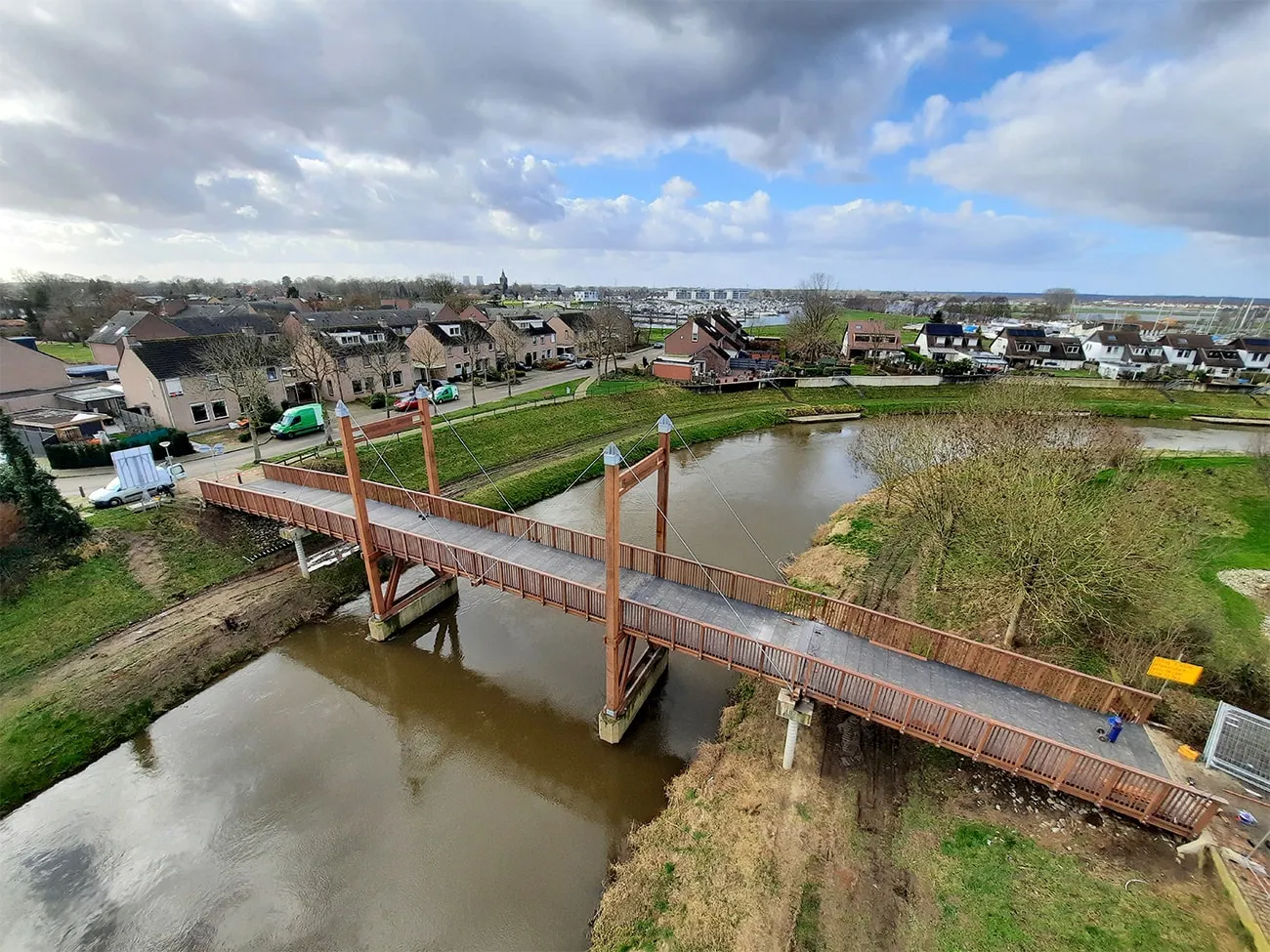
Following an inspection, the existing ‘Hambeek bridges’, namely the Roode bridge and Brug ’t Ham over the Hambeek in Roermond, were found to need replacing. The municipality of Roermond invited Flora Nova Houtconstructies, among others, to tender for the project ‘Replacement of two timber bridges over the Hambeek’. Flora Nova won the contract, and Boogaerdt Hout, one of the oldest timber merchants in the Netherlands, supplied all the timber.
The municipality of Roermond engaged engineering consultancy Westenberg to prepare and launch the tender using an EMVI contract and its associated specification. “The contract fitted our business activities very well,” says Lennert Joore, Manager of Structural Works at Flora Nova. “We are particularly strong in delivering civil engineering structures.”
From design to delivery
Flora Nova houtconstructies b.v. operates nationwide and specialises in the design and delivery of bridges, marinas, jetties and decking, among other structures. “Our extensive knowledge and experience of timber, combined with steel, concrete and plastics, enable us to take care of every aspect of a project for our clients. That is why so many municipalities, water authorities, provinces and contractors turn to Flora Nova for a wide range of projects.”
Bridges over the Hambeek
The same was true of the bridges over the Hambeek. “As contractor for this project, we were responsible for the entire job: preparing and carrying out all the work from start to finish as part of a construction team. This involved removing the two old bridges and designing, drawing, calculating, building and handing over the two new ones. We were also responsible for applying for the necessary permits and carrying out associated tasks, such as implementing traffic management measures and communicating with stakeholders.”
Approach
“As with every project, we drew up a thorough plan explaining how we would prepare and carry out the work, and how we could take as much off the client’s hands as possible. We achieved the maximum score and were subsequently awarded the contract. After a productive kick-off, we began the design phase. We carefully assessed the shortcomings of the old bridges and devised solutions for the new design. Several requirements were fixed from the outset. The most important? The new bridges had to look the same as the old ones and be made of the same material.”
Improving through change
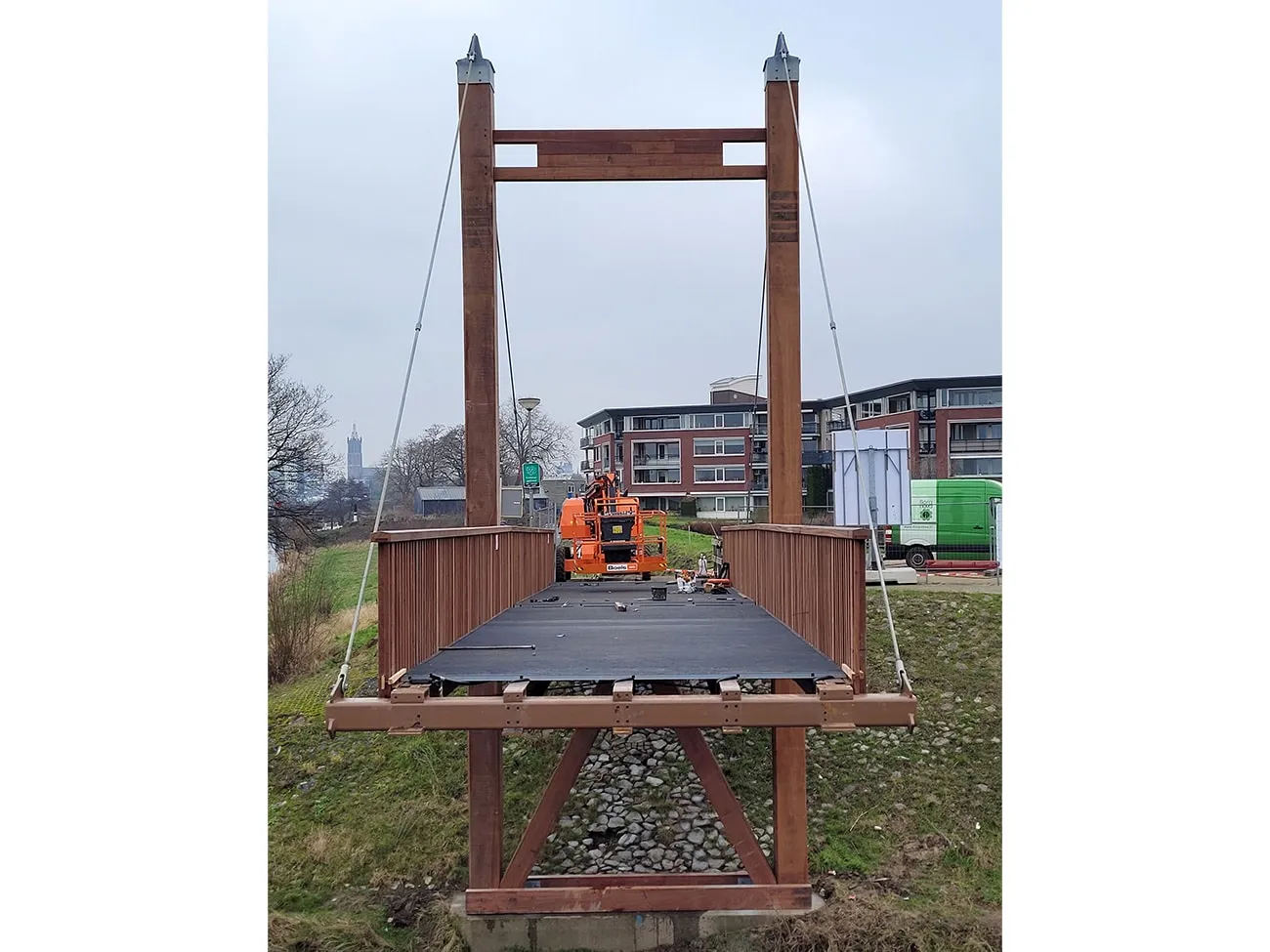
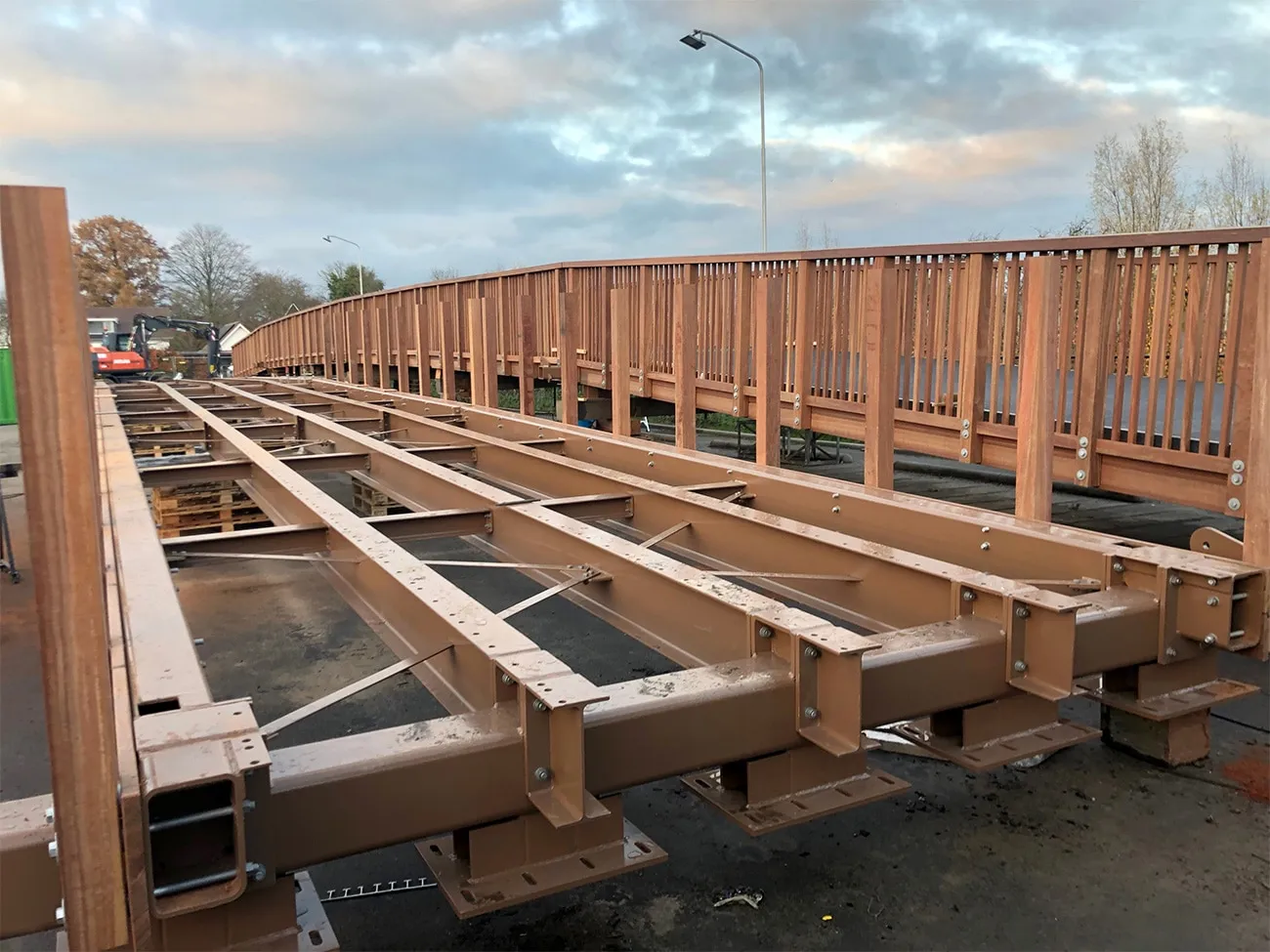
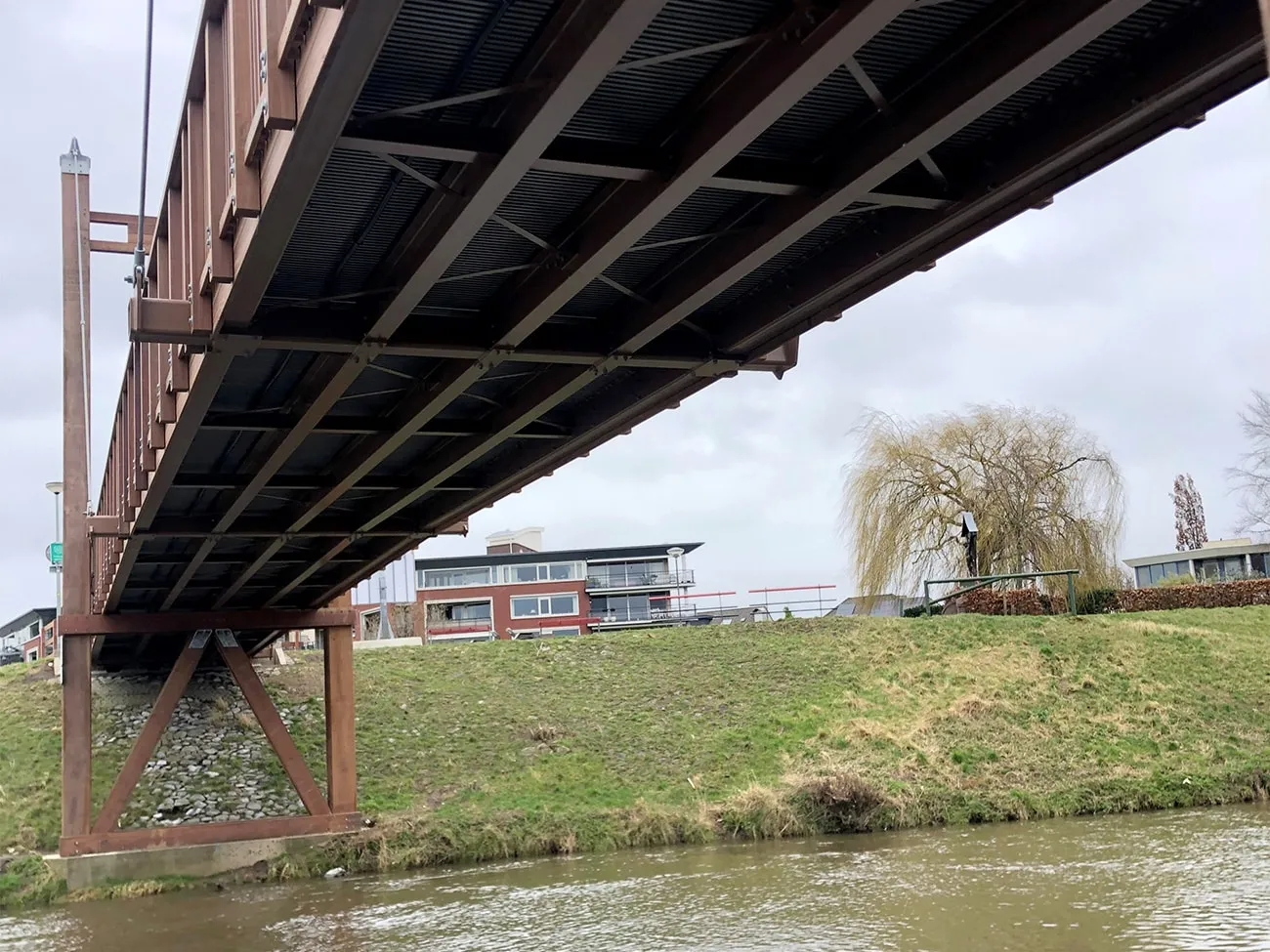
“We always comply with the required project specifications, unless calculations during the design phase show that this is technically impossible, as was the case here.” Joore explains that the old bridges were built in 1985, when structural calculations had to meet less stringent standards and safety factors. “For the new bridges, that would have meant that, if we built them in timber as specified, the beams would have to be so large that the navigation clearance would no longer be sufficient, and the self-weight would be too high. So a change was necessary to ensure that the design met current standards and was structurally feasible.” Flora Nova’s engineers designed the new bridges with steel beams, adapting the design so that they look as if they are made entirely of timber. “The new bridges therefore have the same timber appearance, while meeting current standards and requirements,” says Joore.
Timber supplier
To build both bridges in timber, it was essential to work with a supplier who knew the material inside out and could ensure the required timber was available on time. “We found the perfect partner in Boogaerdt Hout,” says Joore. Founded in 1741, Boogaerdt Hout is one of the oldest timber merchants in the Netherlands. With its own import channels, roundwood sawmill and timber-processing facilities, as well as knowledge built up over many years, it can supply every sector with the right sustainable timber species.
Timber in water engineering
Lars Bastiaansen, sales manager at Boogaerdt Hout, specialises in the use and processing of timber in water engineering. He explains the company’s contribution to the project. “Timber is well suited to civil engineering and, in particular, water engineering, thanks to its strength and durability. Just look at lock gates, fendering, bridges, jetties and railings.” Bastiaansen has seen an increase in the use of hardwood. “This is undoubtedly linked to increasingly stringent sustainability requirements for materials. Because timber stores CO2 throughout its service life, it plays an important role in making Dutch infrastructure more sustainable. We import all our timber from sustainable production operations, mainly in West Africa.”
Sustainable bridges
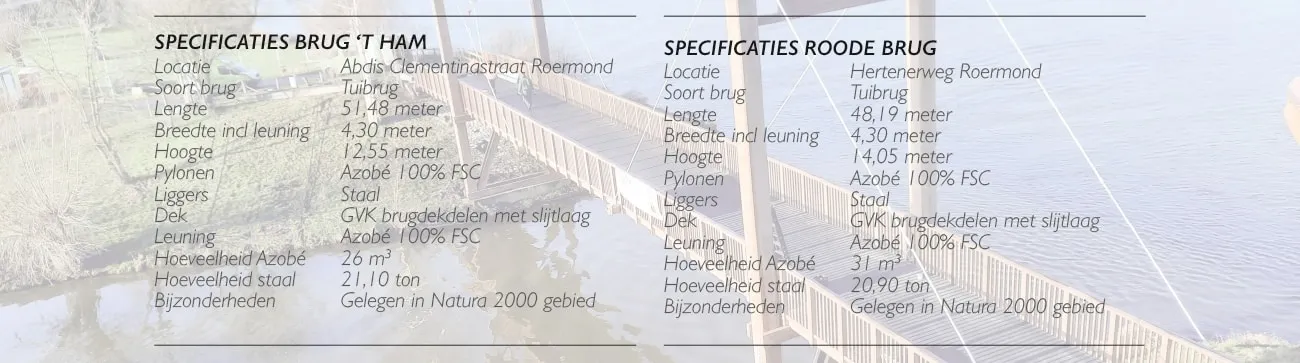
“We were involved early in the process and worked closely with Flora Nova. The number and size of the pylons posed a particular challenge. Using such long, heavy poles is quite unusual. They require long, straight trunks. We immediately consulted an FSC-certified sawmill in West Africa, which selected trunks in the forest specifically for this project to meet the required specifications. The next challenge was to get them to the Netherlands on time and process them so that the schedule could be met.” Joore says: “Boogaerdt Hout and Flora Nova worked together seamlessly: they sawed and planed everything accurately, and we then cut it to length and assembled it.” Bastiaansen adds: “By optimising the dimensions at the preparation stage and incorporating sustainability into the engineering, we kept waste to a minimum. A total of 57 m3 of FSC Azobé timber has stored no less than 93.154 Kg of CO2 in these bridges.”
Prefabrication
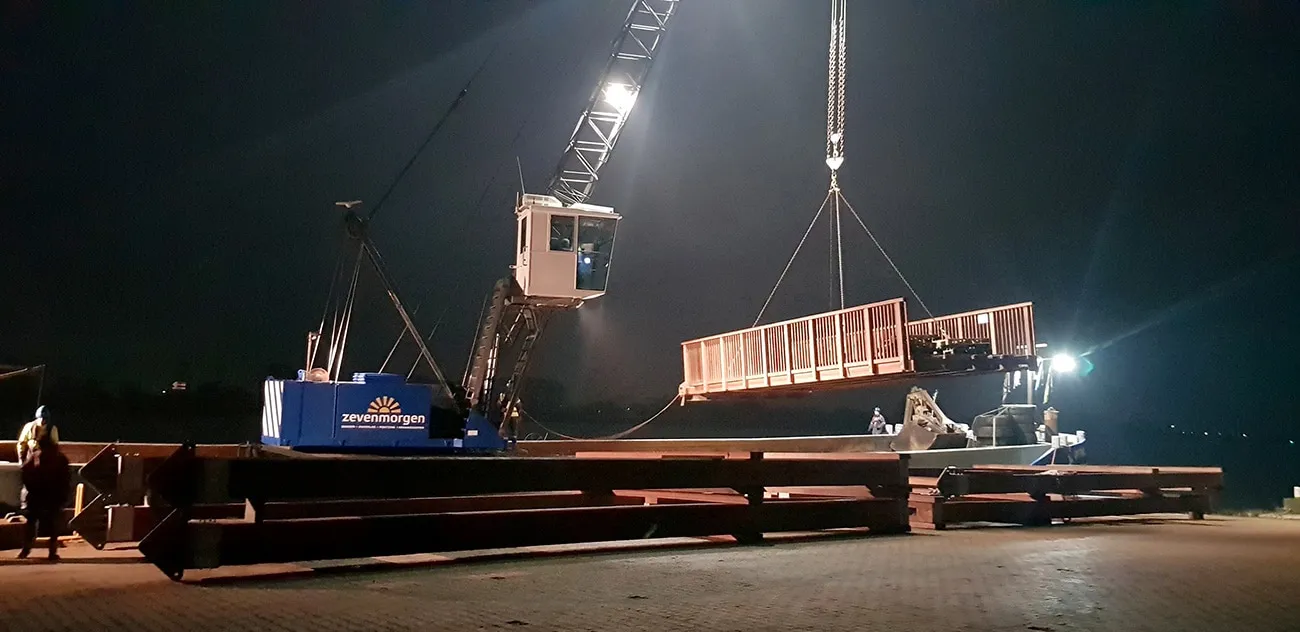
Both bridges were manufactured in sections at Flora Nova’s workshop in Ophemert. “One reason the municipality chose us was the considerable effort we put into preparation.” Joore is referring, among other things, to carefully surveying the existing situation, plotting the new bridges onto the survey and carrying out various checks during fabrication. “Every detail and every screw in the bridges was carefully specified in the drawings. The municipality was also very impressed with our construction method. At our own site, we replicated the supports to match the actual situation and fully assembled both bridges in advance, including the prefabricated railings.” Joore says these factors all helped make it possible to complete the on-site work in a very short time. But first, the bridge had to reach its site…
Transport by water
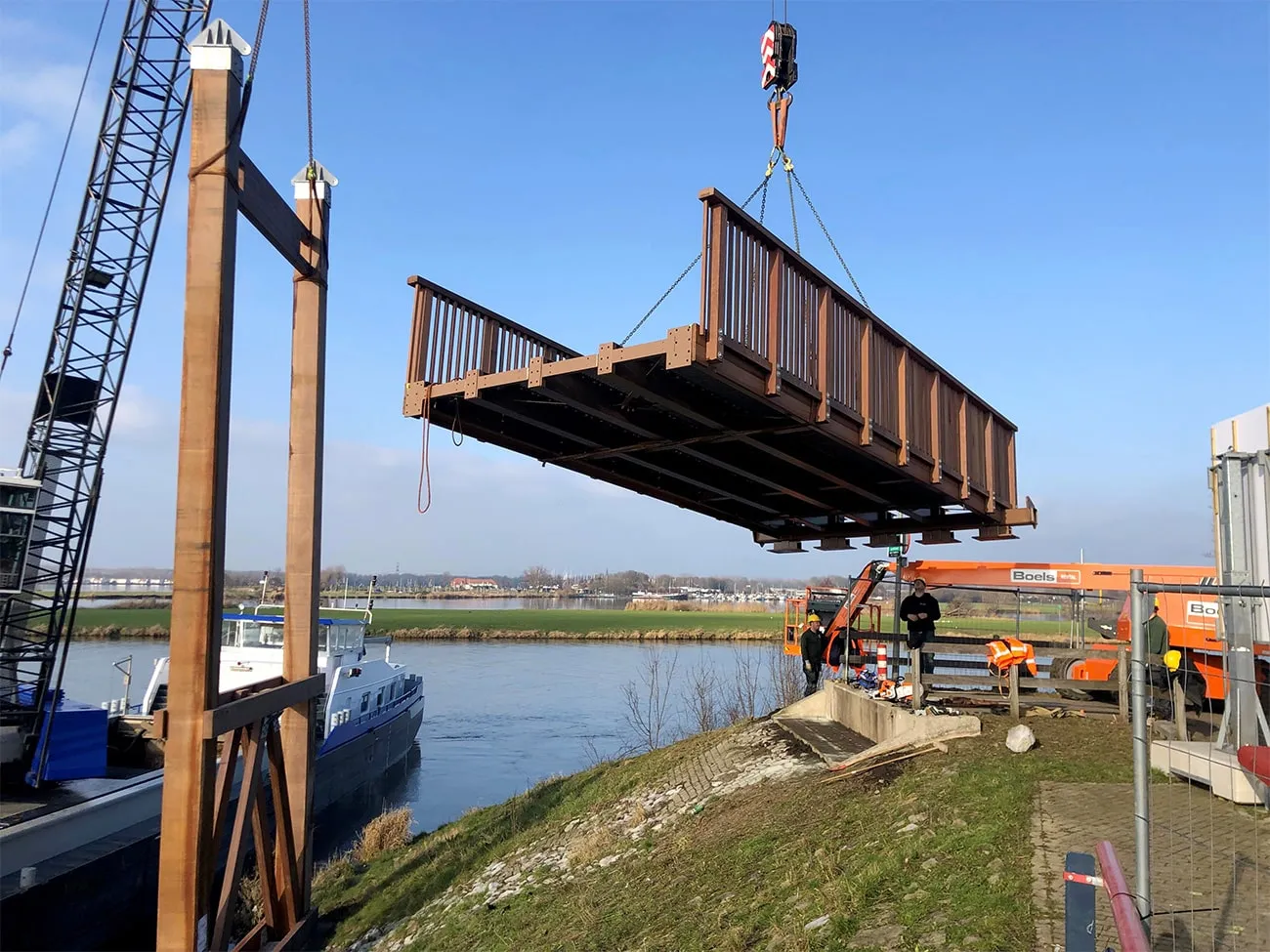
Because of the bridges’ dimensions (47 and 53 metres long), the sections were loaded onto a work vessel at night and transported by water to Roermond. There, the prefabricated kit was assembled and finished. “This method of transport not only reduced the number of road journeys, but also minimised disruption for local residents.” The bridge sections were installed on the old foundations and finished on site.
Joore and Bastiaansen are proud of the result: “With the new bridges over the Hambeek, we have created two striking features sustainably in a Natura2000 area. They will be used extensively by pedestrians and cyclists.”
Question about this story? Ask your question
Who worked on it
Hambeek bridges in Roermond
- contractorFlora Nova Houtconstructies
- timber supplierBoogaerdt Hout
- engineering consultancyWestenberg
- clientgemeente Roermond
Keep following this
Get an email when a new story is published. No account needed.
- ProjectHambeek bridges
- ThemeExtending the life of roads and civil engineering structures
- SubjectBridge construction
- CompanyFlora Nova Houtconstructies
- CompanyBoogaerdt Hout
- CompanyWestenberg
- Companygemeente Roermond







