









Standing out in trenchless techniques
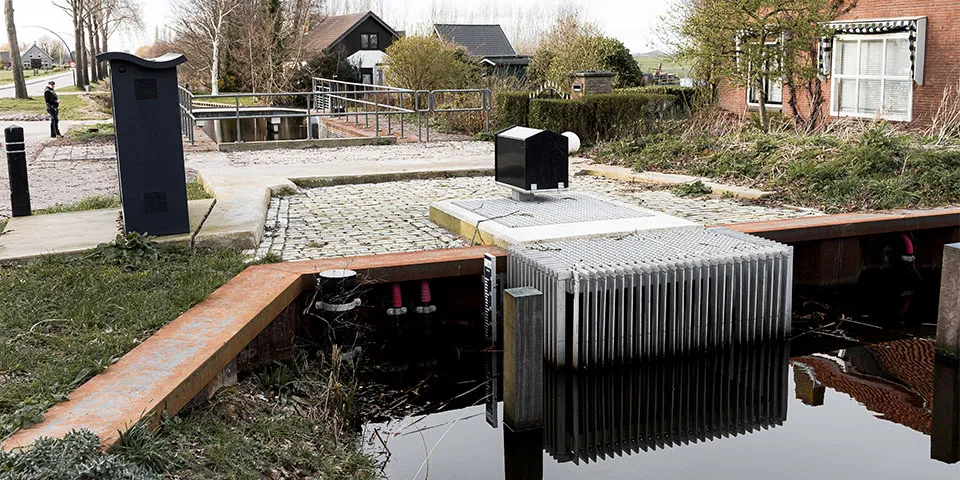
Trenchless techniques are used to install underground infrastructure with as little disruption as possible. Dutch Tunnel Engineering divides its work into several disciplines and specialises in advising on, calculating and designing trenchless techniques. The firm stands out for its pragmatic approach and the ‘practical design’ valued by its clients. “Applying trenchless techniques is a real niche where details play a major role,” says Rosella Krot of Dutch Tunnel Engineering.
“But you need to know those details,” Krot continues. “That is precisely where we, as a geotechnical engineering consultancy, have extensive expertise and experience. The great advantage of using trenchless techniques is that the ground surface is disturbed very little, if at all. After all, no trench is dug. There are several methods available within this discipline, including horizontal directional drilling and pipe jacking with an open or closed face. The most suitable method is selected for each situation. Often, a combination of techniques is used.”
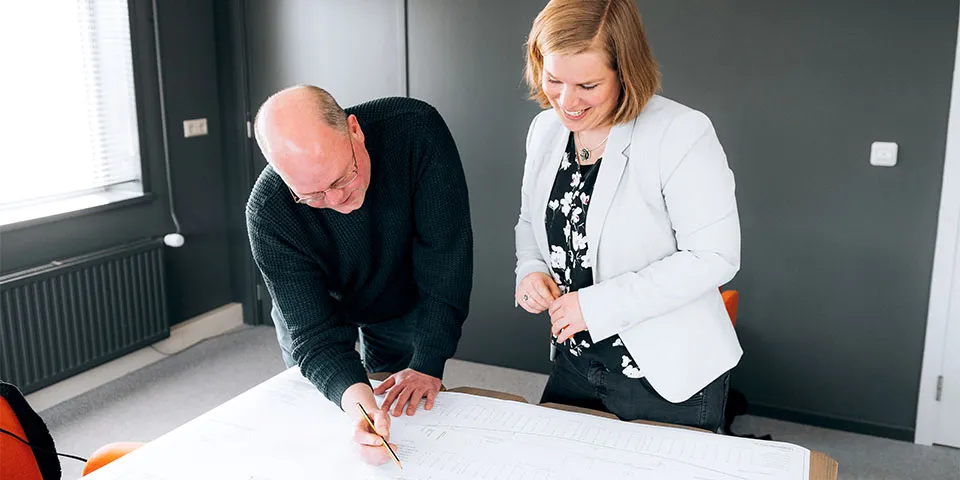
Pascal Timman and Rosella Krot discuss a drawing.
Different divisions
According to Krot, Dutch Tunnel Engineering (DTE) always approaches assignments from a practical perspective. “We place great importance on developing a practical solution. We apply this approach across all our disciplines. In addition to trenchless techniques, DTE is also active in geotechnical structures and cables & pipelines. “Geotechnical structures covers everything below ground level, such as sheet pile calculations, settlement calculations, stability calculations and foundation engineering. The cables & pipelines division focuses, among other things, on transporting electricity, gas, water and digital data below ground level. Installing or replacing an entire route often presents considerable challenges. Our work ranges from advising clients and conducting feasibility studies to designing the route and carrying out strength calculations.”
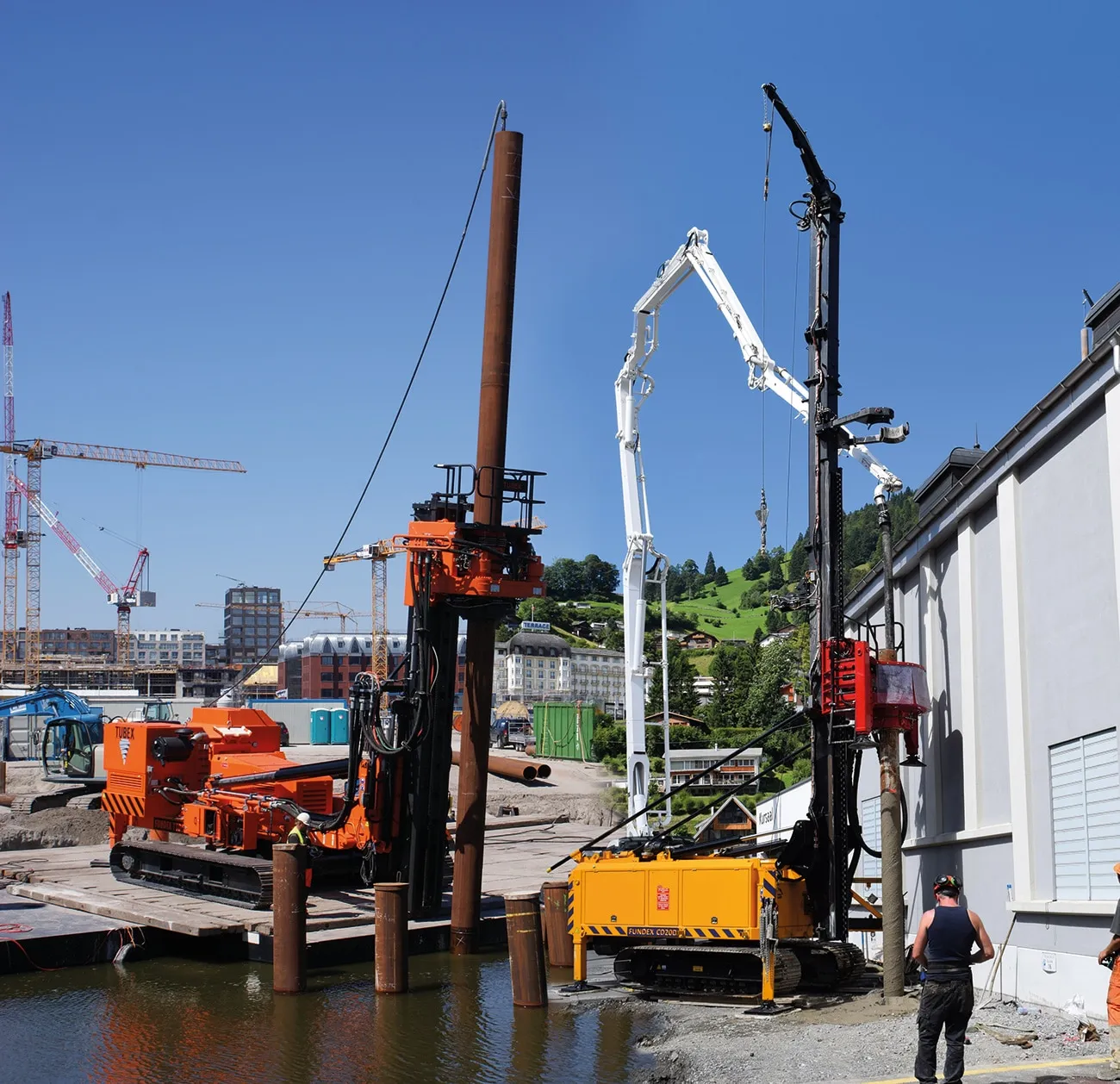
The tunnel boring machine (TBM) is ready to start pipe jacking in the launch shaft.
Working in teams
Trenchless techniques are often used to install cables & pipelines. “The two disciplines have a lot in common,” says Krot. “So we often work on projects in teams. It helps that everyone in our office has knowledge of all the disciplines. This often benefits the development of a project. We approach every project as a team.” And there are plenty of them. Krot gives a few examples. “We are currently working on two projects in Zwolle, where several crossings beneath the motorway and railway will be carried out using horizontal directional drilling. We are preparing the necessary drawings and calculations for the drilling work. We are also developing the detailed design (D.O.) and construction design (U.O.) for two pumping stations, covering the installation of a new rising main, replacement of the water main and changes to the site layout. This brings together our geotechnical structures and cables & pipelines divisions.”
DTE is also keen to embrace innovation. “We work closely with contractors looking to apply innovative techniques. We are often asked to prepare the design and carry out the calculations in advance, so that the proposal can be properly substantiated when submitted to the permitting authority. There is a great deal of development, particularly in horizontal directional drilling. Huge strides have been made over the past decades. Drilling is now far more precise than it was years ago. And we, too, are doing our bit to continually improve techniques. We have been doing so with great pleasure for five years now,” Krot concludes.
Question about this story? Ask your question
Keep following this
Get an email when a new story is published. No account needed.
- ThemeUnderground construction
- SubjectBridge construction







