









Safe bridges with tailor-made (bio-based) coatings
Concrete, asphalt, timber or steel. Whatever material a bridge structure is made from, Possehl has a suitable coating in a colour that matches its use. It protects the road surface, improves safety and extends its service life. Erik de Leeuw, managing director at Possehl, tells us more about Thermoflex, the specialist coating for bridge decks.
The best possible surface layer for bridges
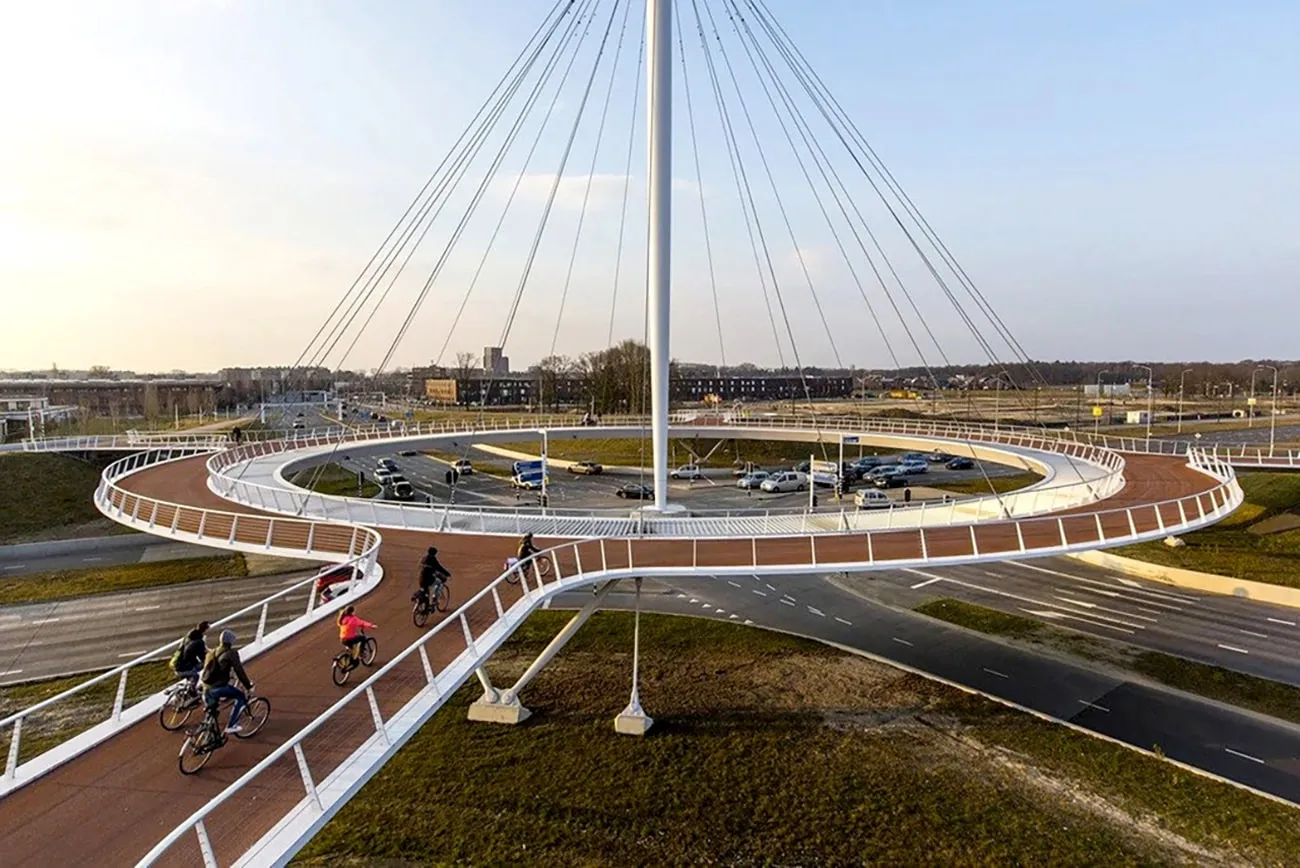
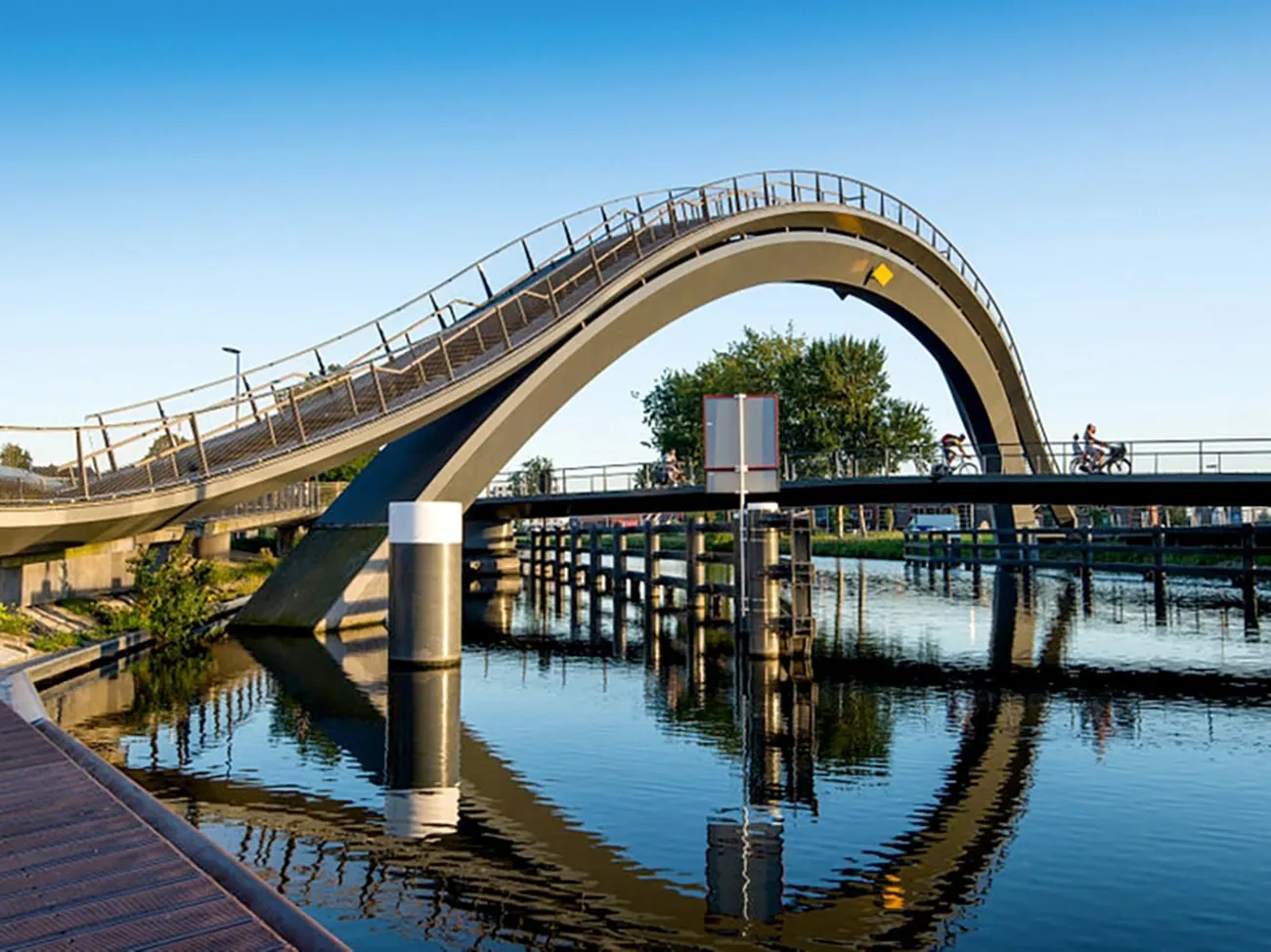
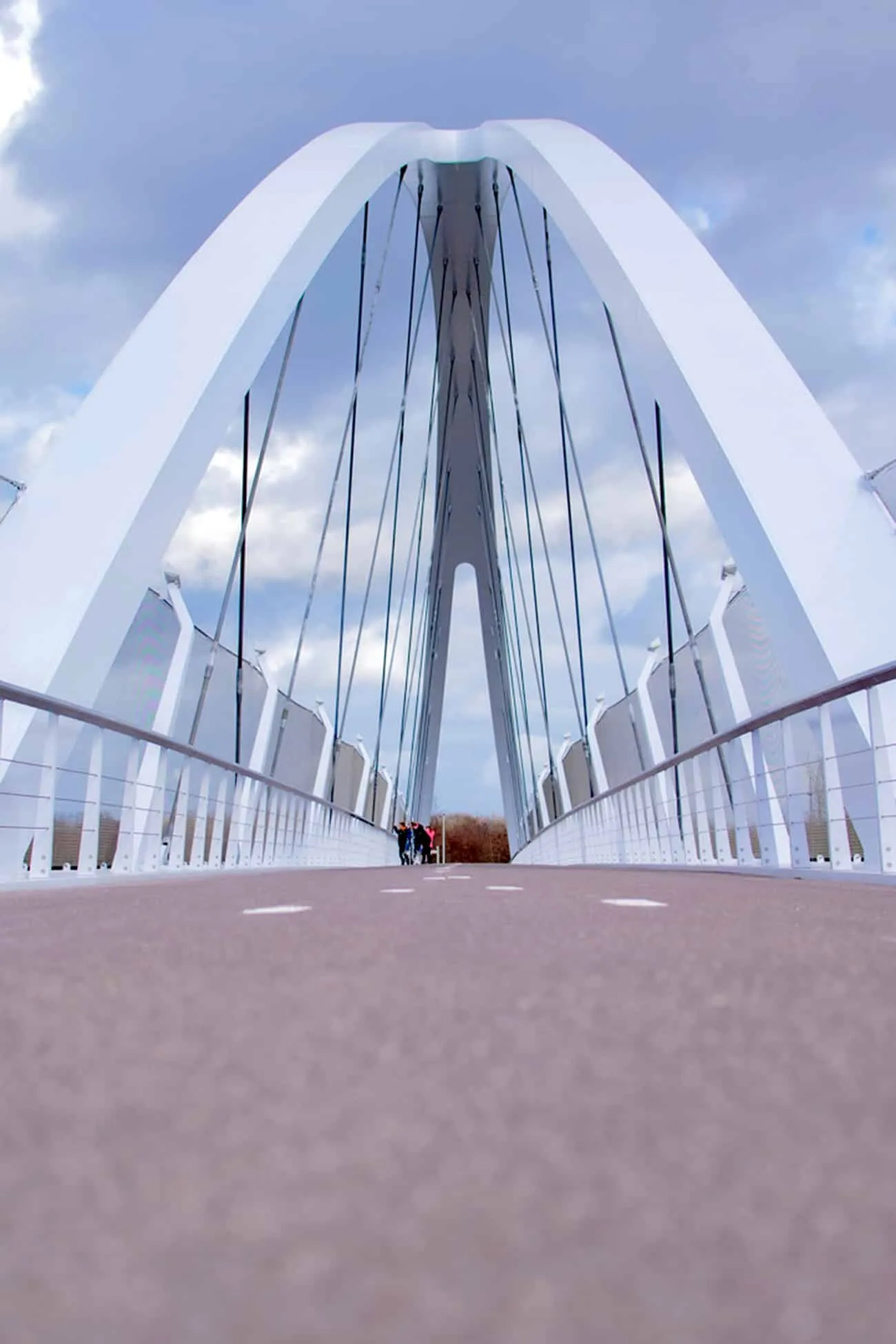
According to Erik de Leeuw, the Hovenring in Eindhoven, the Melkwegbrug in Purmerend and the 160-metre-long Tegenbosch bridge over the A2 near Eindhoven all have one thing in common. “We have applied our specialist Thermoflex coating to these three distinctive cycle bridges, adapting it technically to meet the requirements of each bridge.” Possehl specialises in developing and applying specialist coatings. The company advises road authorities, contractors, engineers and project developers, and delivers coating, repair and maintenance for floors, roads, paths, bridges and airports. “A coating provides better grip on the surface, improving safety. It also makes the surface more resistant to water and chloride attack, such as damage caused by road salt. This is particularly important for bridge decks. A bridge deck is the first to freeze, so an effective coating is essential.”
Millions of square metres
Bridges come in all shapes and sizes. They can be made of timber, concrete, steel or asphalt, and carry cycle paths, footways and/or roads. Each material behaves differently, and each use calls for its own colour. Cycle paths, for example, are often red, while bus lanes are green. That is why it is important to tailor the coating precisely to its application. Erik says: “Every coating we apply is tailor-made. We use our own coating, Thermoflex, which we developed ourselves. Today, it is the best possible surface layer. We have now coated millions of square metres with it, from asphalt to industrial floors.”
Torrential downpours
Frost is not the only additional risk for bridge decks. The transition from porous asphalt (ZOAB) on the road to conventional, impermeable asphalt on the bridge deck also presents safety risks for road traffic. “On motorways, there is the phenomenon known as splash and spray. You know the situation: it is raining and you are driving on the motorway. Visibility is good as long as you are on ZOAB. Then you cross a bridge with impermeable asphalt and can barely see a thing. This abrupt transition is known as splash and spray. It can be prevented by applying a coating to the bridge deck, giving it drainage properties. Water drains away between the tiny granules, even in the heaviest downpours we have experienced in this country so far. The drainage capacity is 6 litres per 20 minutes.”
Bio-based
The coatings applied by Possehl have a service life of more than twenty years, making them highly durable. But they can be made even more sustainable, with a lower environmental impact. Erik says: “We have developed a bio-based version of our Thermoflex coating. It is a highly durable, water-based coating that remains slip-resistant in all conceivable weather conditions. It can then be dressed with any of a wide range of dressing materials, but the ultimate combination is with recycled glass. This is reused glass that has been ground and tumbled into tiny 3 mm granules. It is almost indistinguishable from natural stone. The epoxy currently contains 20 per cent bio-based material. We are developing it further with the aim of making it fully bio-based by 2030 at the latest. Independent research has also shown that these bio-based materials result in virtually no microplastic loss compared with other coatings.”
Een zakelijke vraag aan Possehl Aannemingsmaatschappij B.V.? Get in touch
Companies in this story

Keep following this
Get an email when a new story is published. No account needed.
- ThemeExtending the life of roads and civil engineering structures
- SubjectBridge construction
- CompanyPossehl Aannemingsmaatschappij B.V.







