









Replacing historic railway bridges at Oostertoegang, Amsterdam
Text Matthijs van Almen en Martijn Roverts Beeld Studio SKMovares
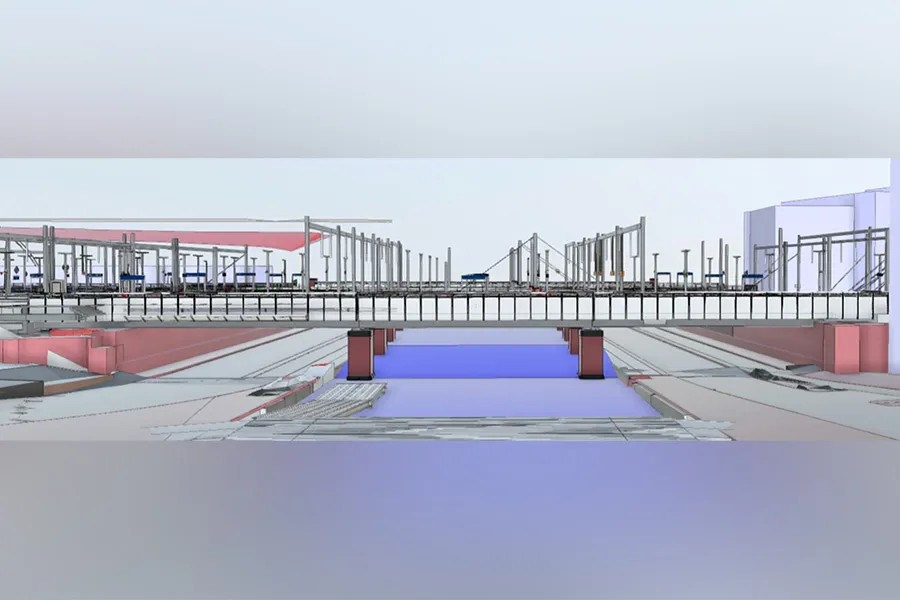
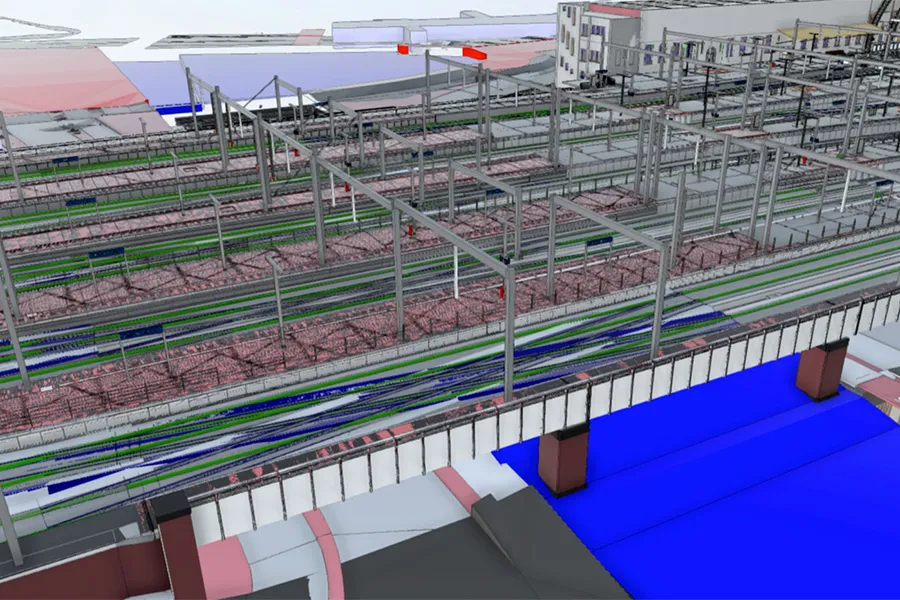
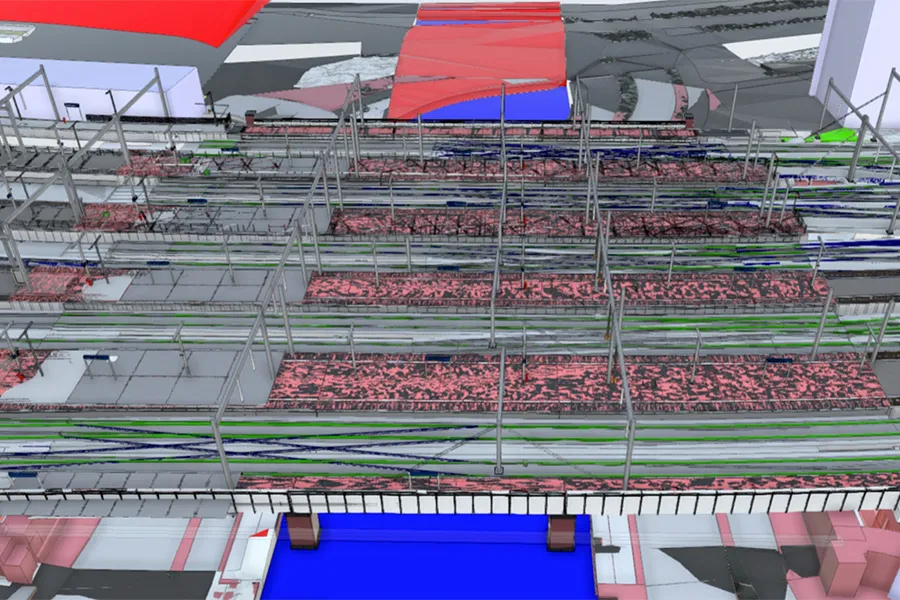
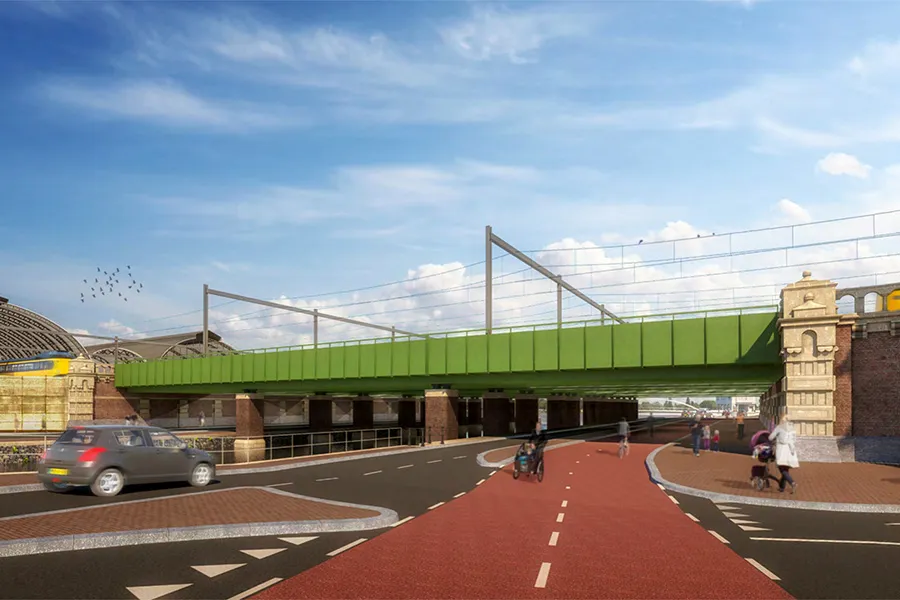
ProRail aims to renew and improve the ageing railway infrastructure in the Netherlands. In line with this vision, four steel railway bridges and one concrete railway bridge on the eastern side of Amsterdam Central Station will be replaced over the next five years. These five bridges, four of which are more than a hundred years old, form an important part of the railway network connecting Amsterdam with the rest of the Netherlands. The station’s redevelopment and the infrastructure upgrades are needed to enable more trains to run in 2030 and accommodate passenger growth.
From 2024, one railway bridge will be replaced each year. This is a necessary step due to the ageing of the existing bridges and the need to extend the platforms. Iv is working with Dura Vermeer, Hollandia, Takke Breukelen, Sterk, CRUX and Mammoet on the Oostertoegang Amsterdam project. Commissioned by Dura Vermeer, Iv is responsible for the integrated design of the five railway bridges.
The design
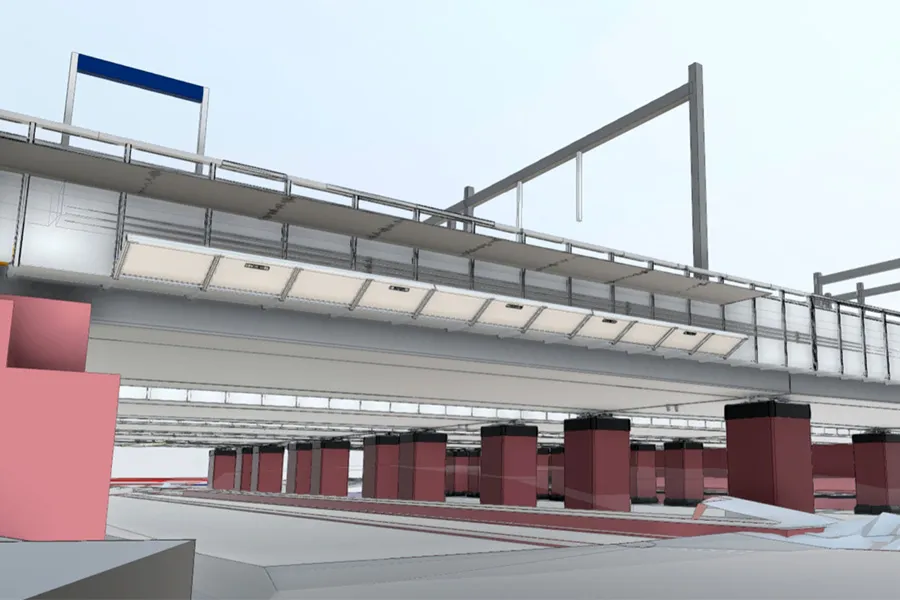
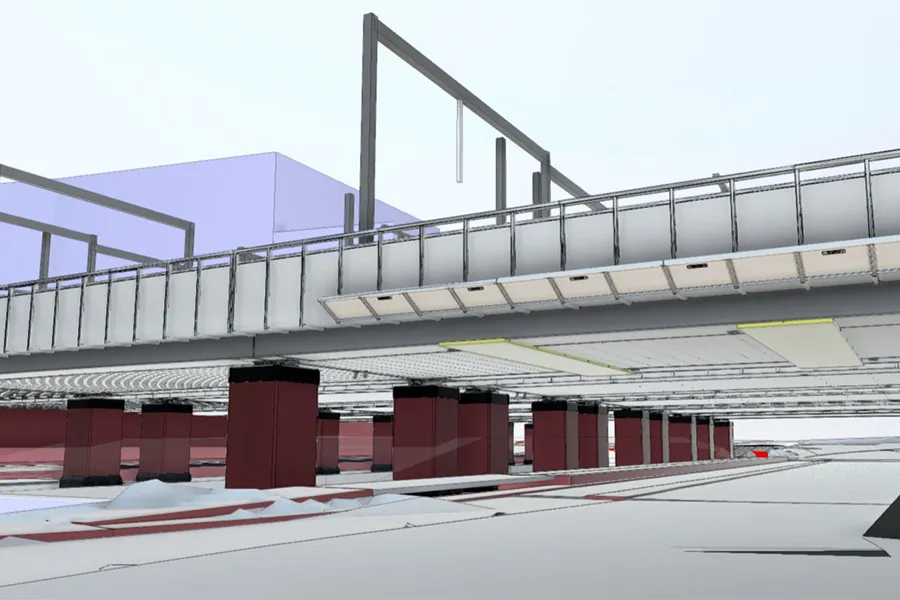
Four of the five bridges will have entirely new piers, abutments and foundations. The existing abutment will be retained for the fifth bridge, presenting a specific challenge for the project. Each bridge comprises three spans supported by concrete piers and abutments. Iv developed the tender design for the steel bridges and supporting structures into the final design. After completing the final design, Iv remained involved in the fabrication and installation of the steel bridges.
Although the bridge sections are similar in form, they are not 100% identical. This calls for a precise and efficient design process. By partly automating the structural calculations and optimising the modelling and drawing work, the bridges can be designed with minimal effort and no increase in cost. This also made it easy to assess the contractor’s requirements and preferences for feasibility. Iv’s calculations demonstrated that the foundations could support the bridges and that the steel bridges met all requirements.
Rail projects are subject to strict physical constraints to ensure safe passage for trains. For example, the railway tracks must be at a fixed height, determined by the adjoining embankments and structures. The resulting platform height is also critical to ensuring passengers can board and alight safely. In addition, there are constraints imposed by elements below the bridges, such as tram tracks and roads. The design takes all these aspects into account to ensure the structures can be used as intended.
Particular challenges
Replacing the historic railway bridges presents several unique challenges. The substructure plays a crucial role, particularly because it incorporates existing mass concrete. The age of this concrete creates uncertainty about its integrity and stiffness. The design addresses these uncertainties by allowing for the upper and lower limits of the mass concrete’s properties, including its strength and stiffness. A longitudinal force analysis was carried out to ensure the structure’s safety. The analysis also served as a design tool for optimising the supports. This approach reduced the number of piles required, saving costs and improving the project’s sustainability.
Another particular challenge concerns bridge 5, where the existing abutments and foundations will be retained. These were originally designed to standards from the early 1990s, which differ from the current Eurocodes. To ensure that these existing structures can support the new loads, Iv first researched the archives, consulting old drawings and calculations. The structures were then modelled to assess whether the existing substructure was strong enough to support the refurbished bridge safely.
Permitted drilling zones
Drilling through the old concrete structure poses significant safety risks and challenges. Strict compliance with the contractual requirements on permitted drilling zones in the existing structure was therefore a challenge. Together with the client, the team explored the options available within the specified requirements to arrive at an optimal, safe design that met those requirements.
Tight schedule
Possessions for train works are often booked two years in advance. This means that the timing of major works, such as installing a bridge, is set well ahead of time and the schedule must be followed strictly. This became a challenge when the original steelwork contractor went bankrupt. A replacement had to be found at short notice, and the design had to be adapted. Meeting these challenges requires creativity and innovation, as well as close collaboration and coordination across all disciplines. To put this into practice, the project team held a joint working day in Amsterdam every Wednesday. It was a dynamic day when the construction teams, the design manager and colleagues from Iv and Dura Vermeer came together to find the best solutions for the project.
Question about this story? Ask your question
Companies in this story
Keep following this
Get an email when a new story is published. No account needed.
- ProjectOostertoegang Amsterdam
- ThemeExtending the life of roads and civil engineering structures
- SubjectBridge construction
- CompanySterk BV







