









Renovating with composite: exceptionally strong, fast and sustainable
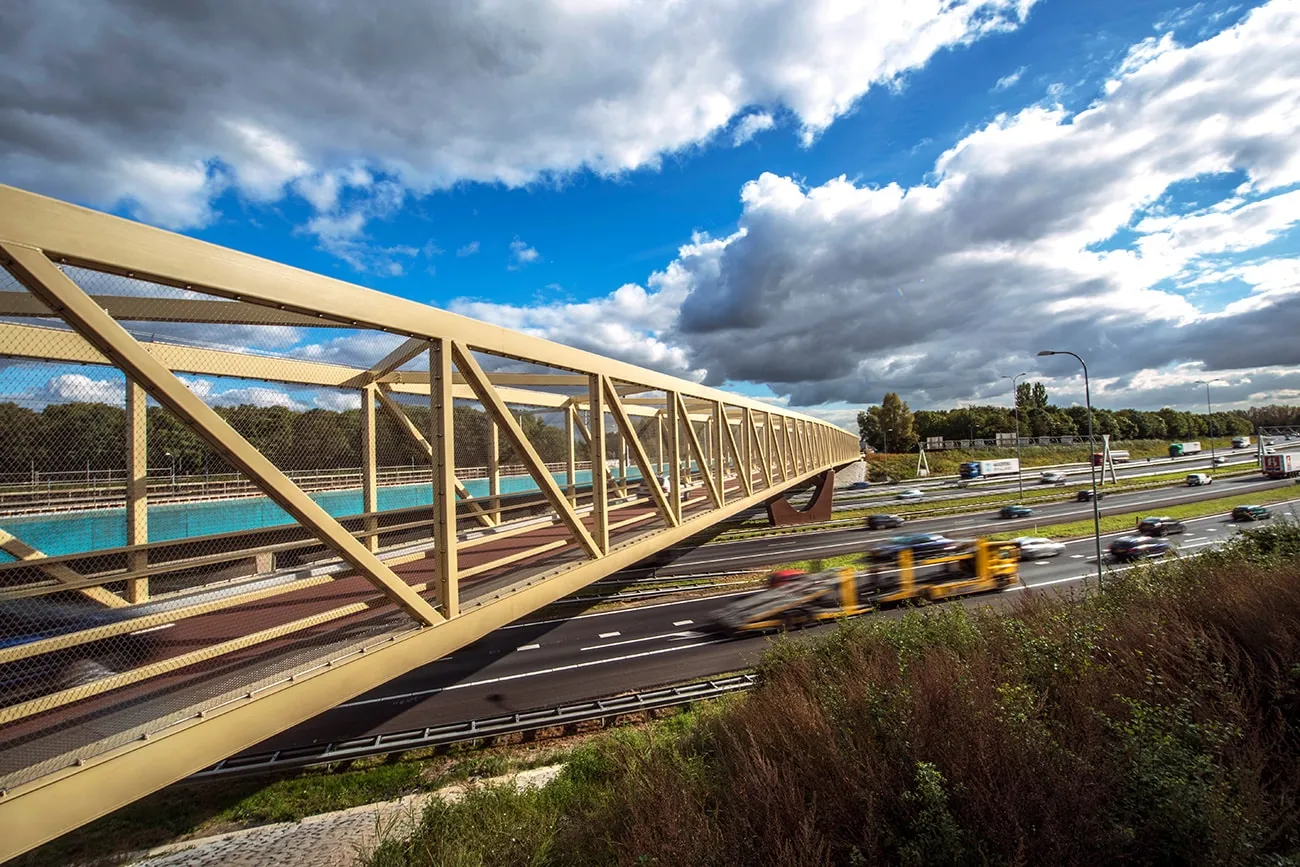
If Matthijs Raak of FiberCore Europe has his way, composite will be used for every bridge or viaduct due for renewal. As a specialist in composite bridges, lock gates and bridge decks for the infrastructure sector, this may sound like preaching to the converted. But when you consider the many benefits of composite, using this sustainable material is simply logical. What makes composite so appealing? This article explains more.
No need to demolish
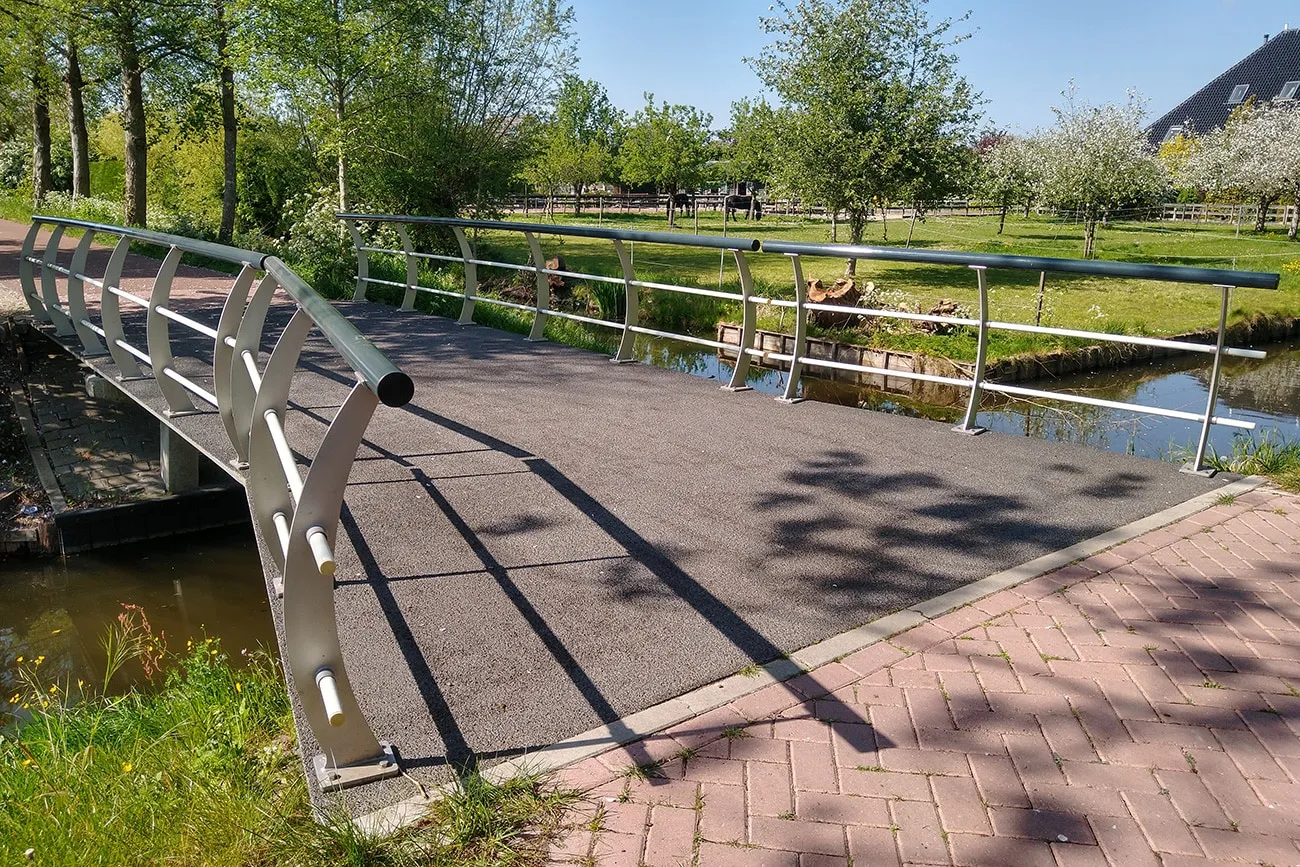
Bridges across the Netherlands are currently scheduled for maintenance. These include cycle and pedestrian bridges, road bridges and movable bridges, as well as a growing number of golf bridges and plot-access bridges. Until now, many timber and steel bridge decks, along with their supporting structures, have had to be replaced at the end of their service life. “Renovating a bridge is always more sustainable and faster than demolishing it and building a new one,” says Matthijs Raak, managing director of FiberCore Europe. “Replacing the old deck with a composite bridge deck featuring patented InfraCore Inside technology gives you six benefits in one go. With this technology, we build highly robust bridges that retain their strength and rigidity over the long term. The bridge decks arrive from the factory ready to install, so they can be fitted very quickly and put back into use sooner. What’s more, they last for at least 100 years, making our bridges highly sustainable.” Raak says the production of FiberCore’s prefabricated bridges also stands out for its sustainability. “You could do a complicated calculation, but composite is simply very lightweight. We use very few raw materials, which has a beneficial effect on CO2 emissions. In fact, our prefabricated bridges contribute to achieving the highest possible project-specific ambition level on the CO2-Performance Ladder.
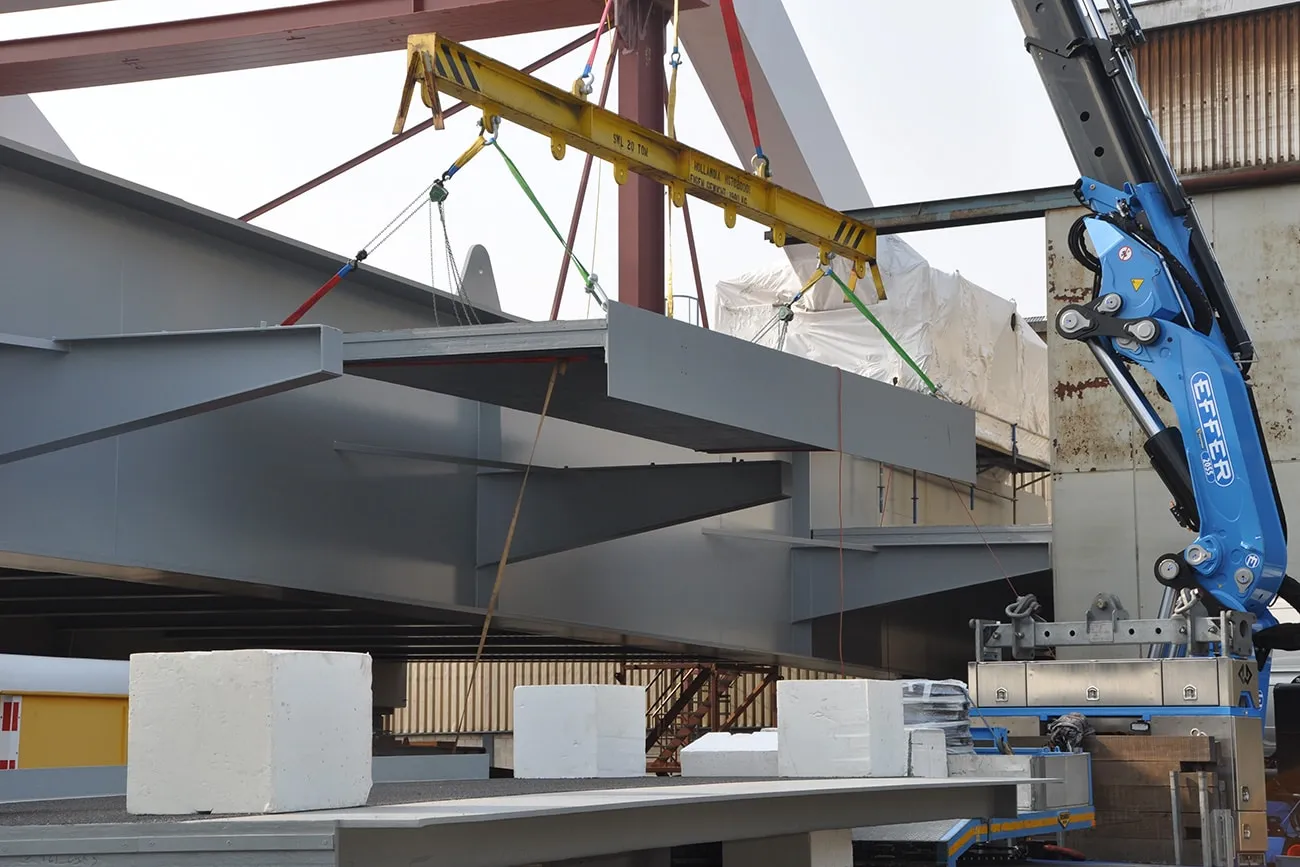
What’s more, their low weight makes the bridges and decks easy to transport, which also has a positive effect on CO2 emissions.”
Virtually maintenance-free
As well as being highly sustainable, FiberCore’s bridges, lock gates and bridge decks are very cost-effective over the long term. “Gritting salt, diesel, chemicals, bird droppings, and exposure to the elements all contribute to the ageing of bridges made from conventional materials. This leads to concrete decay, rust or timber rot. By contrast, a composite bridge structure is virtually maintenance-free. The only tasks are to clean the bridge parapet from time to time and inspect the wear layer.”
Across the Netherlands
With all these benefits of composite, you might wonder why it isn’t used as standard. According to Raak, this is mainly because it is relatively unfamiliar in the infrastructure sector. “You often can’t tell that a bridge is made of composite. But if someone asks me, ‘Where can I see one of these bridges?’, all I need to do is ask where they live, and I can often name one or more nearby.” FiberCore installs bridges across the Netherlands and beyond. There are now almost 1,500 worldwide. The municipality of Purmerend, a leader in this field, is a good example. You can find bridges by FiberCore here in all shapes and sizes. Raak says: “These bridges are a great example of our new standard bridge concept. Bridges are often considered bespoke, but we standardise the structure while leaving complete freedom in the design of the parapet. This means we can not only deliver them even faster, but also reuse them at another location later.”
Also for widening bridges
FiberCore’s bridge decks can also be installed on an existing bridge, for example when it needs to be widened to accommodate a cycle superhighway or footpath. The Suurhoffbrug, the link to the Maasvlakte, is a good example. FiberCore decks are also used in hybrid bridges, where a bridge with a steel or concrete main supporting structure is fitted with a prefabricated composite deck. The result is a lighter bridge with a lighter foundation. The bridge over the A27 at Lunetten is a good example.
No need to demolish
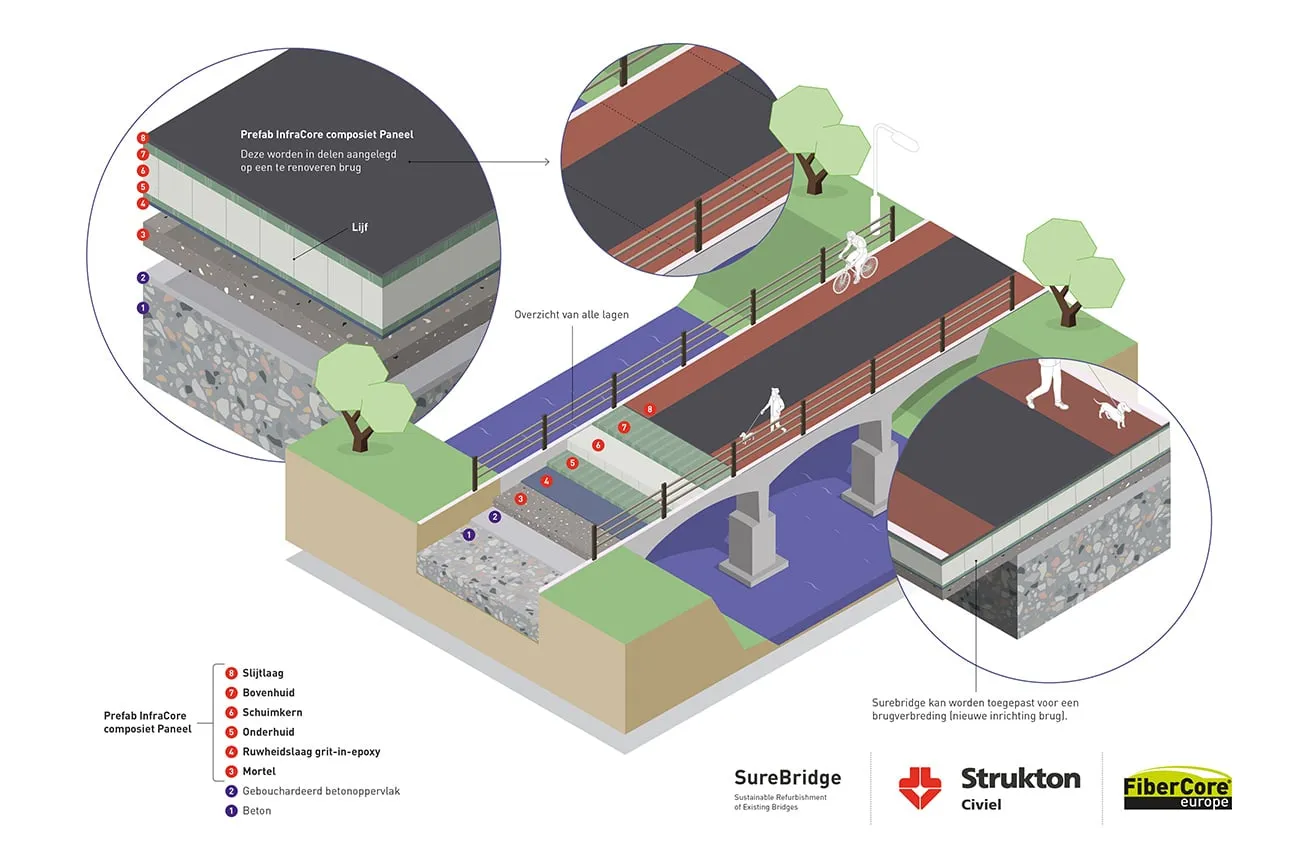
The innovative SUREbridge concept is an interesting option for ageing concrete bridges. “With this innovation, we strengthen the existing structure. Where necessary, we widen it by mounting a prefabricated composite panel on top, fixed in place to prevent sliding. There is no need to demolish the bridge, saving time, reducing disruption and avoiding traffic having to take a detour. The bridge can then remain in service for up to 50 years, with minimal maintenance.”
Raak says: “There’s much more to tell about composite bridges and lock gates. I invite everyone to visit our factory in Rotterdam and take a look at our website. There you can see and read more about all the bridges we have installed, as well as the options for leasing a bridge.”
Een zakelijke vraag aan FiberCore Europe? Get in touch
Companies in this story

Keep following this
Get an email when a new story is published. No account needed.
- ThemeExtending the life of roads and civil engineering structures
- SubjectBridge construction
- CompanyFiberCore Europe







