









Prins Clausbrug: an architectural landmark powered by smart engineering
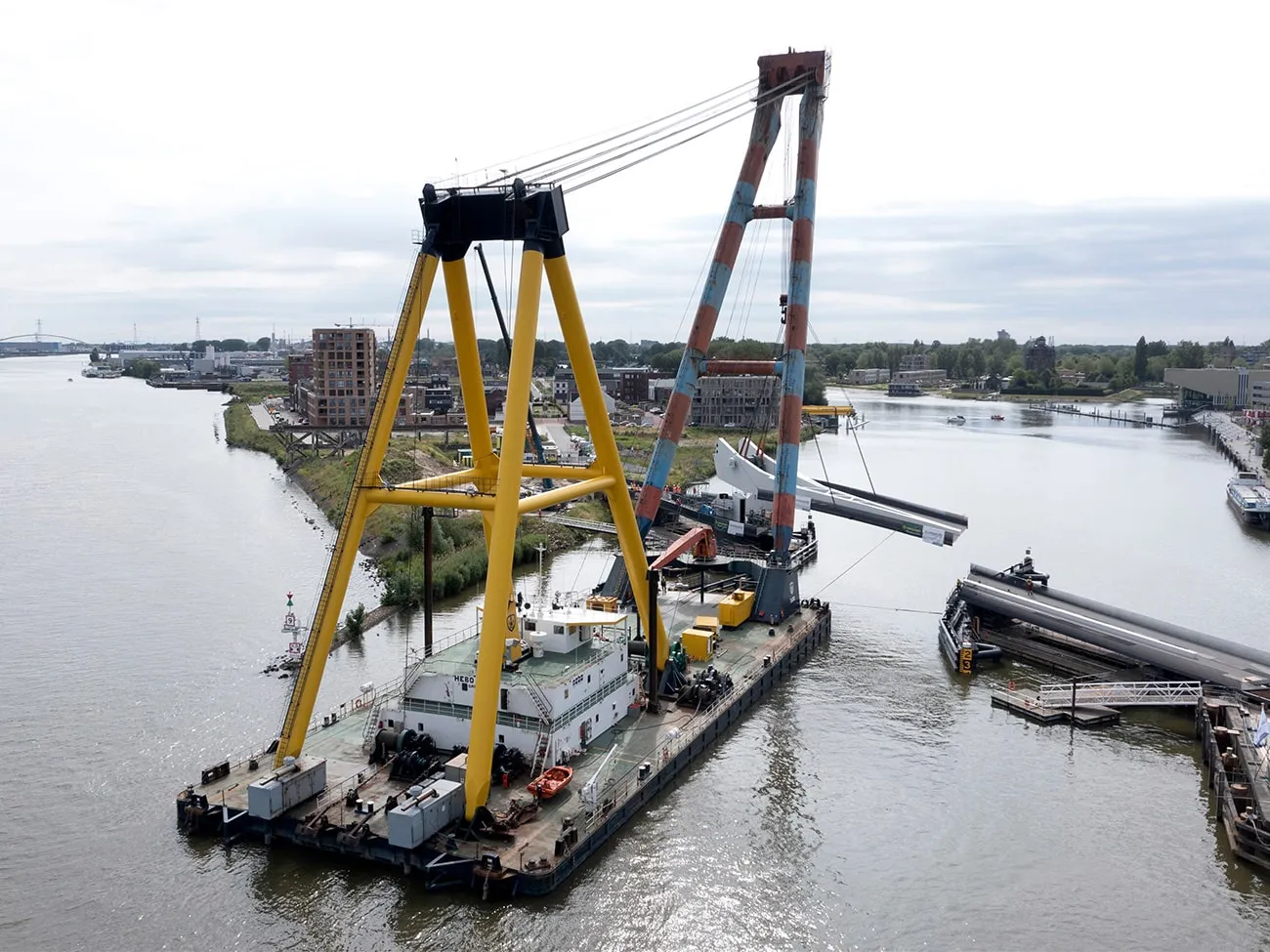
The Prins Clausbrug is an impressive project that is anything but standard. The new movable bridge for cyclists and pedestrians over the Wantij connects the new Stadswerven district with the historic centre of Dordrecht.
Innovative not only in its design, the bridge is also a technical tour de force. The 140-metre-long bascule bridge, with its rotating counterweight mast, is being built for the Municipality of Dordrecht by Hillebrand, part of ASK Romein, and Dura Vermeer.
Unique operating mechanism
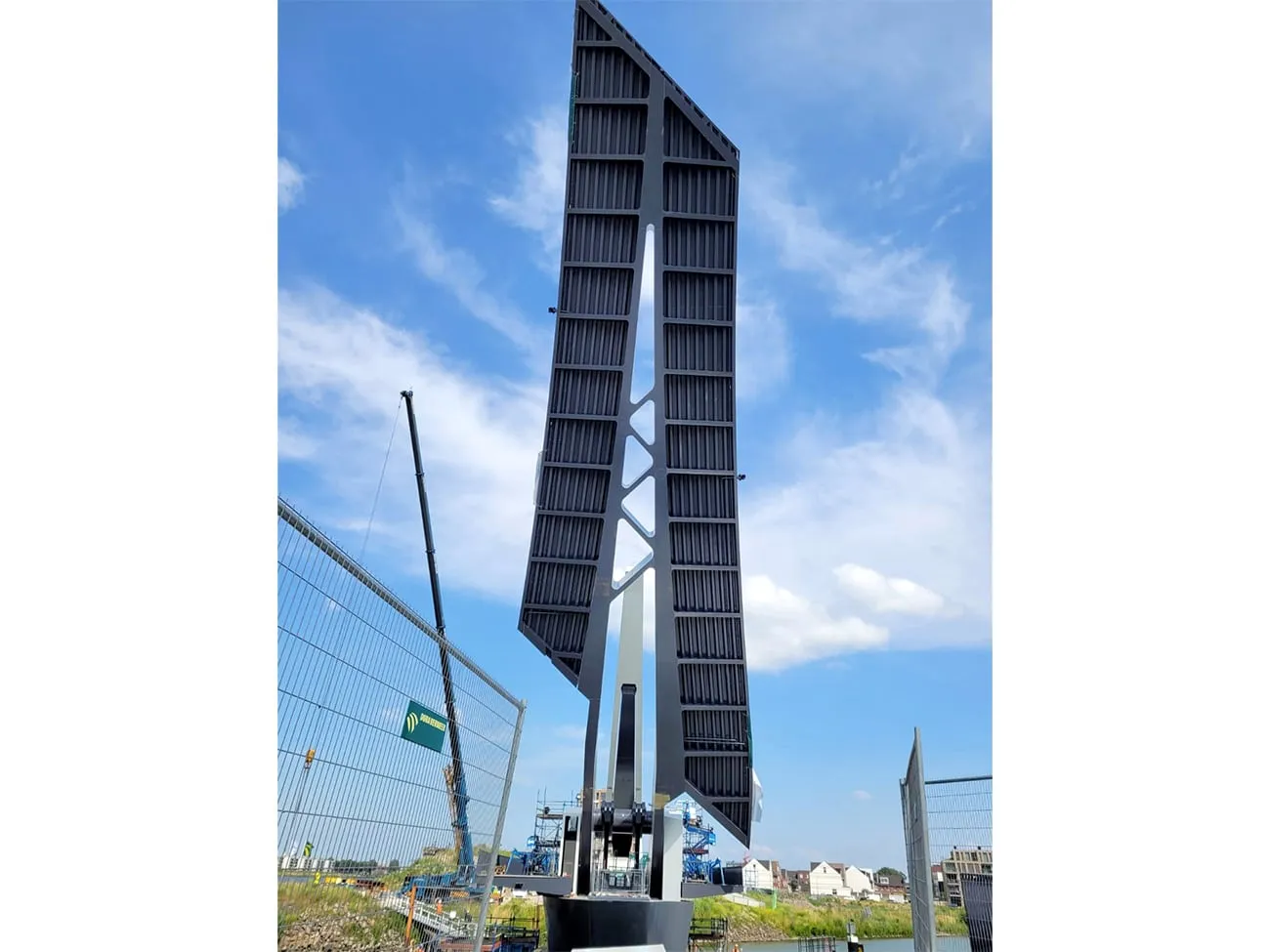
“The biggest challenge with this bridge is the design by René van Zuuk architecten,” says Martijn Kuzee, project manager at ASK Romein. “Architecturally, a movable bridge with a counterweight mast looks particularly impressive, but a concept like this has never been used in practice before. The imposing counterweight mast and pendulum rod together form the movable section, or leaf, which rises 52 metres above the water when the bridge is open. Kuzee explains that the mechanisms for all these moving elements ultimately had to be accommodated in the narrow spaces available. “That called for smart engineering.” The Dura Vermeer/Hillebrand construction consortium brought in IV-groep, a multidisciplinary engineering consultancy with expertise in technically challenging projects. “They designed all the pivot points, continually consulting with us as the contractor to check whether the design was technically feasible. Where necessary, they then made adjustments to the 3D model, ultimately resulting in a structurally viable bridge.” Dura Vermeer produced the 3D design for both the substructure and the superstructure. During design and technical meetings, the model was used to identify and manage the interfaces between the different disciplines.
Technical tour de force
The unique operating mechanism, which rests on a concrete plinth, was built so that shipping could continue to pass through during construction. “With a technical tour de force like this, it is crucial that the entire design is engineered with care,” Kuzee continues. “That applies to every stage of assembly too, where accuracy is essential both in the dimensions of the civil concrete works and in the steelwork.” The assembly of the various components was therefore fully modelled in advance. Everything was measured carefully on site and in Vlissingen, then checked against the 3D model. “Once the fixed section is in place, there is only 5 centimetres of clearance on either side of the movable section. That is very little for components of this weight,” says Kuzee. “In practice, we have shown that we can work faultlessly within these tight tolerances.”
All the components come together
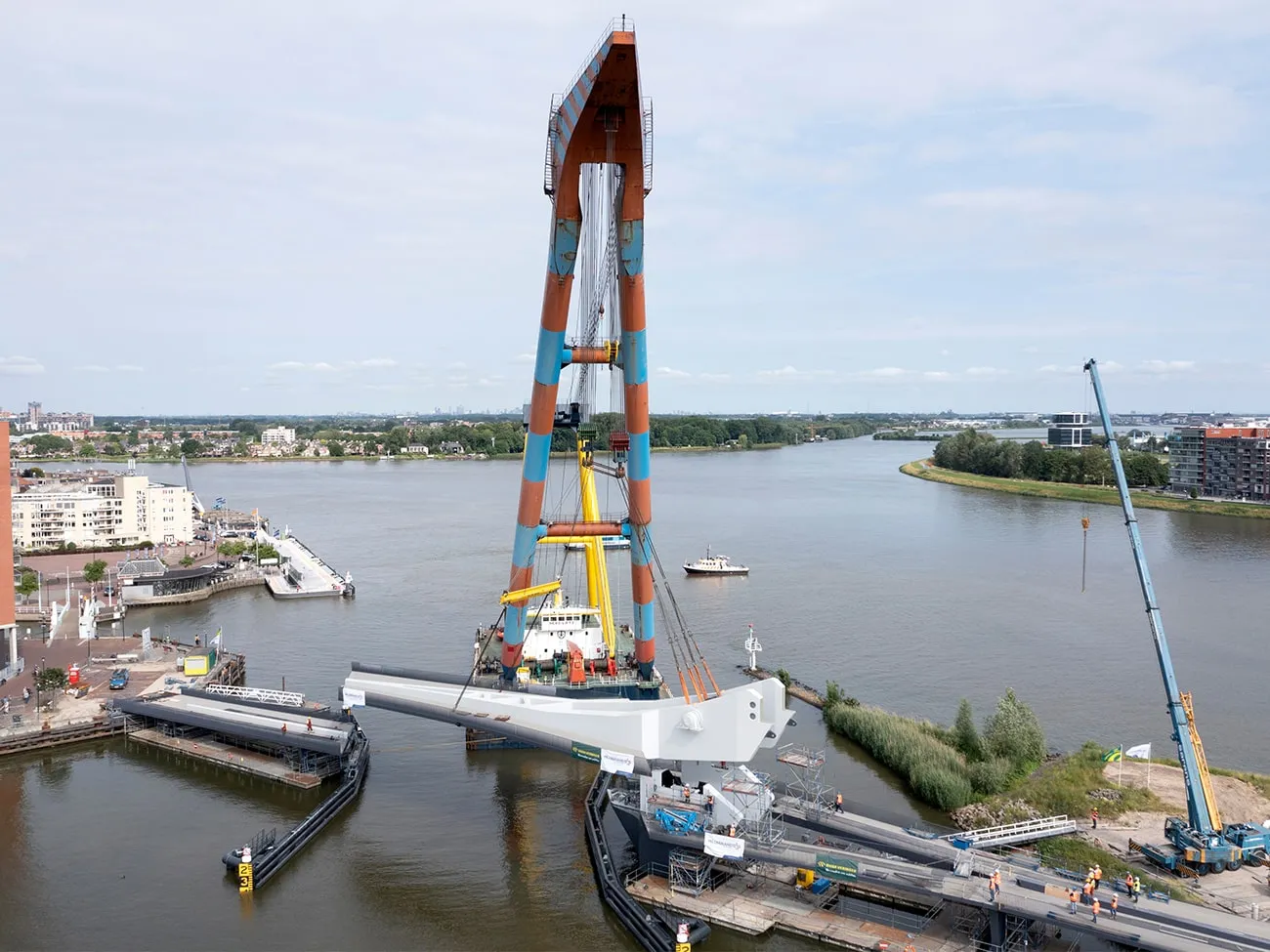
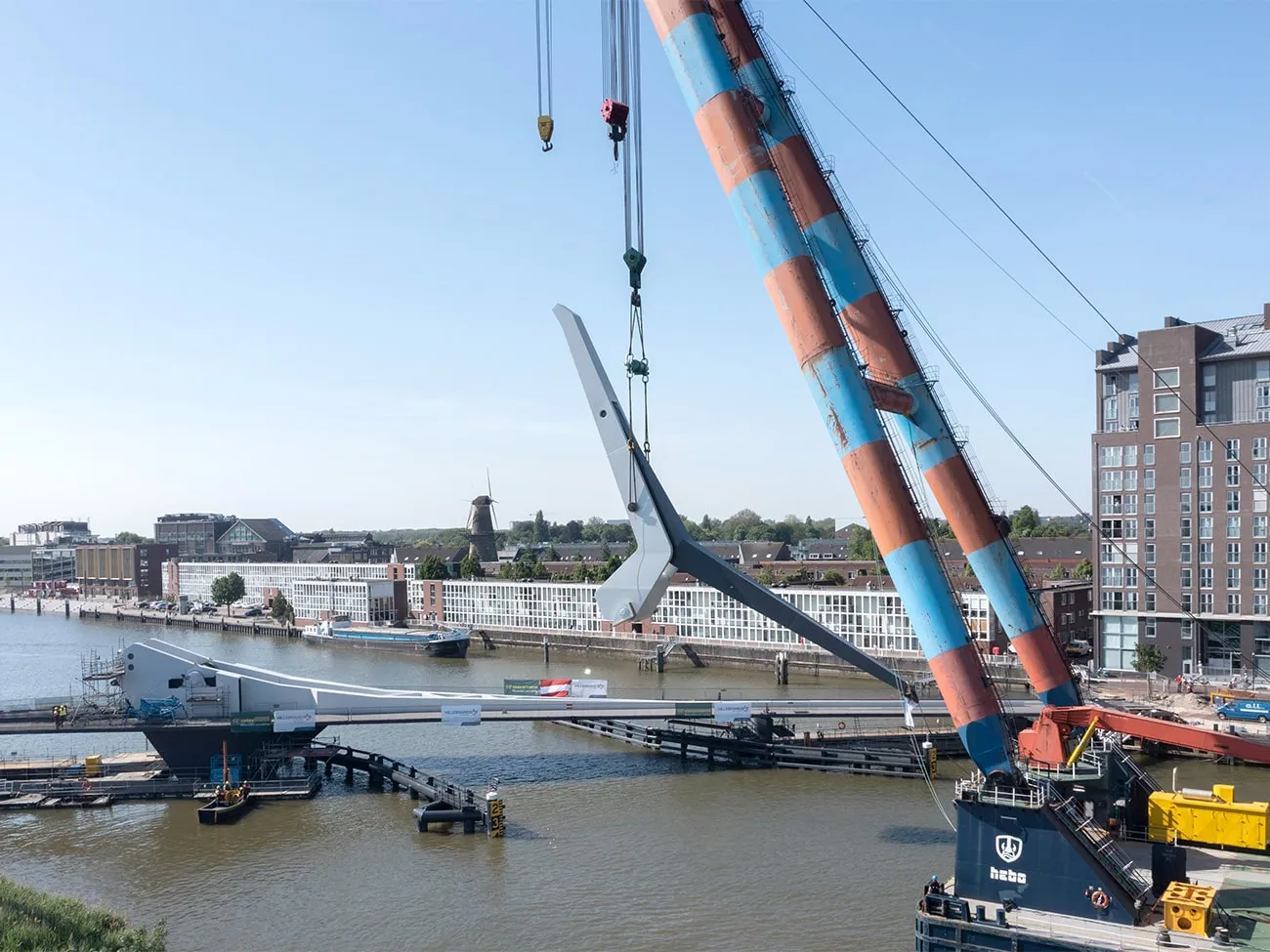
Towards the end of the project, the collection of colossal individual components came together. “Many components were prefabricated at different locations. The piers, for example, were made in Rotterdam. All the other concrete work, such as the connections to the banks, was carried out on site in Dordrecht. The steel bridge deck was made at the factory in Middelburg. The approach spans, also built in Middelburg, had to be welded together on site because of their size for transport. The movable section and the counterweight mast were made at our factory in Vlissingen. Floating cranes were used to load and assemble them on site. First, the movable section, weighing around 266 tonnes, was installed, followed by the drive system, including the hydraulic cylinders. The counterweight mast, weighing approximately 380 tonnes, was then installed. Finally, electrical engineering contractor Langezaal & Inniger installed the electrical systems, including the bridge controls and all safety functions, to ensure safe and reliable operation. “We are experienced bridge builders,” says Kuzee, “but delivering the Prins Clausbrug has been a real tour de force. We are proud to have brought the architectural and technical designs together.”
A business enquiry for ASK Romein? Get in touch
Who worked on Prins Clausbrug
- integraal definitief ontwerp en uitvoeringsontwerpIv-InfraMentioned in The distinctive design of the new Prins Clausbrug in Dordrecht
- engineering consultancyIV-groepMentioned in Prins Clausbrug: an architectural showpiece with smart engineering
- architectRené van Zuuk architectenMentioned in Prins Clausbrug: an architectural showpiece with smart engineering
- electrical installationLangezaal & InnigerMentioned in Prins Clausbrug: an architectural showpiece with smart engineering
- contractorHillebrandIn this story

Keep following this
Get an email when a new story is published. No account needed.
- ProjectPrins Clausbrug
- SubjectBridge construction
- CompanyHillebrand
- CompanyASK Romein







