









Data generated during a tunnel’s design and construction phases is also highly valuable during operation
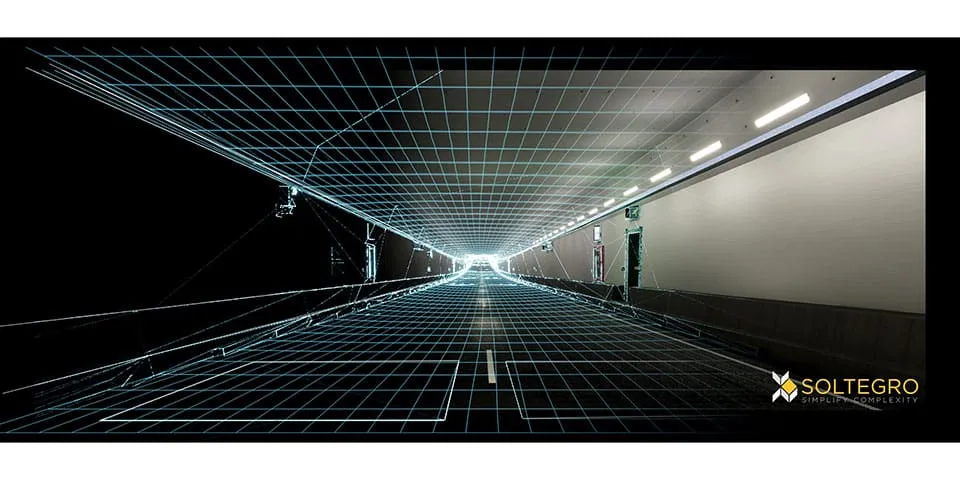
Looking at the different phases involved in delivering a tunnel, we can distinguish five main phases: preparation, design, construction, testing and, finally, operation. A dedicated company is set up to deliver a tunnel, often a consortium bringing together the parties responsible for the different disciplines involved in the work.
An application landscape is established within this company so that each discipline can do its work and manage the process-related and technical interfaces with other disciplines. Soltegro designs, develops and implements these applications and systems. We speak to Franc Fouchier, Manager Systems Engineering & Innovatie, about how this data can continue to add significant value after the tunnel has been handed over.
Don’t let data go to waste
“The first four phases often take 5 to 8 years. The operational phase, however, lasts much longer, namely 15 to 25 years,” Fouchier begins. “And in fact, even longer, because a tunnel has a lifespan of around 100 years. Every application we develop contains and generates data. We use this as part of the ‘digital twin’ of the asset. Data is used for testing, conducting analyses, validating and verifying the system, training people and much more. At the end of phase 4, you have a ‘mountain’ of valuable data, which, strangely enough, is rarely used in phase 5, the operational phase. Only some of the data continues to be used. The rest is lost because the tunnel operator does not need it or cannot incorporate it into their processes.”
Isn’t that a real shame? “It certainly is, because we believe this wealth of data could be put to very good use during the operational phase,” Fouchier replies. “At Soltegro, we are always focused on optimising all processes from the outset. Our aims include finding ways to work more efficiently and effectively. We look at whether we can prevent substantial failure costs for our clients. But that is not where we stop. We go a step further and consider the operational phase. We realise that data generated at the outset can be put to very good use in later phases.”
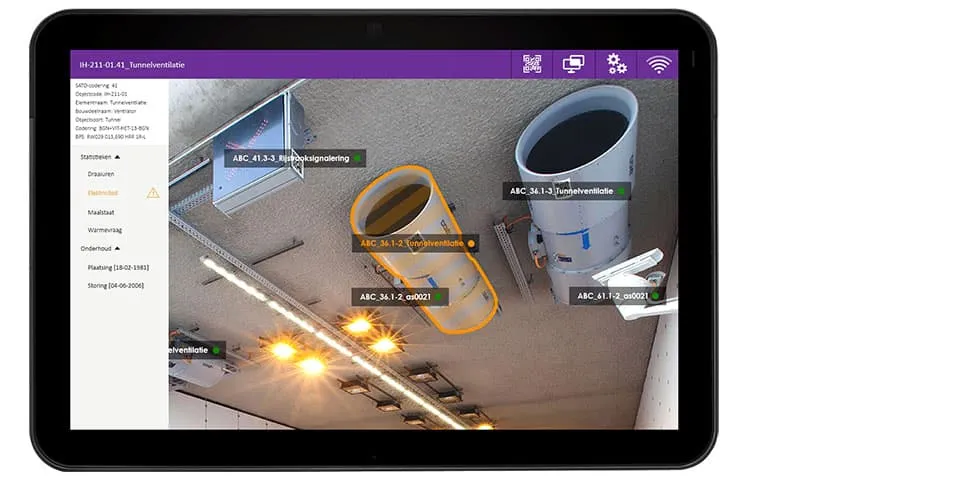
Augmented Reality application in a Digital Twin.
Using data after the tunnel has been handed over
How can data generated at the outset be used later on? Fouchier: “Consider the tunnel’s ‘digital twin’, which can be maintained to test future modifications or new processes. Artificial intelligence using the available data could enable ‘predictive maintenance’. And what about using Augmented Reality techniques to provide remote support? Soltegro is also a knowledge leader in VR and AR. We can visualise the status of assets perfectly and analyse problems visually.”
What keeps asset managers, operators and control-room staff awake at night?
“Data can help reduce travel times and therefore CO2 emissions. Preventive maintenance increases tunnel availability. These are just a few examples of how continuing to use data can also serve the public interest,” Fouchier continues. “I would argue for involving asset managers, operators and control-room staff earlier in the process. What keeps them awake at night? What are their priorities for optimisation? Ultimately, they are the ones who will work with the systems we hand over.
We first need to understand where they see the greatest added value. Involving them at an early stage helps us identify their real needs. Innovation is not just about developing a new technology, but also about intelligently combining technologies that have already been developed and using data and its analysis at the right time.
Fouchier’s point is clear. Taking an integrated view across processes, broadening the multidisciplinary approach and involving stakeholders responsible for operation and maintenance at an early stage can ensure the seamless integration and transfer of data. “Soltegro provides integrated solutions to technical challenges involving availability, reliability and safety. We are happy to help make tunnels fit for the future during the operational phase,” Fouchier concludes.
Data: what data are we talking about?
In this context, “data” means all the information collected and created by applications, systems and people to design, develop, use and maintain a complex system. This ranges from initial design documents such as SSS and SSDD to measurement and metadata, sensor data, inspection plans, asset trees, modelling data, codes, progress data, proposed changes and much more. In short, all the information (data) needed to create and use a properly functioning system.
A business enquiry for Soltegro? Get in touch
Companies in this story
Keep following this
Get an email when a new story is published. No account needed.
- ThemeUnderground construction
- SubjectBridge construction
- CompanySoltegro







