









A planned, industrialised approach to the large-scale replacement and renovation challenge
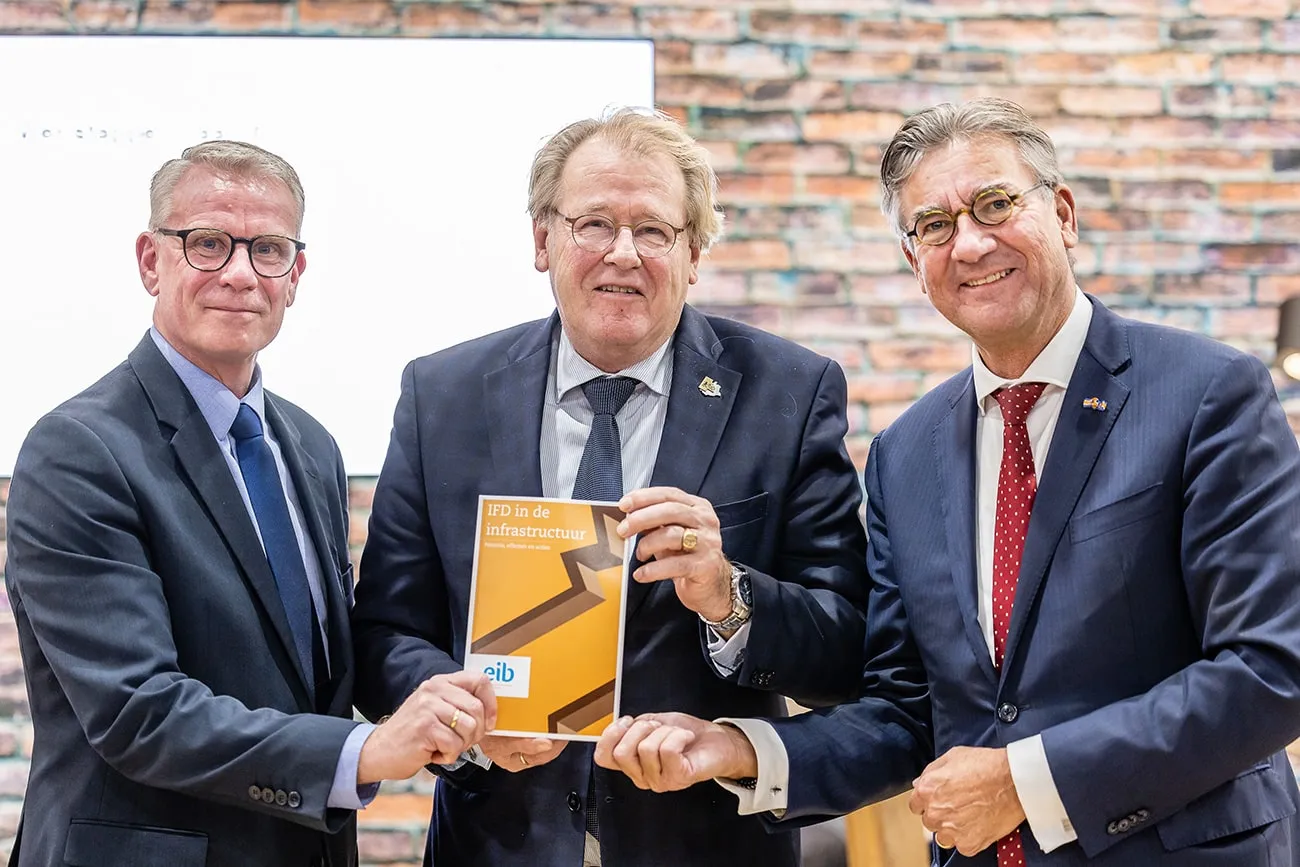
Over the coming decades, thousands of bridges in the Netherlands will need to be replaced or renovated. This will require substantial investment. The social and economic impact of a temporary bridge closure can also be significant. An efficient and innovative approach is therefore needed, one that is also sustainable and circular. Through a broad programme, Bouwend Nederland aims to promote a planned, industrialised approach in the civil engineering sector, working with its partners.
Municipalities, provinces and water authorities face a major challenge: bridges, viaducts, underpasses and culverts will need to be maintained, replaced and newly built in the coming years. This is a challenge in terms of capacity, but also of cost. The EIB research institute estimates the total cost for provinces and municipalities over 2025-2035, including the construction of new structures, at €9 billion. In the past, insufficient funds were often set aside. So the question is: what is the best way to tackle this? Commissioned by Bouwend Nederland and the province of North Holland, the EIB researched the potential of industrialised, flexible and demountable construction (IFD) in the infrastructure sector.
The benefits of IFD
The province of North Holland has had good experiences with industrialised, flexible and demountable construction. “From now on, we will apply it to all our fixed and movable bridges,” says Jeroen Olthof, member of the provincial executive of North Holland responsible for Mobility and Accessibility, at the presentation of the IFD report at InfraTech. “With IFD, we save on raw materials and design costs. Maintenance and replacement are quicker, causing less disruption to the surrounding area. In short, IFD is sustainable and cost-effective, and works best when all road authorities apply it. So let’s do this and invest together in a circular future.”
Ambition: a planned, industrialised approach
Bouwend Nederland is keen to take up this challenge. Programme manager Willemijn Visscher says: “We were already involved in the IFD steering group for civil engineering, focusing on developing NTA 8085 for the application of IFD. Our ambition is now broader. Through our multi-year programmes for sector renewal and mobility, we want to work with partners on a planned, industrialised approach to the enormous replacement and renovation challenge facing the infrastructure sector. IFD is one part of that.”
Bringing frontrunners together
Visscher says the report’s main conclusions are that IFD has potential for around €3 billion of the total replacement and renovation challenge between 2025 and 2035. “IFD also makes an important contribution to a circular construction economy and can help shorten construction times and reduce traffic disruption. A planned, industrialised approach requires the use of technology. It also calls for a different way of working together. Our initiative aims to bring frontrunners together. We will jointly identify the changes and innovations needed, then test them in pilot projects and learn from the results. We will of course also approach public authorities that want to adopt this way of working. A number of provinces and municipalities are already working on implementing IFD, including the municipality of Amsterdam and the province of North Holland. We hope many more will follow soon.”
“The construction industry is ready to standardise more and stop treating every structure as a one-off project,” stresses Bouwend Nederland chairman Maxime Verhagen. “A multi-year programme-based approach requires extra investment at the outset. Apply it widely so that market participants can recoup that additional investment. Ultimately, this will lead to satisfied contractors, satisfied clients and satisfied communities. I urge clients not to focus solely on the lowest price. Put the contracts on the table and the market can work on them together with clients.”
Question about this story? Ask your question
Companies in this story
Keep following this
Get an email when a new story is published. No account needed.
- ThemeExtending the life of roads and civil engineering structures
- SubjectBridge construction
- CompanyInfraTech







