









Zero-emission work demands a lot from companies and their employees
GKB Groep in Barendrecht is investing heavily in an electric fleet of vehicles and equipment. It is responding to client demand and helping the 77-year-old family business move towards a sustainable future. Its first electric Volvo is already proving satisfactory. But equipment manager Martijn Kraaijeveld also sees plenty of challenges ahead.
‘If you want to be able to work tomorrow, you need to plug in today’
The family business GKB Groep has now been operating for more than 75 years. Describing themselves as ‘creators of outdoor spaces’, the company is organised into six divisions covering the full spectrum of green-space maintenance, dredging, bank protection, tree care, civil engineering, playgrounds, sports complexes and steelwork. GKB Realisatie develops public spaces, GKB Machines designs and builds machines for maintaining and working on sports fields, GKB Visie provides design, engineering and drafting services for various projects, GKB Staalwerk makes steel structures for public spaces, GKB Materieel manages the company’s extensive fleet of machinery and vehicles, and Grondbank IJsselmonde supplies and processes the sand and soil used to deliver a wide range of projects.
Sustainability is one of the pillars on which the company is built. “We would never have made it to our 75th anniversary otherwise,” says equipment manager Martijn Kraaijeveld. “To us, sustainability also means looking after your employees, so they can still earn a living 50 years from now. It goes far beyond electrifying the fleet or mowing in a different way. It encompasses everything and requires you to look well ahead.”
Plugging in today
Nevertheless, GKB Groep has invested heavily in zero-emission operations in recent years. This has included purchasing two Volvo FH diesel trucks, four Volvo FMXs and a Volvo FE electric truck. “And we have another FMX Electric 4×2 on order,” adds Kraaijeveld. Despite these investments in clean equipment, he regularly grapples with the challenges of zero-emission operations. “Clean air for children in Rotterdam and the surrounding area is obviously a good thing, but what does that mean for children on the other side of the world who have to dig up all those raw materials for us? And how do you make sure all those machines can be charged as cleanly and sustainably as possible? Our roofs here are covered with solar panels, but that’s nowhere near enough to keep all those heavy machines working every day. I often find myself thinking hard about that. What I’ve learnt most about zero emissions over the past few years is that if you want to be able to work tomorrow, you need to plug in today.”
A few extra per cent
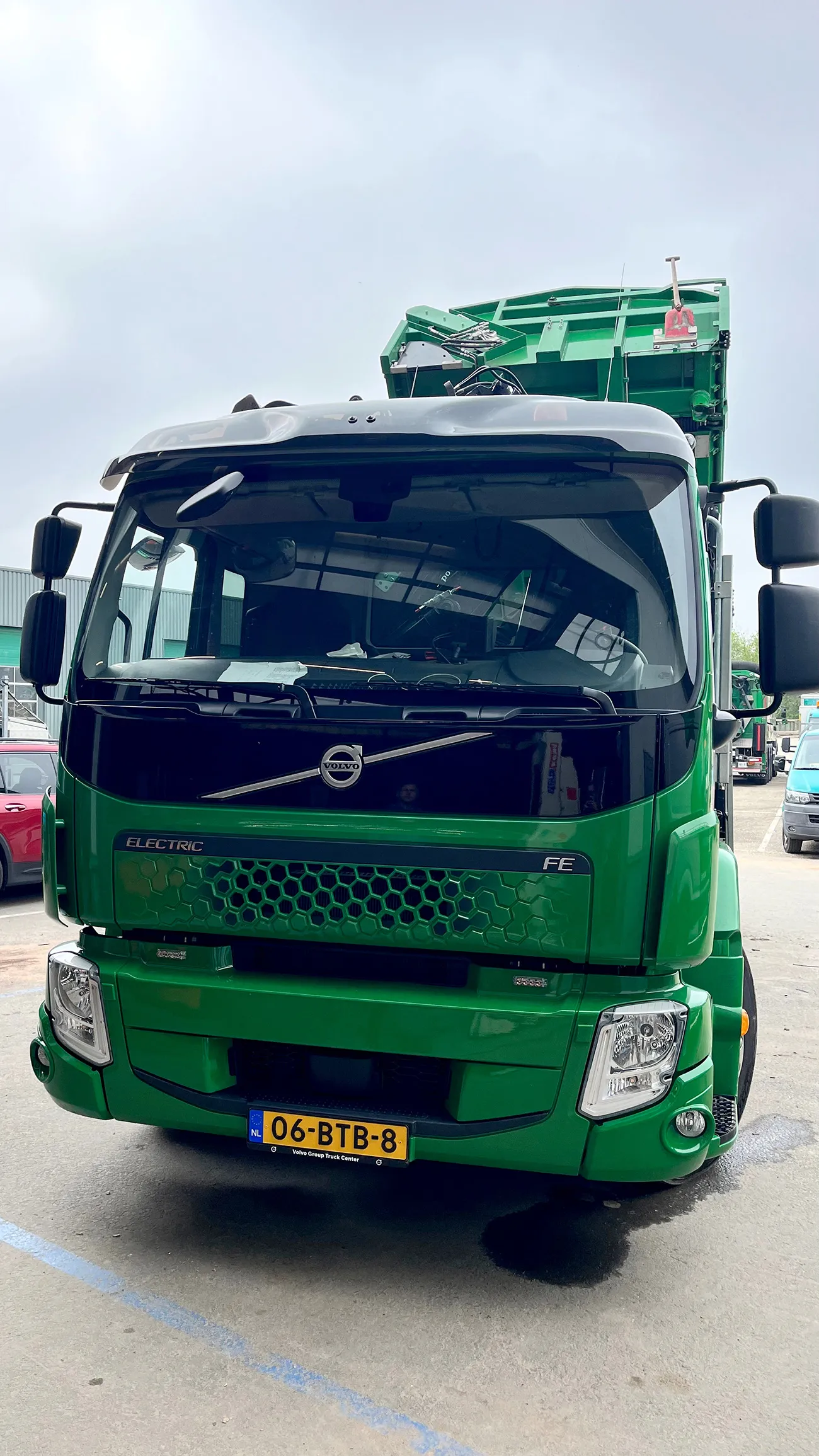
GKB Groep has now been running a fully electric Volvo FE in Rotterdam and the surrounding area for more than a year. “It gets through the day reasonably well in urban areas,” says Kraaijeveld. “We’ve recently been covering more kilometres with it, and the driver now plugs it into the fast charger at our depot at lunchtime to give it a few extra per cent.”
That does call for a different driving style, the equipment manager agrees. “Electricity doesn’t come in a jerrycan, so the driver needs to be aware of that. It’s no coincidence that the driver took an eco-driving course in his own vehicle. In effect, his role is changing from ‘driver’ to ‘process operator’. But you also need the right vehicle. Not every job is suited to an electric truck.”
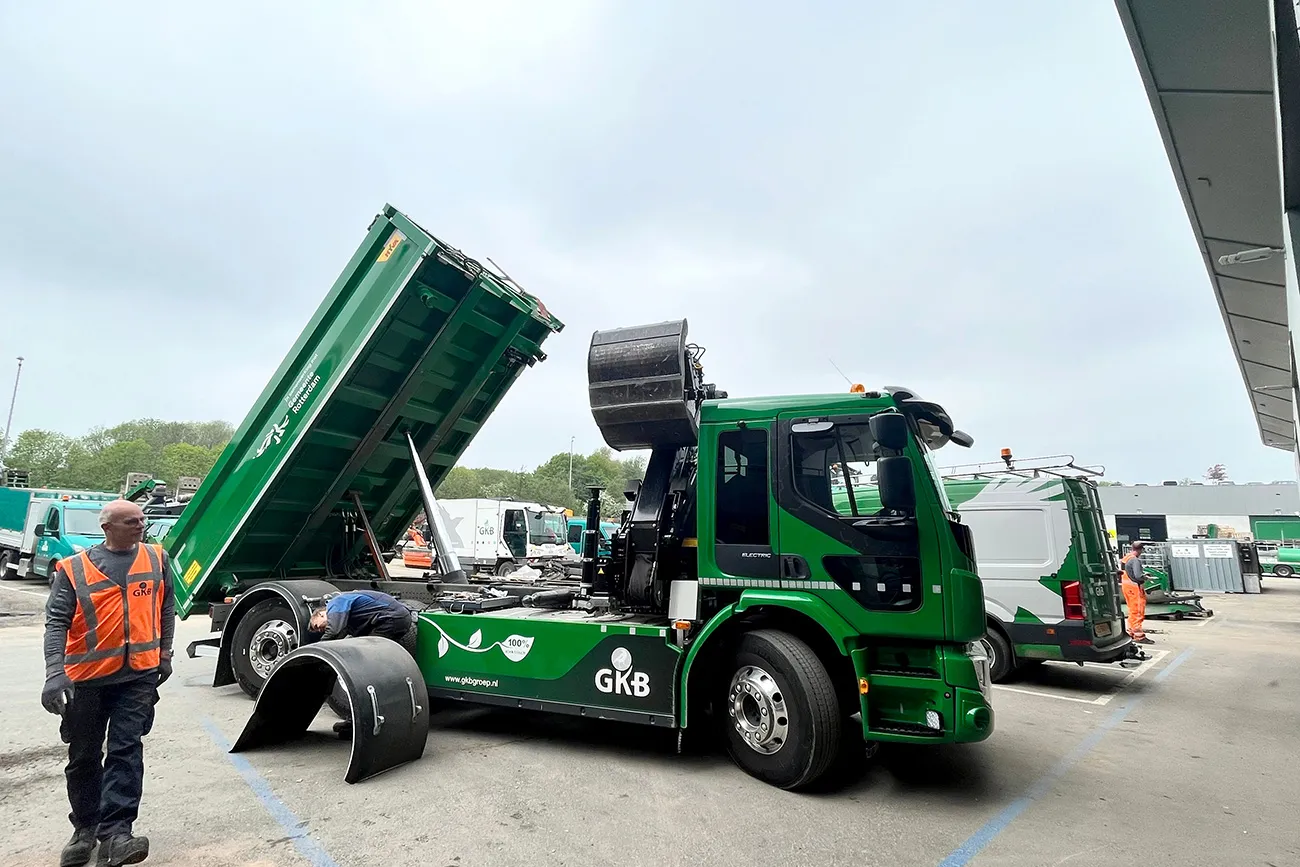
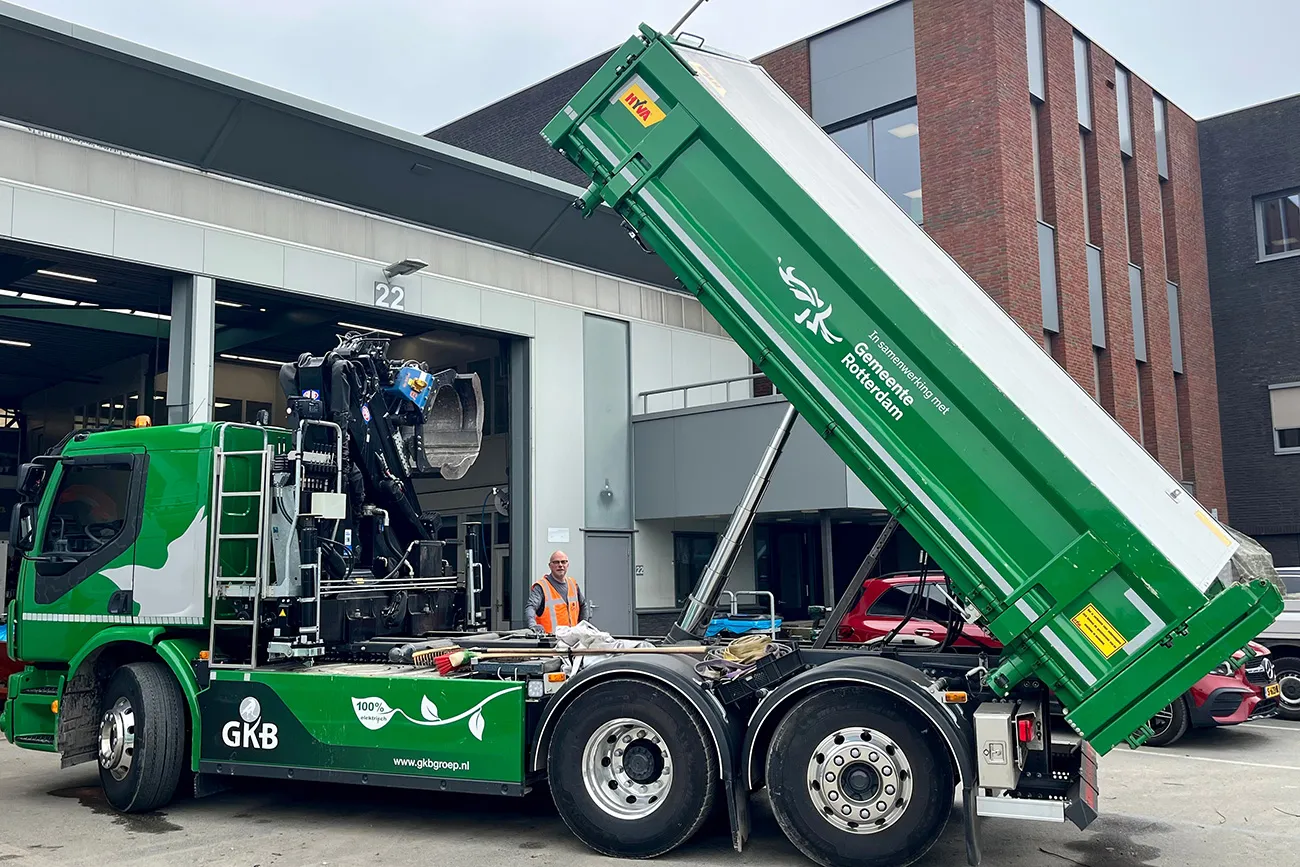
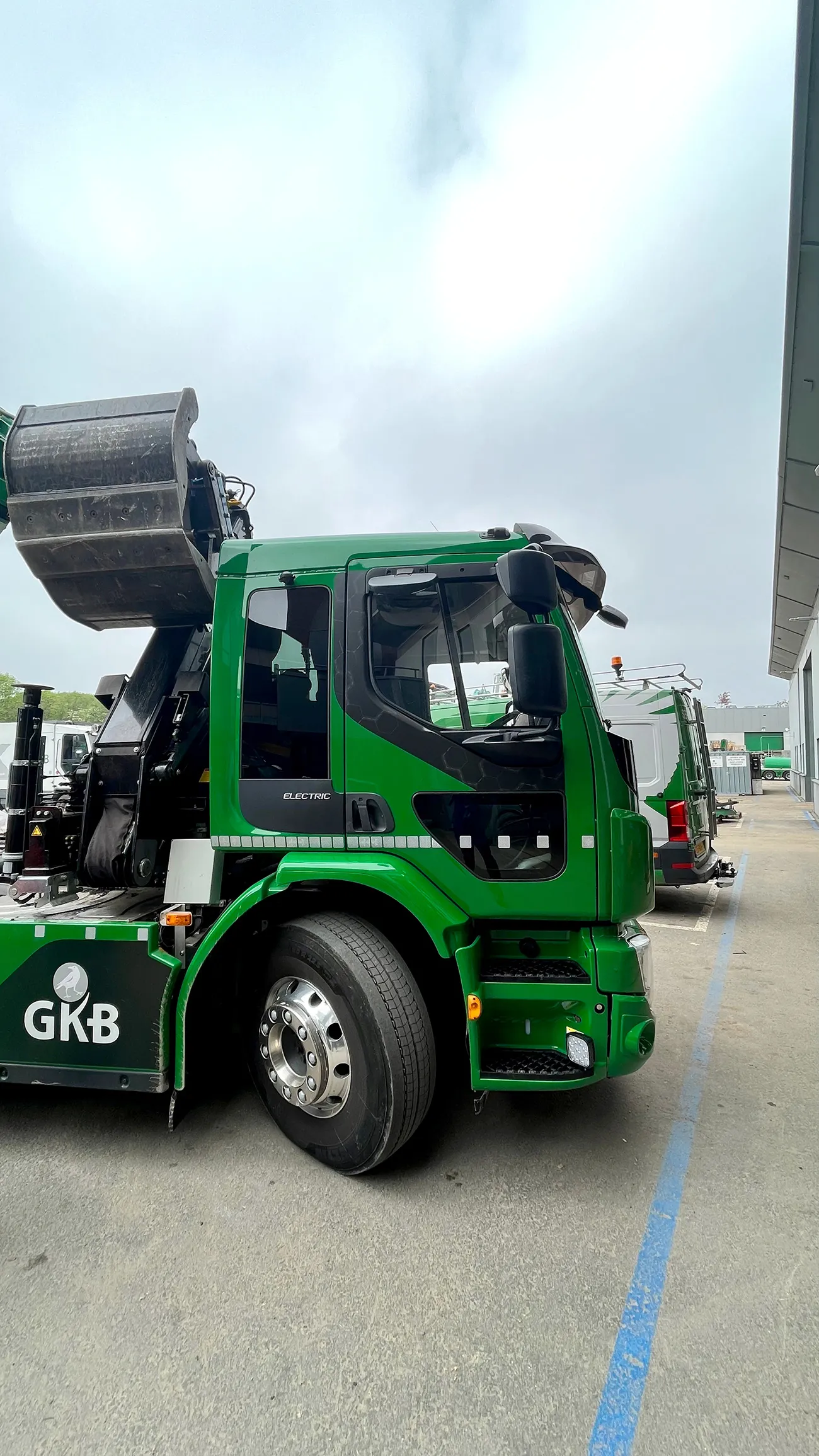
The electric Volvo FE is a tipper with a crane, used mainly to transport smaller loads of sand and paving slabs for neighbourhood maintenance. Clients such as the municipality of Rotterdam are increasingly asking for zero-emission equipment. Kraaijeveld involved the driver, who operates the truck every day, in the purchasing process. “It’s important to bring your people along with you and explain why we want to use an electric truck for a particular job. After all, the driver is the one who has to work with it all day. And he’s very happy with it, although he too has had to learn to drive differently.”
Not always easy to plan
Another factor in choosing a type of truck is that GKB Groep’s work is not always easy to plan. “We’re not a haulage company that always drives from A to B. Our work is far from always repetitive or predictable. That makes things difficult for many established truck manufacturers.”
Despite the challenges, Kraaijeveld knows that continued investment in clean transport is unavoidable. “No one can escape it. Will it be electric or hydrogen? Your guess is as good as mine. But for our people, our children and our planet, we have no choice but to keep investing in these kinds of technologies.”
Family business
In 1946, Jan and Pieter-Arie Kraaijeveld laid the foundations for GKB Groep. Under the name Gebr. J. en P.A. Kraaijeveld, they cut reeds and rushes in the willow coppices and harvested brushwood. The willow was used, among other things, in the Delta Works and for strengthening dykes, for example to make fascine mattresses. Six of Pieter-Arie’s children and three of Jan’s joined the business. The second generation has since left the company, which is now in the hands of the third generation. The fourth generation is already ready to continue building the business. The Kraaijevelds work together in harmony and a family atmosphere to earn their living. More than twenty family members own the company, and over forty employees share the Kraaijeveld name. The close family ties shape the culture, commitment and strong sense of responsibility across the whole team. “The people at the top of the company today used to work together in the mud and jump across ditches,” says
equipment manager Martijn Kraaijeveld.
Flexible platform
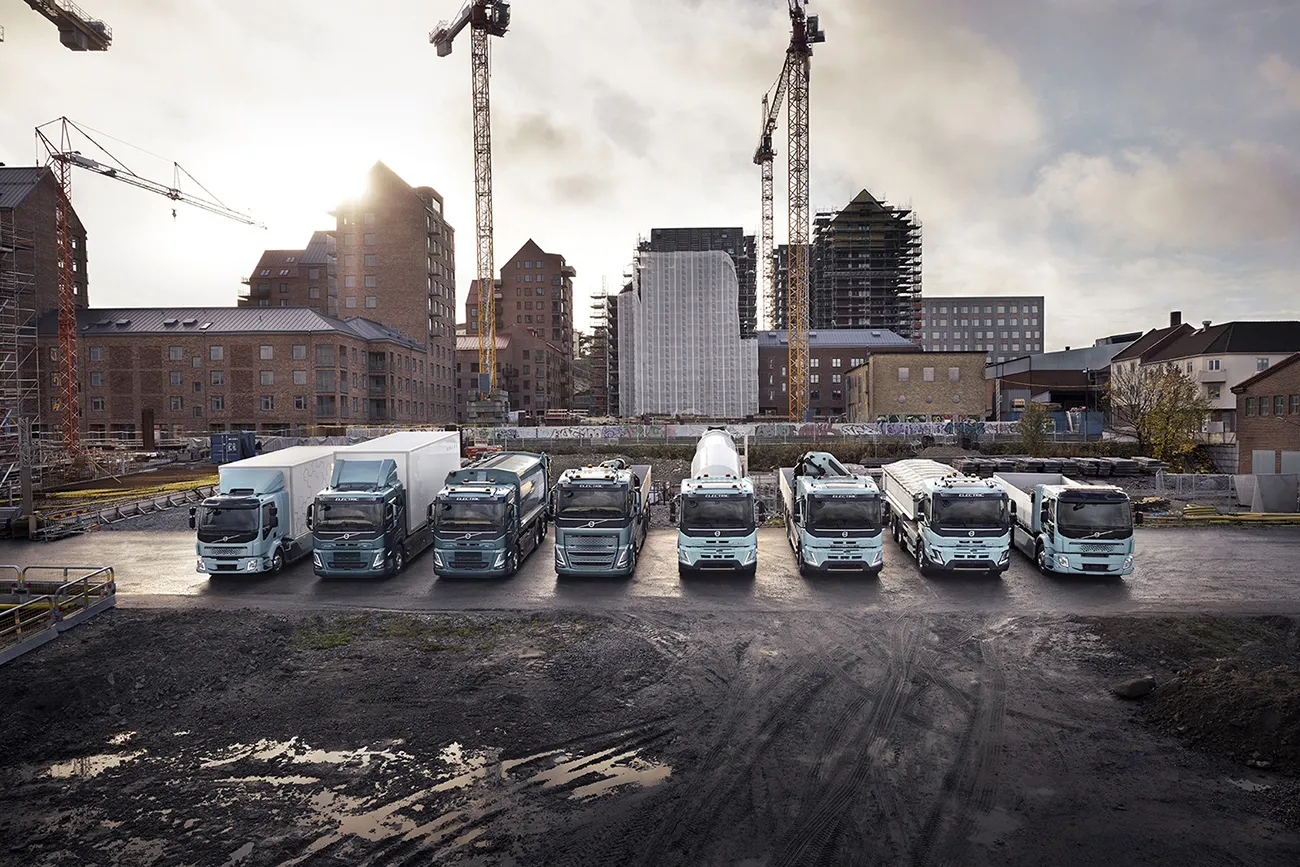
Volvo’s electric trucks are based on a proven, flexible platform. The Volvo Gold Service Contract also covers the complete truck, giving companies access to everything they need to minimise the risk of unplanned stops. Volvo also offers services to optimise range, as well as digital tools for fleet management and driver support.
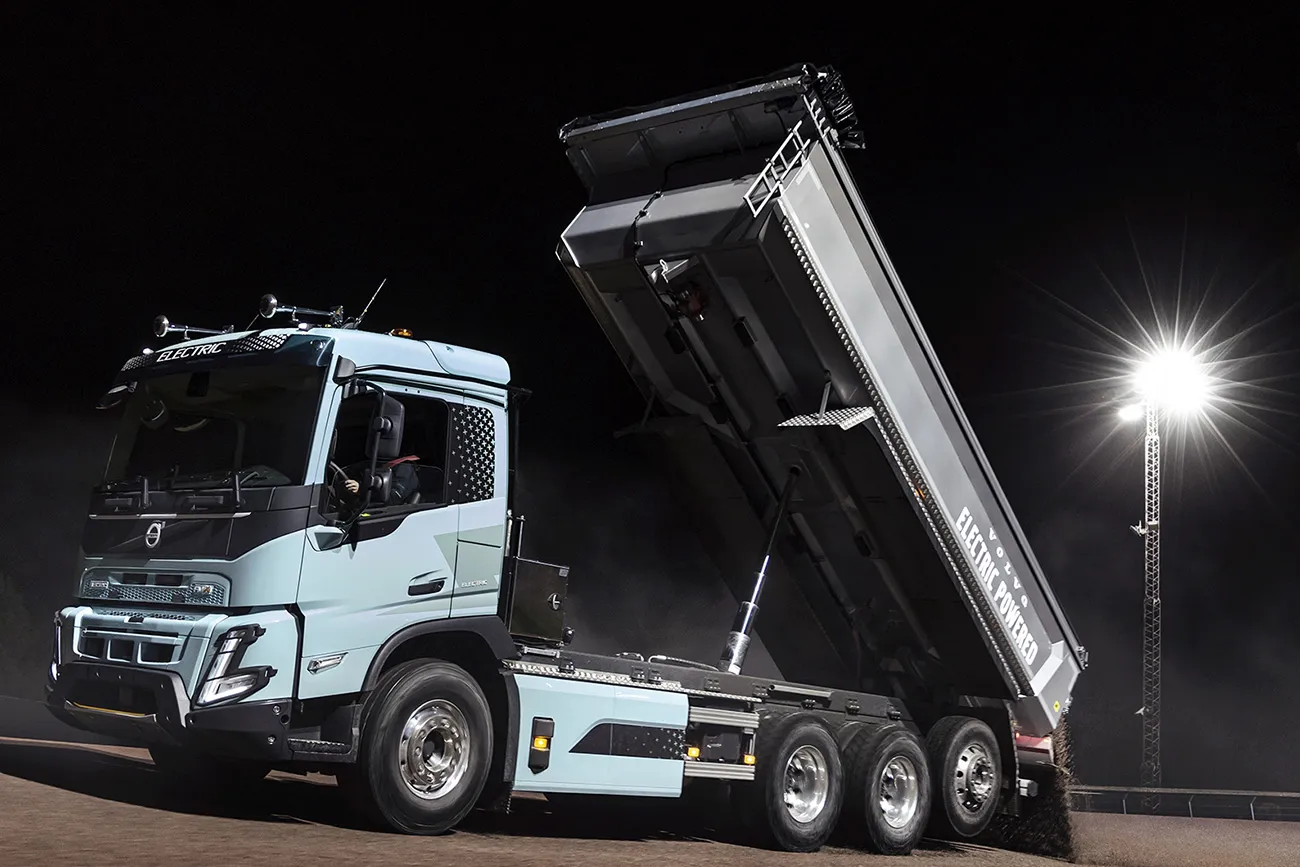
The robust Volvo FMX Electric can deliver and move heavy materials and machinery in sensitive parts of the city, while causing as little disruption as possible. This enables the trucks to meet the requirements of local authorities and residents for cleaner, quieter transport. To simplify the transition to electric transport, the truck is available with service and support packages covering charging, route planning, range, battery monitoring and more.
Two or three electric motors combined with an I-Shift gearbox adapted for electromobility deliver a smooth, powerful driving experience. The impressive output of up to 490 kW/666 hp is managed by a traction control system that is also suitable for slippery surfaces. Various drive modes offer the desired levels of performance, comfort and energy consumption. The six battery packs provide up to 540 kWh, giving the truck sufficient range for construction work.
Question about this story? Ask your question
Keep following this
Get an email when a new story is published. No account needed.
- ThemeConstruction equipment and transport in motion
- SubjectBouwMat







