









‘You need to treat the purchasing process as a business case’
Text Kees Beijer Images UMS and Kees Beijer
Zero-emission equipment is a worthwhile investment even without SSEB subsidy
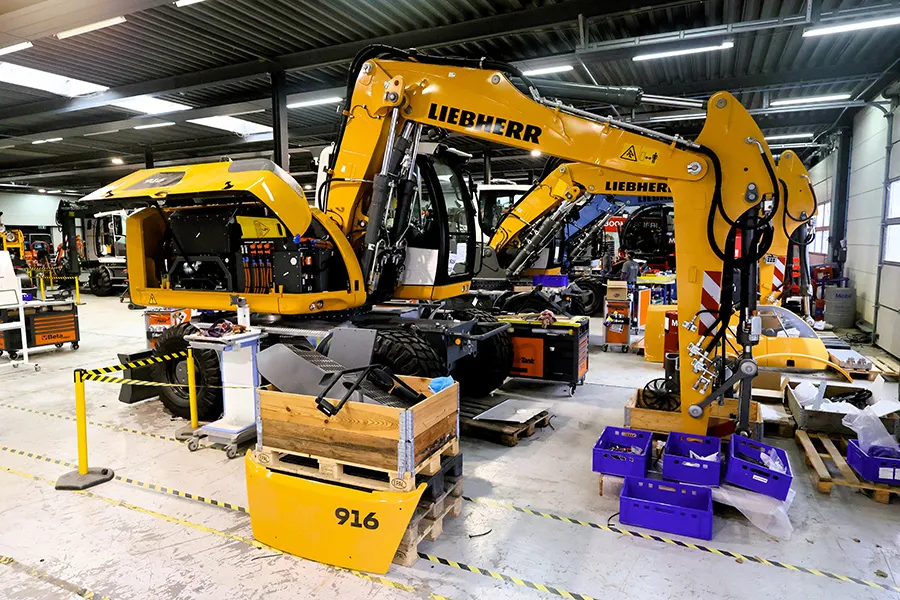
Under the banner ‘UMS on the move’, Urban Mobility Systems in Oss is fully committed to the energy transition in the construction and transport sectors. With the Netherlands serving as a test bed for zero-emission vehicles and machinery, much has already been achieved and numerous innovations are in the pipeline. “In that respect, 2025 looks set to be another interesting year,” says owner Lars Kool, giving a glimpse of what lies ahead.
As a specialist in high-tech electrification solutions, UMS aims to give zero emissions a powerful boost. Its guiding principle, ‘No emissions as our mission’, is its main driving force. To achieve this, UMS places great importance on quality and safety. “These core values are embedded in our business operations like DNA.” All products are fully automotive-certified and therefore meet the highest quality and safety standards. In Lars’s view, safety requirements cannot be high enough. “A new standard comes into effect next year. Safety regulations are becoming stricter and enforcement will be stepped up. We’re very pleased about that. It is important to keep cowboys in the industry in check and work together to achieve the highest possible quality standards.”
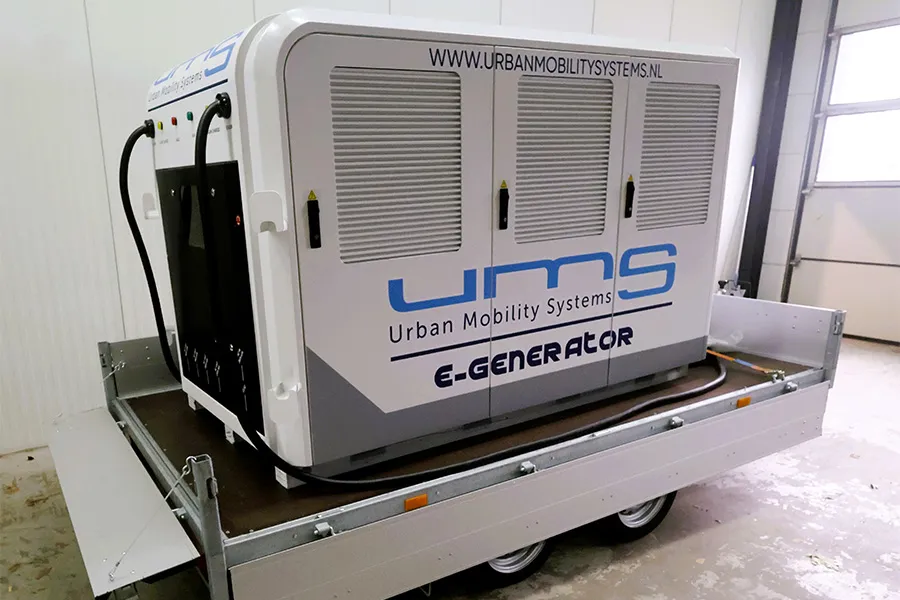
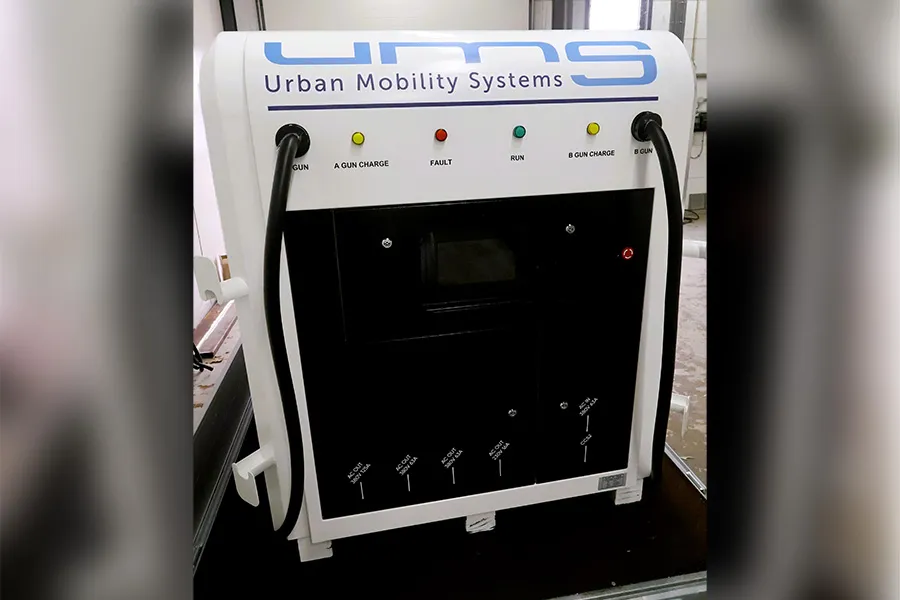
As an alternative to a battery container, UMS offers this mobile e-Generator, available with either 250 or 500 kWh of battery capacity.
The key to success
Collaboration is the key to success, Lars assures us, because “you have to share in order to multiply. Only by working together successfully can we accelerate the energy transition.” The former automotive technician remains determined to establish a certain legacy as a ‘leader’ in clean technology. “Winning a CES Award 2022 is, of course, great, and now the circular asphalt train ART-E is one of three finalists for the Cobouw Award, but beyond the recognition, it doesn’t mean much to me. What matters is creating an impact in the construction and transport sectors with our conversion kits. That’s what’s relevant.” Anyone entering the workshop in Oss cannot fail to see that UMS is well on its way to achieving this ambition. Electric machines are being assembled simultaneously at some eleven workstations.
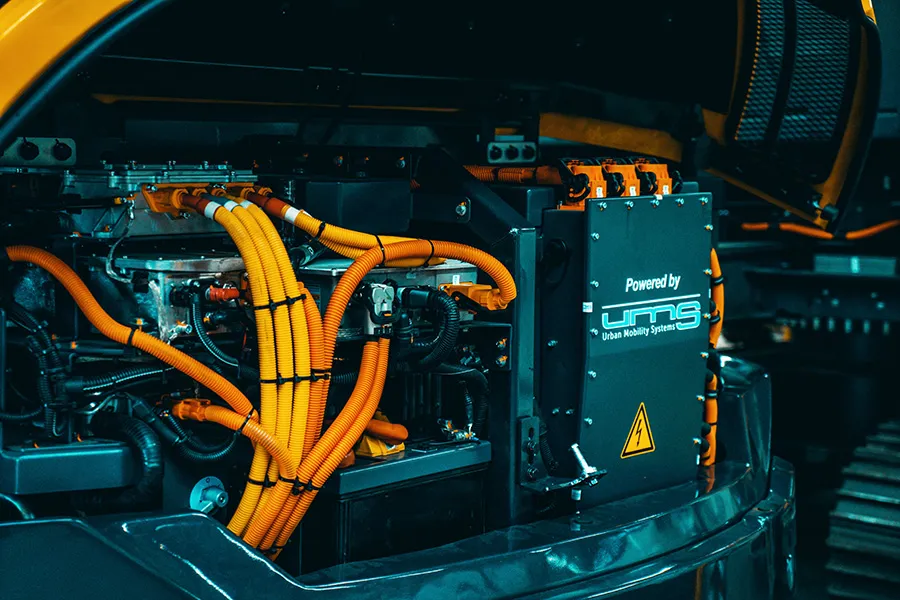
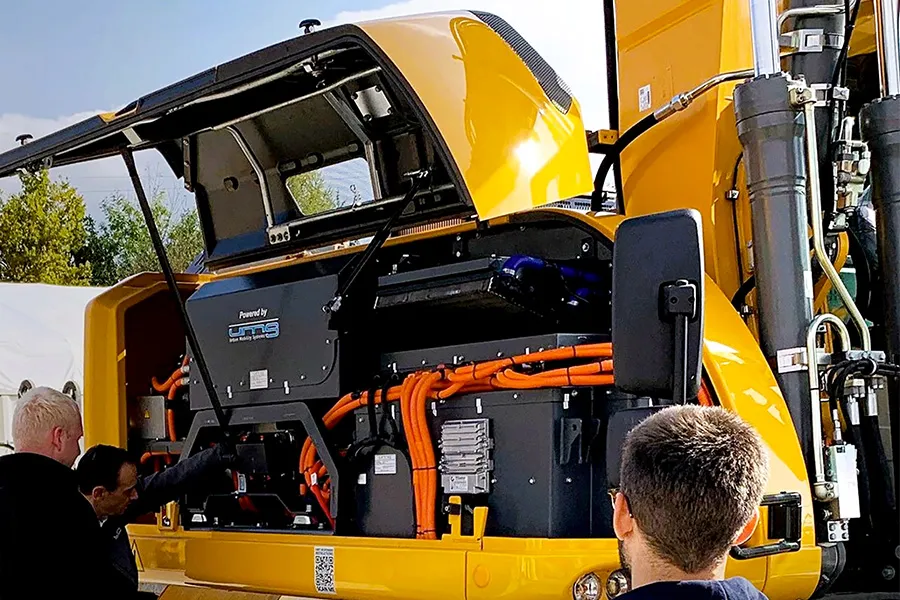
With its zero-emission drivetrains and conversion kits, UMS creates practical, sustainable solutions for the construction sector, from a 1.5-tonne articulated loader to a 30-tonne crawler excavator. “Cranes, piling rigs, asphalt rollers and telehandlers can also be electrified cost-effectively,” says Lars. Developments are moving fast, and the company in Oss has plenty in the pipeline too. “There are many new players in the market, so we need to keep innovating. A completely redesigned conversion kit is planned for next year, and we hope to bring another leading equipment manufacturer on board soon. The company will see a major change as it starts the new year in a brand-new factory in Arnhem. We can produce up to 3,000 battery kits a year here, or even 9,000 kits if we move to three shifts.”
From OEM to end user
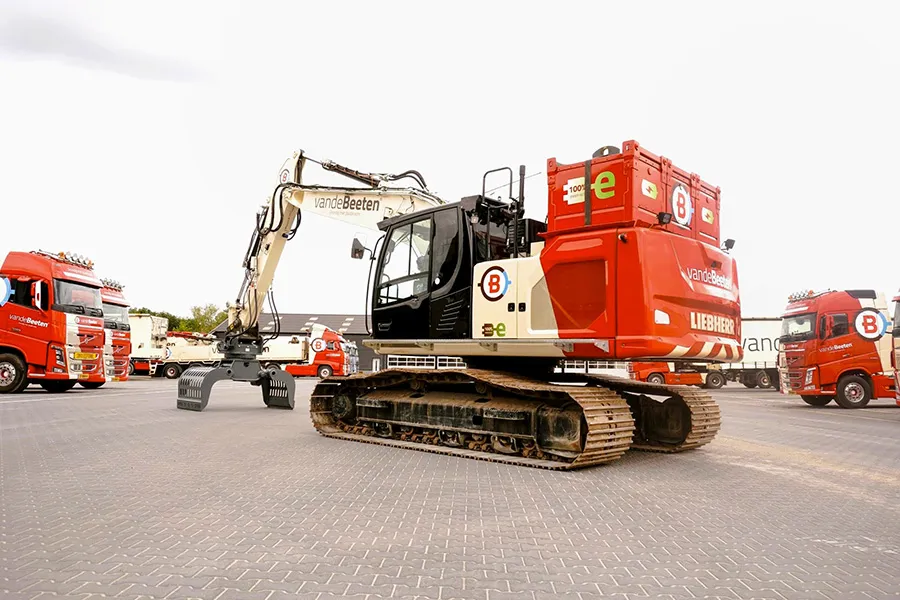
UMS provides solutions for OEMs, distributors and equipment owners. Manufacturers such as Bobcat, DAF, Dynapac, Hyundai, Junttan, Knikmops, Liebherr and Magni rely on UMS to expand their product ranges with zero-emission versions of existing models, without adding to the workload of their own engineering departments at this stage. “We also supply distributors of brands that do not yet offer electric models but are seeing strong market demand for zero emissions,” says Lars. “Finally, fleet managers at large construction companies use our electric conversion kits to upgrade existing machines in their fleets. This provides a highly cost-effective way to renew equipment and reduce operating costs through significantly lower fuel and maintenance costs.”
Lars is certainly no fan of the AANzet scheme, which subsidises the purchase of electric trucks, or the SSEB scheme for zero-emission construction equipment, at least not in their current form. “Subsidies are the death knell for a faster transition,” he has said. “I think the SSEB scheme is more of a hindrance, because the funding is not available to everyone. It would be much better to provide subsidies on the procurement side, not by financially supporting the purchase, but by rewarding the use of zero-emission equipment with a higher hourly rate, paid for out of the subsidy fund. That way, end users will treat the purchasing process more as a business case and make sure the investment stacks up financially. Otherwise, it simply won’t work. We can already see that the Netherlands, despite being a test bed for zero-emission equipment, is being overtaken on all sides.”
Building a counterweight
That is why UMS has long since stopped focusing solely on the Dutch market and now presents itself as a global player. From its branches in Abu Dhabi (United Arab Emirates) and North America, the company aims to expand its reach around the world. By operating globally, the clean-tech engineering company is positioning itself as an attractive supplier of battery-electric drivetrains and conversion kits to major manufacturers. Australia and Argentina are the next stops on Lars’s mission. This choice is no coincidence: as producers of raw materials for battery technology, these countries offer an opportunity to provide a counterweight to China’s absolute dominance. “We are in the middle of an industrial war. By bringing skilled people together, we can make a stand and preserve the knowledge and expertise that have been built up here over so many years.”
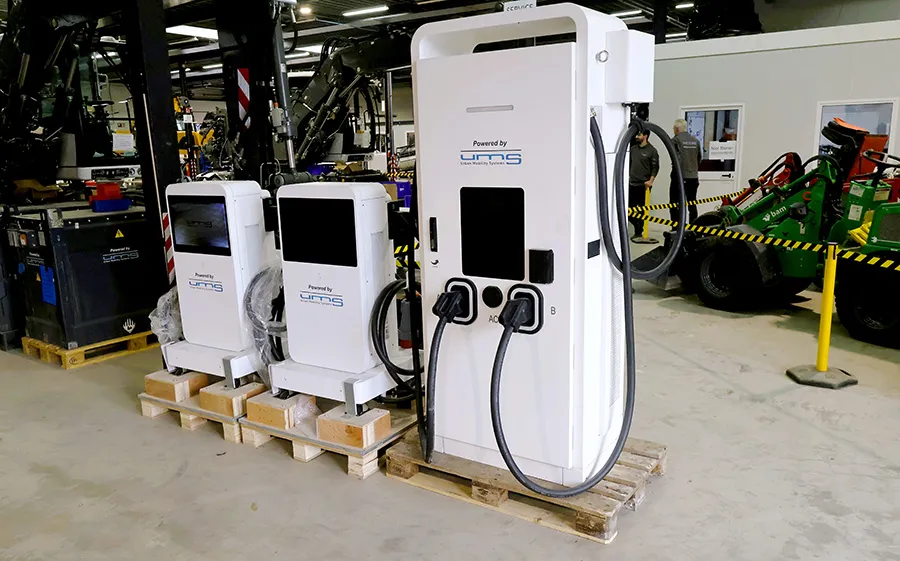
To help customers use zero-emission machines on site, Urban Mobility Systems also offers charging and energy storage solutions that enable off-grid storage and grid balancing as temporary or semi-permanent solutions. The e-Generator is the latest development in this area. This mobile charging station is available with 250 or 500 kWh of battery capacity and offers several charging options. “The first units have already been sold,” says Lars with justified pride. “For permanent installations, we supply high-quality fast chargers from Germany. Various models are available, with the top-of-the-range model featuring a 44 kW AC connection and two ports for DC fast charging at up to 150 kW. Modular battery packs can be connected downstream of the fastcharger to provide extra capacity, and the price is considerably lower than the going market rate.”
Question about this story? Ask your question
Keep following this
Get an email when a new story is published. No account needed.
- ThemeConstruction equipment and transport in motion
- SubjectBouwMat







