









Trench box system guarantees safety, speed, flexibility and quality
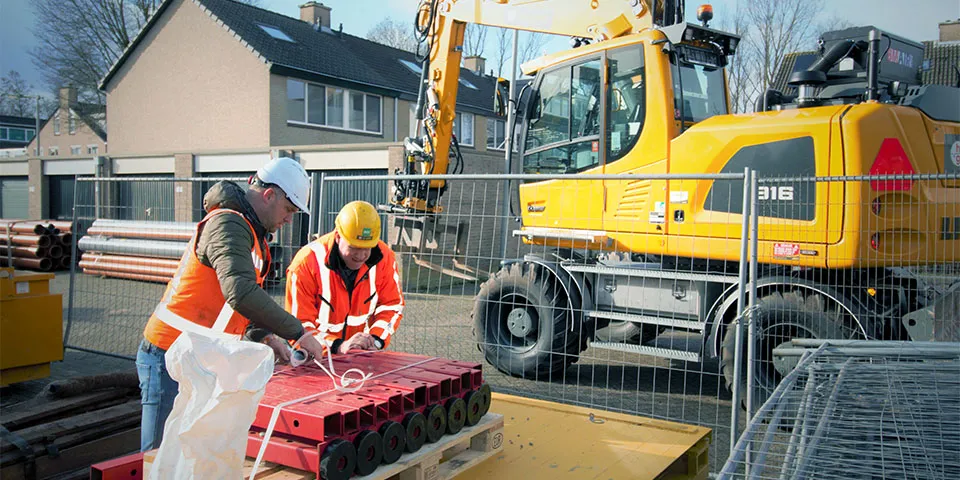
It is Tuesday afternoon when a gleaming Van de Beeten lorry arrives at Van Gelder’s project site on Hillegomweg in Arnhem. Also gleaming is the mobile excavator, a Liebherr 916, working on the project on behalf of Van Gelder. Its operator is Maarten Schutte. Before welcoming us into his small but warm site cabin, he first has to unload the lorry, of course.
How excavation work is carried out with minimal disruption to the surrounding area
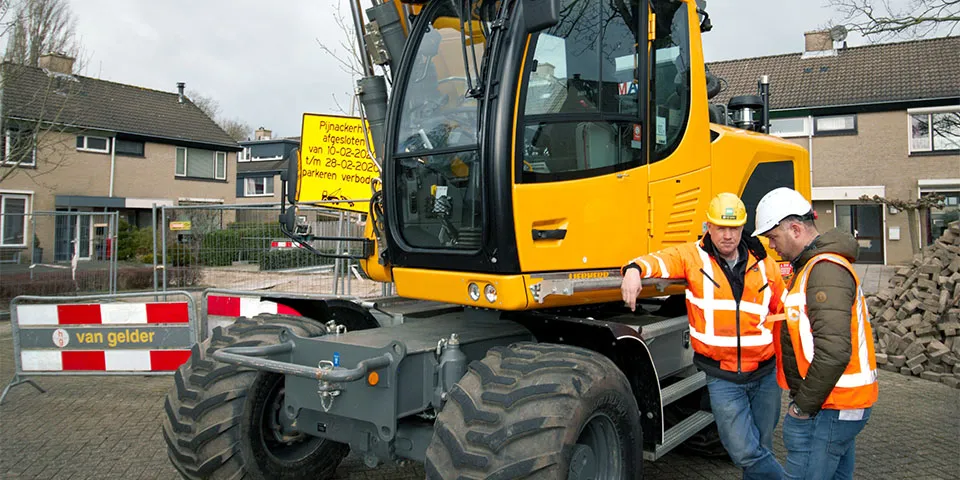
Good consultation beforehand is half the job.
Although the lorry is equipped with a crane and a stone grab, Maarten prefers to unload it himself using his mobile excavator. That way, the equipment is quickly and safely placed in the right spot, and the lorry can soon be on its way again. No time lost, no double handling and less disruption for local residents. Just how we like it.
An operator through and through
Maarten skilfully unloads the equipment using a tiltrotator fitted with a fork carriage. Within 10 minutes, everything is in place, the lorry has left and Maarten invites us into the site cabin for a cup of coffee. He enthusiastically tells us about his career, which began in 1988 with a farm contractor, where he started out on a shovel. He then moved to Van Gelder, where he has now been working for 27 years. At Van Gelder, he became a mobile excavator operator, a job he still enjoys. Maarten likes infrastructure projects, especially sewer renovation. “With sewer renovation, at least you can see what you’ve accomplished after a long day’s hard work,” he says with a laugh.
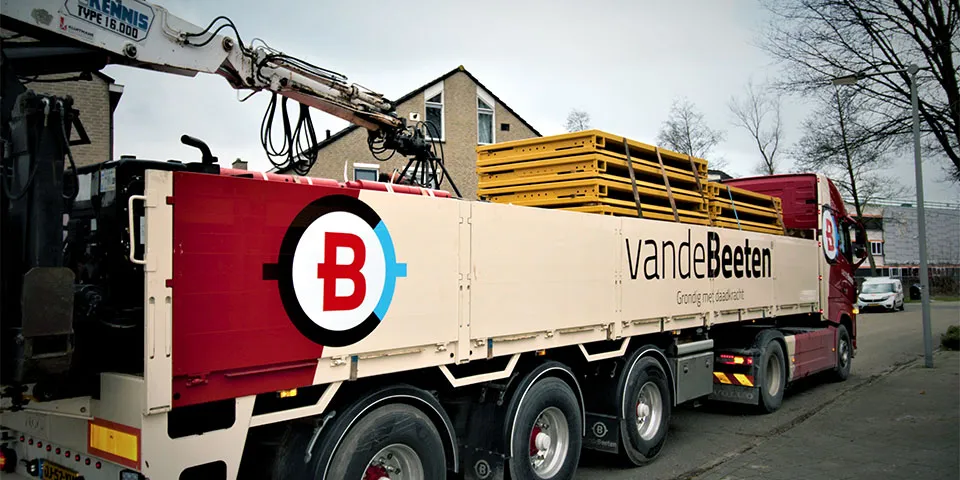
Although the lorry is equipped with a crane and a stone grab, Maarten prefers to unload it himself using his mobile excavator.
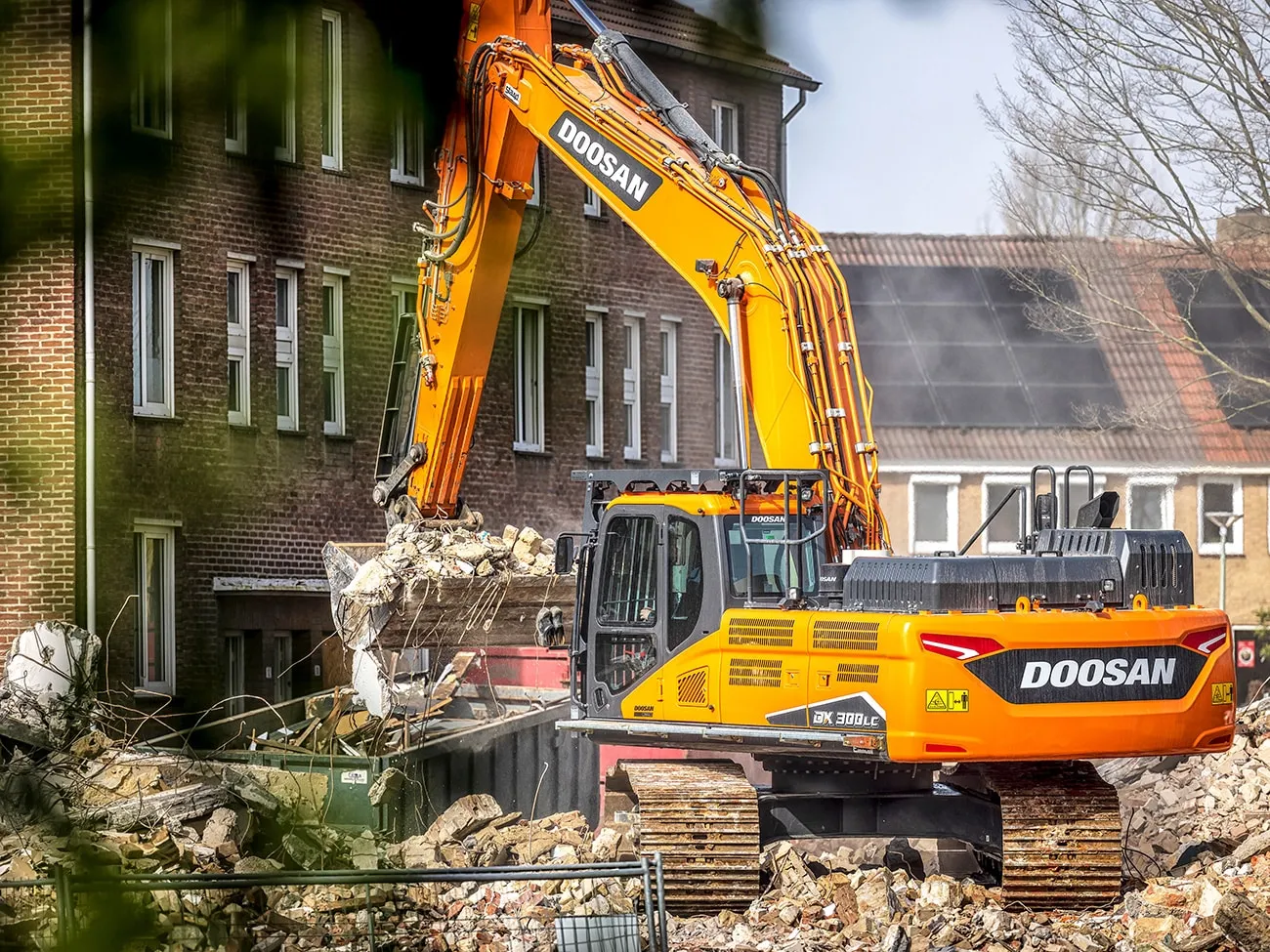
When we ask him about the best project he has worked on during his career, he immediately mentions Amersfoort, where Van Gelder had to build the bus lane and associated infrastructure from the station to the city centre. He also recalls the renovation of the old industrial estate for the municipality of Elburg, where Van Gelder installed all the infrastructure, a stormwater drainage system and sewers using pipes ranging from 200 to 400 mm in diameter.
The BodemBox is unloaded with care.
Working safely and saving space
Maarten has worked with BodemBoXen before, although he is quite honest in saying that it has not been very often. “If there’s enough room to excavate a trench, it’s quicker to work without BoXen,” he explains. We have to agree. “But here in Arnhem, for example, we have gas and water pipes close by, and a dewatering system is needed. That’s when we need the BoXen to work safely and save space,” Maarten continues. BodemBoX is, of course, the right partner to help identify the BoX best suited to the project.
Instructions on the square box struts.
As the BodemBoX will be in use on the Arnhem project for some time and will be excavated and reinstalled several times, the recommendation was to use extendable square box struts. With frequent use, screw struts are more likely to be knocked out of alignment by the excavator bucket, making them unusable. After coffee, we walk outside with Maarten to explain how the square box struts work. Together, we assemble the first strut, and Maarten can get to work safely and quickly. We wish Maarten and Van Gelder every success with the project and continue on our way to advise elsewhere on the use of BodemBox.
Question about this story? Ask your question
Companies in this story
Keep following this
Get an email when a new story is published. No account needed.
- ThemeConstruction equipment and transport in motion
- SubjectBouwMat
- CompanyVan de Beeten B.V.







