How to apply greening strategically in design plans
Text Suzanne van Gaale Images idverde NL
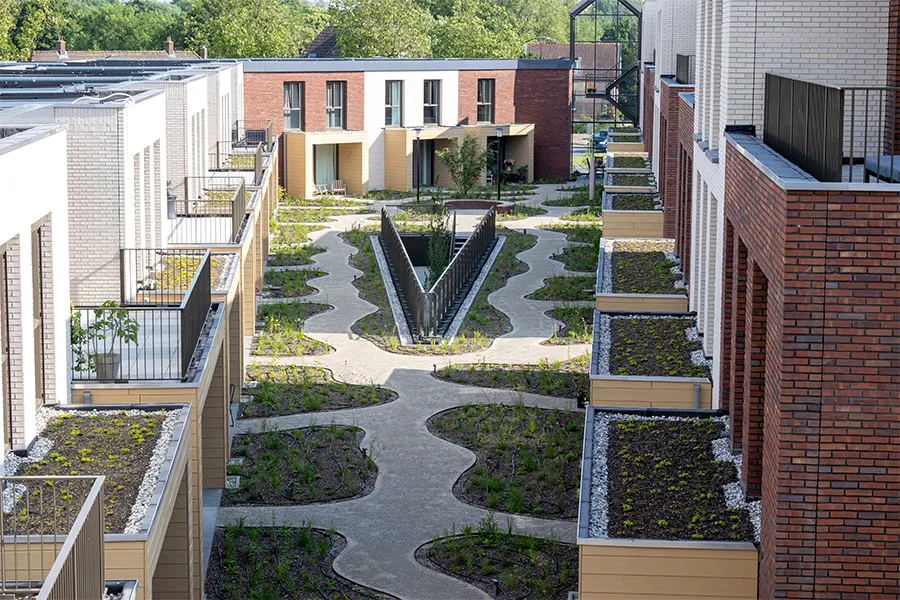
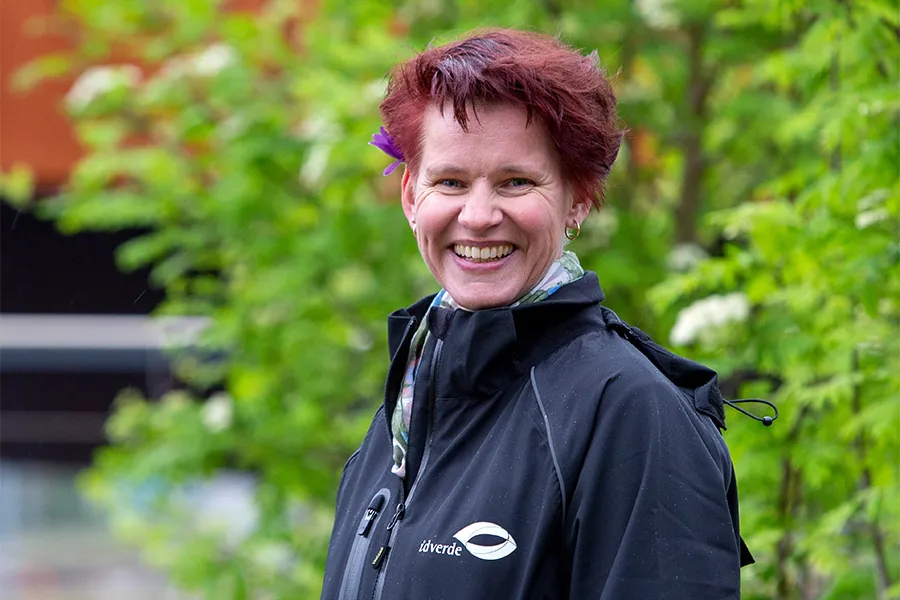
Green space is no longer an afterthought. It is the key to tackling societal challenges such as climate change, heat stress and flooding, while also improving health, biodiversity and spatial quality. Yet in practice, there is still friction between civil engineering and green space, observes Miriam Spermon, Design & Planning Adviser at idverde Advies: “The good news is that there are gains to be made.”
“In many civil engineering projects, design decisions about cable routes or paving have already been made by the time the green space is considered,” says Spermon. “Awareness is growing, but greening really does need to be considered from the outset. Whether it is asphalt or street furniture, everything loses value after completion. Trees are the exception: they become more valuable over time and, after 40 years, will contribute exponentially more to our health and the liveability of the city. That is worth investing in. Even small adjustments can have a big impact. For example, we advise on how to position cable ducts so that trees have room to grow old in good health. Another example is greening flat roofs with a rainwater storage system. This is already a major step: it cools and insulates the roof, and solar panels perform better. Everything is interconnected.”
Tools provide insight
Through projects across the Netherlands, idverde NL helps public authorities and developers apply greening strategically. One of the tools it uses is the Climate scan. “It shows where heat stress, drought or flooding occurs and which interventions can help reduce these effects. This allows us to provide targeted advice tailored to each location.” The Climate scan is part of Green Impact Modelling (GIM) and can be seen as a starting point. Using the Climate scan as a baseline assessment, GIM can then map the impact of green space within a design. This allows the added value of greening to be substantiated with measurable data. It helps ensure that green space is considered not just a preference, but a demonstrable function in the design and decision-making process. Spermon explains its added value with an example: “In a recent application, temperatures on a business park were found to reach as high as 50°C on summer days, despite some existing planting. The Climate scan and GIM showed how adding trees with larger crowns, green façades and permeable paving could effectively help cool the area and improve water management.”
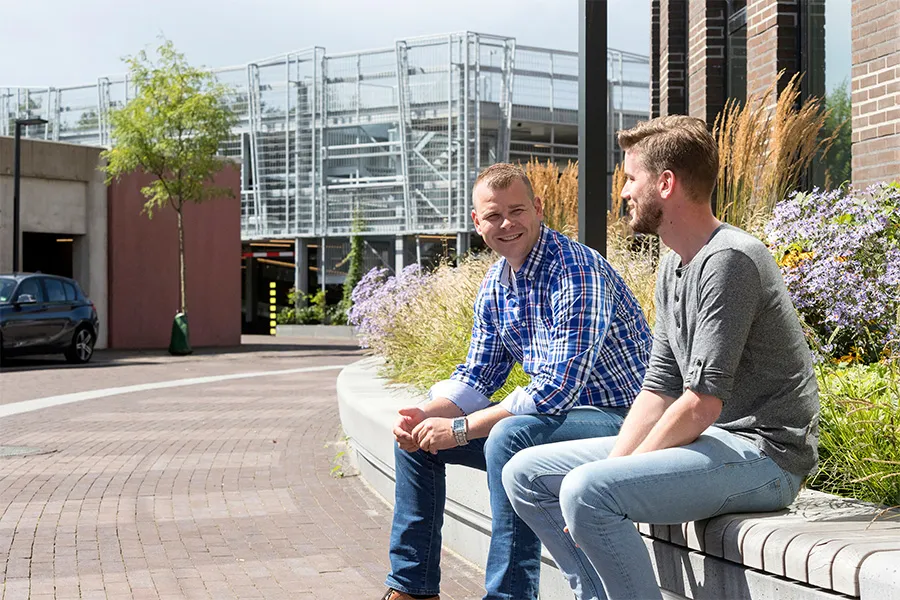
Working together on greener solutions
These tools encourage integrated thinking and action. By showing the impact of the choices you make, idverde NL helps policymakers and designers make informed decisions. “Greening then becomes not just desirable, but self-evident,” says Spermon. “Greening is not an aesthetic luxury, but a functional and urgent necessity. Only by working together can we create greener solutions for a better world!”
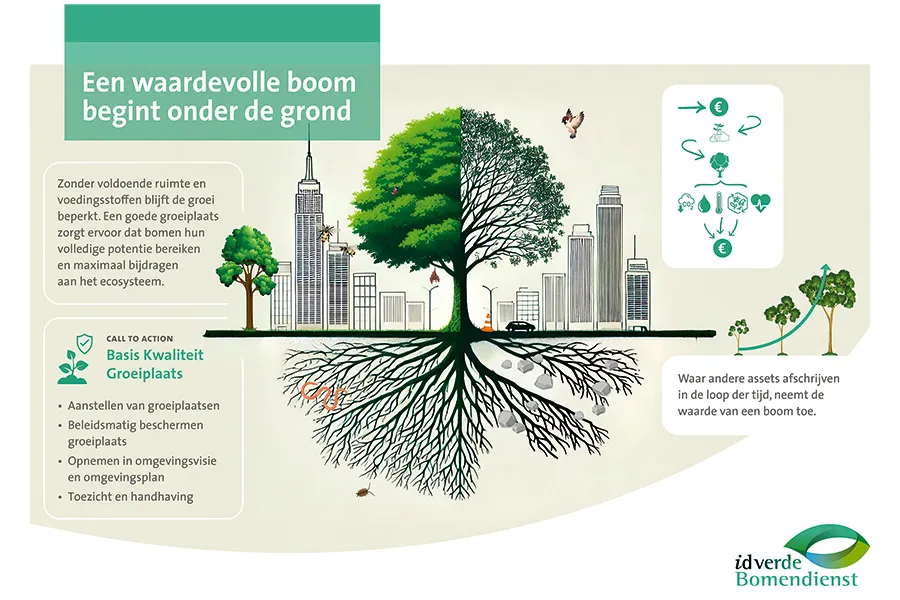
If we consider trees a long-term asset, we must treat them as such. That starts with creating a good foundation. Tree crown volume (BKV) is a valuable tool for making data-driven decisions and designing growing spaces that can develop along with the tree. This means giving careful thought to basic growing site quality (BKG). While many municipal assets, such as roads and sewer systems, lose value over time after installation, trees become more valuable as they grow older and larger. This means that investing in a spacious, healthy growing space is not only essential for the tree itself, but also an economically sound choice for tree managers.
Question about this story? Ask your question
Keep following this
Get an email when a new story is published. No account needed.
- SubjectSustainability & innovation