Good stewardship for future generations
Text Roel van Gils Image Rijkswaterstaat
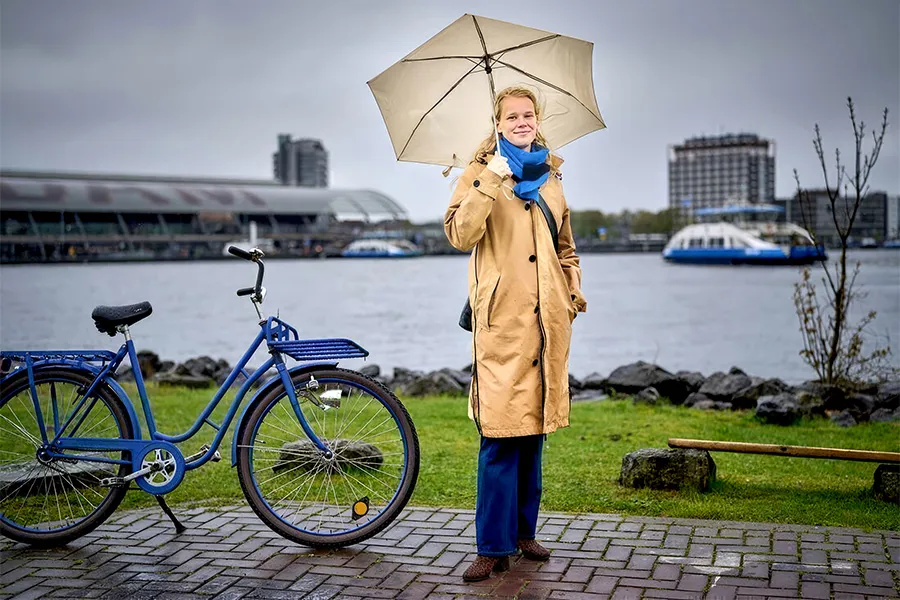
Actively involving the future in the choices we make today
Policymakers in the water sector must take future generations into account when making decisions today, as these often have an impact for generations to come. Good stewardship means avoiding the transfer of costs and problems to future generations. The Ministry of Infrastructure and Water Management, Rijkswaterstaat and the Delta Programme have appointed Mare de Wit as Future Ambassador to ensure that today’s young people and tomorrow’s residents are more closely involved in policymaking and decision-making on water and climate adaptation.
De Wit joined Rijkswaterstaat in 2020 as an adviser on climate and future-proof water management. “At the time, I was drawing up plans and doing calculations for the future water system, taking account of the energy transition, climate change and so on. It was all about the long term. What struck me then was that some of the choices being made did not always align with the direction we want to take in the long term. As a result, problems were being passed on to the future. I increasingly began advising on this. In that capacity, a year and a half ago I was appointed as a project lead to make the impact of our choices on future generations clear. To that end, I set up the Future at the Table project. Together with a group of young professionals and experts, we looked at how to make our ambition tangible within existing processes. This resulted in the report ‘The Future at the Table’, with practical guidance to help prevent policies from shifting problems onto future generations.”
Three ‘bosses’
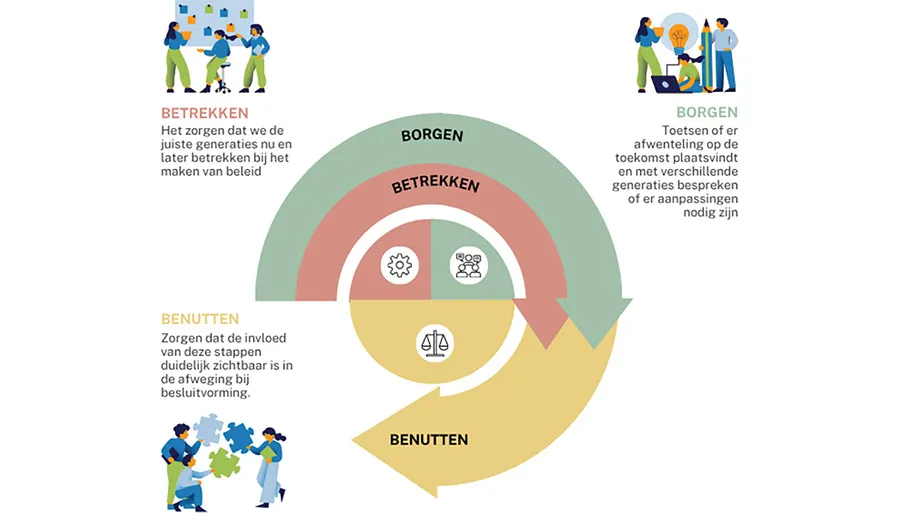
In April this year, De Wit was appointed Future Ambassador for Water and Climate Adaptation. She holds the role on behalf of the Delta Commissioner’s staff, the Ministry of Infrastructure and Water Management (Directorate-General for Water and Soil) and Rijkswaterstaat. It may sound strange to have three ‘bosses’, but on closer inspection it makes perfect sense. “The Delta Commissioner prepares policy and ensures that the right information is available, together with the Delta Programme partners. The minister then makes the decisions, and Rijkswaterstaat implements them at national level. That is how it is structured, so in that respect it is quite straightforward,” says De Wit. “My main role over the next two years is to put the methods described in the report into practice. We all have a responsibility to the future. By bringing the future to the table, we are trying to make clear the reach of our impact as advisers, civil servants or other commissioning parties. We have defined three steps: involve, embed and make use of. Each step comes with a practical tool to help.”
How long will it last?
The first step is to consider how to involve future generations in your plan, says De Wit. “To do that, it is important to establish the plan’s lifespan. Say you are working on a new housing development that is due for completion in 2040. If all goes well, it will still be there in 2140. How many generations will it affect, and how can you involve them in the process now? One way is to use the Japanese Future Design method, a kind of role-playing exercise in which you put yourself in the shoes of a future resident and talk with colleagues from the present day. There are many other tools for identifying the interests of future generations.”

Generational impact assessment
In the second step, you embed these interests in your plan. “It is quite difficult to safeguard the interests of someone who does not yet exist,” De Wit rightly points out. “But we can assume that certain needs of future generations, such as those represented in Maslow’s hierarchy of needs, will be much the same as ours today. This is also reflected in the broad prosperity approach, which sets out eleven indicators of what people need to flourish in society. To safeguard the interests of future generations, we have developed a generational impact assessment. Using these indicators, you can assess whether a generation will be better or worse off in those areas. This allows you to test whether your plan will create problems or opportunities in the future.” However, the generational impact assessment alone is not enough to safeguard all interests. De Wit gives an example: “That is why the second step also includes a generational dialogue, in which we discuss the dilemmas raised by the assessment and whether we consider the extent to which we are shifting problems onto future generations acceptable. If the new housing development is built in a deep polder and the assessment shows that the project’s costs will rise sharply after 2050 because an additional pumping station will be needed, we could discuss in the generational dialogue what responsibility we have in that regard, and whether we could, for example, set aside some money now. These are the kinds of issues you discuss through public dialogue, the generational dialogue.”
The third and final step is to make use of the future at the table. “When you make a decision and implement the plan, explain in plain language how it shifts problems onto the future and why. Think of it as a way of demonstrating stewardship when making a decision,” explains De Wit, who is now keen to make progress. She will work with the three organisations to encourage good stewardship for future generations in decision-making. “I also hope that people in other organisations will take ownership of this issue. In principle, anyone can work on it, in any field and in any type of organisation. We are all responsible for the future!”
Question about this story? Ask your question
Keep following this
Get an email when a new story is published. No account needed.
- SubjectSustainability & innovation