









Rapidly growing demand for electric cranes
Withdrawal of nitrogen exemption for construction boosts demand for zero-emission equipment
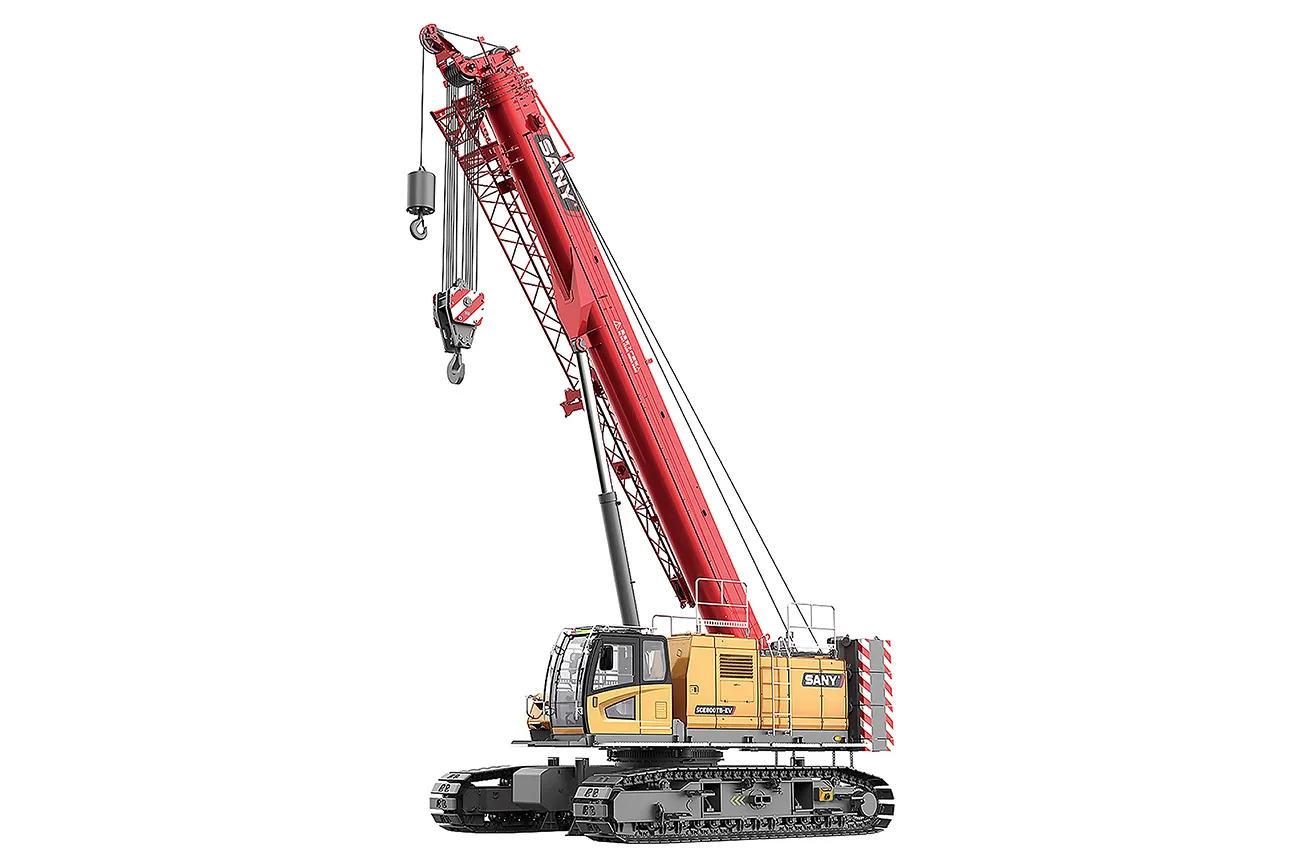
A disaster for the construction sector, but at the same time an incentive to accelerate the purchase of zero-emission equipment. With the construction exemption withdrawn, demand for electric cranes is growing, as they will be part of the solution in the years ahead. Sany Cranes.Services in Sassenheim has been inundated with calls about the 80-tonne electric crawler-mounted telescopic crane unveiled at bauma. Latest news: a 135-tonne version of the electric lattice-boom crane is also on its way.
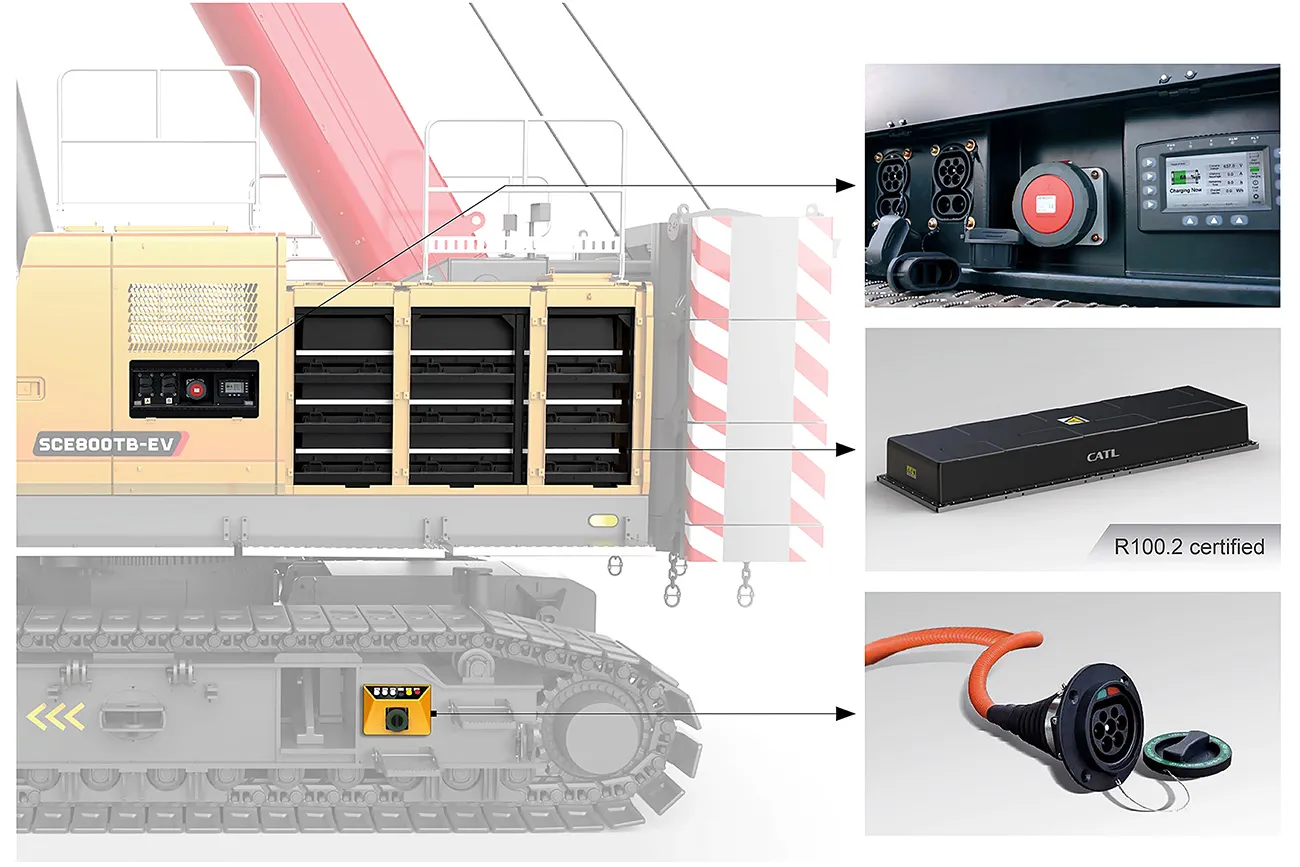
At the end of October, during bauma, the plant and machinery trade fair in Munich, VolkerWessels unveiled the world’s first fully electric crawler-mounted telescopic crane. The SCE800TB-EV was displayed in VolkerWessels colours on the stand and was officially handed over to the Netherlands’ second-largest construction company. The electric 80-tonne crane drew a large crowd to the SANY stand, and not just people who wanted to look. Demand for zero-emission equipment is growing outside the Netherlands too, although we remain a frontrunner in this area. One example is VolkerWessels’ order for a second SCE800TB-EV, which is expected to be delivered before the end of this year. The electric 80-tonne crane ordered by Ballast Nedam will follow soon after.
It’s going to be a very busy year
Interest in this new type of electric crane was already growing strongly, but with the construction exemption now withdrawn, 2023 looks set to be a very busy year for the Sany Cranes.Services team. Since 2019, the Sassenheim-based company has presented itself as an importer of Sany cranes and is also the official dealer for the Benelux. A SANY representative is based at the company to check quality standards and ensure they meet European standards.
Sales manager Roland Quarré is seeing a sharp rise in demand in the Netherlands for zero-emission machines, which enable construction sites to meet increasingly stringent local and national requirements on emissions and noise pollution. Those strict requirements are taking on a new dimension following the long-feared ruling on the construction exemption, now confirmed by the Council of State (see box).
There is a silver lining
The withdrawal of the construction exemption is a real disaster for the construction sector. Yet there is a silver lining: given the current political circumstances and the rollercoaster of fossil fuel prices, zero-emission machines such as electric cranes can help cut emissions. For many companies, that is a welcome bonus, but it is increasingly becoming a necessary step. The Sany Cranes.Services team expects three out of every four machines sold next year to be electric. Given the expected growth in sales and rising demand for rental machines, it is important for customers to place their orders in good time to ensure they can take delivery of a crane in 2023. To ensure it can provide adequate service, Sany Cranes.Services has begun building a completely new and expanded service complex in Sassenheim.
Coming soon: the 135-tonne version
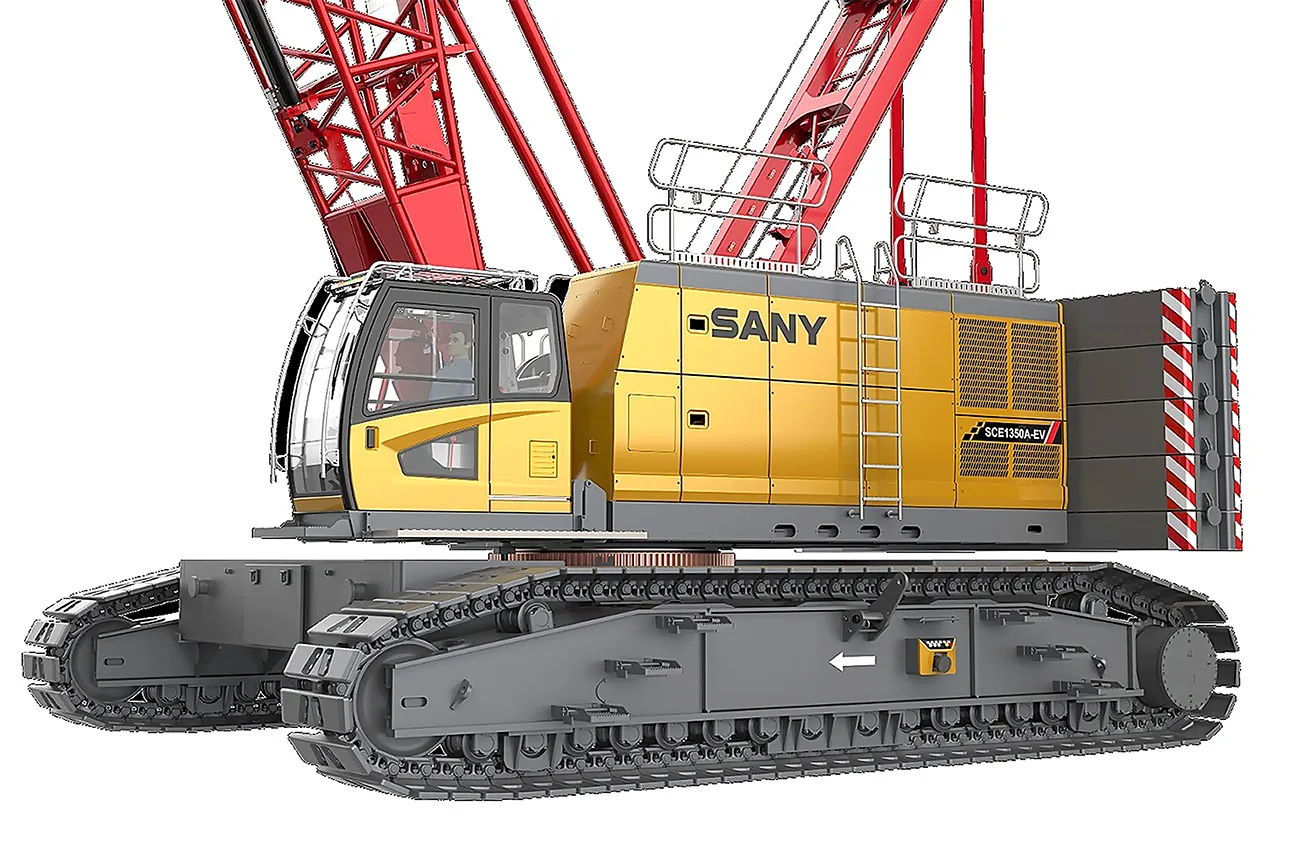
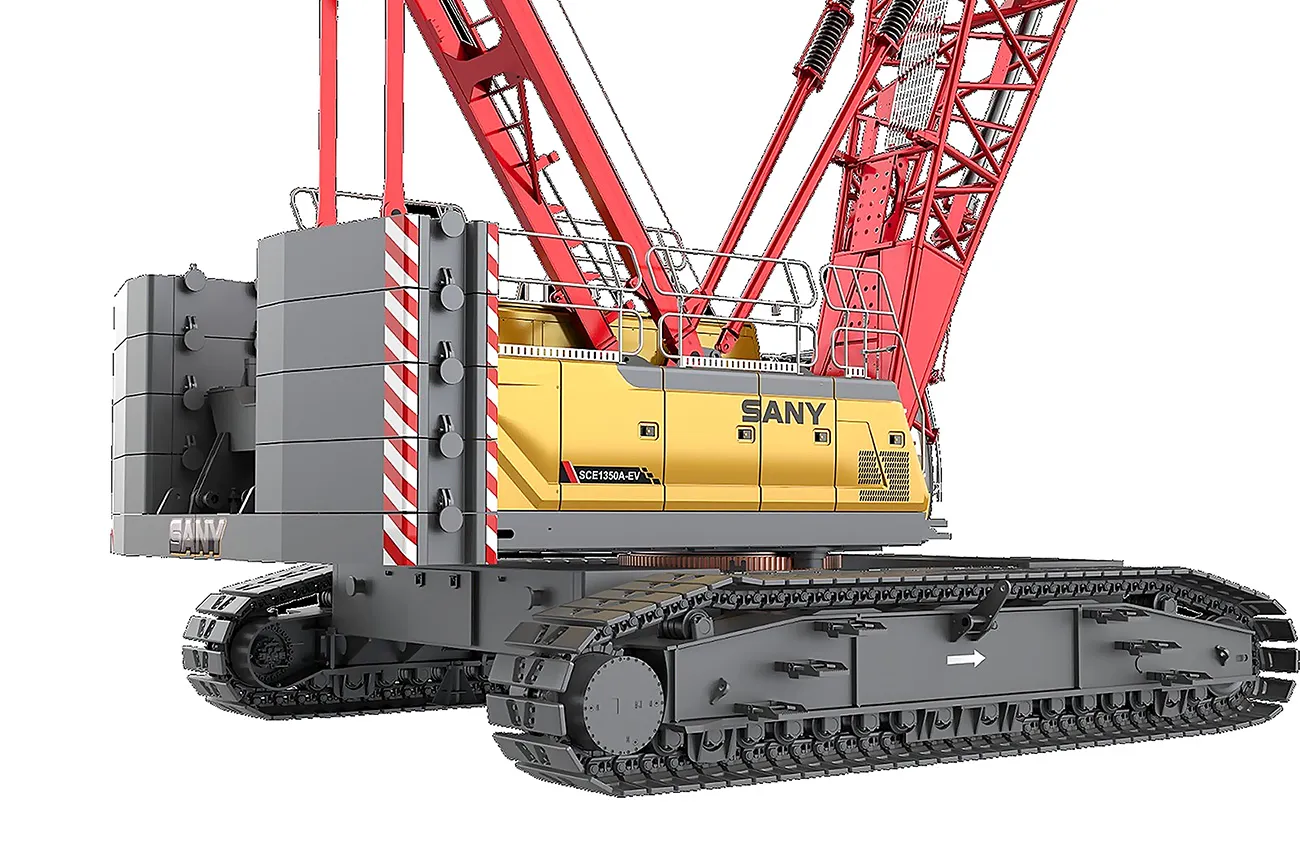
The latest news is that the first of the announced 135-tonne versions of the electric crawler-mounted lattice-boom crane will arrive in Sassenheim in early 2023. Many people are eagerly awaiting it. Like the SCE800TB-EV, the 1350A-EV produces no emissions and is quieter and more powerful than the Stage V diesel version. Its battery capacity has increased in proportion to the crane’s capacity compared with the 80-tonne model: 368 kW versus 282 kWh, enabling it to work continuously for 8 hours as well. Further specifications are: 668 tonne-metres. The main boom alone has a maximum length of 76 metres. The main boom with fixed jib has a combined length of 61+31=92 metres, while the main boom with luffing jib measures 49 to 52 metres. Another interesting point is that, according to Sany Cranes.Services, the load chart for the 135-tonne 1350A-EV is better than or equal to that of a 160-tonne crane from another well-known brand.
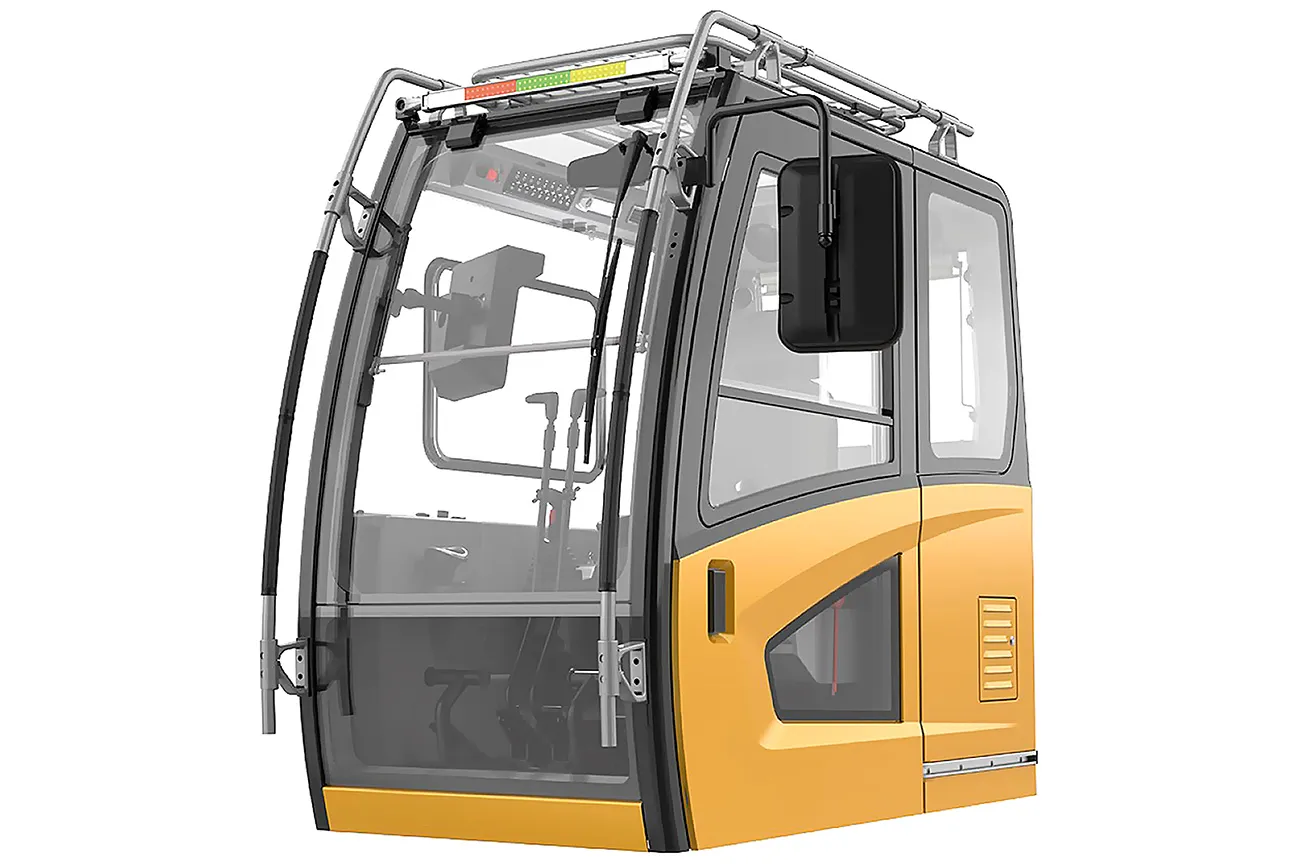
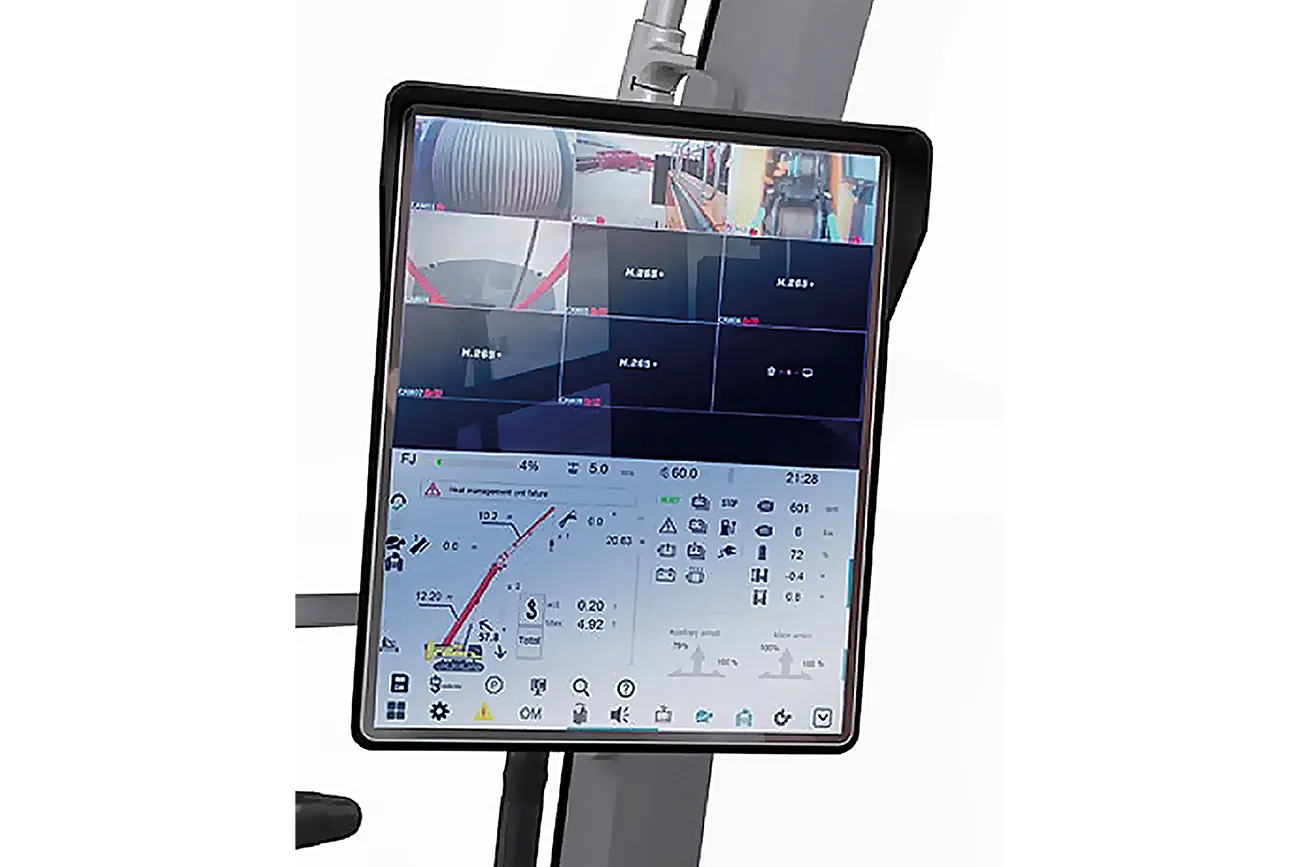
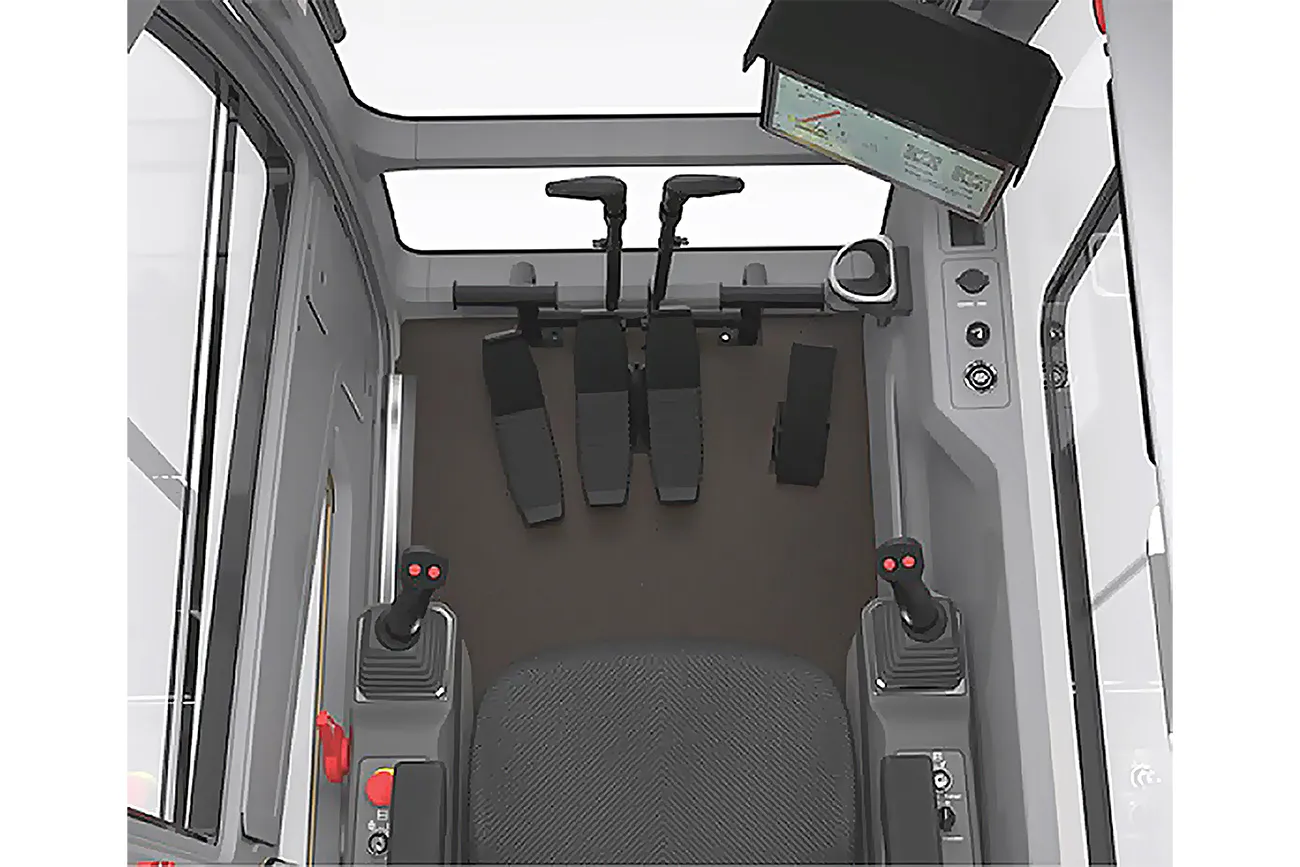
The new cabs on the electric cranes are slightly more spacious than the standard cabs on the Stage V versions, which has proved very popular with customers and operators. So who knows, perhaps we will soon see these cabs on all the cranes. The new machines are available with an optional charging point in the crawler frame. This allows the crane to be charged while working, with lifting, slewing and boom extension all possible. The crane can travel, but for safety reasons this must be done under supervision, with the cable monitored to prevent it from being run over.
Special training course for operators
The Sany Cranes.Services team provides buyers of electric cranes with a special training course for operators. Operating an electric crane is slightly different, and handling the battery charging process also requires a different approach. As with passenger cars, safety is paramount when connecting power cables and so on. Special manuals are also available in Dutch. Sany Cranes.Services also ensures that the electric cranes are tested and inspected at its own premises before delivery.
Withdrawal of construction exemption puts the Netherlands back to square one
Zero-emission construction sites are the future, and that is a good thing. What has been warned about for years has now become reality. The government’s nitrogen policy has failed miserably, following the Council of State’s final ruling in early November. The current rules for construction conflict with the Dutch interpretation of European nature conservation regulations. How did it come to this?
Since 1 July 2021, the Nature Conservation Act has included a construction exemption, following the court’s rejection of the Integrated Approach to Nitrogen (PAS). Under the construction exemption, permit applications did not have to take account of nitrogen emissions from certain construction activities. But unfortunately, according to the Court of Justice of the European Union, permission may only be granted if research shows that individual protected nature areas, particularly Natura 2000 sites, are certain to remain unharmed.
A disaster for the construction sector
“The Council of State’s ruling in the Porthos case is a disaster for the construction sector.” Bouwend Nederland could not have put it more clearly or forcefully, with chair Maxime Verhagen saying that “the consequences for construction are far-reaching”. “The government must urgently buy out major nitrogen emitters to free up nitrogen capacity for nature, construction and new economic developments,” he said, calling for action. The nitrogen crisis has now lasted three and a half years, which he, and by no means he alone, considers unacceptable. Housing and commercial building projects, road and railway upgrades, wind farm construction and much more will initially all come to a halt. A permit must once again be applied for on a project-by-project basis, and there are not enough experts to process all the applications on time.
The Netherlands is back to square one
Bouwend Nederland also expects construction costs to rise further as a result. “Reassessing the 30 to 50 per cent of projects still in the pipeline will take an average of three to six months. Home seekers, the energy transition, the climate and mobility will all suffer. The Netherlands is back to square one.”
For companies such as VolkerWessels, which has been investing in zero-emission equipment for some time, the impact may be somewhat less severe. For many others, however, it will be a case of waiting, and delays always cost money in construction. Looking back, we can say that the money would have been better spent investing in zero-emission equipment from the outset.
Conclusion
Electric equipment, including cranes, enables construction companies to keep working. With more options now available on the market, SANY is a frontrunner in this field.
Question about this story? Ask your question
Keep following this
Get an email when a new story is published. No account needed.
- ThemeConstruction equipment and transport in motion
- SubjectBouwMat







