









On the road to a fully reusable road
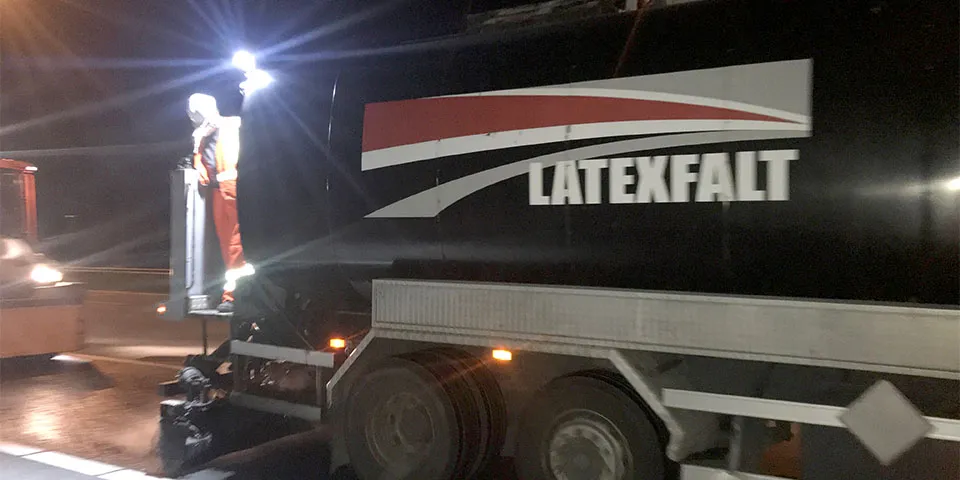
As the link between oil refineries and customers, Latexfalt buys bitumen and processes it into systems and solutions for use in various sectors, including infrastructure. The company, based in Koudekerk aan den Rijn, has set out three roadmaps for the infrastructure sector, with the aim of making roads fully reusable. “It’s already technically possible,” says Latexfalt’s Foeke Elzinga enthusiastically.
Latexfalt operates in several sectors and exports its products to no fewer than fifty countries worldwide. These include products such as tack coat emulsions, concrete protection products and surface treatments. “For the infrastructure sector in particular, we distinguish between hot and cold binders,” Foeke explains. “A few years ago, we drew up three roadmaps to help Latexfalt add value in the infrastructure sector. They involve the joint development of products and systems that contribute to the sustainability of the infrastructure sector and society as a whole.”
Better bitumen
The first roadmap focuses on better bitumen. Foeke explains: “Refineries are able to extract an increasing number of high-value products from crude oil. The composition of today’s bitumen is no longer the same as it was a few years ago. Consistent bitumen quality is essential for a high-quality road surface. We have developed a method for testing bitumen and, where necessary, modifying it with our products, for example to improve stability or restore its molecular structure.”
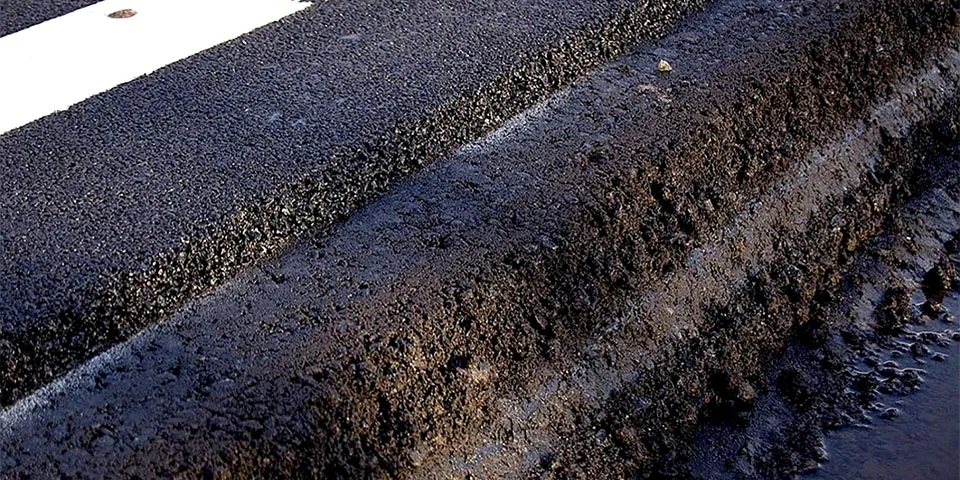
Consistent bitumen quality is essential for a high-quality road surface.
Life-extending maintenance
In 2010, Rijkswaterstaat launched a competition to develop products that could defer road maintenance. “The Netherlands has an extensive network of porous asphalt, which has a limited service life,” Foeke says. “One of our products has been validated for deferring asphalt maintenance. The rejuvenating component in our Modimuls ZV emulsion has been proven to extend service life by between three and six years.”
Horizontal reuse
Finally, the third roadmap focuses on reusing old asphalt, completing the cycle. “The properties of the bitumen in old asphalt change over the years due to various factors, including UV radiation, dust and contamination. We have developed a ‘rejuvenator’ to restore the bitumen in old asphalt to its original condition. This means the asphalt can continue to be reused, and at a lower temperature during production. So it’s a win on both fronts. The effectiveness of this rejuvenating component, which is applied in a controlled dosage, has been scientifically validated.”
By continuously monitoring bitumen quality, carrying out life-extending maintenance and ultimately enabling horizontal reuse, Latexfalt makes a significant contribution to improving the sustainability of the infrastructure sector.
Question about this story? Ask your question
Keep following this
Get an email when a new story is published. No account needed.
- ThemeExtending the life of roads and civil engineering structures
- SubjectBouwMat







