









Noise, a curious phenomenon
Text Roel van Gils Image Aboma
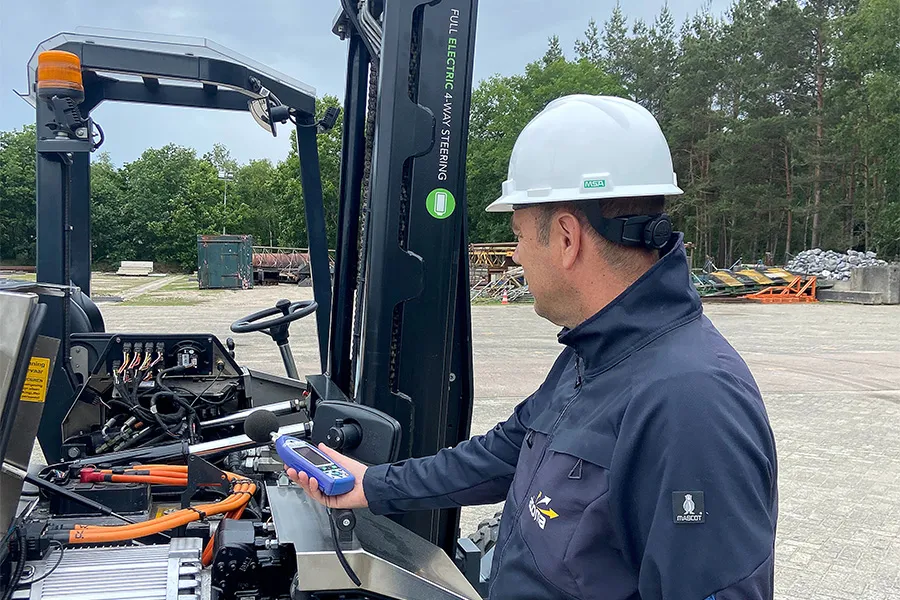
Even electric machines can be harmful
Construction machinery produces noise, and often has a major influence on noise exposure for operators and the surrounding area. That is why guidelines have been established for machine noise emissions, including the guaranteed sound power level. Aboma Inspections is the only body in the Netherlands appointed by the government to carry out these noise measurements, and points out that noise is a curious phenomenon. A machine that sounds pleasant to the ear, such as a piece of electric equipment, does not necessarily produce lower sound pressure and can still be harmful to operators and the surrounding area.
When a construction machine is placed on the market, the manufacturer is required to have its guaranteed sound power level measured, explains Bas van Gruijthuijsen, general manager at Aboma Inspections. “At our site at the construction and infrastructure park in Harderwijk, we have all the equipment and facilities needed to measure sound power levels in accordance with the latest guidelines. We do this regularly for many manufacturers, and occasionally for an end user. This is because if, for example, you import a machine from outside the European Union, it still has to comply with the guidelines. The same applies when converting a machine from fossil-fuel to electric power.”
Silent killer
According to Rudo Smits, noise measurement coordinator at Aboma Inspections, it is a common misconception that electric equipment is quiet. “When we take measurements, the guaranteed sound power level is not necessarily much lower than that of a comparable diesel-powered machine. High and low frequencies can be just as harmful, even if they are less perceptible to an individual. This is sometimes called the silent killer. Even manufacturers are sometimes unaware of this, so it is a good thing that laws and regulations set clear limits.” Van Gruijthuijsen adds: “The guaranteed sound power level is relevant not only to the person operating the machine, but also says something about the people in its immediate vicinity. Measurements are therefore taken simultaneously at several positions within a radius of 4, 10 or 16 metres from the machine.”
Updated guidelines
Measurements are normally taken over a hemispherical surface around the machine. The guidelines were amended on 22 May this year, changing the measurement procedures. For quieter machines, a rectangular layout can also be used for microphone positions. Smits says: “The sound level of generators and water pumps, for example, is measured using a rectangular layout, with the microphones positioned 1 metre from the machine. The results of each measurement are processed and published in a report. Based on the measurement results and measurement uncertainties, we issue a certificate for the guaranteed sound power level, provided the machine meets all the guidelines. Machine manufacturers are required to check whether their machines comply. Any changes to the machine, such as choosing a different fan or speed, can also affect the guaranteed sound power level.”
Question about this story? Ask your question
Keep following this
Get an email when a new story is published. No account needed.
- ThemeLower emissions and more reuse
- SubjectBouwMat







