Smart glasses make remote inspection support personal and efficient
Text Roel van Gils Image Aboma
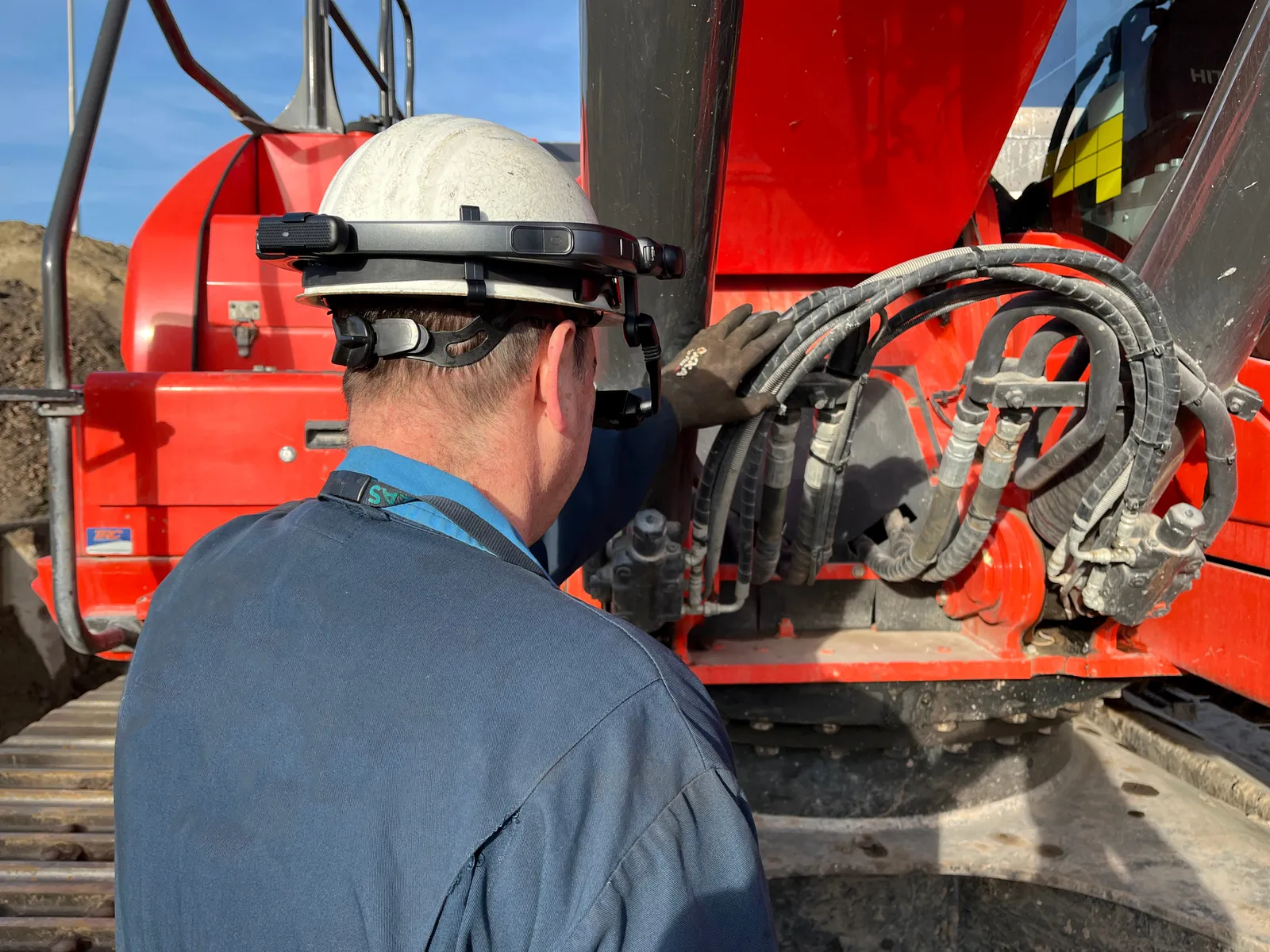
Many companies make grateful use of Aboma’s AMTeK system, which allows them to inspect their own equipment and interchangeable attachments whenever it suits them. AMTeK inspectors receive annual inspection support from Aboma inspectors. This used to take place in person on site, but with smart glasses, it can now also be done remotely, while maintaining the same level of support as before. Naturally, we wanted to find out more.
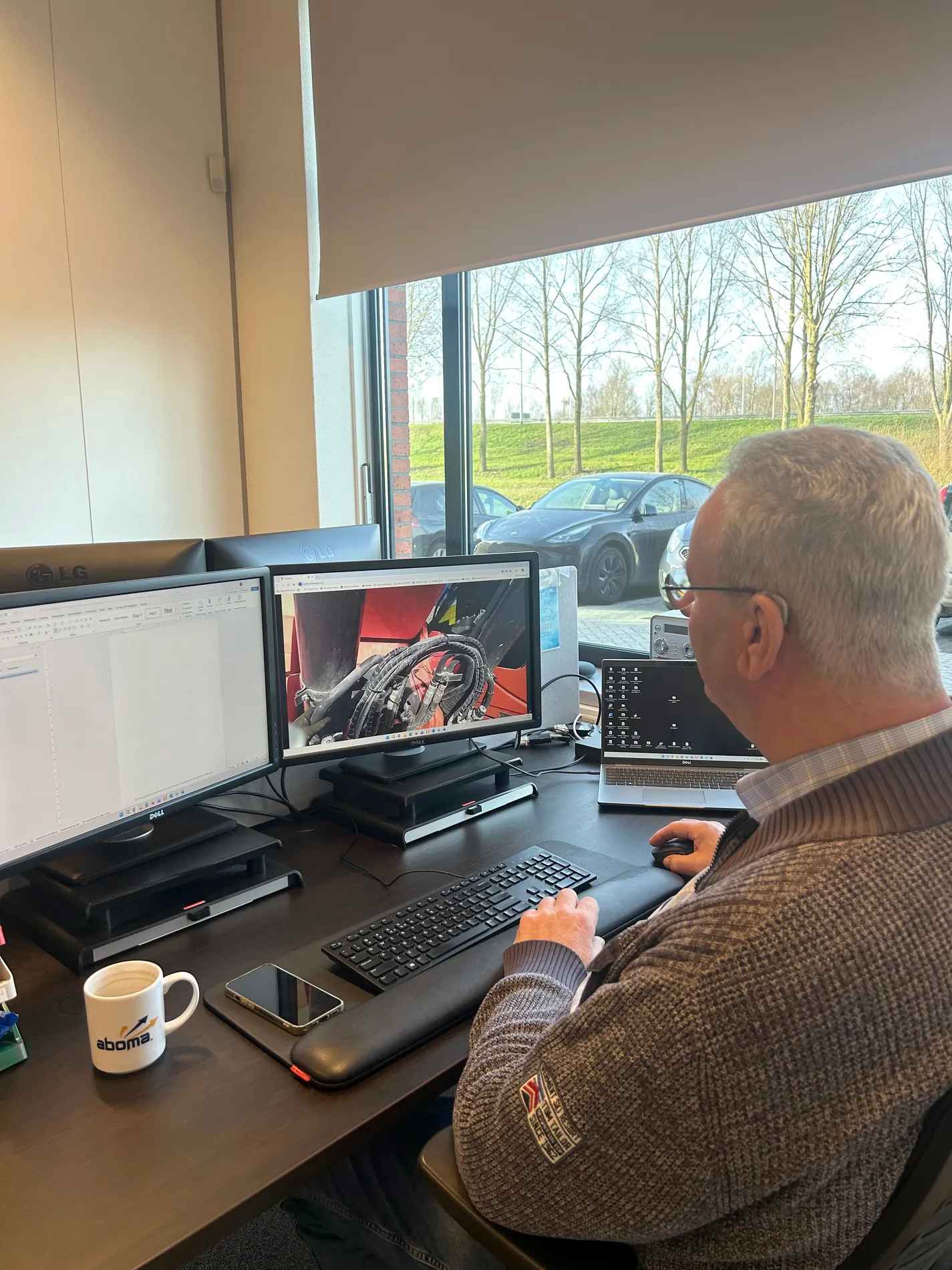
Using the smart glasses is simple and effective. “The inspector on site puts on the smart glasses, connects and gets to work,” says Mario Rovers, AMTeK manager at Aboma. “The camera lets our inspector literally see through the on-site inspector’s eyes. Everything the inspector sees is immediately visible to the remote inspector.” Communication remains uninterrupted: both parties can talk to and see each other, and even pick up on non-verbal cues such as gestures. “This means the personal aspect of inspection support is preserved,” says Gerben van der Weide, AMTeK coordinator.
Live instructions on screen
According to Rovers, the technology offers additional options that are less practical in person. “For example, the inspector can display live instructions or standards, take photos and add comments to them straight away. In the past, you needed a laptop to explain something afterwards. Now this happens directly in the working environment. This makes the support not only more efficient, but also clearer and more practical.” Van der Weide adds: “A major advantage of this approach is its flexibility. The smart glasses are simply sent to the company by post. At an agreed time, the AMTeK inspector logs in and the Aboma inspector can start watching straight away. This makes it much easier and less time-consuming to schedule inspection support. The inspector also no longer has to travel, reducing the environmental impact.”
Surprisingly personal
A session takes about as long as traditional on-site support, says Rovers. “An inspection of ladders and steps, for example, takes about an hour, while an earthmoving machine takes between one and two hours. The difference is that the inspector can simply carry on working while the Aboma inspector watches live and steps in where necessary.” Several test sessions have now been held, both internally and with AMTeK inspectors in the field. “The feedback has been unanimously positive so far. Users find the system reliable and surprisingly personal.”
Although the technology is still relatively new at Aboma, its ambitions are high. “For complex machines with extensive safety systems, an inspector will continue to need to be there in person for the time being,” says Rovers. “But for many other inspections, this approach already offers a full-fledged and efficient alternative without losing sight of personal contact.”
Question about this story? Ask your question
Keep following this
Get an email when a new story is published. No account needed.
- SubjectMachines & equipment