Extending the service life of wear parts
Text Roel van Gils Beeld Geurts van Kessel Hardfacing
Hardfacing wear-resistant layers
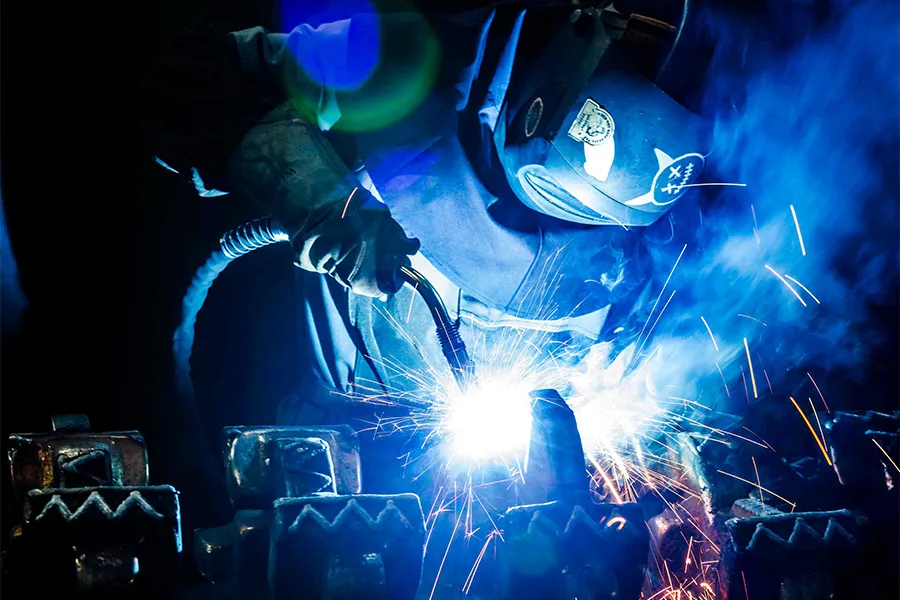
The construction machinery sector is also changing tack. We are moving away from a throwaway culture, and machine parts are increasingly being refurbished to give them a second life. Geurts van Kessel Hardfacing knows this better than most. Even machine manufacturers are turning to this family business, which specialises in applying wear-resistant layers to both new and used machine parts. As well as being a more sustainable choice, maintenance that extends service life offers other benefits too.
Geurts van Kessel Hardfacing has been applying wear-resistant layers to machine parts for more than twenty years. “We are known for our unique, sometimes experimental welding methods, and we see it as a challenge to keep improving them,” says Kim Geurts van Kessel. “We work across the board: machine builders have been our customers for many years, but savvy end users also recognise the value of maintenance that extends service life. A new wear layer delivers more consistent output, less downtime, lower fuel consumption and reduced maintenance costs. It is also a much more sustainable choice.”
Reducing CO2 emissions
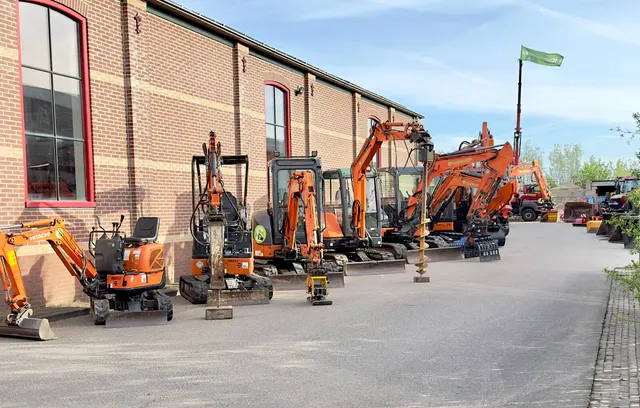
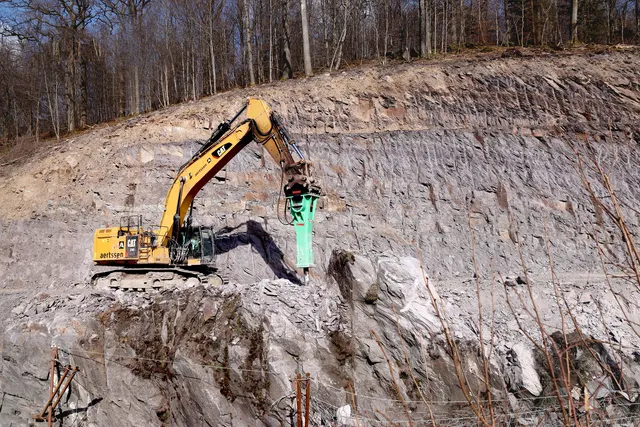
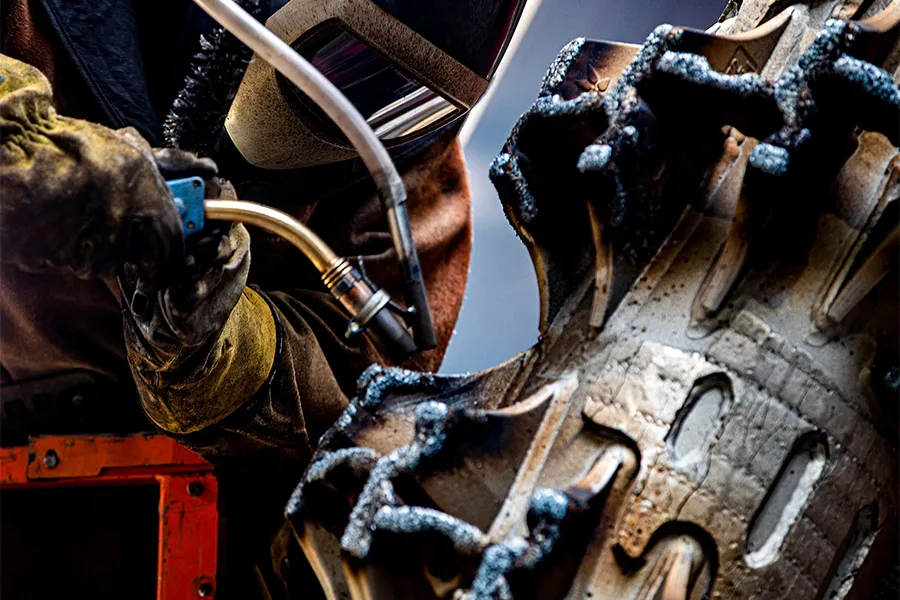
Asphalt mixer drums, milling heads on asphalt planers, wear pads on buckets and bucket teeth: the potential for extending the service life of construction machinery in the civil engineering sector is enormous. “Applying a new wear layer to machine parts means far fewer new parts need to be forged. This saves a huge amount of CO2 emissions,” says Kim. “Almost all machine parts with a wear layer can be refurbished and restored to their original condition over time, so far fewer need to be replaced.” Geurts van Kessel Hardfacing prefers to work at its own workshop in Heesch, but Kim says that on-site refurbishment can also be discussed, depending on the circumstances. “Our customers often have a replacement set available, keeping downtime to a minimum. If not, we can act quickly.”
The perfect mix
Geurts van Kessel Hardfacing uses a range of methods. “We believe in a bespoke approach and always provide the optimum wear layer for the application. Sometimes that can mean combining several layers. And bear in mind that a harder wear layer is not always better,” Kim explains. “Tungsten carbide wear layers are the most widely used, but we also create different combinations. For example, we further crush a broken milling head from an asphalt planer and scatter that material into the weld layer when refurbishing the other milling heads. We are always looking for the perfect mix of materials: even harder filler materials, wires that weld even better, and all with the right balance between price and quality, of course. The sector is moving away from a throwaway culture, and we are proving that there is another way: higher quality and more sustainable.”
Question about this story? Ask your question
Keep following this
Get an email when a new story is published. No account needed.
- SubjectMachines & equipment