









Knowing where equipment is and how many hours it has worked
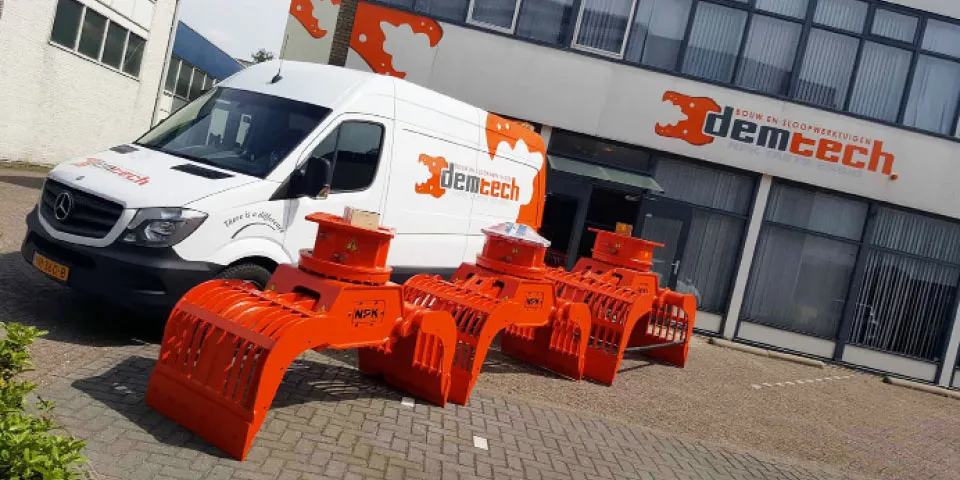
Uncertainty surrounding nitrogen and PFAS has caused considerable difficulties for importer of scrap and demolition tools Demtech in recent months, says Arthur Polak. “Hiring and sub-hiring attachments fell sharply because work dried up at many companies. Fortunately, in Belgium we still benefited from the 20% investment allowance available there.” Demtech therefore focused mainly on its ATS division, which is making great strides with GPS trackers, track-and-trace theft protection and journey registration.
“Designing a good GPS system that works and is genuinely useful to a demolition company or contractor takes time,” Polak explains. “There are quite a few parameters you have to adjust before you have the right data. But I’m confident that we and our partner, with whom we developed ATS, have succeeded.”
ATS supplies GPS trackers that do more than locate equipment and attachments. “Of course, it’s useful to know where your equipment is, and there is a lot of demand for that function. But it’s even more useful to know how many operating hours it has clocked up. And our trackers can do that too.”
Predicting maintenance needs
Polak explains that the ATS tracker makes it possible to predict when equipment and attachments will need maintenance. “That’s useful when you have a job a long way from home. In 9 out of 10 cases, downtime caused by equipment failure is due to maintenance, but without access to concrete data, you can’t rule this out. Providing these insights in a personalised online environment means less downtime, fewer unnecessary transport movements and therefore less (unnecessary) equipment hire.” The ATS trackers are not only wireless, they also run on a built-in rechargeable battery. “A fully charged battery will last for at least 5000 transmissions, which, depending on the number of transmissions you set, is about three years.”
ATS designed a heavy-duty casing specifically for the trackers to protect the GPS module in (extremely) harsh conditions. The casing also doesn’t look like an electrical component, but more like a stop block. “So anyone with malicious intent is unlikely to recognise it as a GPS tracker,” says Polak.
Question about this story? Ask your question
Keep following this
Get an email when a new story is published. No account needed.
- ThemeConstruction equipment and transport in motion
- SubjectBouwMat







