









Iveco S-Way now runs even cleaner thanks to Bio-LNG
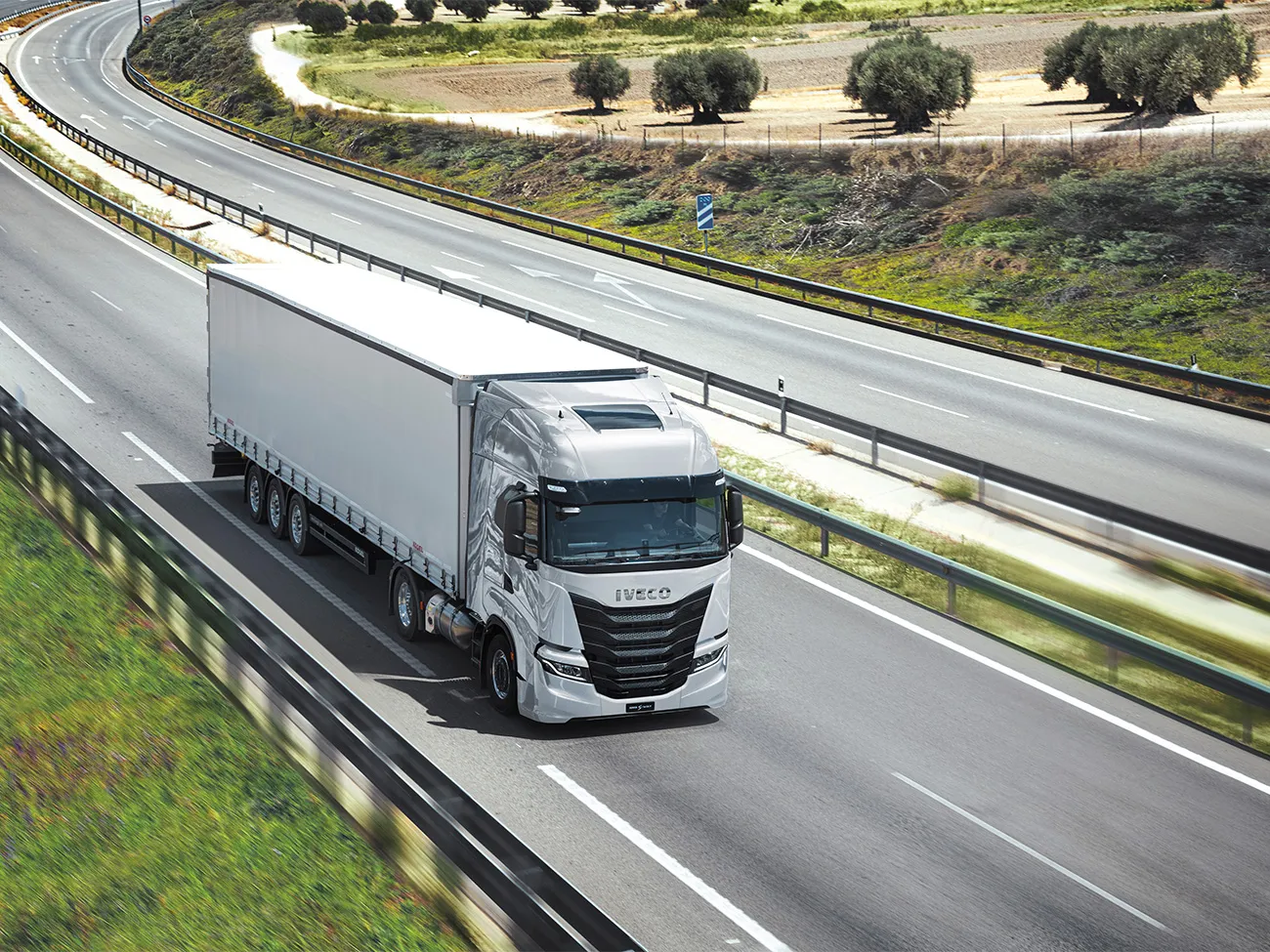
There is much forecasting and planning around alternatives to diesel, but much of it is still for the future, while CO2 emissions need to come down right now. However, electric trucks are still mostly rigid vehicles, and hydrogen trucks are still years away. So, says Iveco, if you want to cut CO2 emissions now, the best option is to buy an Iveco S-Way running on LNG, especially now that Bio-LNG is becoming widely available. “That is the best way to meet climate targets in the short term.”

Climate targets are not yet moving in the right direction. Now that the coronavirus pandemic has largely been brought under control, climate experts conclude that the ‘climate gains’ from lockdowns have largely been wiped out. So action needs to be taken to cut emissions as soon as possible.
Iveco is a pioneer in LNG-powered trucks. The company has been at the forefront of the technology for nearly ten years and has secured a strong market share in the supermarket distribution sector. In that time, LNG technology has improved significantly. This sector often involves shorter distances and heavy loads.
“Iveco has proved that our trucks are perfectly suited to this type of work. But that is only part of the story. The S-Way is the LNG truck with the greatest range. Our truck chassis has the most practical layout, allowing us to fit larger tanks. That makes our trucks particularly well suited to longer journeys. More and more customers are realising this and using the S-Way, sometimes even as an LZV, on international routes,” says Loek Vroon, commercial director at Iveco NLS.

Biogas
Today’s LNG trucks reduce CO2 emissions by twenty per cent and are just as cost-effective as their diesel counterparts. But Bio-LNG is set to take off as a fuel in autumn 2021. Its availability means that the same trucks, using the same technology, can achieve a CO2 reduction of almost one hundred per cent. The raw material for LNG comes from waste, and this was the original purpose of LNG.
Bio-LNG can now be produced on a scale that makes it possible to supply the growing network of LNG filling stations in the Netherlands regularly and to the required quality. “Our aim is for Bio-LNG to prevent waste from simply going into an incinerator. Bio-LNG is a way to reuse waste as truck fuel and, in doing so, immediately reduce CO2 emissions from road transport,” says Iveco.
Although trucks can run on 100% Bio-LNG, as supplies begin to come on stream, Bio-LNG will initially be blended with 30% LNG, which we know as heavily cooled natural gas. “This will allow us to find a wide range of applications for the gas in a relatively short time and already achieve a substantial reduction in CO2 emissions from road transport.”

First plant
The first Bio-LNG plant in the Netherlands recently opened in Amsterdam-West. A number of partners are working together there, with the aim of producing an estimated 3.4 kilotonnes of Bio-LNG a year, preventing emissions of more than 14.3 kilotonnes of fossil CO2. This is enough to cover 13 million road kilometres. Bio-CO2 is also produced in the manufacture of Bio-LNG. It is captured for reuse in greenhouse horticulture, creating a highly effective and environmentally friendly chain.
This was the aim when the LNG project began: to produce a fuel from waste streams for use in trucks. And this is only the beginning. Other parties are also expected to start producing Bio-LNG, leading to a wider range of supply, greater availability and a denser network of filling stations.
Tenfold increase
The parties involved expect Bio-LNG production in Europe to increase tenfold over the next few years. This is very important, as it will make a relatively rapid and measurable reduction in CO2 emissions possible. At the same time, less waste will need to be processed by incinerators, which are not particularly clean, as more waste is effectively reused. The tenfold increase is expected to be achieved within three years.
Bio-LNG therefore offers benefits in addition to the emissions advantages already associated with non-Bio-LNG. These include lower particulate and NOx emissions, as well as lower emissions when greenhouse gas emissions are measured across the entire chain, or well-to-wheel. The arrival of Bio-LNG has no noticeable effect on truck performance. Bio-LNG can also be blended with conventional LNG, if required.
The arrival of Bio-LNG is a clear win and vindicates the path Iveco chose at the time. Bio-LNG production has been designed to capture an additional residual product and reuse it in a sector that is already keen to become more sustainable in the Netherlands.
The right path
For Iveco, the arrival of Bio-LNG confirms that the brand chose the right path towards sustainability. “With our range of LNG trucks, hauliers can make a significant contribution to climate targets in the short term, without having to make major investments. Iveco also offers the new X-Way, a truck perfectly suited to construction traffic. All this is possible without any further concerns about higher costs, and there is no need to invest in associated equipment. Maintenance costs are comparable to those of a diesel truck, so that should not be an obstacle either.”
Question about this story? Ask your question
Keep following this
Get an email when a new story is published. No account needed.
- ThemeLower emissions and more reuse
- SubjectBouwMat







