









Into the gutter, out of trouble
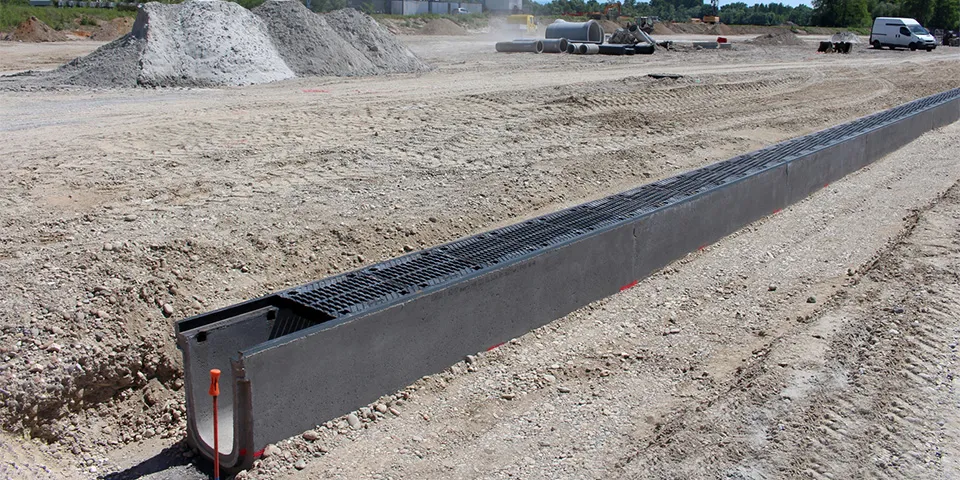
Stormwater drainage, particularly in urban areas, is a hot topic. It is no coincidence that Nering Bögel launched the high-profile ‘Waterquest’, a think tank exploring unconventional solutions to tackle the increasing rainfall expected in the future. We speak to Toin Bongers, operations director at Nering Bögel.
“Waterquest has given us a great deal of insight, both into the problems and into possible solutions. Ideas have emerged that deserve further investigation. But ‘normal life’ goes on too, and we also need to look for practical, hands-on solutions for water drainage in the short term. We now have one such solution!”
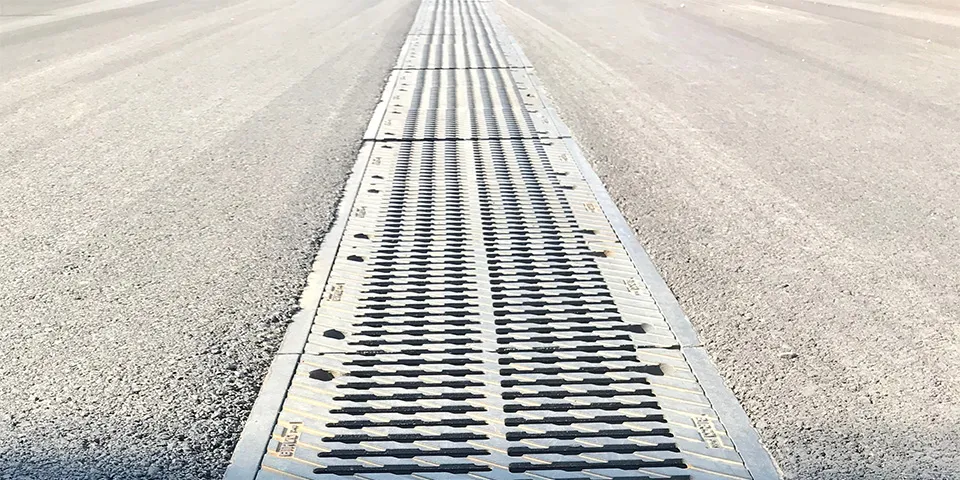
The Max-i channel is EN1433 certified and fitted with cast-iron slot or mesh gratings.
Storing water for later use
“Drainage systems can broadly be divided into two categories: point drainage and linear drainage. Point drainage means a gully, while linear drainage means a long, shallower channel with gratings. In both cases, the water is carried to a large pit or basin. From there, this valuable water is transported onwards to rivers and eventually out to sea,” says Bongers. “So we are effectively dealing with two problems: our drainage network was built to an outdated principle and was never designed to cope with the volumes of water it now has to handle, resulting in flooding; and all that rainwater is sent out of the country without being put to any useful purpose. That’s a waste.”
Nering Bögel held discussions with German company Birco, which developed the Max-i channel. Bongers says: “We will be introducing the Max-i system in the Netherlands under our own brand. You could think of this system as an XXL channel. The concrete channel is much deeper than the existing linear drainage channels we know. Excess rainwater is retained in the channel, which acts as a water store. This makes the water readily available for useful applications when needed, for example during drought, like the dry spells we have experienced over the past few hot summers. Max-i enables us to cope with two extreme weather conditions: one where so much water falls at once that the drainage capacity of conventional channels would be insufficient, and another where extreme drought leads to a water shortage.”
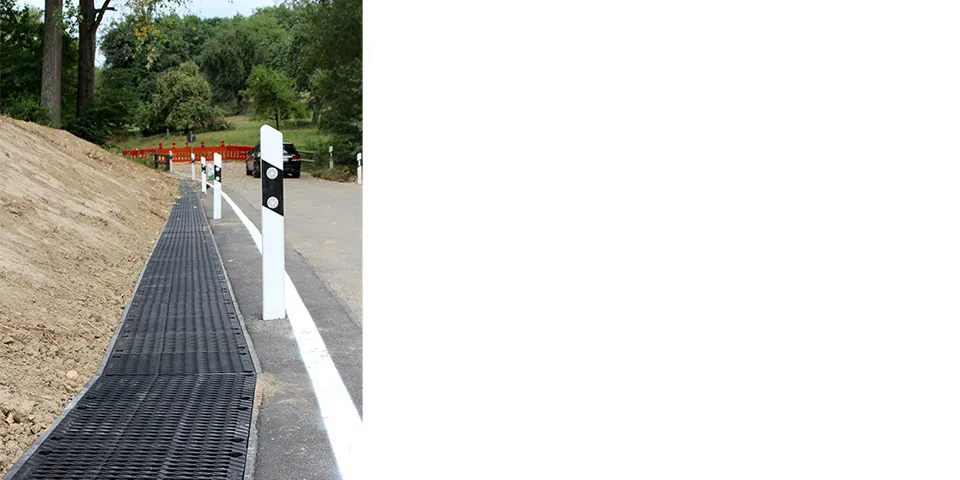
Enhanced safety in wet weather in Baden-Baden, thanks to Max-i.
Made entirely of concrete and certified
The Max-i channel is made entirely of concrete and is strong enough to be laid directly in the ground. “No additional concrete surround is needed, unlike with conventional channels. That saves space, materials and time. The Max-i channel is EN1433 certified and fitted with cast-iron slot or mesh gratings. Whether it is used by pedestrians or heavy goods vehicles makes no difference. A Boeing could drive over it without any problem. That is why this channel is already being used at airports.”
According to Bongers, the Max-i is relatively expensive compared with conventional drainage systems, but that is an apples-to-oranges comparison. He explains: “Max-i is already being used in Germany and France, with pilots at airports and in port areas where drainage requirements are stringent. So far, it has been supplied directly to end customers, including specifiers, airports and local authorities. We will initially market Max-i in the Netherlands in the same way, offering the system directly and making clear that it makes sense to install Max-i as a preventative measure.”
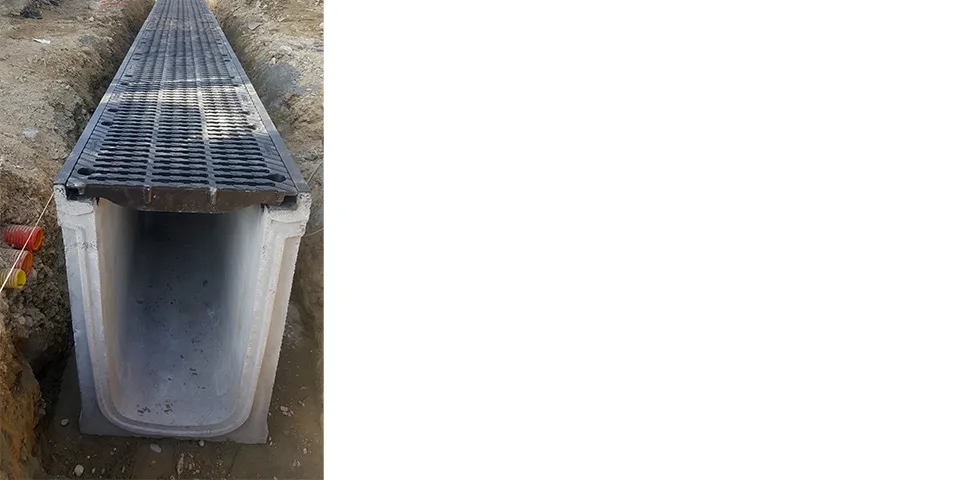
Installation at a car wash in France.
Proven technology that takes things a step further
Bongers believes a different approach to drainage is essential. “You need to think beyond existing channel systems. There are no risks with Max-i, because everything has been designed and built using proven technology. The idea has simply been developed further, both literally and figuratively.” Nering Bögel Max-i is available in a range of widths and depths to suit the requirements of each situation. Bongers concludes: “A different way of thinking is essential, but it also gives you a genuine solution. We believe this can make a major difference, initially at airports, ports and logistics centres. Of course, people are less inclined to trust what they don’t know. So I would like to invite anyone who is interested to visit us at Dag van de Openbare Ruimte 2020, on 30 September and 1 October 2020 at Jaarbeurs Utrecht, or earlier at RioleringsVakdagen 2020 in Gorinchem, on 17, 18 and 19 March.”
Question about this story? Ask your question
Keep following this
Get an email when a new story is published. No account needed.
- SubjectBouwMat







