









Innovations in underground infrastructure
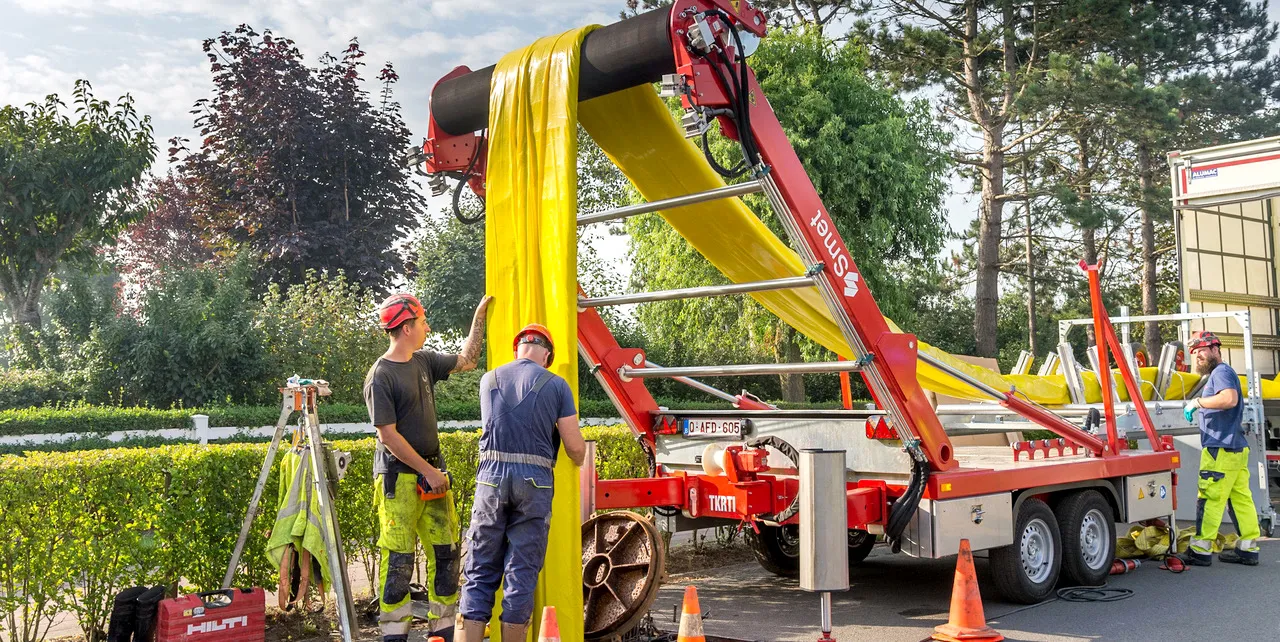
For the past decade or so, the family business has also further specialised in trenchless pipe rehabilitation. As these projects have grown in scale, Smet-Tunnelling has been split into two divisions: Tunnelling and Pipe Rehabilitation. We spoke to the heads of these divisions about the latest developments and some interesting projects.
Smet-Tunnelling began using cured-in-place pipe techniques around ten years ago to repair damage to existing sewers. “We have continued to develop our expertise in this market and can now offer almost every solution, including installing shell segments and applying sprayed concrete,” says Gert Van Gorp, head of the Pipe Rehabilitation division. “Every rehabilitation project is unique and calls for a specific solution, or sometimes even a combination of solutions.”
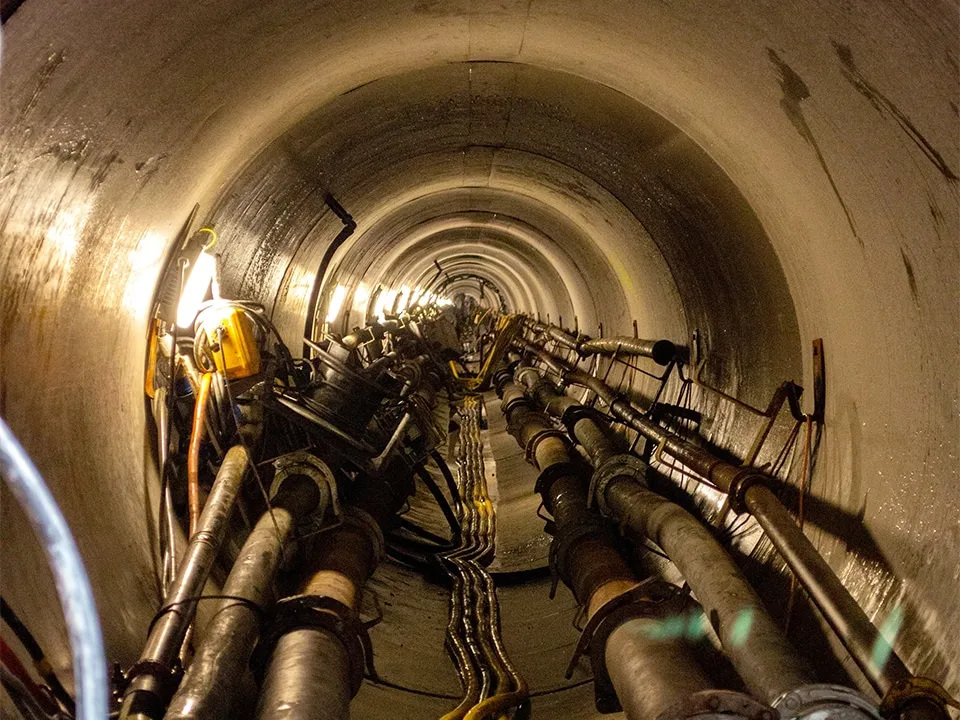
Water main rehabilitation
Water mains and pressure pipelines that need repairing are a relatively new area in pipe rehabilitation. Van Gorp says the market is still in its infancy. “The same techniques as for sewer rehabilitation are often required, but water mains and pressure pipelines are subject to different, and higher, quality standards. We have the solutions for that too. We can also switch easily from one technique to another if needed. If a pipeline can no longer be repaired or an area proves inaccessible, we can always call on our Tunnelling division, and vice versa. The Pipe Rehabilitation division was set up to provide clients with support from start to finish. Once a pipeline has been installed by the Tunnelling division, we can also maintain and repair it.”
Pipe bursting
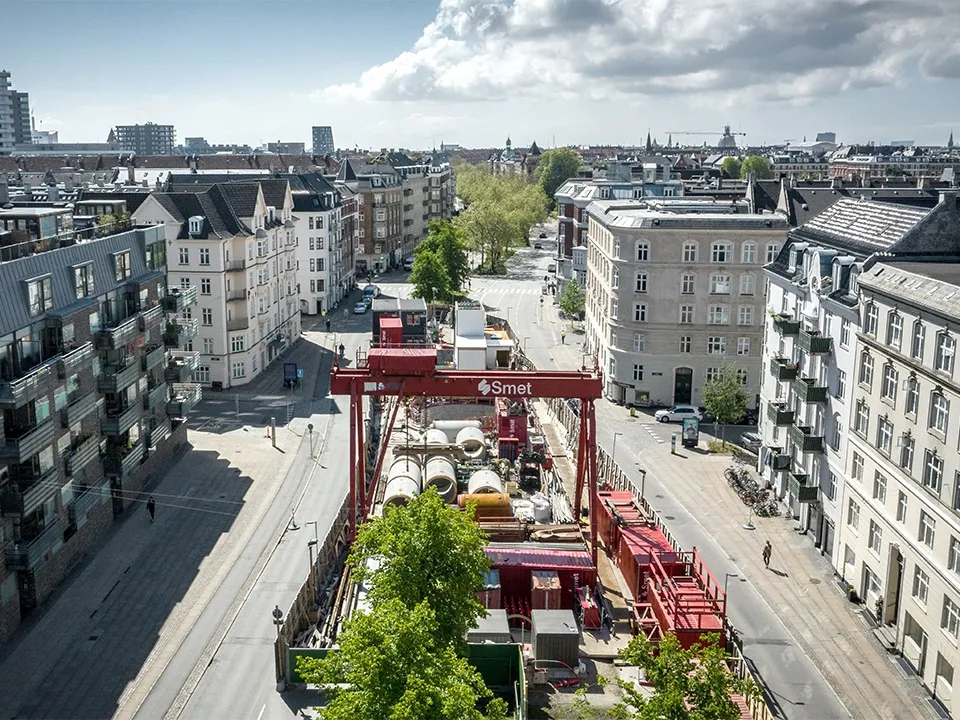
While the Pipe Rehabilitation division is mainly active in the Benelux, the Tunnelling division operates throughout Europe. “We currently have various projects under way in Denmark, Switzerland and Germany,” says Wouter Roels, head of the Tunnelling division. “One of our best-known activities is pipe jacking using an open or closed face, also known as microtunnelling. These horizontal bores range from 400 to 4,000 millimetres in internal diameter. We also specialise in jacking prefabricated concrete and/or steel (tunnel) sections or bridges, carry out auger boring and work on pipe bursting. The latter technique is more closely related to our rehabilitation division. At the end of a pipeline’s service life, we can use pipe bursting to displace the old pipe into the surrounding ground while pulling in a new one at the same time. That brings the process full circle.”
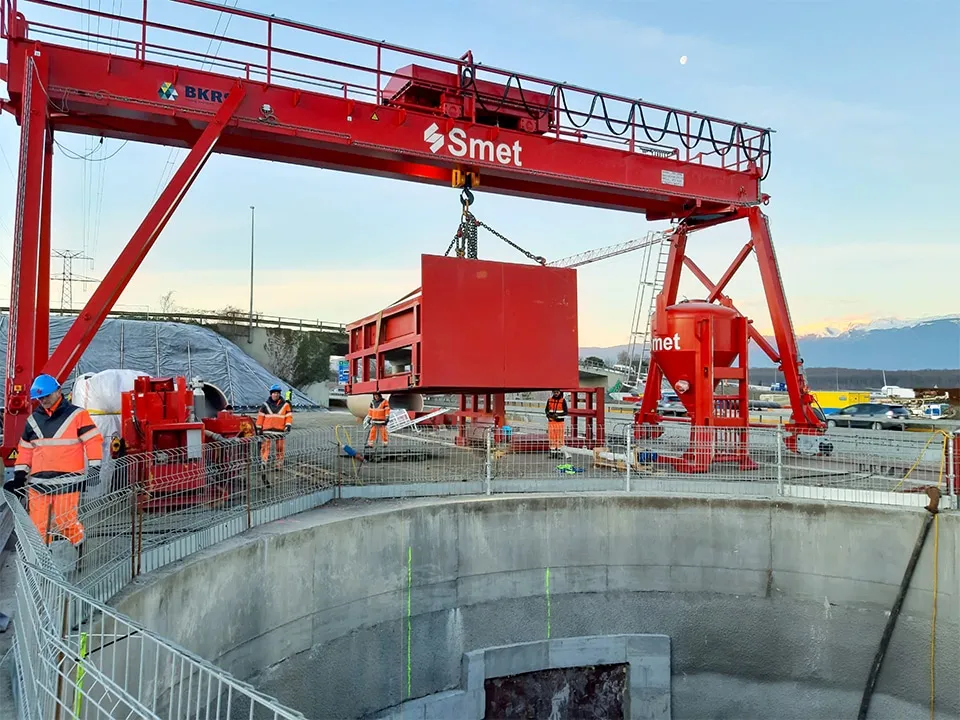
Smet-Tunnelling’s techniques are suitable for a very wide range of highly topical underground construction applications. “These include climate adaptation programmes to retain as much rainwater as possible locally, and the Blue Deal, measures to minimise the risks of water shortages and flooding under the Flemish Climate Adaptation Plan 2021-2030. Our techniques are also used to improve wastewater treatment, which must meet a certain level of purification under European standards by 2027, as well as for the energy transition and underground logistics transport. We also construct so-called pipe roofs, made up of adjacent bored pipes that serve as a roof slab for underground metro and railway stations, cycle tunnels or car parks. The possibilities are endless, and less disruptive than traditional cut-and-cover methods. We do not always choose the easiest route, but the most effective solution tailored to the project.”
Question about this story? Ask your question
Keep following this
Get an email when a new story is published. No account needed.
- ThemeUnderground construction
- SubjectBouwMat







