









Every day is Climate Day
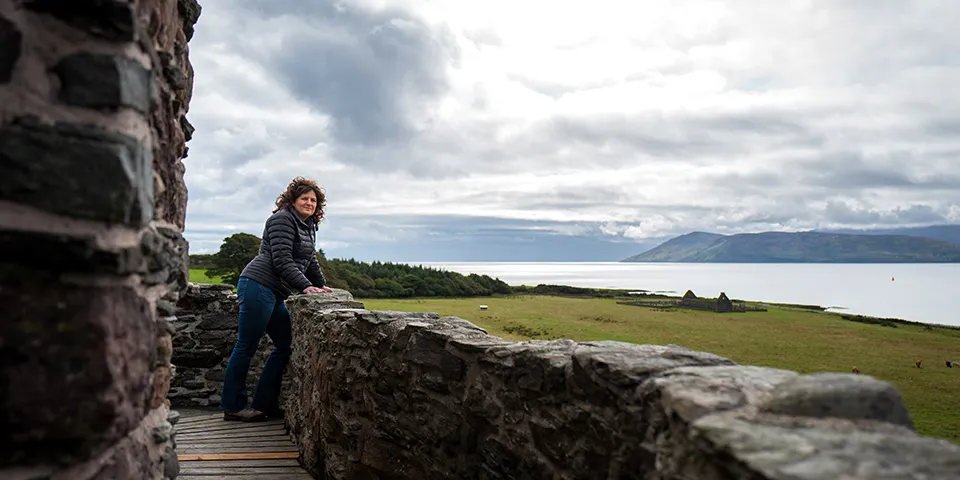
Skipness Castle, Kintyre Peninsula, Scotland. Scotland is dotted with beautiful castle ruins. Some are so old that often only a few walls remain, serving mainly to fire the imagination. Skipness Castle is an exception. Several of its rooms are still intact. When you see a monument like this, you wonder: how did they keep it warm without gas? We can see today how history sometimes becomes relevant again. The need for ways to heat historic buildings without gas is more urgent than ever. And that is just one of the problems we will face in the years ahead.
At the end of December 2018, the long-awaited draft Climate Agreement was published. In it, five sector working groups (the built environment, mobility, agriculture and land use, electricity and industry), led by the Climate Council, set out their provisional plans for reducing CO2 emissions. Subsequently, on Tuesday 28 May, the Senate voted in favour of the Climate Act. This Act enshrines the main principles of climate policy. This has established the path we intend to follow to achieve our climate targets. But what does the Act mean in practice? And what mechanisms will we have at our disposal to ensure we stay on course towards achieving those targets?
The Climate Act is, first and foremost, a ‘framework act’: legislation that sets out general principles, responsibilities and procedures. Its main framework comprises three clear targets: greenhouse gas emissions must be reduced by 49% by 2030, compared with the 1990 baseline. By 2050, the reduction must be 95%. At the same time, the share of greenhouse gas-neutral electricity must be increased to 100% by 2050.
How we will achieve these targets will become clear in the Climate Plan, which the government must produce every five years. The plan sets out the main decisions the government will take on climate policy over the following years. It also includes, among other things, the maximum CO2 emissions for each sector over a five-year period and energy-saving targets set every five years. Six to twelve months before the Climate Plan is adopted, the Netherlands Environmental Assessment Agency (PBL) models its impact. This helps keep us on our toes.
The message from politicians is clear: they mean business. In view of the targets, the Climate Act will enter into force as soon as possible, probably this year. The Climate Act’s ultimate success depends on the final Climate Agreement: the package of concrete measures that companies, organisations and the government are still negotiating at the climate round tables, and which will form part of the first Climate Plan. The Climate Agreement is expected to be announced in late June or early July.
The Climate Plan provides a guiding framework for the annual Climate Review: a government response to the Climate and Energy Outlook, which the PBL will publish on the fourth Thursday of every October and which sets out the latest figures and other current climate-related information. To keep the promises made alive, this day will henceforth be known as Climate Day. But with ambitious climate targets in sight, from now on, every day is really Climate Day for us!
Liesbeth Schippers, partner and lawyer at Pels Rijcken
Question about this story? Ask your question
Keep following this
Get an email when a new story is published. No account needed.
- SubjectBouwMat







