









E-trucks pave the way to a sustainable sector
Text Kees Beijer Images Volvo Trucks Nederland
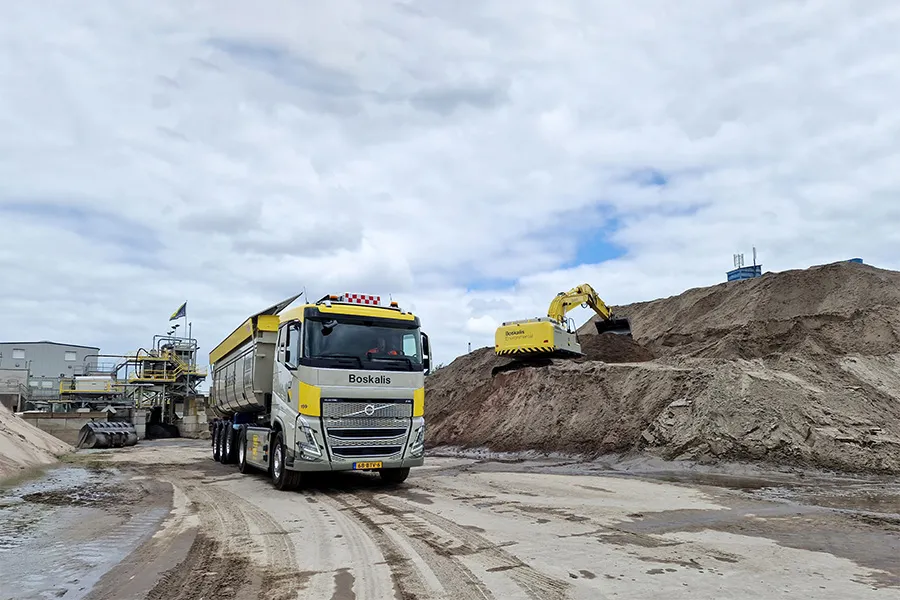
Last year, Boskalis Nederland was one of the first companies in the construction sector to put two Volvo FH 4×2 Electric tractor units into service. Both vehicles are helping the company achieve its zero-emission working target, with 75,000 and 46,000 kilometres on the clock respectively. Another four electric Volvo FH 8×4 tipper trucks are due to follow soon. Fleet manager Sjaak Heemes explains how the transition from diesel to electric has gone so far and the role Volvo Trucks is playing on the road to a sustainable future.
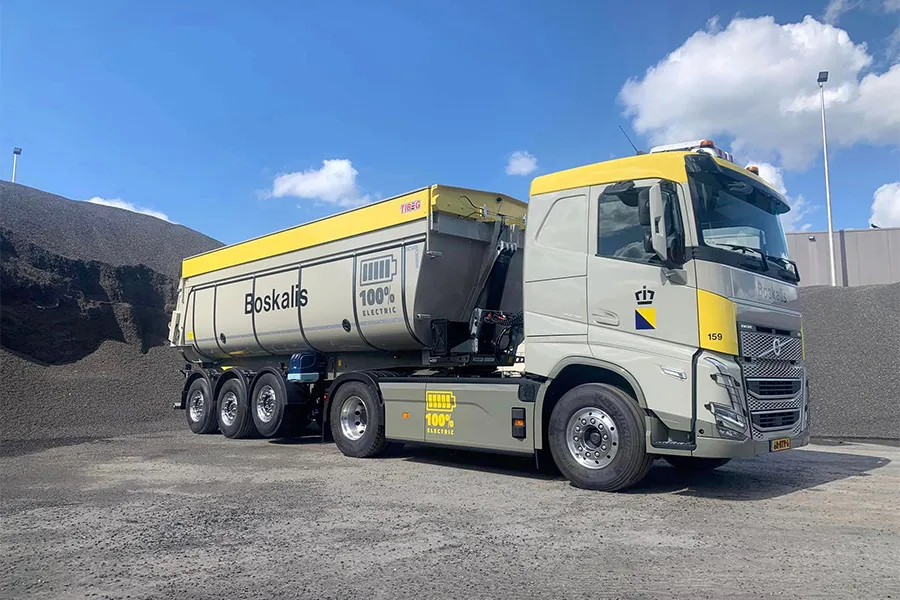
Boskalis has had its first battery-electric Volvo FH in service since April 2023, supplied by truck dealer BAS Truck Center. The electric trucks are contributing to the company’s CO2, particulate matter and nitrogen reduction targets. “There is a strong commitment to sustainability within the organisation,” says Sjaak. “Clients are also increasingly asking for projects to be carried out using zero-emission machinery. We are therefore investing heavily in electric equipment and charging infrastructure.”
Getting drivers on board
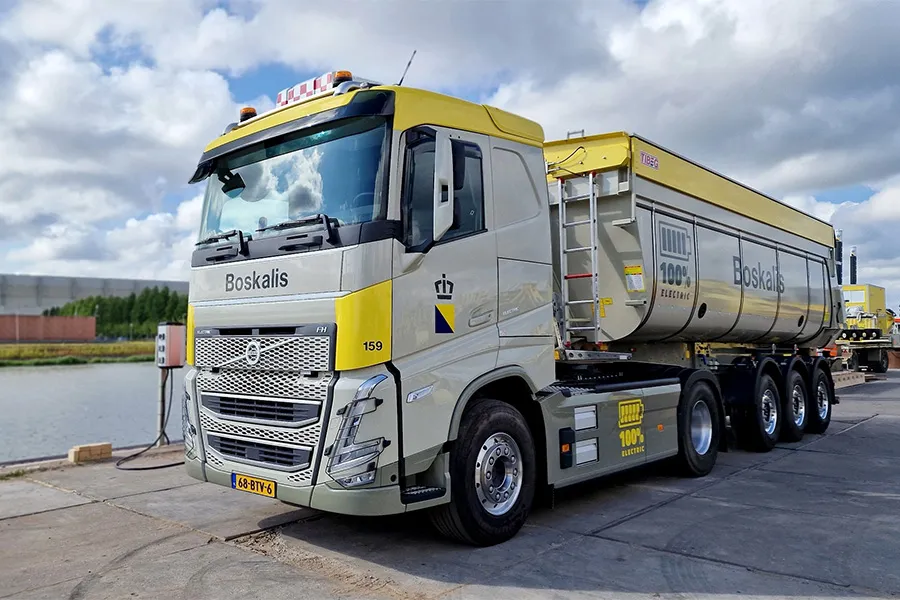
The fleet manager says choosing Volvo Trucks was an obvious decision, as the Swedish manufacturer was the first to introduce a full range of electric trucks, including construction vehicles and trucks capable of towing 50 tonnes with ease. “We deliberately chose two FH 4×2 tractor units for our work. Another four electric 8×4 tipper trucks are currently being built at the Volvo dealer. These will also have FH cabs, as they offer the most comfort, which helps get our drivers enthusiastic about switching from diesel to electric. Of course, it calls for a slightly different mindset.”
Heemes says that with e-trucks, more than ever, the driver makes the vehicle. With the workforce ageing, it is not easy to persuade all those diesel enthusiasts to switch to electric. “The first reaction is often cautious, but after a few trips that scepticism gives way to enthusiasm,” he says, in familiar terms. “Drivers particularly appreciate how quiet the electric motors are. A fully charged battery gives a range of around 250 to 300 kilometres. Volvo Connect helps us plan journeys as efficiently as possible. Now that more and more Boskalis sites have their own fast chargers, and the number of public charging stations for e-trucks is also growing, both Volvo FH Electrics fit into the schedule with ease.”
Playing their part
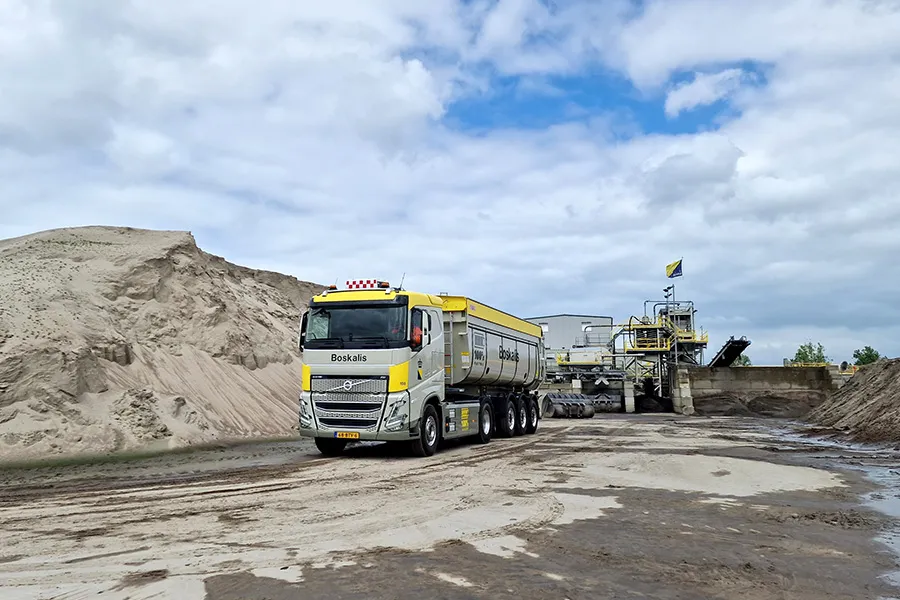
Boskalis mainly uses the zero-emission tractor units for transport work in the civil engineering sector. One combination primarily makes trips for Boskalis Environmental in Schiedam, which specialises in cleaning or processing soil, dredged material, bottom ash and other mineral waste. It has covered more than 75,000 kilometres in fourteen months. The electric 4×2s are playing their part and have earned praise for their ability to work every day. The second FH Electric was delivered last September and makes five trips a day, carrying bottom ash from the washing plant at HVC in Alkmaar to Middenmeer. This e-truck has now covered 46,000 kilometres.
As an experienced contractor, Boskalis Nederland takes the lead on new developments as a matter of course. The same applies to electrifying its machinery and fleet. So far, the experience has been very positive. “Now that it is increasingly possible to top up the charge en route, the zero-emission Volvo tractor units can also be used more widely. As a result, the main drawback of the FH Electric is gradually becoming less of an issue.
There is still a great deal of resistance to e-trucks in general, but the transition to zero-emission working is essential, and Boskalis is keen to take responsibility by staying the course. Ultimately, we all want to operate without emissions,” says Sjaak.
Clear advisory role
To make its transport operations greener, Boskalis Nederland maintains a long-standing relationship with Volvo Trucks Nederland and dealer BAS Truck Center. When specifying the axle configuration, the advice was to choose a 4×2 rather than the usual 6×2. The weight distribution between tractor unit and trailer was carefully considered. Making better use of the FH Electric’s front axle results in an optimal distribution. Sjaak says: “We have been driving Volvo trucks for years and are very satisfied with them. Comfort and safety are at the highest level, and the brand also performs exceptionally well in terms of performance, fuel consumption and reliability. We use Volvo Connect to keep a close eye on the consumption figures for both our diesel and electric trucks.”
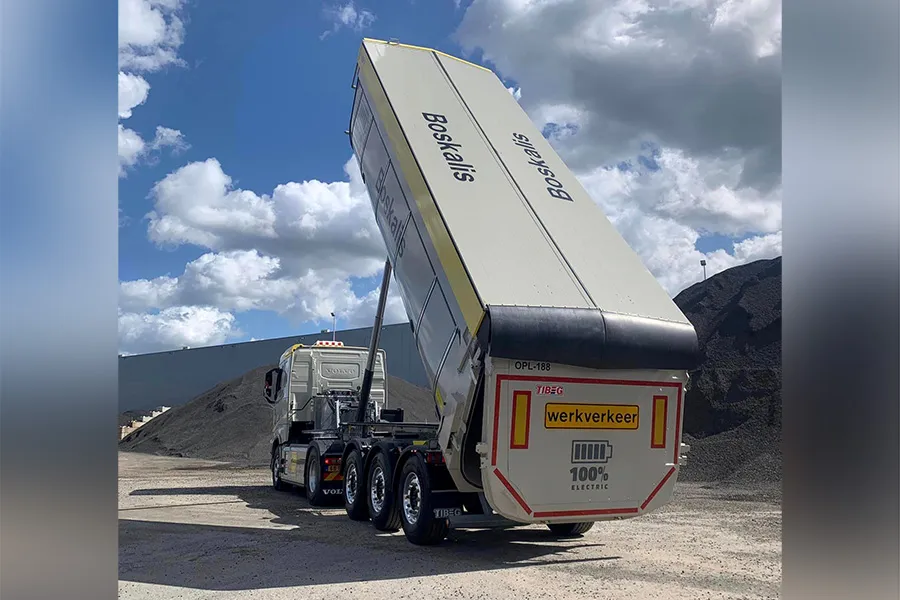
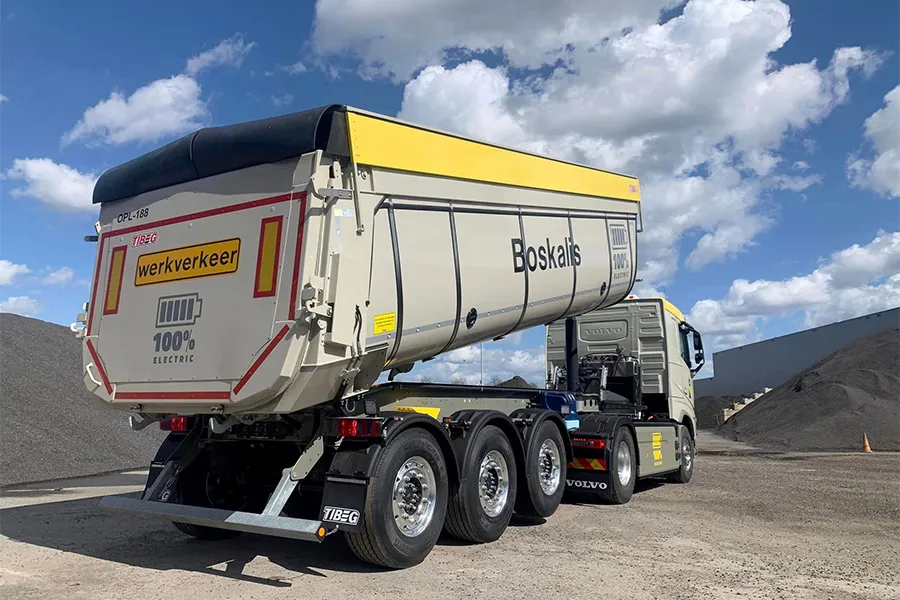
The Volvo tractor units are paired with two almost identical Tibeg tipper trailers, each with a capacity of 28 cubic metres. The only difference is that one has an insulated body for transporting asphalt, while the other does not. The trailers are fitted with multi-cover systems, and the first metre and a half of the floor is lined with stainless steel. They are painted in Boskalis’ yellow and grey corporate colours. The tailgate is fitted with a set of hydraulic sliding hooks. Both the covers and the hooks are electrically powered by a separate power pack. One notable feature, though not immediately visible, is the choice of removable landing legs and Alcoa aluminium wheels. This raises the payload to around 30 tonnes. With these two striking combinations, Boskalis Nederland is taking an important step towards sustainability.
Have a business enquiry for Boskalis Nederland? Get in touch
Companies in this story
Keep following this
Get an email when a new story is published. No account needed.
- ThemeLower emissions and more reuse
- SubjectBouwMat
- CompanyBoskalis Nederland







