









Circularity and sustainability in road construction and road maintenance
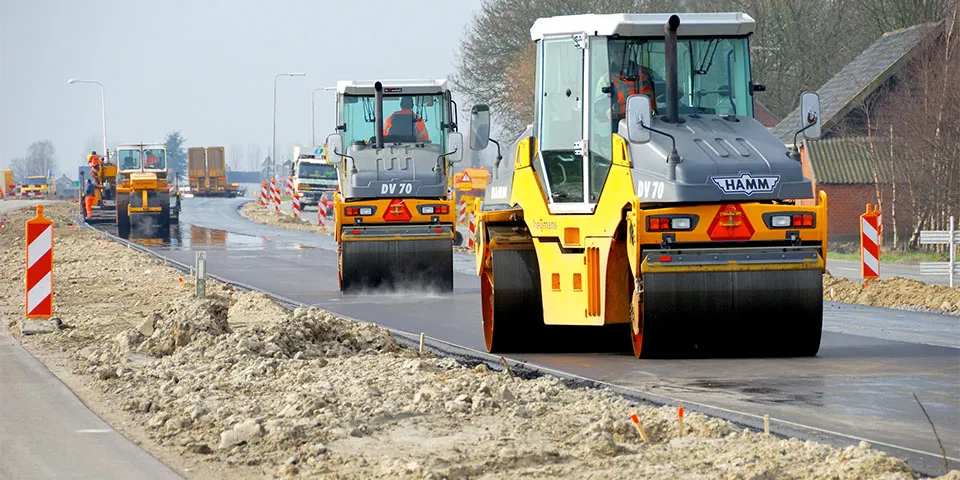
“Asphalt is (in principle) 100% circular. We throw nothing away, we reuse everything except tar-bound asphalt.” This is a statement by Ron Wesseling, Manager of the Bituminous Works Division at Bouwend Nederland. “However, it is removed from the supply chain responsibly, after which some of the cleaned materials can be reused. The point is that we have not agreed on a definition of circularity. In road construction, we produce more asphalt than we mill off the road. So is that still circular? Of course, we use as much recycled asphalt as possible. That does not change the fact that, as long as more asphalt is needed than becomes available, new asphalt will always have to be produced.”
GWW Magazine talks to Bouwend Nederland
The ‘Asfalt-Impuls’ programme brings the sector together
Wesseling continues: “In the coming years, road authorities, asphalt contractors, suppliers, designers, quality assurance bodies and knowledge institutions will face major challenges. These include delivering on the circular economy, the Climate Agreement and the Green Deal Sustainable Civil Engineering 2.0. Ideally, all this should be achieved at lower cost, with less disruption and with due regard for the commercial interests of companies producing and laying asphalt. That is why the sector has joined forces in the ‘Asfalt-Impuls’ programme. Only by working together can we, as a sector, find solutions to all these issues.”
The partners united in Asfalt-Impuls are Rijkswaterstaat, the 12 provinces, municipalities, CROW, TU Delft, the University of Twente, Bouwend Nederland (Bituminous Works Division), independent asphalt producers/contractors, Eurobitume, TNO, Aveco de Bondt, Sweco, Kiwa Nederland, Kiwa KOAC and De Wegenscanners. “Together, we are looking for ways to make asphalt more sustainable,” explains Wesseling. “Sustainability is a continuous process. However, innovations must be accepted as solutions. Sometimes regulations stand in the way of innovation. The requirement to use ‘proven technology’ creates a chicken-and-egg situation. An innovation can only become proven technology once it has been used in practice.”
Agreeing clear terms
In road construction, sustainability is understood primarily as making asphalt last longer and reducing CO2 emissions. Wesseling says: “But how do you know whether you are working sustainably if there are no clear agreements? What if you develop an asphalt mix that lasts 10 times longer on the road, but produces more CO2 emissions to manufacture? Is that acceptable? We want answers to questions like these. Through its Bituminous Works Division, Bouwend Nederland is bringing the parties together for this discussion. We are discussing the issues without any commercial agenda. We are, in a sense, neutral Switzerland among the partner group. Bouwend Nederland serves a higher purpose: not just our own sector, but also the Netherlands as a whole and its citizens. We promote safe working and a level playing field, and aim to establish standards and definitions, working sustainably and circularly wherever possible. The gains lie in greater efficiency, and therefore in cost savings.”
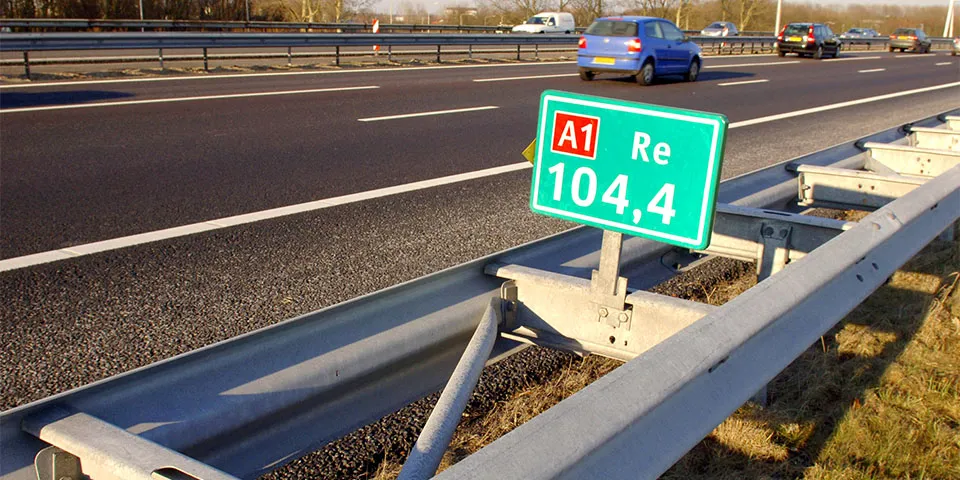
Old systems will be dismantled, and components that meet the requirements of the procedure will be reused.
The nitrogen debate
Johan Asscheman, Secretary of the Civil Concrete Construction and Specialist Road Construction Division at Bouwend Nederland, takes up the issue of CO2 emissions. “Bouwend Nederland is in talks with the government on this, because such discussions can only be held by representative organisations. We represent our sector. The question we ask is: ‘Where does the interest lie?’ The nitrogen debate is being led by the Ministry of Agriculture, which is responsible for the issue. We are in talks with both the Ministry of Agriculture and the Ministry of Infrastructure and Water Management. The problem, however, cuts across ministerial boundaries, which is why we welcome the study by the Remkes Committee. A threshold value for construction needs to be set. The government has instructed Minister Carola Schouten to work on this,” says Asscheman. “Bouwend Nederland urges the minister to turn the recommendations in Remkes’ final report into policy as soon as possible and to set a threshold value.”
Sustainability in safety barriers
On the subject of sustainability in safety barriers, Addy van Doorn, chair of the Safety Barrier Committee of Bouwend Nederland’s Specialist Road Construction Division, explains: “Rijkswaterstaat has a working group looking at how existing safety barriers can be recycled. A new procedure has been introduced to demonstrate that the current model is safe and meets the CE standard. Old systems will be dismantled, and components that meet the requirements of the procedure will be reused. This allows us to work as circularly as possible.”
Maintaining asphalt roads
From a sustainability perspective, it is preferable to extend the life of existing asphalt rather than replace it. Ton Kneepkens of Arcadis (technical partner to Bouwend Nederland’s EAB Committee) explains: “We have been using emulsion asphalt concrete for some time to improve the surface course of asphalt roads. Traffic and weather wear away the asphalt surface, often causing texture damage and deformation. Emulsion asphalt concrete can be used to repair the surface course. It acts as a bituminous coating that improves the road. One condition is that the road in question must not have serious structural damage; we use emulsion asphalt concrete as a preventive measure. The better the substrate, the longer the new coating will last. On average, it extends the road’s life by around 7 years or more. It is a cold process: the mix is made on site in a mobile application unit. The quantity is measured out, so there is no waste. By saving the energy required at an asphalt plant to produce hot asphalt, avoiding energy-intensive transport and eliminating the need for heating on site, we significantly reduce the CO2 footprint. And the best part? The emulsion asphalt concrete surface is ready for traffic after an average of just half an hour. That’s less disruption for you…”
Question about this story? Ask your question
Companies in this story

Keep following this
Get an email when a new story is published. No account needed.
- ThemeExtending the life of roads and civil engineering structures
- SubjectBouwMat
- CompanyKiwa Nederland B.V.







