









BAT invests in fully electric Scania battery electric vehicles (BEVs) for refuse collection in the municipality of Tilburg.
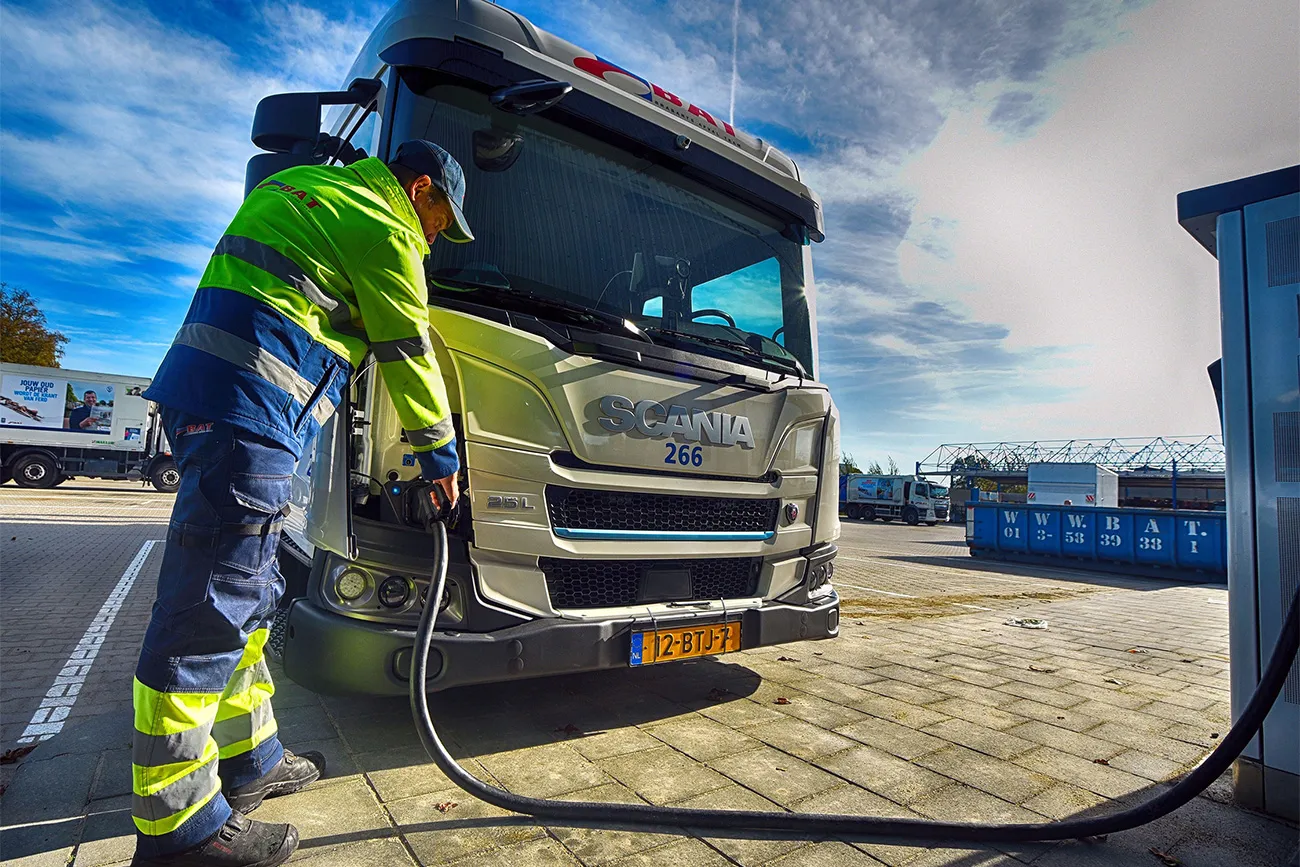
The municipality of Tilburg’s BAT department (Brabants Afval Team), which collects waste sustainably in and around the municipality and oversees its optimal reuse, has put its first three electric vehicles, all Scania trucks, into service. Over the coming years, all refuse collection vehicles will be replaced in stages with clean, electric trucks.
Looking to the future
By putting these three Scania BEVs into service in Tilburg, BAT is taking a major step towards making its fleet more sustainable, in anticipation of the zero-emission zone coming into force in and around the city centre on 1 January 2025. This is part of Green Collective, alongside other partners such as Renewi and Pre-Zero. The initiative brings waste collectors together to collect waste using shared vehicles and combined collection routes. The municipality is also preparing now for the government requirement that no polluting vehicles may be purchased from 2030. Bob Brocks, procurement officer and fleet manager at BAT, explains: “We aim to have twenty electric trucks on the road when the environmental zone is introduced in 2025. We have made a policy decision that, as a municipality, we should be at the forefront of driving electric vehicles through the city. We want to set a good example. We also have the backing of the politicians, and the Tilburg coalition fully supports this.”
Quieter and cleaner
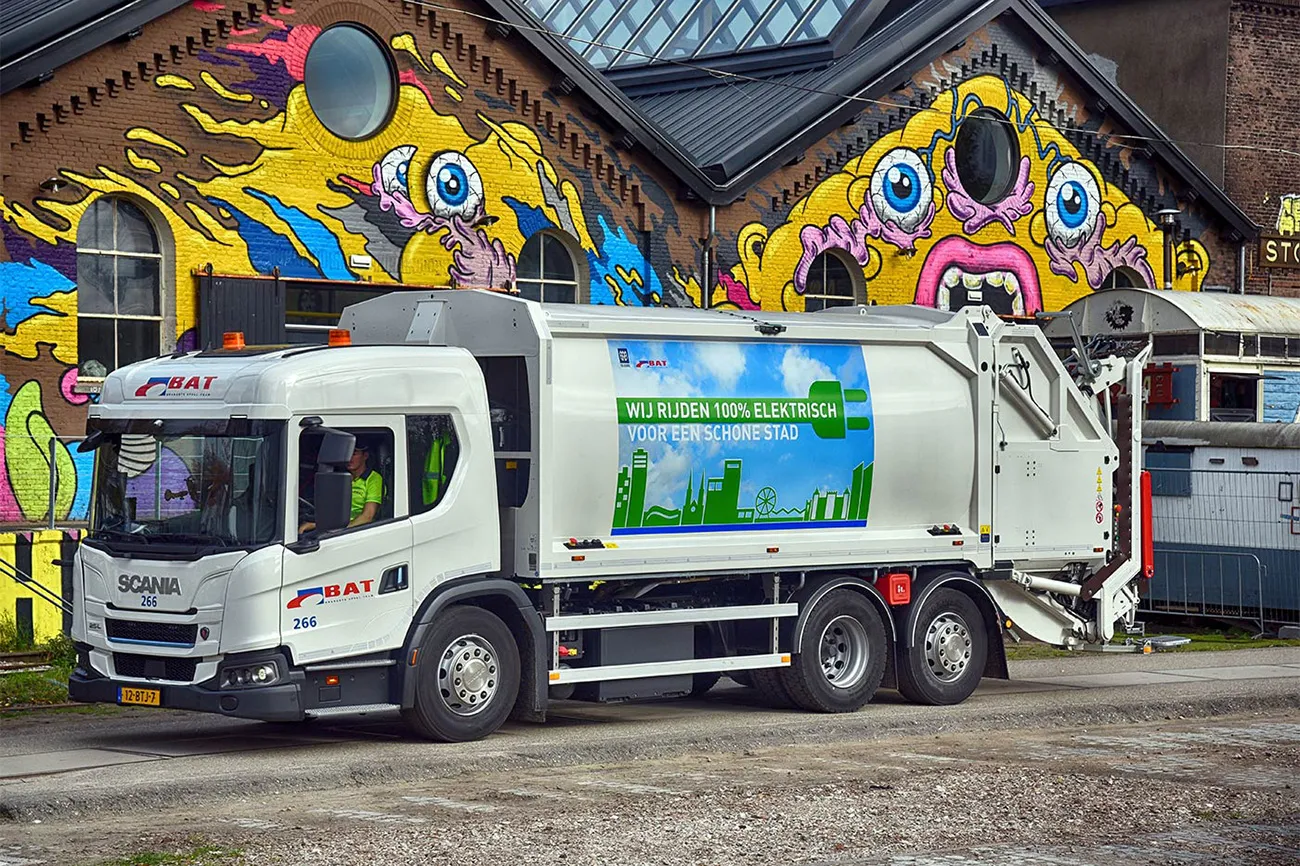
The municipality of Tilburg wants to remain a pleasant city to live in and is firmly committed to more green space, cleaner air and less noise, exhaust fumes and waste in the city centre. Quieter, zero-emission Scania trucks are crucial to achieving these ambitious goals. This launch, marked with a celebration, is therefore the starting point for the planned, phased replacement of the entire fleet of 60 collection vehicles with electric models. Initially, they will operate only in and around the city centre, collecting commercial and household waste, and later in the surrounding neighbourhoods as well.
Scania BEV collection vehicles
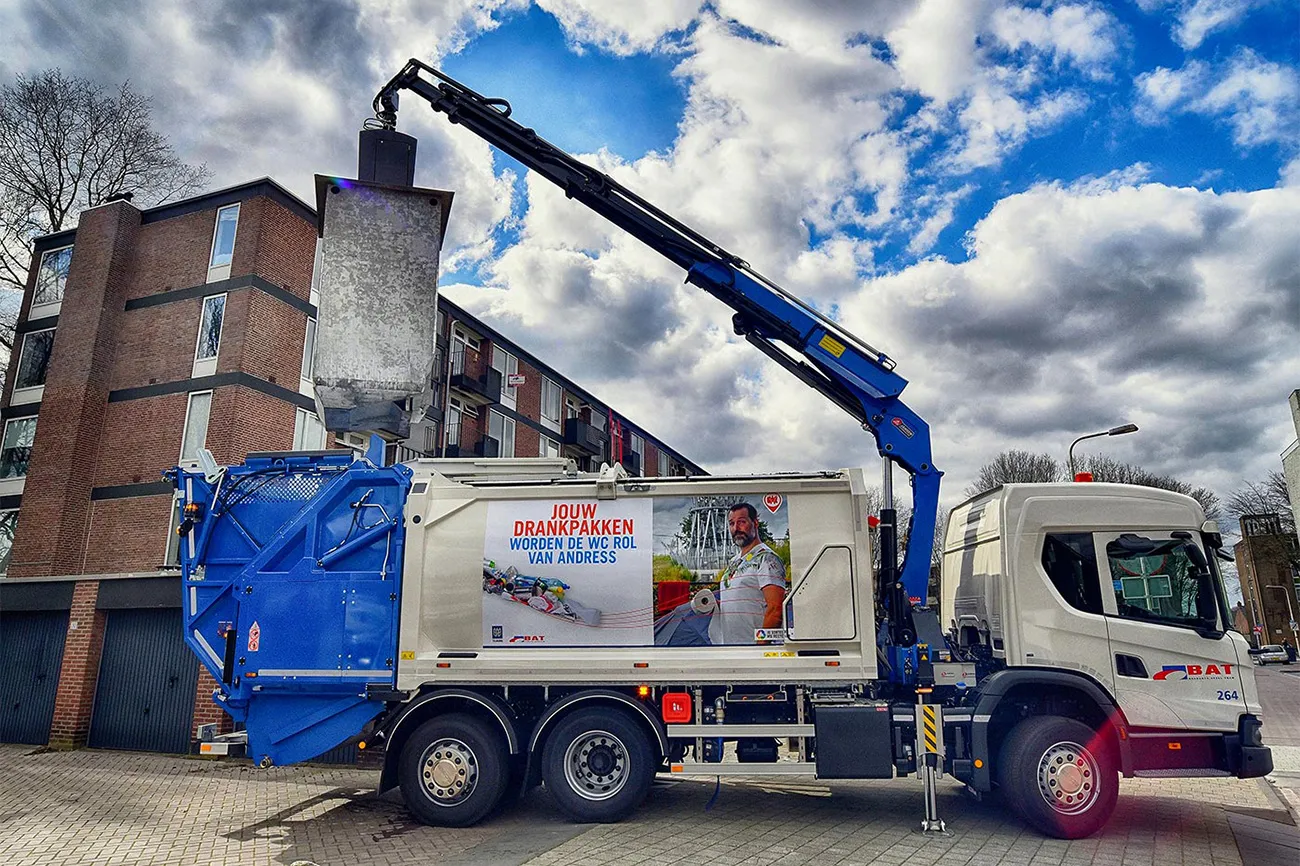
To achieve 100% emission-free transport, BAT made a deliberate choice in favour of Scania and selected three battery electric vehicles (BEVs) in two different specifications. Two 25L B6x2*4NB rear loaders feature the low-entry CL20N cab and Geesink Norba bodywork for kerbside and commercial waste collection. A third Scania, a 25P B4x2NA box truck with an enclosed body and CP17N day cab, will be used to collect textiles and bulky household waste. The two new rear loaders are equipped with five battery packs each, with a total installed capacity of 165kWh, and an electric motor producing 230kW. The box truck, which has a capacity of 300kWh, has nine battery packs. Range and axle configuration were important factors for BAT in the tender. The choice of battery packs was determined by the vehicle length, which must not be too great for the city centre. “We will be operating in the environmental zone. With an interim charge, it can continue to run its regular route in the city,” says Brocks.
A business enquiry for Scania Belgium? Get in touch
Companies in this story
Keep following this
Get an email when a new story is published. No account needed.
- ThemeLower emissions and more reuse
- SubjectBouwMat
- CompanyScania Belgium







