









The Netherlands is an international testbed for electric equipment
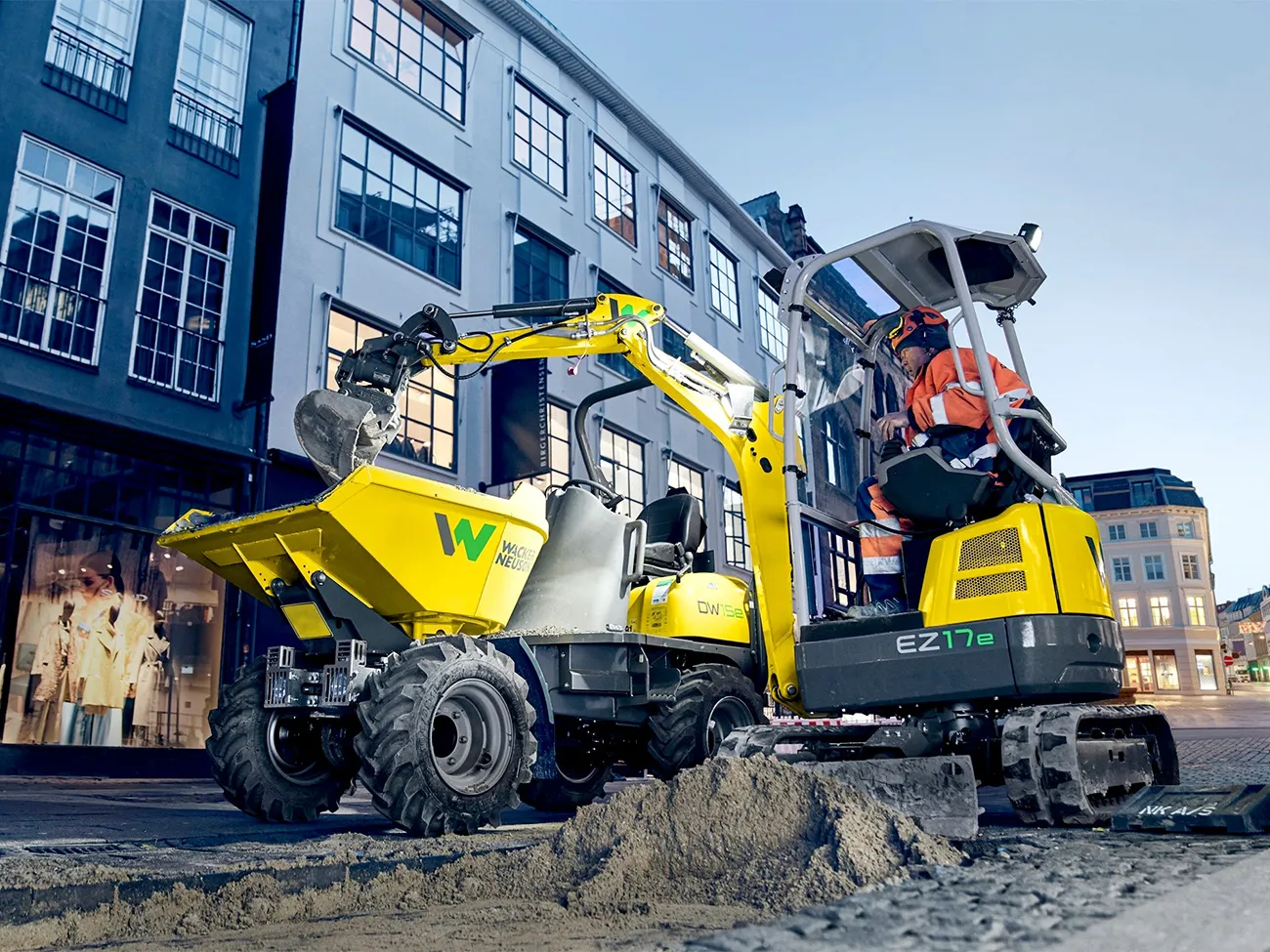
The recent climate summit in Glasgow showed how difficult it is to work together to halt global warming. This is a shame, because the Dutch construction equipment sector shows that when the pressure is on, as with the PFAS and nitrogen crises, many promising initiatives can emerge in a short space of time.
The construction industry has been feeling the effects of excessive emissions for two years now and is responding by accelerating the switch to electrically powered machinery. The shift is still modest, but the Netherlands is ahead of what manufacturers currently offer when it comes to sustainability. Companies such as Electric Construction Equipment, ELEO, ETEC, Limach, UMS and Q-Lectra are working hard to make the machinery fleet more sustainable, and there is a clear need for this. A survey published by TNO in June on behalf of the government found that more than a third of machines used in agriculture and construction still met the Stage IIIa emissions standard from 2006… The shares of Stage II, Stage IIIb, Stage IV and Stage V machines each hover around 15%.
There appears to be a concerted effort to accelerate the greening of the country’s equipment fleet. After all, those who can demonstrate that they are reducing nitrogen emissions can continue building for the time being without restriction. A recent EIB study shows that around €2 billion will be invested in new machinery by 2025. A further €2.5 billion will follow in the next 5 years, and 80% of the current 43,000 mobile machines are due to be replaced. More than €1 billion in replacement investment will be postponed until after 2030. Electric machines are considerably more expensive than models with combustion engines, but maintenance and energy costs are 50% lower. According to the Economic Institute for Construction (EIB), conditions are already favourable for investment in compact equipment.
Limiting factors
The payback case is currently less favourable for medium and large machines. Purchase prices are two to three times higher, and there is often no infrastructure at the worksite for charging this type of equipment. Residual values are also uncertain, as there is little or no demand for electric machines abroad. To make the business case more attractive, battery prices will need to fall significantly or additional government subsidies will be required. It is now known that the Dutch government is making €50 million available to establish a knowledge and innovation programme under the Clean and Emission-Free Construction (SEB) roadmap, to develop clean construction concepts and logistics.
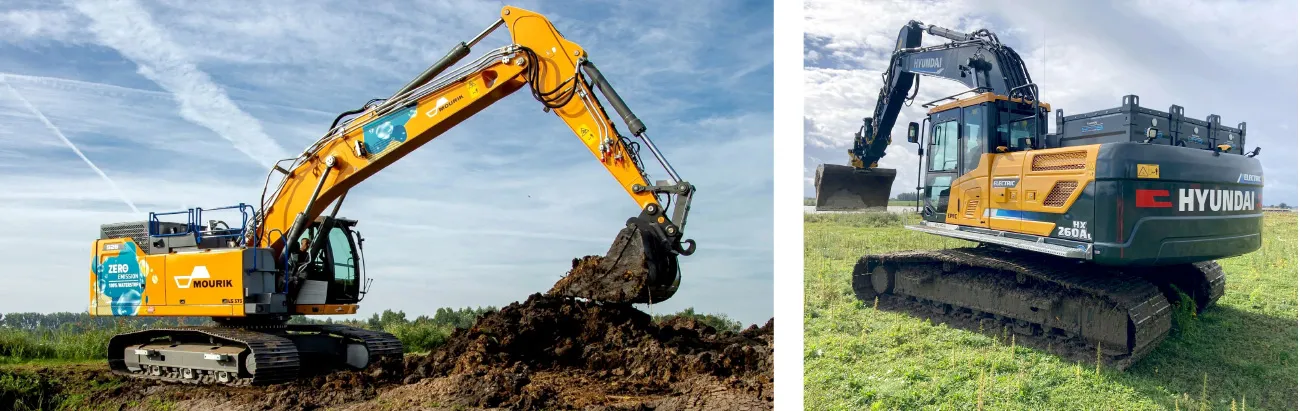
The roadmap sets a target for 2030 of a 60% reduction in nitrogen emissions, a 75% improvement in health and a 400,000-tonne reduction in CO2 from construction. The major construction groups have set even more ambitious targets and want to work emissions-free sooner. Heijmans, for example, has set 2026 as its target date and aims to be carbon-neutral from 2023. Two electric 24-tonne Liebherr crawler excavators are due to enter service in 2022. They are being developed by UMS in Oss together with importer Wynmalen & Hausmann. A similar project was completed with Van der Spek for GMB, which recently became the proud owner of a 28-tonne zero-emission Hyundai based on the HX260A. So it is clearly possible to electrify large equipment.
Making major strides
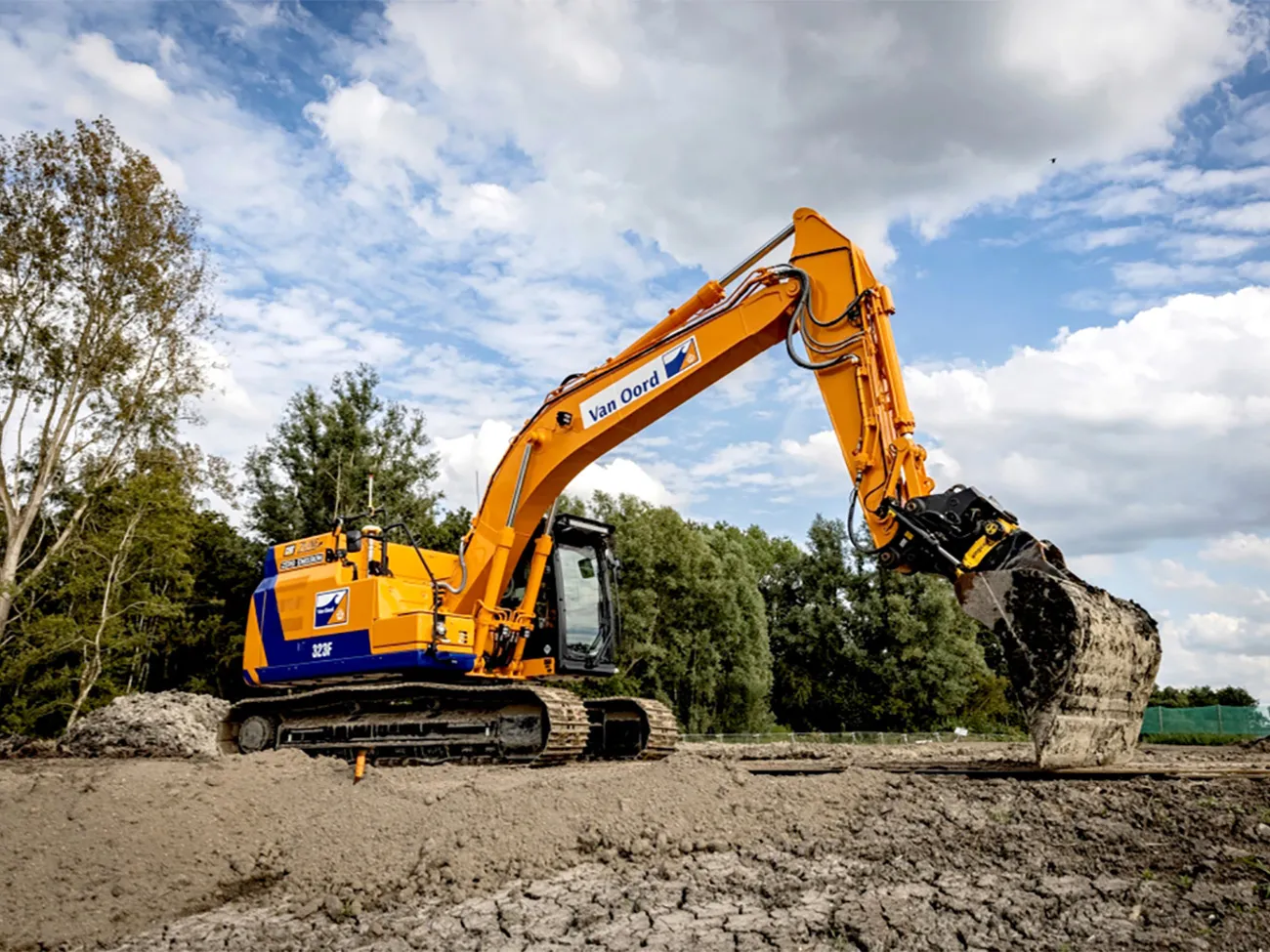
Internationally, the Netherlands is seen as a testbed for electric equipment. From small to large excavators, battery packs are also being fitted to mini loaders, telehandlers, rollers and even an asphalt paver. There are plenty of examples. In just two years, Tobroco-Giant in Oisterwijk built just over six hundred battery-powered articulated loaders, 60% of which were sold in the Netherlands. In the coming years, an emission-free version of almost every machine type is expected to become available, making it possible to take real strides towards a green construction site. After supplying numerous mini and midi excavators, Limach delivered its first-ever EW60.1, a 6-tonne mobile excavator, to Van Gelder in early November.
Kovaco entered the Dutch market with an electric skid-steer loader and compact tracked dumper, while Hanenberg Materieel put the Sherpa skid-steer through its improvement process. Conmeq signed agreements with ELEO and Vermeer in the hope of bringing a thousand electric mini loaders to the European market within 3 years. In a major achievement, Mourik, with help from Accenda, converted a Liebherr R926 into the world’s first operational hydrogen-powered crawler excavator. And what about the major manufacturers? JCB, Volvo and Wacker Neuson are leading the way with zero-emission machines, but more and more brands are introducing their first battery-powered models. Hitachi, for example, now offers the ZE85 as an alternative in the under-10-tonne class.
A business enquiry for Mourik? Get in touch
Companies in this story
Keep following this
Get an email when a new story is published. No account needed.
- ThemeConstruction equipment and transport in motion
- SubjectBouwMat
- CompanyMourik
- CompanyGMB
- CompanyTOBROCO-GIANT







