









Vertical drainage under exceptional conditions
Text Roel van Gils Images CeTeau BV
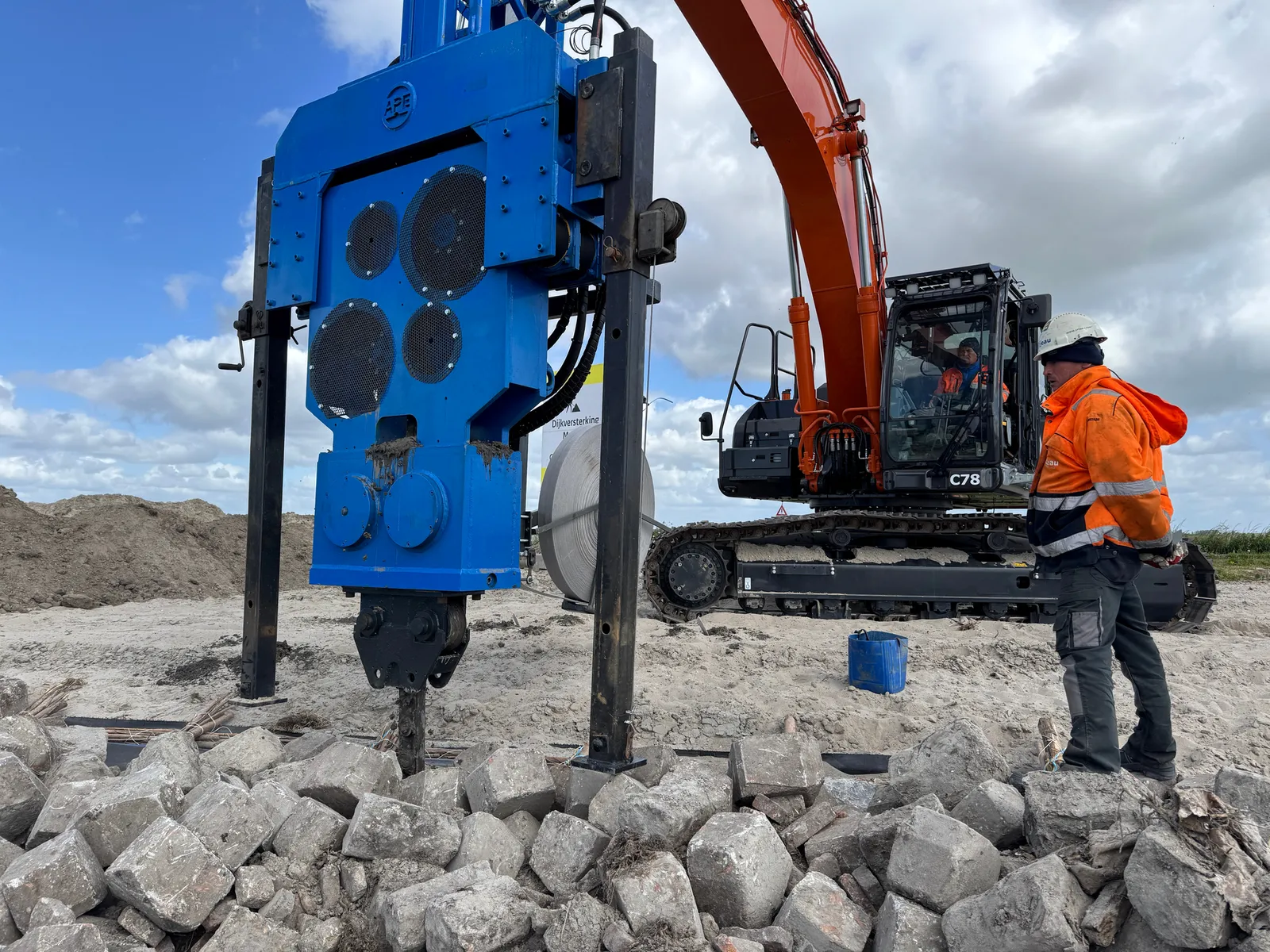
Vertical drains are usually installed using heavy equipment that pushes them in a controlled manner into the ground to be consolidated. This standard approach proved impossible for the Marken dike reinforcement project. The combination of work phases carried out from the water and from land, restrictions on the use of equipment and unexpected obstacles in the ground made the work considerably more challenging than usual. A job tailor-made for CeTeau BV, experts in ground improvement.
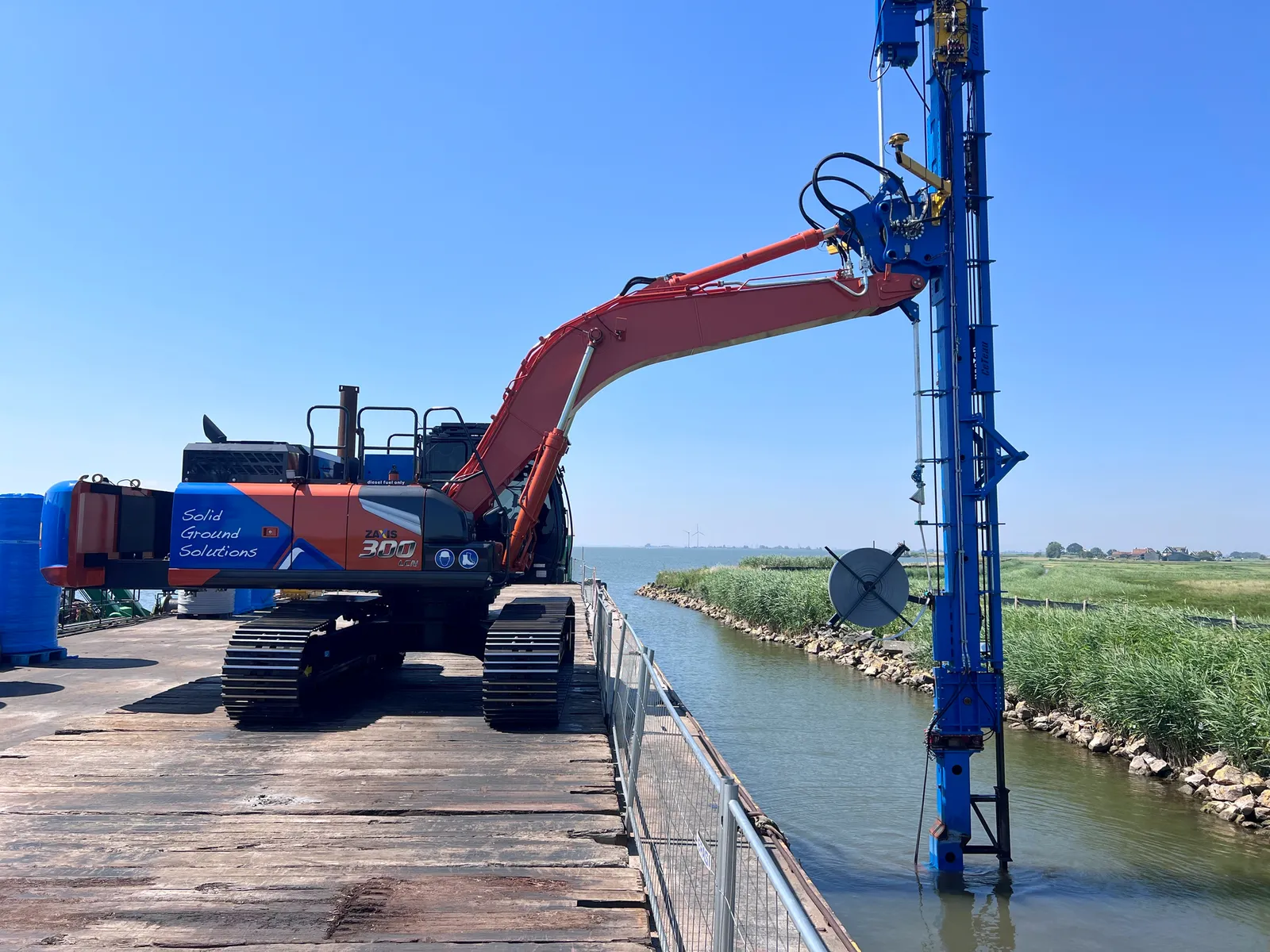
It became clear during the preparation phase that this was no standard project, says Gatze van der Meer, general manager of CeTeau BV. This prompted the Hof op Marken contractor consortium to bring in the right expertise. CeTeau BV and DEME know each other well from international projects. “As a company, we operate worldwide, so working so close to home makes this project extra special,” says Van der Meer. “Our scope included installing vertical drains in two phases: from the water and in the old dike body. Vertical drainage accelerates settlement, while also ensuring it takes place in a controlled manner.”
Wet and dry phases
During the wet phase, carried out from a pontoon between May and November 2024, approximately 130 kilometres of drains were installed to a depth of approximately 6 metres below NAP. “Using relatively light equipment and smart logistics, we were able to work close to the coast,” says Van der Meer. “There were hardly any obstacles in the ground here.” The situation changed dramatically during the dry phase, which ran from April to October 2025. “Heavy machinery could not be used on the existing dike body, even though weight is essential for installing drains without disturbing the ground. Alternatives such as pre-drilling were ruled out because of the contamination present, including asbestos. In addition, during various trial phases we encountered remnants of old bank protection and stone chippings, which made parts of the ground difficult to penetrate.”
Finding a balance
The solution was a specially developed, lightweight vibro rig. “This technique uses vibration to generate sufficient penetration force and work its way between the stone chippings, without adversely affecting the ground structure,” explains Van der Meer. “Because the ground was sufficiently silty, unwanted smearing of the clay was avoided. This achieved a workable balance between technical feasibility and environmental restrictions.” In total, CeTeau BV installed 115 kilometres of drains during the dry phase, in lengths ranging from 6 to 9 metres. “The CT-D 1013 drains used are specially designed for high tensile strength and are reliable even in complex conditions, such as the buckling loads that can occur when the surcharge slides.”
The combination of technical restrictions and environmental factors made installing the vertical drains exceptionally challenging, says Van der Meer. He adds that all CeTeau BV drains are made from PP in the Netherlands. “We have also developed a biodegradable drain that is 100 per cent degradable under normal ground conditions, so it no longer poses a risk of seepage. It was not used here because of the specific ground conditions.”
Een zakelijke vraag aan CeTeau B.V.? Get in touch
Wie aan Dijkversterking Marken werkte
- contractors' joint ventureHof op MarkenIn this story
Keep following this
Get an email when a new story is published. No account needed.
- ProjectMarken dike reinforcement
- ThemeFlood protection and climate-resilient water management
- SubjectWater infrastructure
- CompanyCeTeau B.V.
- CompanyHof op Marken







