









Sixteen immersed-tunnel joint frames for the Oosterweel Tunnel from Oude-Tonge
Text Roel van Gils Beeld Tekst Roel van Gils Beeld GS Birkhoff Staalwerken
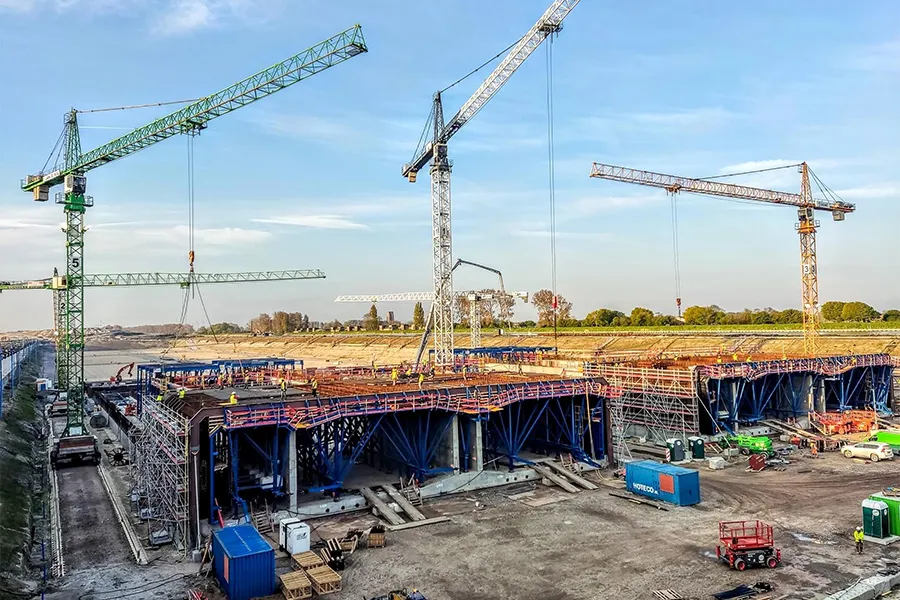
The Oosterweel Connection is currently one of Belgium’s largest infrastructure projects. One part of the project is the construction of an immersed tunnel on the bed of the Scheldt. For the supply of the immersed-tunnel joint frames, the TM COTU construction consortium brought in Dutch company GS Birkhoff Staalwerken from Oude-Tonge. And the consortium had good reason to do so…
GS Birkhoff Staalwerken is rightly an expert in producing immersed-tunnel joint frames. “A few years ago, we also produced, supplied and installed the joint frames for the immersed tunnel on the A24 Blankenburg Connection,” says director Henk van den Ochtend. “The team working on that project has since moved over to the Oosterweel Connection. They had a good experience with us, which is why we have now been asked to make the joint frames for the Oosterweel Tunnel too. Sixteen in total, and fairly substantial in size.”
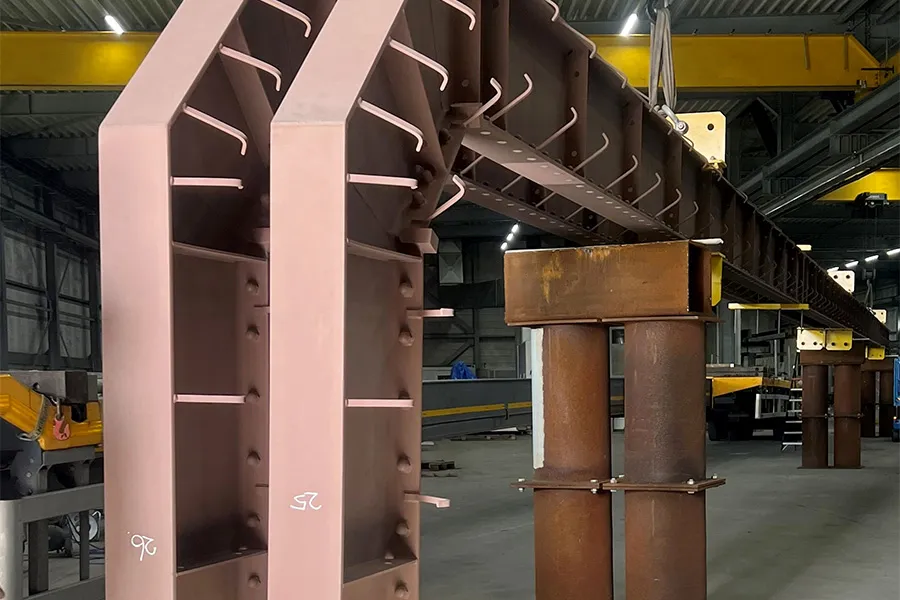
Frame to execution class 4
The immersed-tunnel joint frames are essentially a type of framework made from IPE 600 steel sections, explains Van den Ochtend. “Each frame is 40 metres long and 10 metres high, and was prefabricated entirely in our workshop to execution class 4. We aimed to prepare each frame as much as possible, so that we would need to do as little welding as possible on site. An IPE section is relatively flexible along its length, so we took special measures to prevent it from buckling during transport to the construction dock.” And successfully so. Once at the construction dock in Zeebrugge, GS Birkhoff Staalwerken set the sections to size, welded the two vertical sections to them, then added the top section and welded everything up. “Making an immersed-tunnel joint frame is one of our specialities. The requirements often make it more challenging than the work itself,” says Van den Ochtend.
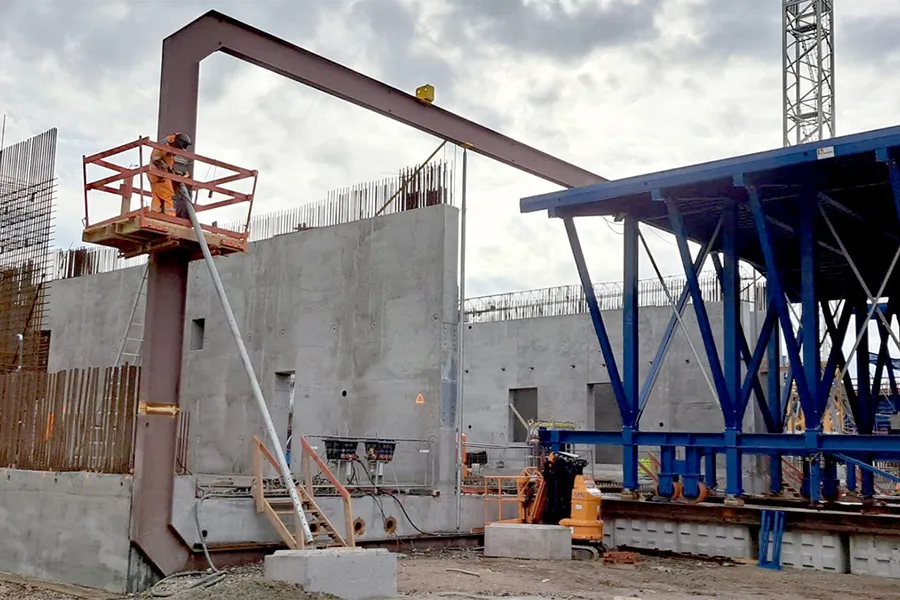
Omega and Gina profiles
The immersed-tunnel joints connect the concrete tunnel sections to one another. “A steel joint frame is located at the end of each concrete section,” says Van den Ochtend. “Flat compression plates are welded in on one side, while on the other side we have fitted compression plates with clamping blocks, onto which the Gina rubber profile is mounted. Immediately after immersion, this provides the first watertight seal between the two tunnel sections.” The final seal is installed from inside the tunnel at a later stage. To gain access to the immersed tunnel sections in the first place, GS Birkhoff Staalwerken supplied roof penetrations that were cast into the sections. “After immersion, these roof penetrations provide access to the tunnel sections, allowing the Omega rubber profile to be installed from inside. We supplied 3,000 clamping strips to secure the Omega profile to the inside of the immersed-tunnel joint frame.
Once that is in place, the end bulkheads can be removed and the tunnel completed.”
GS Birkhoff Staalwerken has already completed the work on the Left Bank and, at the time of writing, is working on the Right Bank, welding compression plates into the final sections. The entire project is being carried out to execution class 4. The tunnel entrance on the Left Bank is ready for the first section to be immersed. This is scheduled to take place in July 2025.
Een zakelijke vraag aan Birkhoff Staalwerken B.V.? Get in touch
Companies in this story
Keep following this
Get an email when a new story is published. No account needed.
- ThemeMaterials and techniques for infrastructure
- SubjectUnderground infrastructure
- CompanyBirkhoff Staalwerken B.V.







