









Using geogrids for reinforced soil, asphalt or foundations
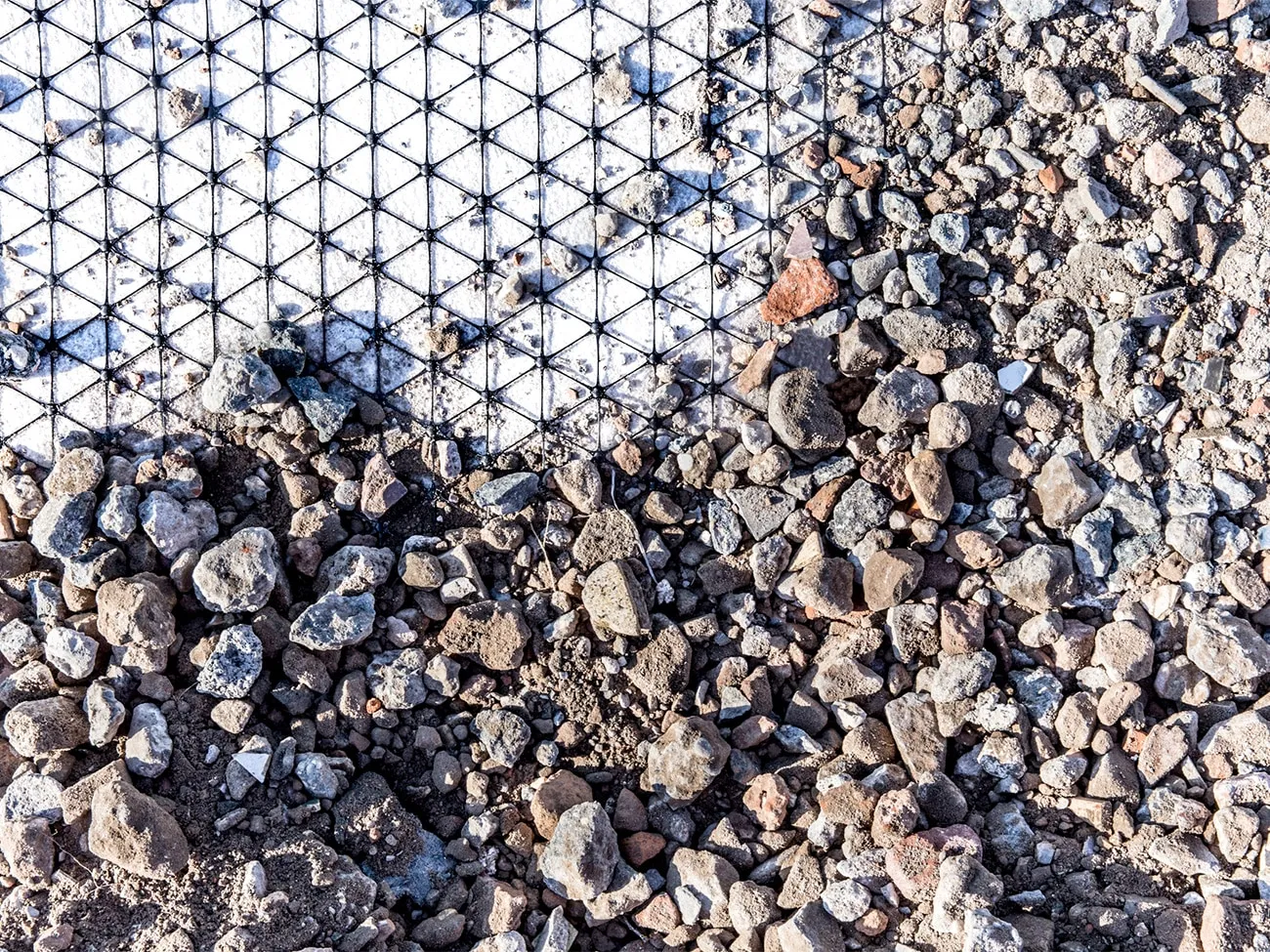
As a global market leader in the development and production of geosynthetics for foundation reinforcement, asphalt reinforcement and soil structure reinforcement, Tensar International often helps save construction time, reduce installation costs and deliver significant environmental benefits. It is no surprise that Tensar solutions are used around the world on countless civil engineering projects.
“Our strength lies in designing and supplying straightforward solutions to complex structural problems,” begins Paul ter Horst of Tensar, the inventors of the geogrid. “Another important added benefit is that our grids enable us to achieve numerous additional savings across the overall structure, in terms of performance, material use and costs, as well as environmental impact. And we can quantify this for every project.”
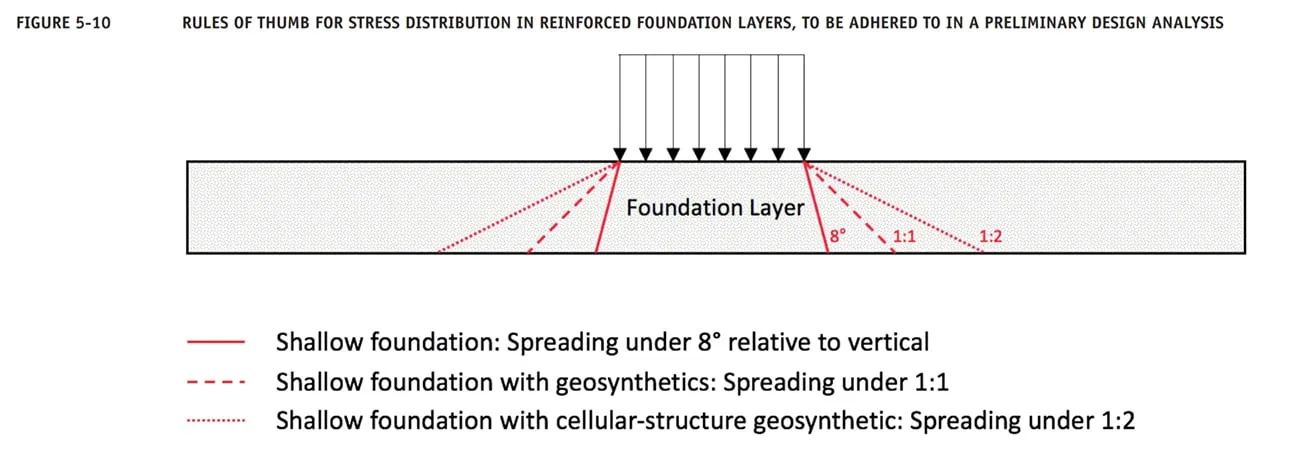
TriAx geogrids
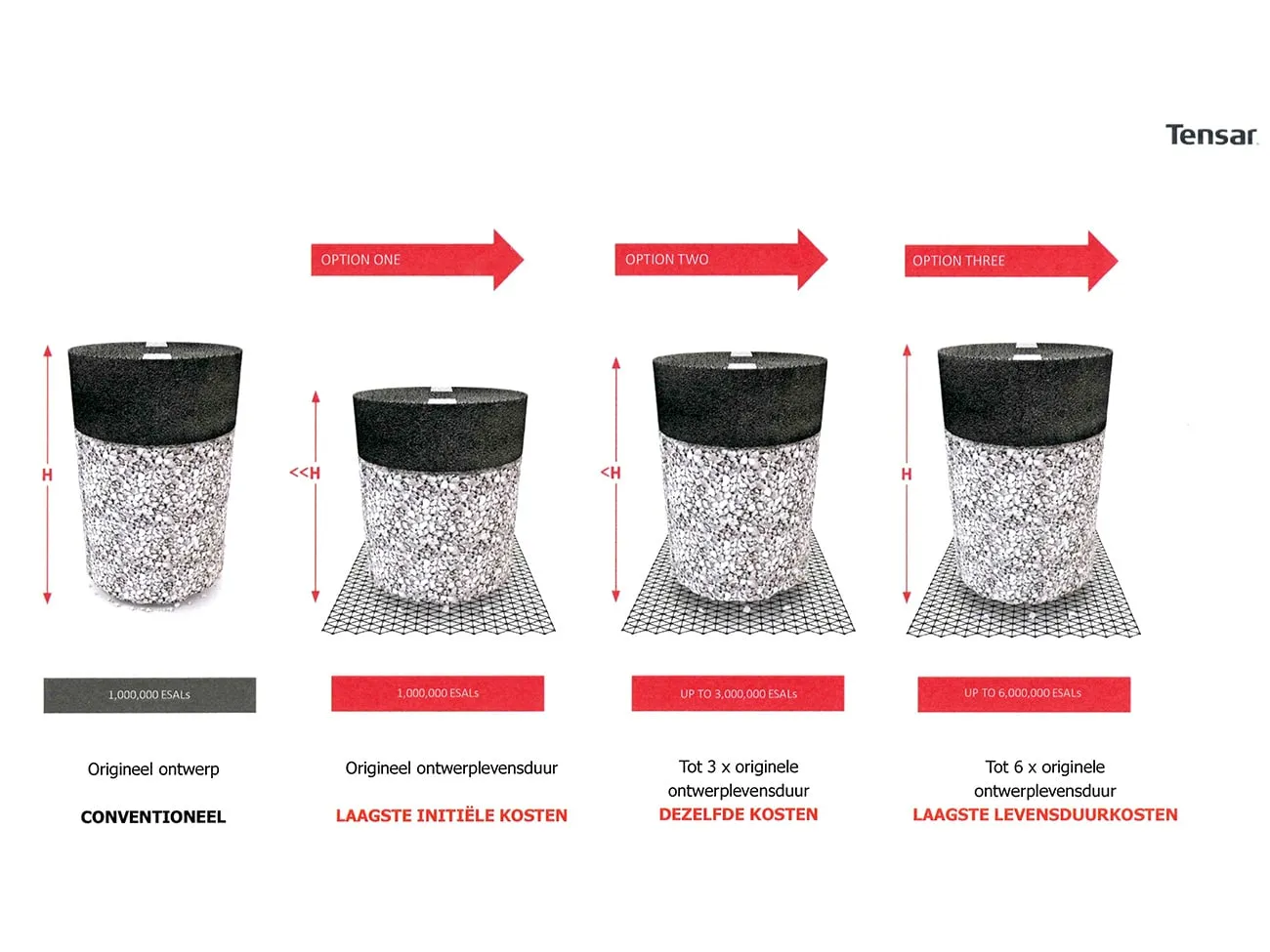
Tensar’s key product for building road foundations is TriAx. “TriAx geogrids enable us to mechanically stabilise aggregate and recycled aggregate,” explains Ter Horst. “With the best performance of any type of foundation geogrid, TriAx can provide much greater load distribution and/or strength. This means you can use less material while maintaining the same traffic loading and service life, or extend the service life significantly, by up to a factor of 5. These are trade-offs that we can substantiate very effectively with our solutions. If asphalt lasts longer because rutting occurs at a later stage, this delivers considerable savings. This reduces the total cost of the structure and significantly cuts its environmental impact too.”
TensarTech Stratum
Another important market for Tensar products is the access roads, storage areas and crane hardstands built for wind farm construction. Ter Horst explains: “A crane hardstand is generally designed for a service life of at least ten years, on the assumption that the turbine will need replacing after that period. By then, you will want to be able to position a comparable crane there. Equipment, however, is constantly changing. At present, crane hardstands are designed around the registration number of the crane. This makes the design very specific. It is entirely possible that, within ten years, or sooner if there are breakdowns in the meantime, a different type of crane will be used. In that case, the design calculations will have to be repeated. The best and most cost-effective solution is a TensarTech Stratum granular mattress. It offers complete flexibility for using any type of crane, with or without load-distributing crane mats.”
Using Tensar TriAx and TensarTech Stratum therefore directly helps reduce the construction costs of asphalt and foundation structures, while also contributing indirectly to the energy transition as a whole, without compromising safety. “The project’s carbon emissions are also reduced because reusable material can be used (recycled aggregate), no concrete needs to be produced and fewer transport movements are required.”
Een zakelijke vraag aan Tensar International BV? Get in touch
Companies in this story
Keep following this
Get an email when a new story is published. No account needed.
- ThemeExtending the life of roads and civil engineering structures
- SubjectYearbook
- CompanyTensar International BV







