









The many possibilities of non-destructive testing
Using non-destructive testing, Wegenscanners give road authorities a comprehensive insight into the condition of their asset base. The aim is to assess the condition of the network and identify potential problem locations at an early stage, so that road maintenance budgets can be used more efficiently. Information about roads can and should be better. Wegenscanners’ unique methodology has many more potential applications, enabling roads and civil engineering structures to be fully analysed.
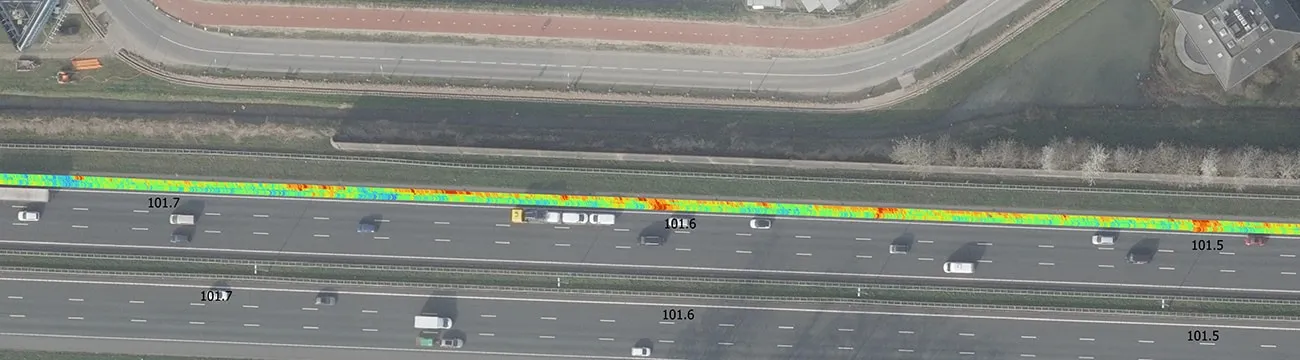
Equipped with a gamma spectrometer and ground-penetrating radar, Wegenscanners search for anomalies in the asphalt pavement structure and foundation layers. “Combining this information with other, more conventional surveys and expert knowledge gives us a comprehensive picture of the structure and condition of the asset base,” says Wilco Bouwmeester of Wegenscanners. But that is not all. “Our aim is to bring more and more information about existing road surfaces and the ground beneath them to the surface. We are therefore constantly innovating. There are still so many possibilities for non-destructive techniques that have yet to be discovered.”
Innovation meetings
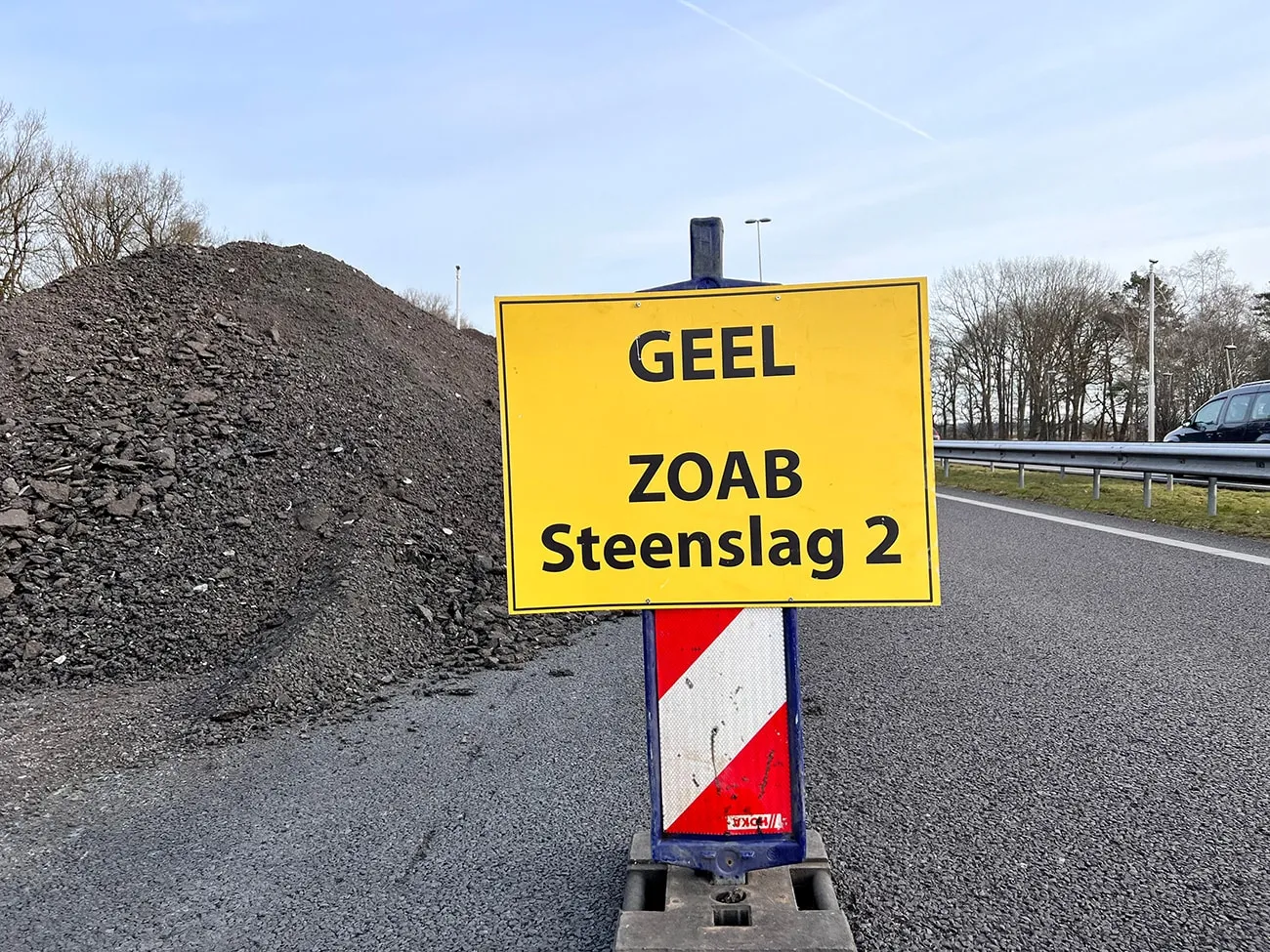
Every six weeks, Wegenscanners hold an internal innovation meeting with staff to discuss how they can develop new applications based on existing techniques. “We also seize opportunities and respond to requests from the market to develop techniques further,” says Bouwmeester enthusiastically. “We don’t do this alone. Of course, we are experts in geophysics and have extensive experience in the field. But we also work with contractors, road authorities and educational institutions, from vocational and higher professional education to the universities in Delft and Enschede. A good example of this kind of joint development is aggregate recognition in the ZOAB pavement. Some stones are better quality than others. As part of the circular reuse of asphalt, it is important to be able to identify that quality, so that high-quality material can be reused in new asphalt, while lower-quality material ‘disappears’ into the lower layers.”
Identifying damage
Staying with ZOAB, Wegenscanners have also developed a technique to map whether or not the surface layer is becoming clogged. Bouwmeester explains: “This makes it possible to take action at an early stage and limit the resulting damage. We can also identify damage to surface courses without visual inspection, using signals from our sensors. The technique is still in its infancy, but has already proved itself in several field trials. We have also developed a method for monitoring the performance of a water-retaining foundation layer. Finally, we are involved in Asfalt-Impuls, an industry-wide programme to give the asphalt sector a boost. We sit on the quality assurance committee, where we are helping to further develop the use of non-destructive techniques, among other things.” Wegenscanners already give road authorities a comprehensive insight, but continue to innovate so that roads and civil engineering structures can be fully analysed.
Question about this story? Ask your question
Keep following this
Get an email when a new story is published. No account needed.
- ThemeExtending the life of roads and civil engineering structures
- SubjectYearbook







