Sustainability in the concrete sector is about more than materials

The Vereniging van Ondernemers van Betonmortelfabrikanten in Nederland represents 110 ready-mix concrete plants, which record their use of secondary and recycled materials, as well as their CO2 footprint, in a benchmark. This benchmark forms part of the Concrete Sustainability Council (CSC) certification. It is a certification system for sustainable concrete production and the responsible sourcing of raw materials, providing assurance to customers. Paul Ewalds is Policy & Regulation Coordinator at Betonhuis. We speak to him about the 2018-2019 sustainability report for the ready-mix concrete sector.
CO2 emissions rose in 2019, but there is an explanation
The benchmark shows that concrete volumes increased, while the supply of raw materials with low CO2 emissions declined. What does this mean? Ewalds: “Because raw materials with low CO2 emissions were in limited supply, more CEM1 was used, resulting in higher CO2 emissions. The problem lies mainly with binders. Is that a problem? For the concrete sector, yes, but not for the Netherlands. It means that other industries have started producing less waste. However, we need to look at alternatives that can reduce CO2 emissions in our sector again. Calcined clay could be one solution.”
Sustainability ambitions
The Betonakkoord sets the direction for sustainable working, and the bar is high. “The ready-mix concrete sector even aims to achieve a 55% reduction in CO2 emissions by 2030, compared with 1990. By 2050, we want concrete to be 100% carbon neutral. We cannot achieve that ambition alone, so we are also looking to other parties in the construction supply chain,” Ewalds explains. “The concrete industry often supplies what is requested. If our industry proposes sustainable solutions, clients may have to abandon their plans or invest more in certain things. Builders and designers may also need to review their working methods and plans, organise waiting times differently, adapt structures, reuse materials or design more slender structures. So clients will need to procure sustainably and work together more. The person placing the order must state how much environmental impact they are willing to cause. Reducing CO2 emissions therefore means using less CEM1 and more CEM3, using more blast furnace slag, and so on. As a concrete industry, we will need to consult with our clients. When public clients award contracts, the MKI value often counts towards their decision, but it does not represent actual costs. Non-public clients can use the CSC label, which includes a module for secondary materials. A CO2 module is also planned for 2022. This will let you order concrete with a sustainability rating from 1 to 5 stars. The system works internationally. In the Netherlands, those stars will most likely be linked to an MKI reference, as MKI is not used abroad.”
Tax CO2 emissions caused by imports
In Europe, calculations are based on the EU ETS, the European Emissions Trading System. “The current ETS system needs to be revised. The number of free allowances is being reduced, but the playing field must remain fair. If we pay for ETS allowances covering all CO2 emissions, this becomes a European matter and CO2 emissions caused by imports will also be taxed.”
According to Ewalds, there is another issue in the background: “A report entitled ‘Carbon Based Design’ has just been published by TNO/RVO. We are already trying to build with as little CO2 emissions as possible, but the report indicates that while emissions from materials have a factor of 1, building use has a factor of 7. Using fewer materials means lower CO2 emissions, but it does mean more heating and cooling. What I want to point out is that materials are not the sole source of CO2 emissions. A large share of emissions comes from clients, developers and structural engineers, in ways that are not material-related. This concerns the building value model, the building’s service life and circular design. You can keep tightening the screws on the MKI in the concrete industry, but the non-material-related side also needs to be considered. However, this is not laid down anywhere.”
Conclusion
The conclusion we can draw is that the benchmark does not tell the whole story, because its results are based on cubic metres of concrete. “But it is the whole picture that matters,” says Ewalds. “The current benchmark reflects the thinking of 2014, when it was a driver for sustainability. Now that the Betonakkoord is in place, we can monitor things in a completely different way: more broadly and more comprehensively. It is an evolution.”
Key findings from the report
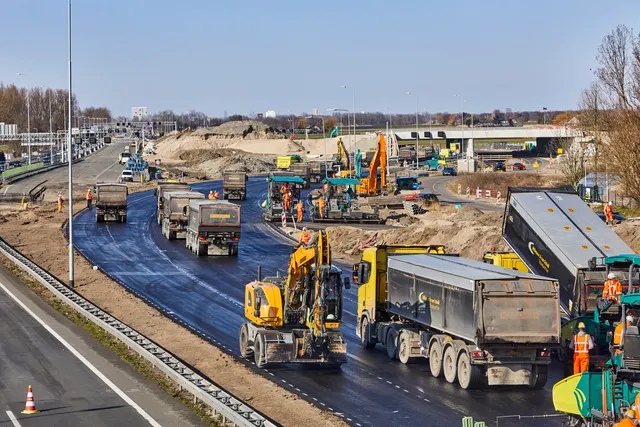
• Rising demand for concrete was driven by the increase in major infrastructure projects in 2019, such as Sluis IJmuiden and Afsluitdijk. These projects also require a lot of cement of a grade that can withstand seawater, which means higher environmental classes that result in more CO2.
• As the market grew, proportionally fewer secondary raw materials per m3 were used, including CO2-neutral materials. At the same time, the supply of CO2-neutral materials such as fly ash and H-slag was lower.
• A relatively large number of high-rise buildings were constructed, increasing demand for higher strengths. This requires higher percentages of cement in the concrete, contributing to a higher volume of CO2.
Question about this story? Ask your question
Keep following this
Get an email when a new story is published. No account needed.
- ThemeLower emissions and more reuse
- SubjectYearbook