









Silent foundation work, even with zero emissions
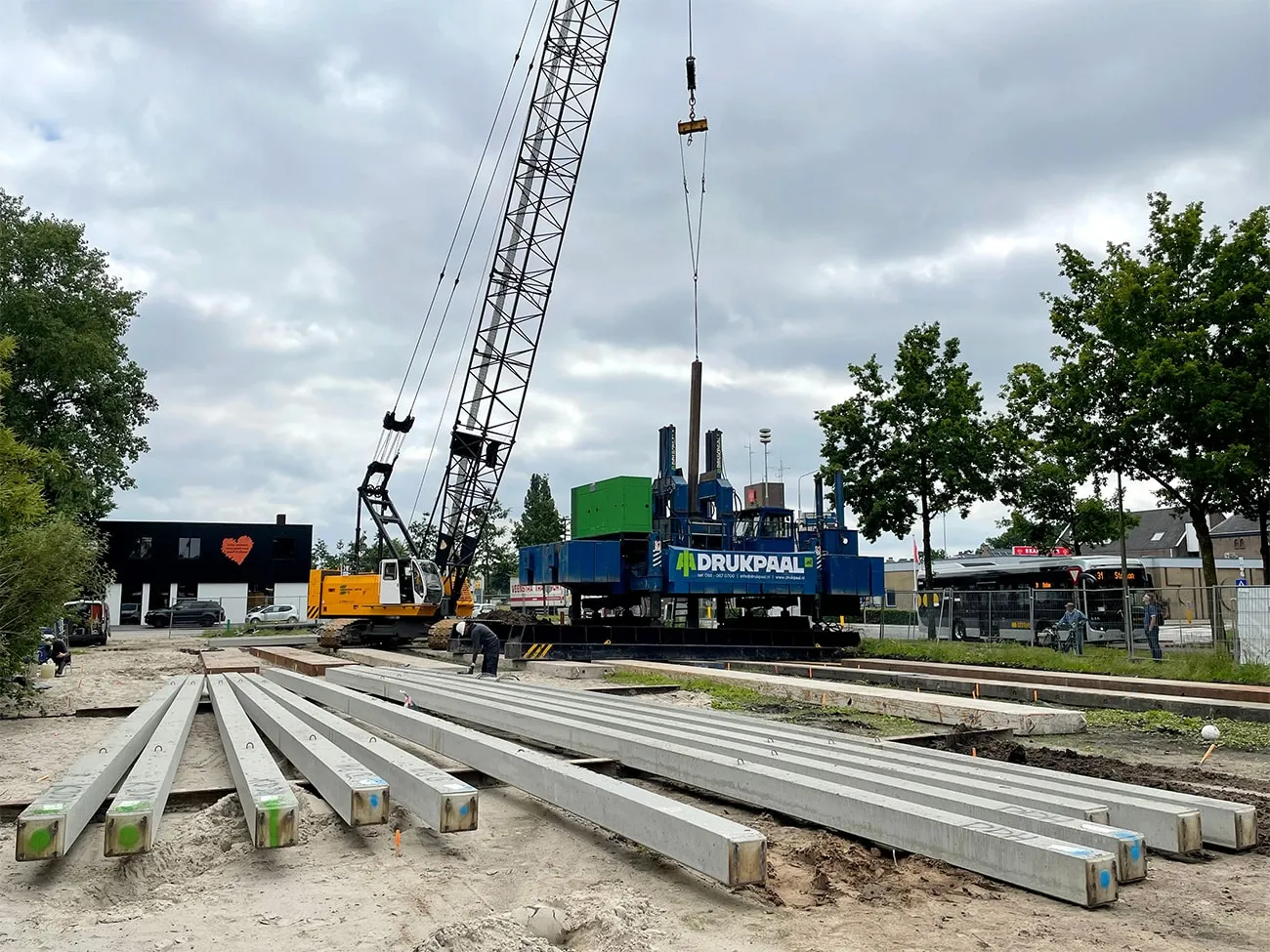
Installing precast concrete piles generally involves noise, vibration and high fuel consumption. Not if A.P. van den Berg has anything to do with it. Alongside its cone penetration testing equipment, the company supplies piling machines that press precast concrete piles into the ground without vibration or noise. The Pile Pusher Pro has low fuel consumption and can even be powered entirely by electricity. A fundamentally better choice in more ways than one.
“Driving piles is still the norm when it comes to foundation work,” says Sandro Katerberg, Sales Engineer Pile Pusher Pro at A.P. van den Berg. “Where pile driving is undesirable or not possible, cast-in-situ piles are used. Until recently, the technique of pressing precast concrete piles into the ground was completely unknown in Europe, even though it is widely used in Asia. About six years ago, we made contact with a piling machine manufacturer in China and were introduced to the Pile Pusher Pro for the first time. We reached an agreement soon afterwards. Since then, we have operated as its exclusive distributor in Europe. We adapted the machine to meet European standards. Every Pile Pusher Pro is supplied with a CE declaration and TÜV certification. We have also integrated our in-house expertise in data acquisition into the machine.”
Valuable data
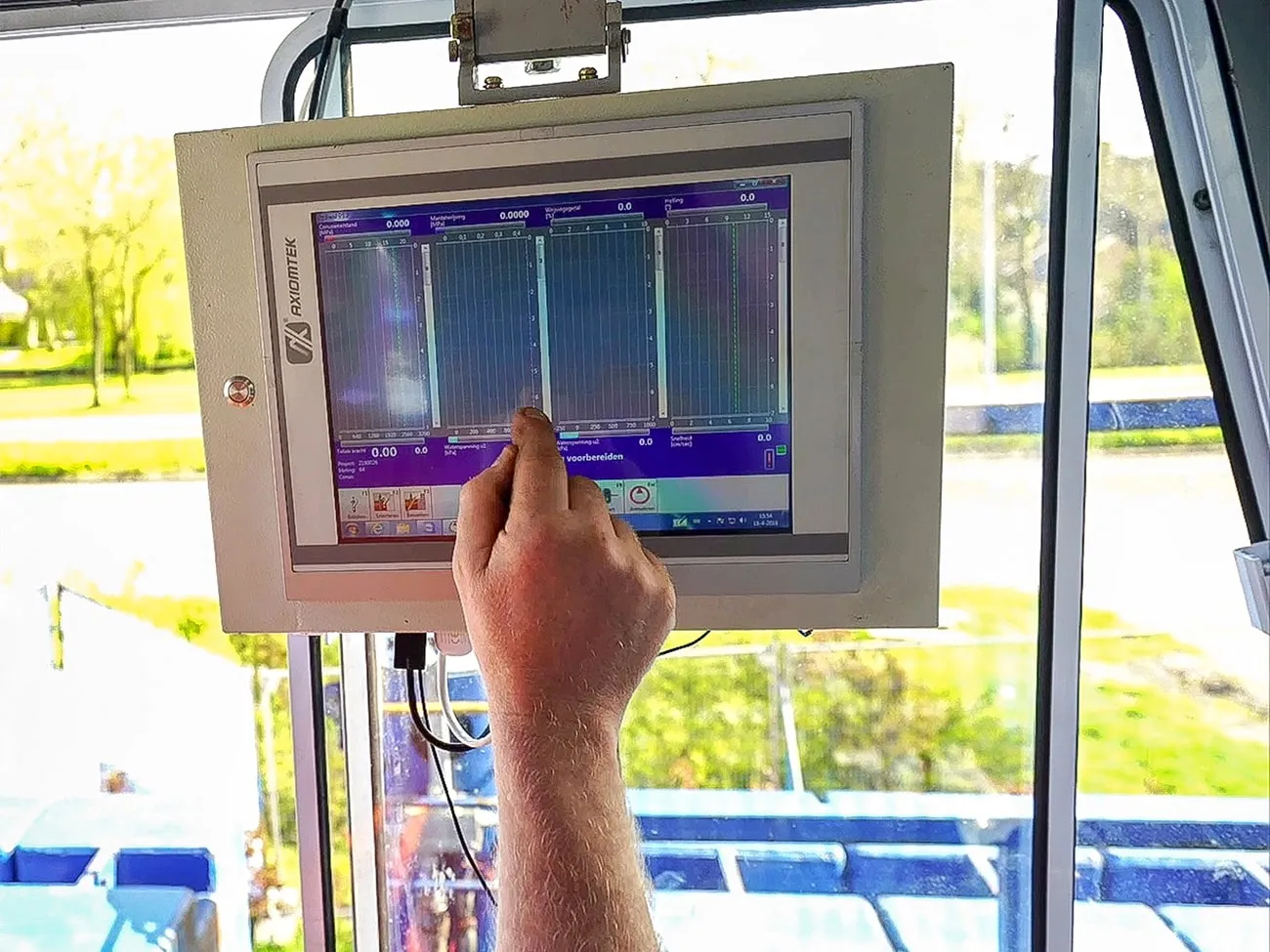
Drukpaal was the first company in the Netherlands to put the Pile Pusher Pro into operation and has already completed many projects with it. “We are seeing the technology gain increasing recognition and become more widely known. The manufacturer of the Pile Pusher Pro, T-Works, has built more than 1,500 machines. So we are not alone,” says Katerberg. “The technology is so simple that it is hard to understand why it took so long to reach Europe. As a manufacturer of cone penetration testing equipment, we are no strangers to pressing technology. We equip the Pile Pusher Pro with our in-house developed measurement and recording system, which provides hugely valuable data. For example, it records the total force required to press in each pile. This makes the data useful to structural engineers and designers. Combined with data from a cone penetration test, they can easily verify whether the piling plan reflects actual ground conditions.”
Versatility
According to Katerberg, the Pile Pusher Pro is extremely versatile. “Its applications range from foundations for housing developments and apartment blocks to infrastructure projects, the construction of piled embankments and foundations for large distribution centres. Wherever there are requirements to limit noise and vibration, the Pile Pusher Pro offers an excellent alternative to conventional foundation techniques. But it is often chosen for other applications with less stringent requirements too. The machine can carry out foundation work at low construction cost and in less time, without compromising on quality or reliability. Fuel consumption is also low, and the machine can even run entirely on electricity.”
The machine is fairly large, which is inherent to the method. “The machine derives its pressing force from its own weight,” Katerberg explains. “It can also be fitted with counterweights, meaning the Pile Pusher Pro is available with pressing forces ranging from 60 to 1,200 tonnes. Another unique feature is that the machine can move around the site by walking, and can even rotate 360° around the pile position. This means the ground is not churned up, and trackway mats are not needed where the ground has sufficient bearing capacity. Finally, foundations can be installed very close to adjacent buildings, structures or railway lines. Our customers’ initial feedback has been extremely positive. We are convinced that this technology will help us ‘conquer’ the rest of Europe too.”
Question about this story? Ask your question
Keep following this
Get an email when a new story is published. No account needed.
- ThemeLower emissions and more reuse
- SubjectYearbook







