









Integrated solution for ventilation, fire detection and smoke and heat exhaust in car parks
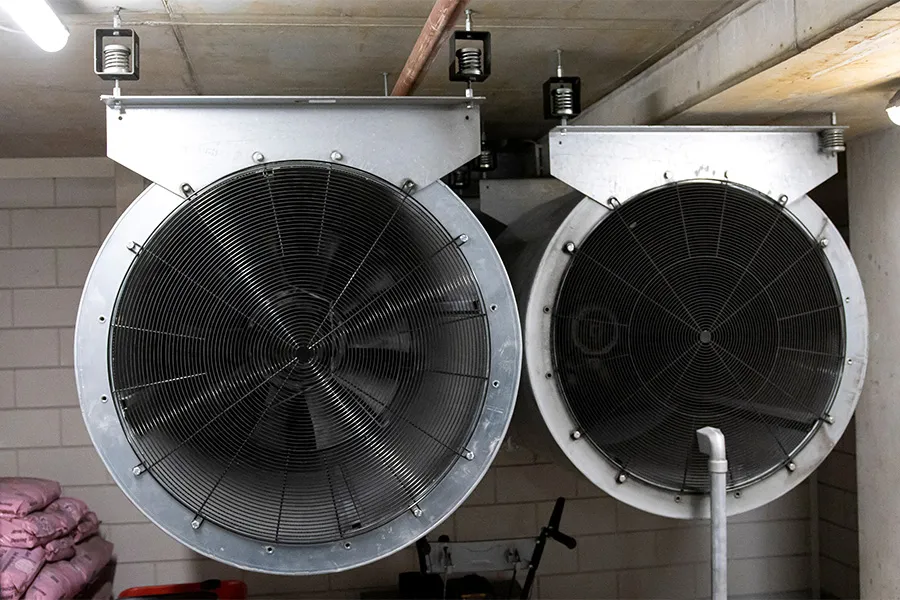
A fire can have serious consequences. This is also true in car parks, where smoke and heat can obstruct visitors’ safe escape routes, hamper the work of the emergency services and cause significant damage to the building structure. Kingspan Light + Air has been providing a solution for this for 40 years. By taking an integrated approach to both day-to-day ventilation in car parks and smoke and heat exhaust in the event of a fire, clients benefit from a complete solution featuring high-quality components, a long service life, low energy consumption and low noise levels. And by managing projects as a whole, they also have one point of contact and one party responsible for the warranty on the complete installation.
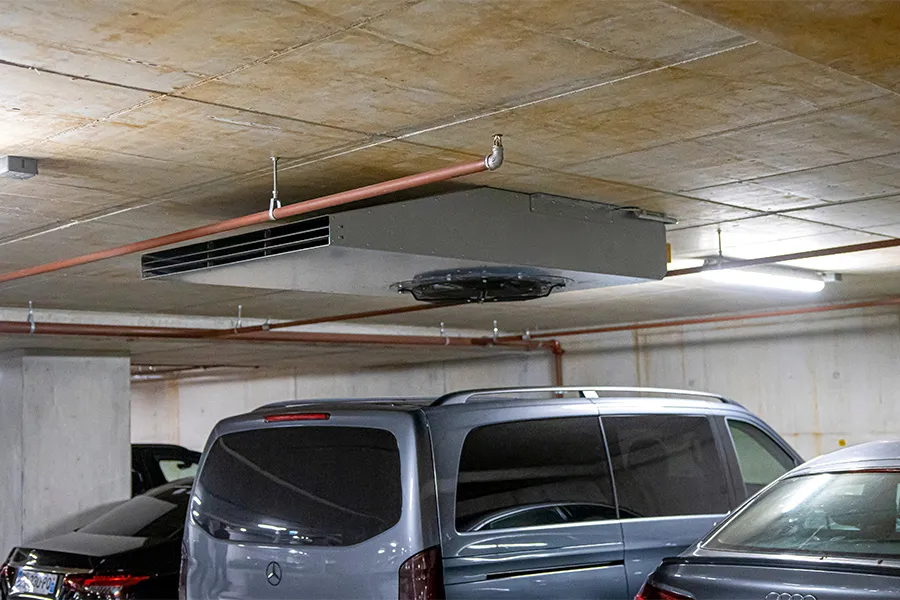
Fresh air in car parks
There are various above-ground car parks and mobility hubs in the Netherlands, where smoke and heat are often exhausted naturally, says Stan Veldpaus, Project Adviser, Smoke Control Systems at Kingspan Light + Air. “Most car parks, however, are below ground, so a mechanical ventilation solution with shafts and jet fans is almost always necessary. Mechanical ventilation in underground car parks efficiently removes toxic gases such as carbon monoxide (CO), autogas (LPG) and benzene. This creates a healthy environment for everyone using the car park. Mechanical ventilation can also help to remove smoke and heat effectively in the event of a fire.”
Appropriate measures
“A building fire cannot be prevented,” stresses Patrick Verboven, Fire Safety Specialist at Kingspan Light + Air. “Even the safest car park can experience a fire, with potentially serious consequences for visitors and the building structure. This applies not only to the car park itself, but also to apartments or offices above it. It is not uncommon for residents or employees to be prohibited from entering a building for months because the stability of the structure can no longer be guaranteed after a fire. Appropriate measures are needed to prevent this.”
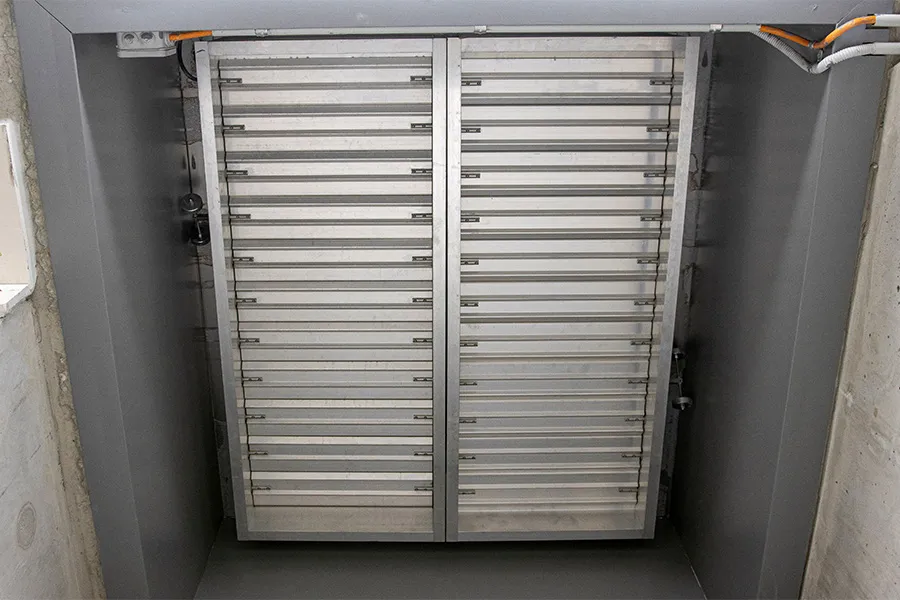
Roll-down fire curtains
“Fortunately, fire safety regulations are becoming increasingly stringent,” says Patrick. “For example, sprinkler systems are now mandatory in car parks beneath buildings where the floor is more than 13 metres above ground level. The Dutch Building Decree (Bbl) also requires covered car parks to be divided into fire compartments of no more than 1,000 m². Adding a few walls might seem like a smart solution, but it is anything but. Visitors still need to be able to drive from one compartment to another, so openings in the fire walls are essential. In the event of a fire, these openings can be closed quickly with our roll-down fire curtains. Their low installation height also makes them particularly suitable for the low floor-to-ceiling heights found in car parks.”
Integrated solution for ventilation and smoke and heat exhaust
Experience shows, however, that building owners and visitors increasingly prefer spacious, light car parks with clear sightlines and straightforward routes, as this enhances the sense of safety, says Stan. “The emergency services also prefer car parks without fire compartments, where they can reach the fire as quickly as possible. To meet the needs of building owners, users and the emergency services alike, we recommend that car parks be equipped with a smoke and heat exhaust system, using an equivalent solution, and that day-to-day ventilation be integrated with it.”
In this configuration, the ventilation system automatically ramps up or down in response to the level of pollution in the car park. Fresh air and low energy consumption therefore go hand in hand. “In the event of a fire, the ventilation system is set to maximum and smoke and heat are forcibly directed in one direction, then efficiently exhausted outside through shafts and large fans at a speed of at least 1.5 m/s. This reduces damage to building structures and largely prevents smoke damage,” says Stan. “The emergency services can also approach the fire with the wind at their backs and begin firefighting, which in most cases limits the damage to just a few cars.”
Long service life, low energy consumption
Anyone choosing Kingspan Light + Air’s combined systems can count on a long service life, low energy consumption and low noise levels, says Stan. “We manufacture the components required in-house or under our private label. These range from (jet) fans to control panels, transmission routes and damper assemblies, and include the associated detection system, comprising CO/LPG and fire detectors, an alarm and evacuation system, and automatic notification to the fire brigade.” Patrick adds: “By advising on, designing, installing and maintaining all the systems as an integrated whole, we can guarantee high quality. This delivers not only a high level of comfort, but also a low TCO. We use standard calculation rules, but also verify our recommendations using Computational Fluid Dynamics (CFD) computer simulations to guarantee performance in both ventilation and fire scenarios. This means building owners can leave everything in our hands, in both new-build and renovation projects.”
Question about this story? Ask your question
Keep following this
Get an email when a new story is published. No account needed.
- SubjectYearbook







