Hollandia, specialists in steel structures for water infrastructure and movable structures since 1928
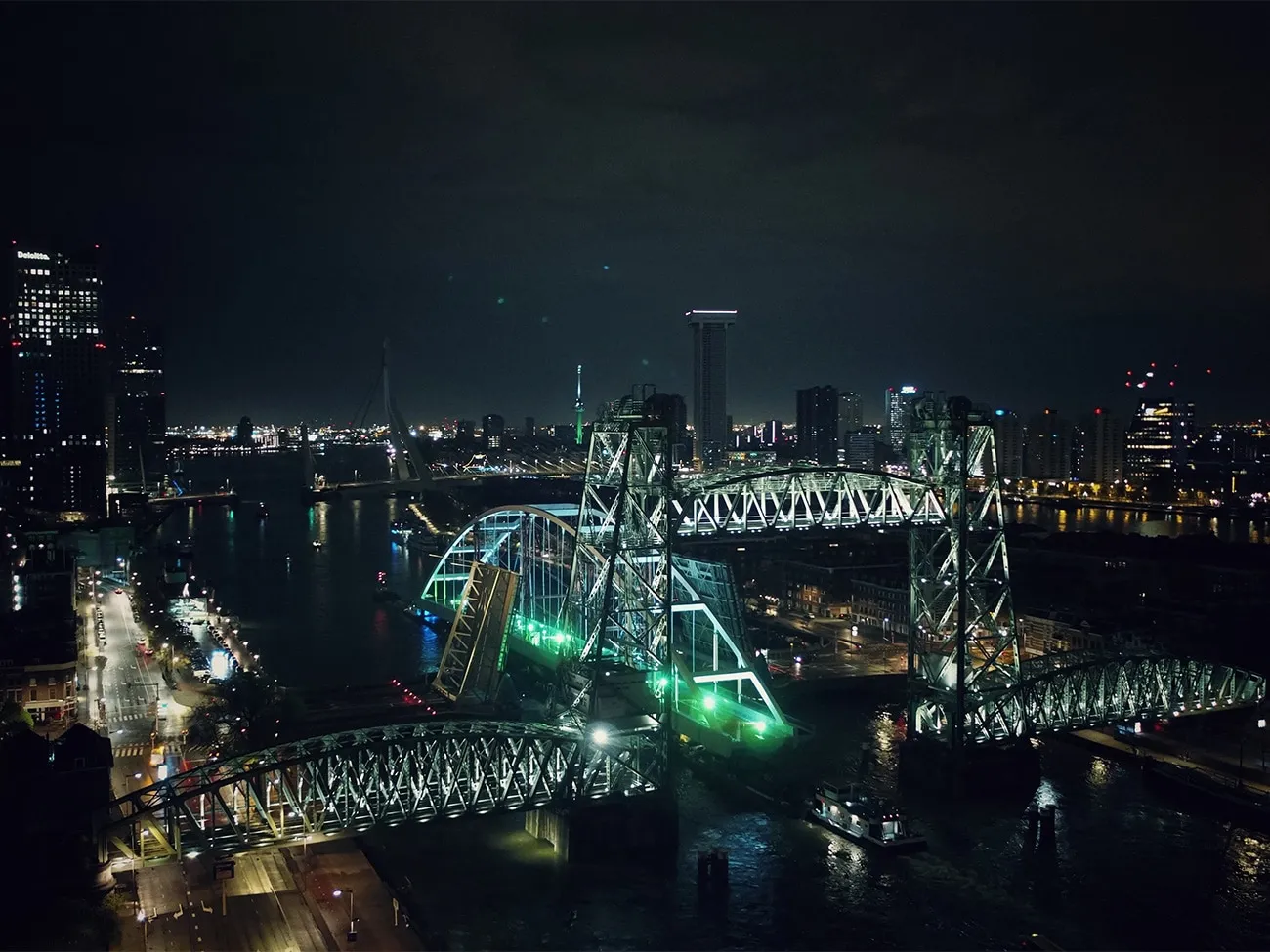
We are pushing the boundaries of what steel construction has made possible to date more and more often. This calls for craftsmanship and expertise, with everyone bringing out the best in themselves, each other, the materials and the projects. Since 1928, Hollandia has played a major role in the evolution of European steel construction. The company designs, builds and maintains complex steel structures for water infrastructure and movable structures, including bridges, locks, weirs, flood barriers and bespoke structures.
From high-tech structures to monumental craftsmanship
Hollandia Infra and Hollandia Services are subsidiaries of Hollandia. Hollandia Infra specialises in designing and building these steel structures, while Hollandia Services focuses on their routine and major maintenance.
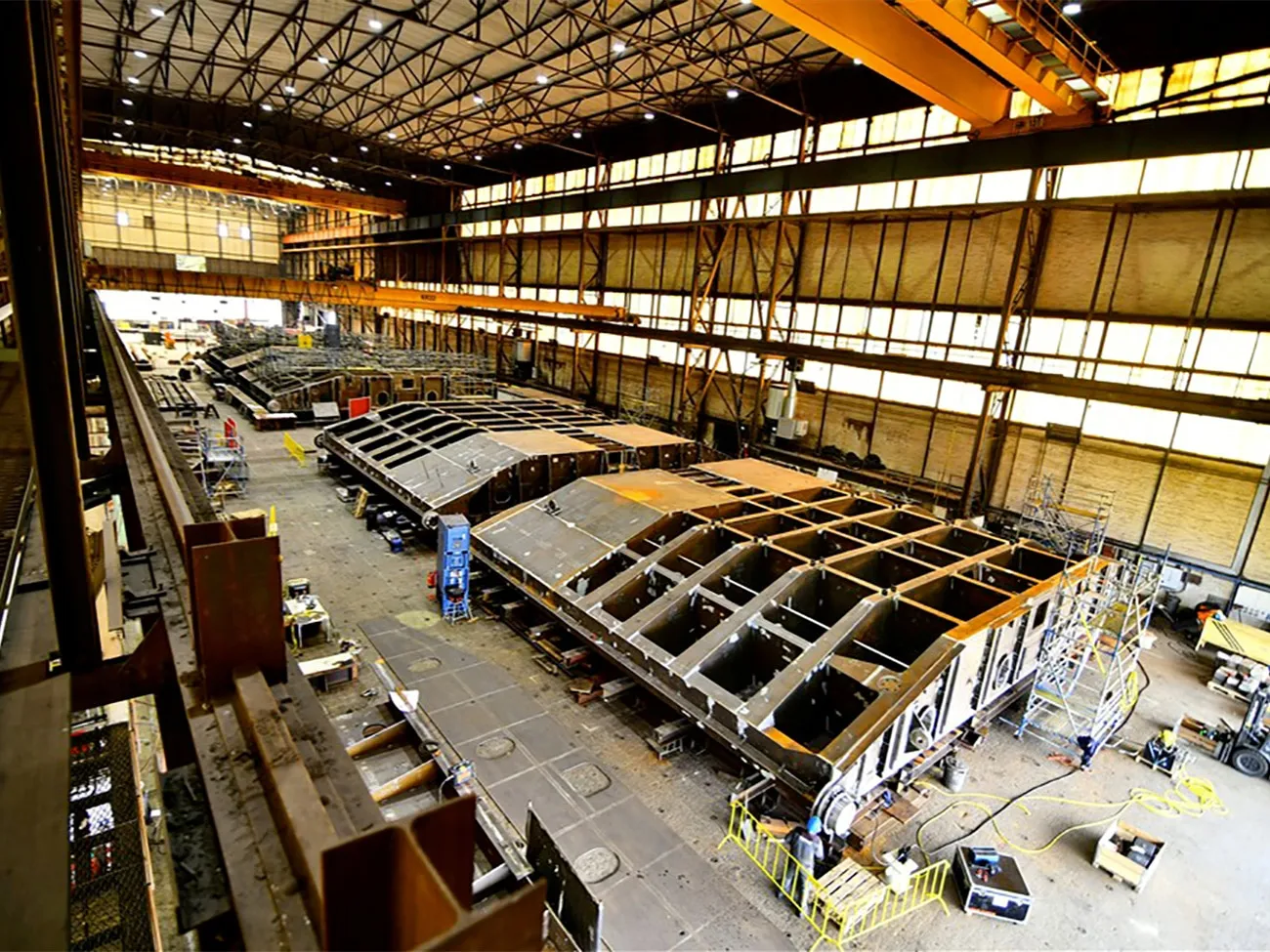
Hollandia Infra
Hollandia Infra’s craftsmanship is distinguished by its knowledge and expertise. “By investing in the development of our people, technology and production facilities, we can make our steel structures even more advanced and sustainable in the future. This meets the growing needs of clients and end users of essential structures such as bridges and flood barriers,” says Nardo Hoogendijk, managing director of Hollandia Infra.
Alex Westendarp Knol, commercial manager at Hollandia Infra: “Structures are becoming more imposing and conditions increasingly challenging. This requires us to be creative and innovative across all our disciplines: tendering, design, procurement, project management, fabrication, protective coating, transport and installation.”
Hollandia Services
The experts at Hollandia Services are tasked with keeping infrastructure assets in reliable condition. “It is vitally important that people can continue to rely on the infrastructure that is used intensively every day,” says Matthijs de Groot, operations director of Hollandia Services. “That is why we focus on the inspection, maintenance, overhaul and renovation of water infrastructure, ensuring that it remains in optimum technical condition.”
De Groot: “When managing and maintaining large movable steel structures, we always want to stay ahead of the situation. We also aim to minimise the impact of maintenance work on the surrounding area and the time it takes. That is why, together with asset owners such as Rijkswaterstaat (RWS), provinces, municipalities, water authorities and private parties, we develop a sustainable, cost-efficient maintenance strategy and take responsibility for the entire project. This proactive approach ensures continuity and extends the service life of infrastructure assets.”
Integrated maintenance
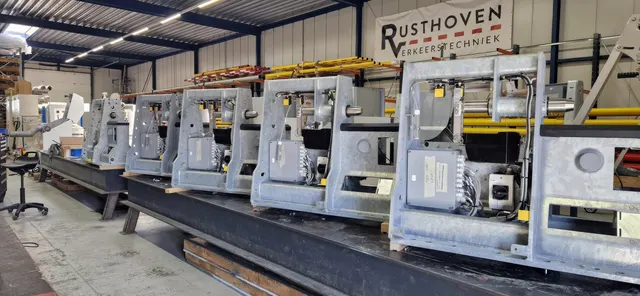
Hollandia Services has its own engineering, E&I and hydraulics departments, as well as a 24-hour emergency service through which its specialists ensure the operational reliability, and therefore the availability, of assets. De Groot: “Our specialist knowledge and extensive experience in mechanical, electrical and hydraulic drive technologies are integrated into our maintenance programme.” We are working on a number of groundbreaking pilot projects, says Ronald van den Berg, managing director of Hollandia Services. “By 2025, we want to be known as the leading company in technological innovation.” Hoogendijk adds: “And in collaboration and sustainability too.”
Optimum synergy
It is quite unusual for Hollandia to have everything under one roof. Its open and transparent approach is equally distinctive. “The mutually reinforcing collaboration between Hollandia Infra and Hollandia Services, as well as with external parties, is one of our great strengths,” says De Groot, noting that the interface between mechanical engineering and E&I is becoming increasingly prominent. “With these disciplines in-house, we offer clients a complete solution. That has a positive impact on delivery times, budgets and the end result.”
Experts in complex projects
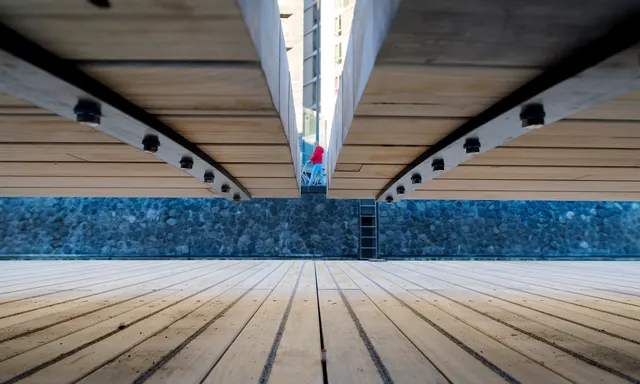
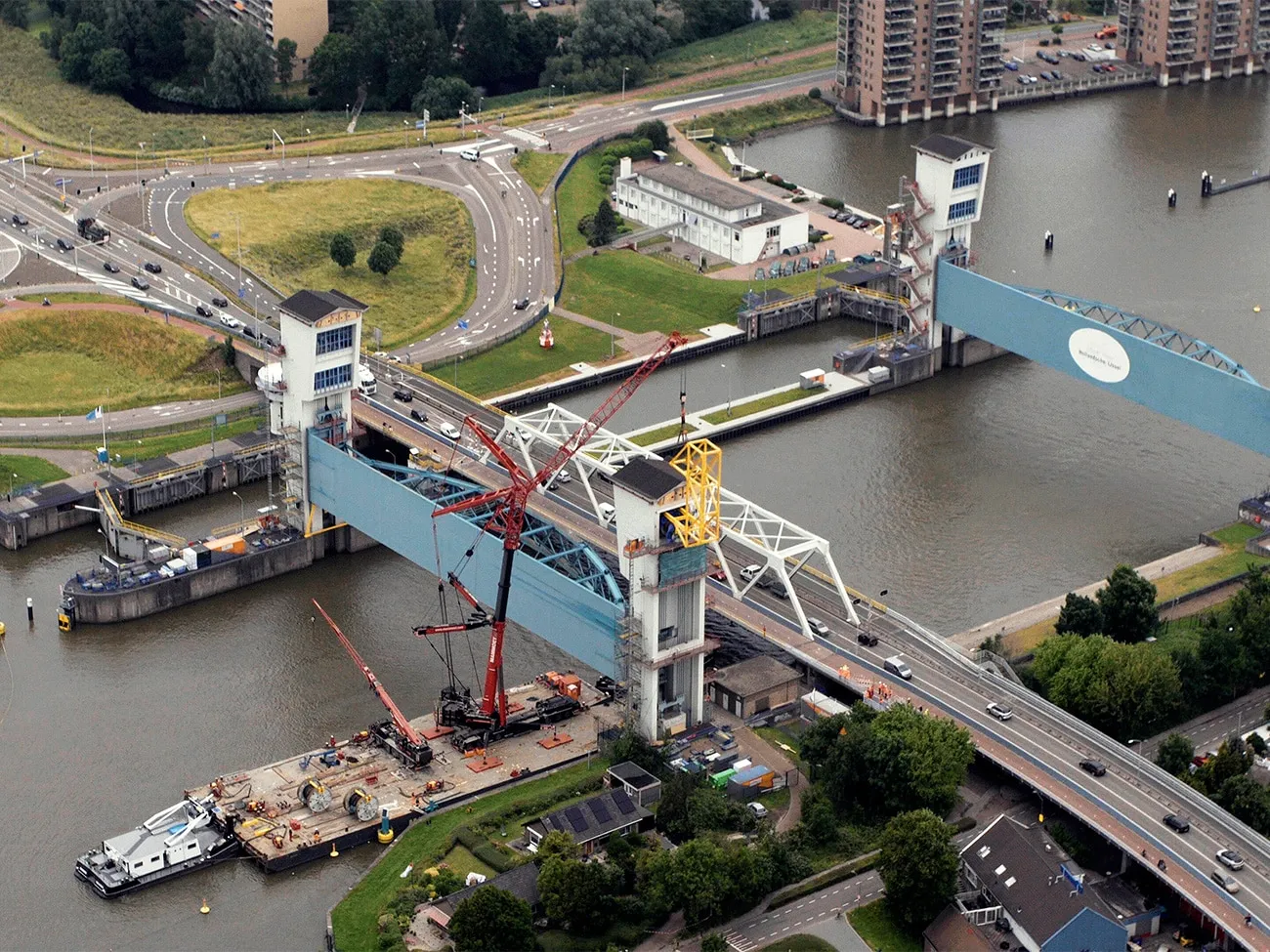
Hollandia excels at complex projects. Examples include the Delta Works, the major railway bridge for the Theemsweg route, the Reevesluis complex in the IJsseldelta, and the Brighton Tower and Boston Barrier in England. But when asked about a recent project where collaboration went almost seamlessly, they point to the Suurhoffbrug (A15). Commissioned by Rijkswaterstaat, Bouwcombinatie STIPT (Hollandia Infra, Dura Vermeer, BESIX NL and Mobilis TBI) built a new arch bridge, after which Hollandia Services renovated the existing road bridge. “The Suurhoffbrug is more than an energy-neutral bridge: it gave everyone involved in the project more energy than it took,” says Hoogendijk with a wink. “Alongside the vital energy transition, open and transparent collaboration is essential. Hollandia has everything it needs to contribute to the renovation and replacement of the many movable structures that are reaching the end of their service life.”
“Both Rijkswaterstaat and Hollandia and its partners were open and willing to be vulnerable. This created a positive dynamic during the tendering phase, which we maintained throughout the construction,” says Hoogendijk. “Drawing on our expertise as bridge builders, we proposed a different bridge with a longer span as a risk-management measure. It could ultimately be built with better control and considerably less risk. This was much appreciated.”
Hoogendijk is proud of the impressive team performance by RWS and Bouwcombinatie STIPT. “Our openness and transparency, and our shared goal, enabled us to find the best solution to the challenges we faced. It also had a positive effect on the schedule and delivery times. And we can be proud of the end result we achieved here.” Hoogendijk is referring not only to the engineering, construction and installation of the bridge, but also to delivering it on time and without a hitch.
Innovative strengthening method
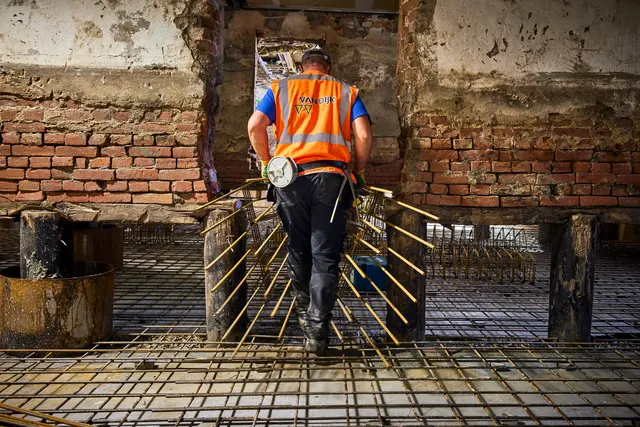
An innovative strengthening method was used to renovate the existing Suurhoffbrug. Van den Berg: “For the first time in the Netherlands, a steel plate was bonded and bolted to the bridge deck to strengthen it. Together with RWS and its project partners, we further developed and refined the approach throughout the project. It has proved so successful that it will undoubtedly be used more often on bridges nearing the end of their service life.”
The strength of Hollandia
Hoogendijk: “We want to be leaders in both Infra and Services, in the market and in collaboration. We want to provide the ideal response to market needs.” Van den Berg: “We like to get involved early and analyse what is needed. We also expect clients to give us the scope to demonstrate our creativity and expertise. Pooling strengths and knowledge at the preliminary stage, and deploying construction partners’ capabilities in the right places, creates room for the ideal solution.” Westendarp Knol sees a cautious shift in the market: “Trust is growing.
Thanks to our broad scope, we can make a valuable contribution in many areas, from design and fabrication to maintenance.” Westendarp Knol is convinced that two-phase tendering contracts will help bring about this change. “A two-phase contract has a positive effect on collaboration, creating significant gains in time, cost and quality. This creates a win-win situation for both clients and contractors,” he believes.
Sustainability
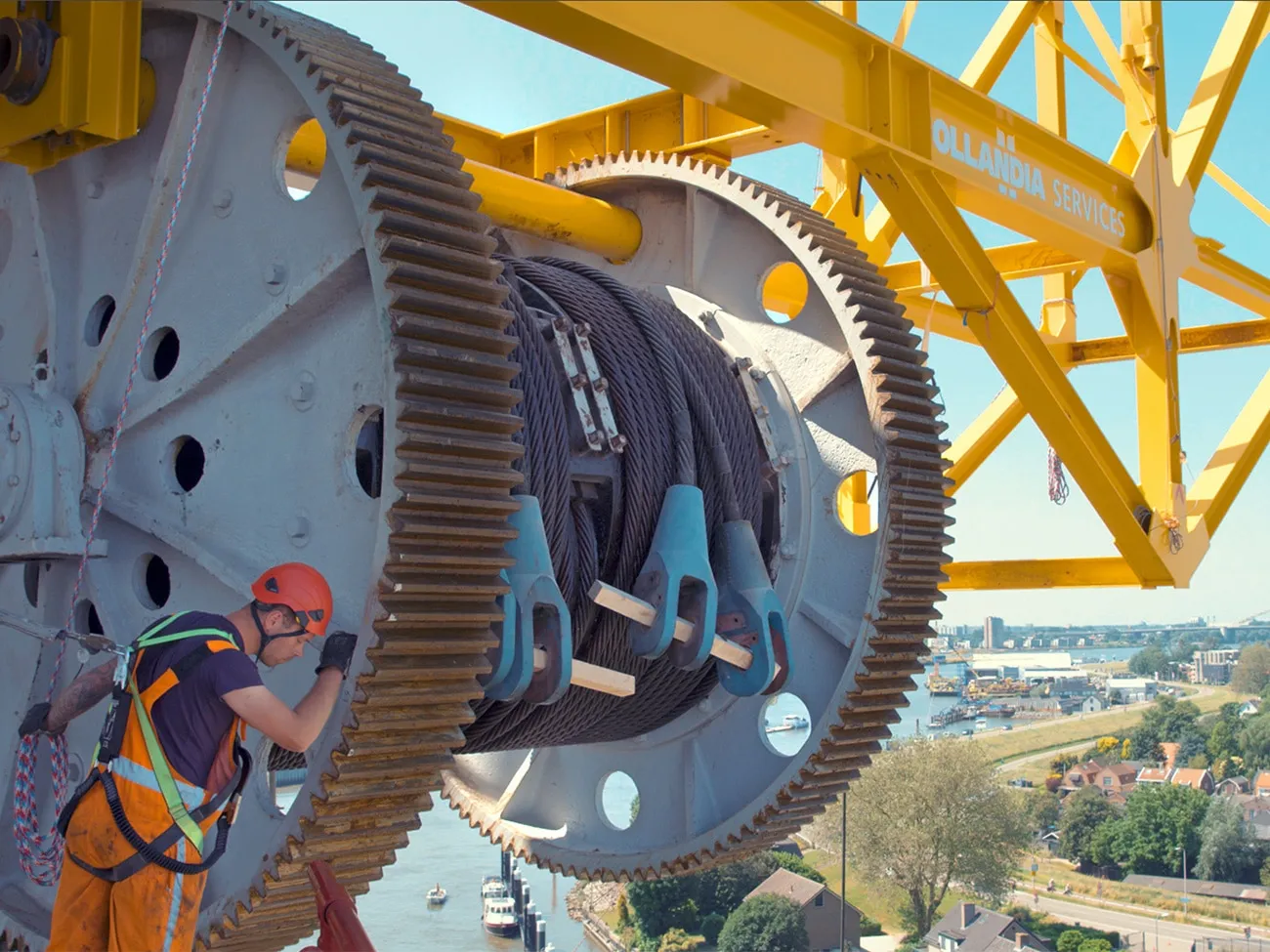
Alongside the importance of collaboration, Hollandia feels a strong responsibility for sustainability. “It is becoming increasingly urgent to reduce energy and material consumption so that we can pass on our planet in good condition to our children,” says Hoogendijk. “Steel is in fact an extremely sustainable material, thanks to its potentially infinite service life. It retains its strength when remelted, but remelting takes a lot of energy. Fortunately, there has recently been a collective discussion about a Steel Construction Agreement, and plans are in place to produce ‘green steel’ by 2035. Major steps are already being taken to achieve this, for example through the Steel Construction Agreement, which is leading to significant investment at companies including Tata in IJmuiden, Dillinger and ArcelorMittal. We are convinced that steel is the material of the future!”
Hollandia also makes a very deliberate choice to support the long-term employability of its people. “We believe it is extremely important that our people enjoy their work, make exciting things and feel they have room to develop within the organisation,” says Westendarp Knol. “Good skilled workers are in short supply, which is why we have had our own training school for decades. It is both a source of new talent and a place where highly experienced employees can move into less physically demanding work by sharing their extensive knowledge and experience and drawing on the support of younger colleagues,” adds Van den Berg.
With skilled employees and a strong market position, underpinned by a commitment to collaboration, safety and sustainability, Hollandia is ready for the future.
Question about this story? Ask your question
Companies in this story

Keep following this
Get an email when a new story is published. No account needed.
- ThemeExtending the life of roads and civil engineering structures
- SubjectYearbook
- CompanyMobilis