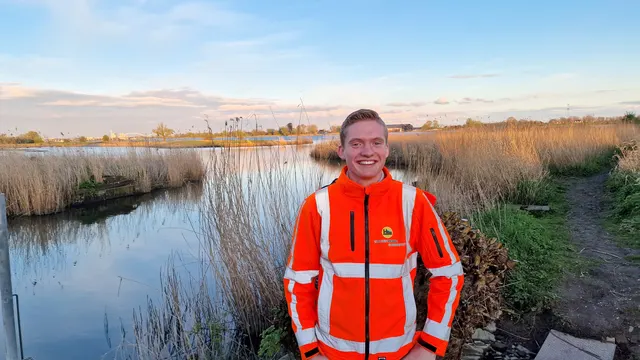
Luuk Faassen studied for a Master’s in Civil Engineering in Delft
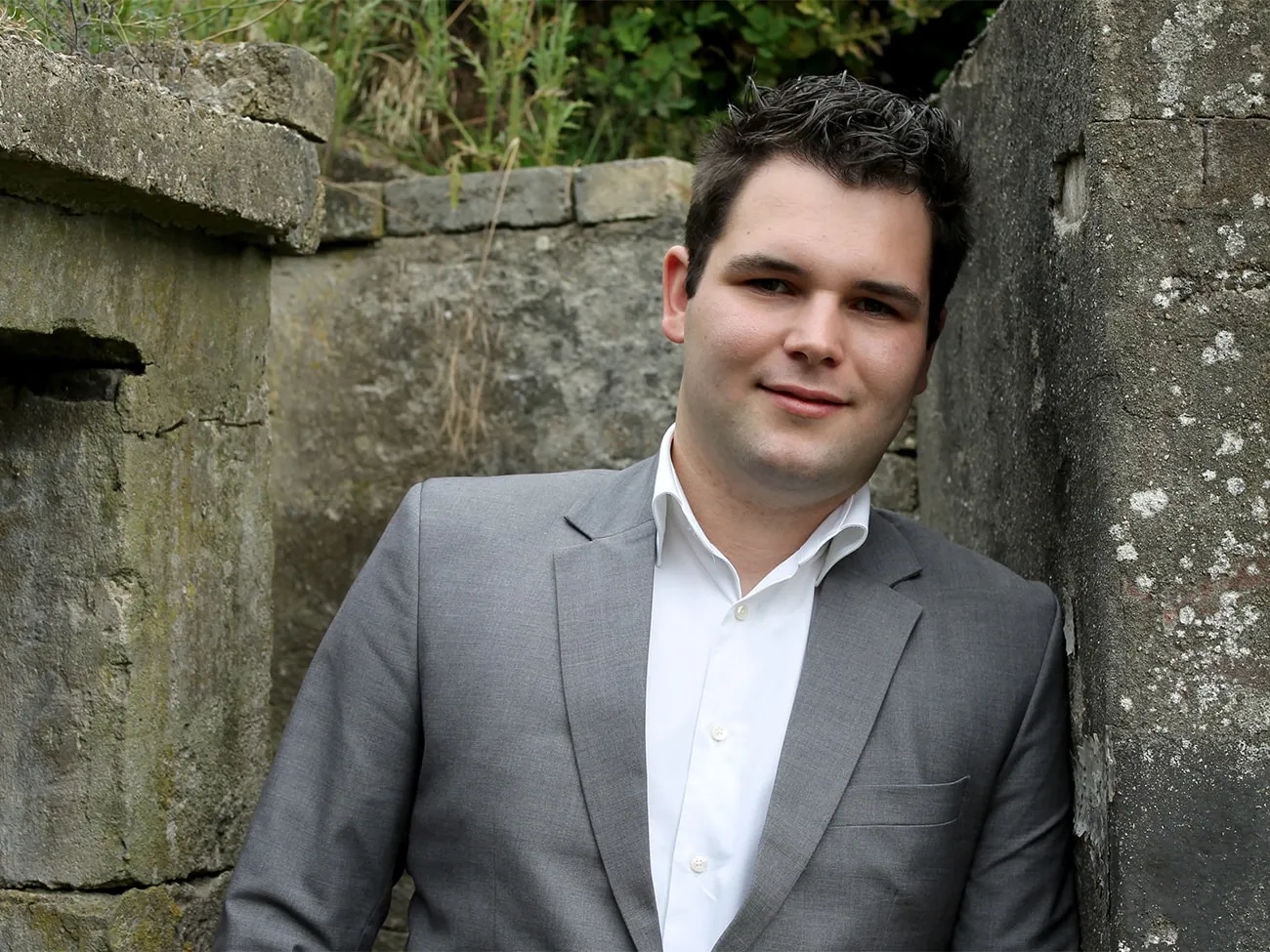
There is no need to tell Luuk Faassen, 25, about the importance of concrete. With a Master’s in Civil Engineering, specialising in Structural Engineering and Concrete Structures, Luuk is ready to make his mark on the civil engineering sector. He has already landed a job, too. No surprise, given the strong demand for people like Luuk. We talk to him about the choices that brought him to where he is today.
The value of an inspiring lecturer
“I took a broad range of subjects at HAVO because I simply didn’t know what I wanted to do later on,” Luuk begins. “I’d looked at all sorts of options, until I met lecturer Thomas Beuker at an open day at HAN. He spoke about civil engineering with such incredible motivation and passion that I was completely captivated. That was literally what prompted me to choose that field!”
A four-year degree, followed by Delft
The degree programme at HAN lasted four years. In his third year, Luuk chose the structural engineering specialism. “I really enjoyed it. Subjects such as steel structures, concrete structures and mechanics. I chose to take a minor in ‘Creative Structural Design’. After that, it was on to TU Delft, where I took a pre-master’s programme, which was required to progress from an HBO Bachelor’s to a WO Master’s. That meant a lot of catching up in mathematics and mechanics. That’s when I really delved deeper into the subject.”
In Delft, he chose Structural Engineering, specialising in Concrete Structures. “You choose Structural Engineering for your bridging programme,” Luuk explains. “You choose Concrete Structures before starting the Master’s.”
Why concrete?
Asked why he chose concrete, Luuk replies: “Concrete is, and will remain, a sustainable material. During my internship at ABT through HAN, I enjoyed working on concrete calculations for projects. I had the opportunity to work with carbon fibre reinforcement, a great, compact solution that is easy to incorporate. At ABT, I realised how important concrete is. I wanted to see it, understand it, calculate with it and come up with solutions,” says Luuk. “Looking to the future, the challenge will be to strike a balance between improving the sustainability of concrete and ensuring that this doesn’t stand in the way of construction innovation.”
Question about this story? Ask your question
Keep following this
Get an email when a new story is published. No account needed.
- ThemeMaterials and techniques for infrastructure
- SubjectPersonnel & training