Surprisingly versatile in emissions-free working
Text Roel van Gils Image Verboon Maasland
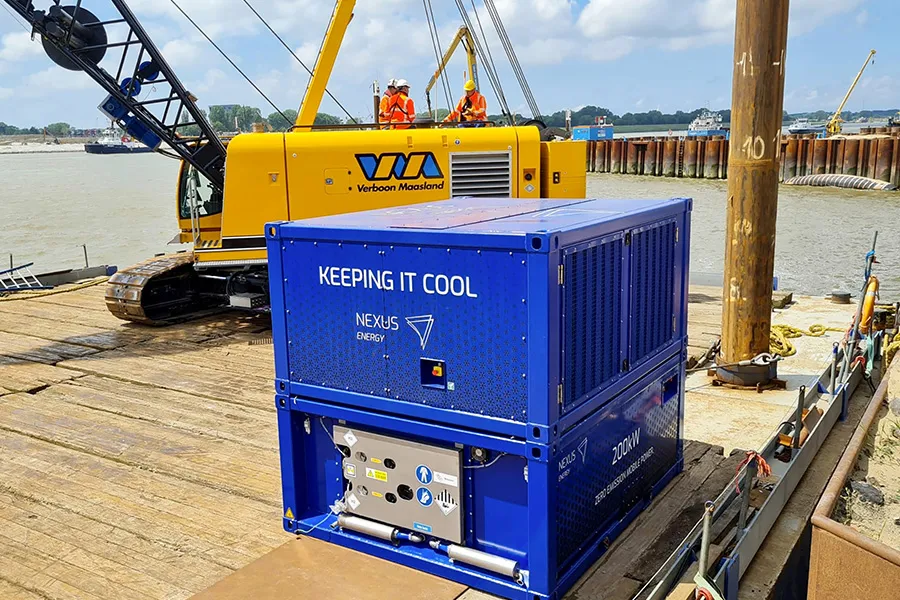
At Verboon Maasland, sustainable working is nothing new. Since 2013, the company has been making a concerted effort to reduce CO2 emissions from its activities. The family business is one of the frontrunners in emissions-free working. At InfraTech 2025, Verboon Maasland will showcase the many ‘flavours’ of emissions-free working at stand 1.214.
The third generation is now at the helm of the family business, which was founded in 1951. “The fourth generation is already on the horizon,” says Arno Schnitker, tender and acquisition manager at Verboon Maasland. “Sustainable working is in our DNA, and we do it because we are intrinsically motivated. We started thinking quite early on about how we could reduce our CO2 footprint on projects. In 2013, for example, we used olivine on a project, a mineral that binds CO2, enabling us to cut CO2 emissions by 50%. In 2016, we achieved Level 3 on the CO2 Performance Ladder, and since 2020 we have held the highest level, Level 5.”
A sustainable alternative
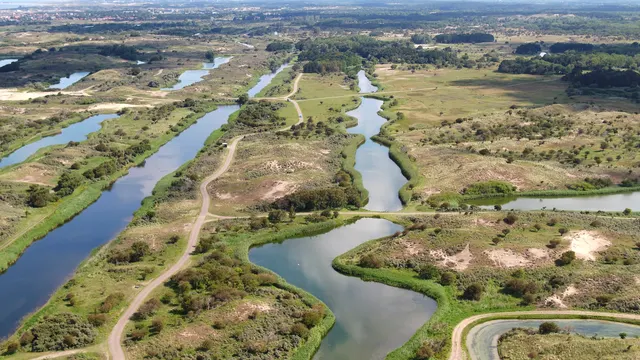
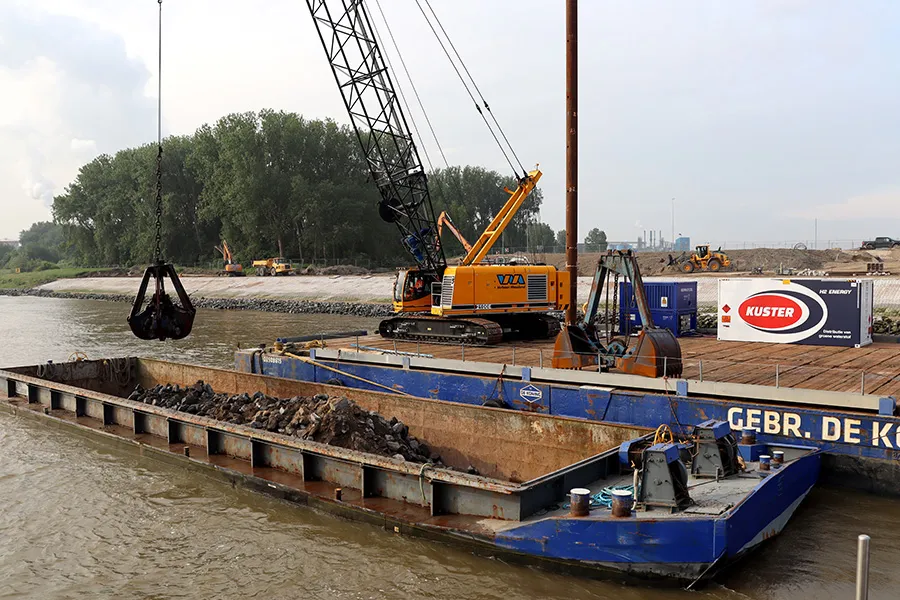
For every project, Verboon Maasland explores ways to carry out the work more sustainably and, preferably, without emissions. “Unfortunately, that is not always possible yet,” Arno acknowledges. “In that case, we go for the best alternative. A good example was dredging in a peat meadow area. Dredging releases methane, which is 28 times more harmful than CO2. On this project, we captured the methane before it entered the dredging pump, then piped it away and flared it, converting it into the less harmful CO2.”
Electric fleet
Since 2020, Verboon Maasland has also been investing heavily in making its plant and equipment more sustainable. “A large part of our fleet is now electric, with a 105-tonne electric cable crane among the latest additions. Since power connections are often unavailable at the sites where we work, we have signed an agreement with Nexus Energy to test whether hydrogen could be a suitable energy source for us. Under the agreement, we are currently working in Amstelveen for the Rijnland Water Authority on the redevelopment of the Kleine Poel. We are using battery-electric equipment exclusively, from excavators and a pusher tug to a dredging squeezer and a soil compactor. They are charged using a large hydrogen supply and a hydrogen generator.”
Different flavours
In January 2025, Verboon Maasland will start a pilot with Port of Rotterdam. “For nine weeks, we will dredge a harbour using our electric cable crane, alternating between three power sources: hydrogen, batteries and conventional diesel,” Arno explains. “The pilot is mainly intended to gather data and find out in practice which technology works best, causes the least disruption and has the best footprint for this type of dredging. We are also in the middle of an 8-year framework contract with the Delfland Water Authority. As the contract progresses, we will carry out an increasing proportion of the work emissions-free, and we are allowed to raise our unit rates in line with that proportion. This gives the client room to invest in more sustainable equipment, creating a win-win situation. In short, there are many routes that ultimately lead to an emissions-free future. And we are keen to play our part.”
Question about this story? Ask your question
Companies in this story
Keep following this
Get an email when a new story is published. No account needed.
- ThemeLower emissions and more reuse
- SubjectInfraTech
- CompanyInfraTech